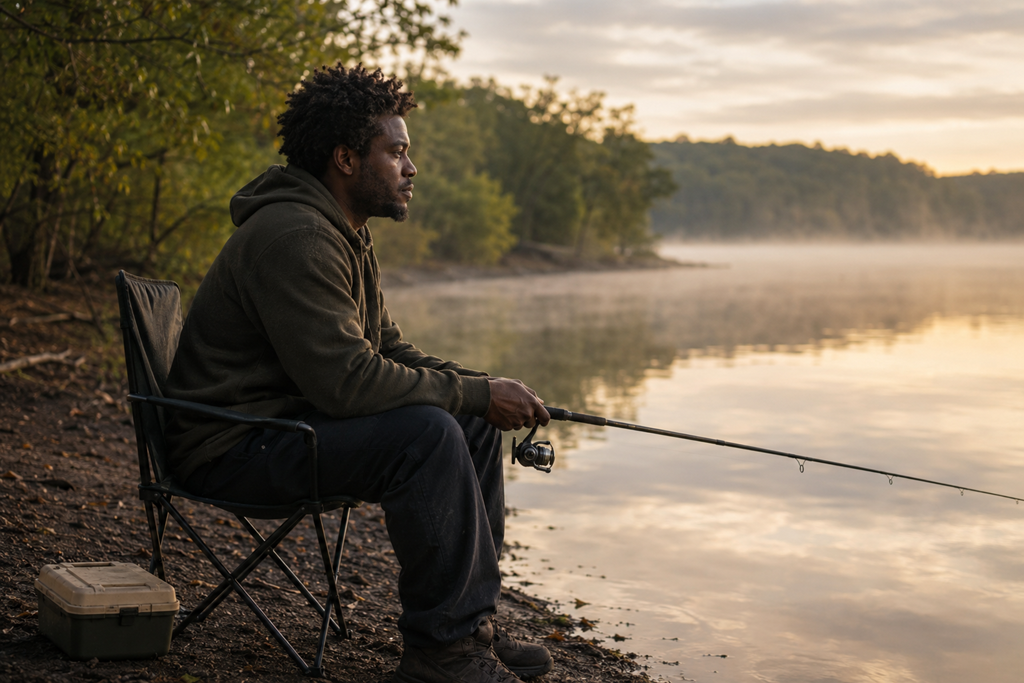
Many people use fishing as a break from everyday stress because it gives the mind something simple, quiet, and steady to focus on. Instead of rushing from one responsibility to the next, fishing creates a slower rhythm: preparing gear, watching the water, waiting patiently, and being present with the moment.
For some people, fishing is about catching fish. But for many others, the deeper value is the pause it provides. It offers a way to step away from noise, pressure, screens, errands, work demands, family responsibilities, and the constant feeling of being mentally “on.”
Fishing does not erase stress. It gives people a place to breathe around it.
Fishing Slows Down a Mind That Has Been Moving Too Fast
Everyday stress often builds quietly. It can come from deadlines, bills, decisions, traffic, caregiving, long workdays, or simply having too many small things to think about at once.
Fishing changes the pace.
There is no need to refresh a screen, answer a message, solve a problem immediately, or keep multitasking. The activity itself encourages patience. You cast, wait, notice the water, adjust when needed, and stay with what is happening in front of you.
That slower pace is part of the relief. The mind is still active, but it is not being pulled in ten different directions.
The Water Gives People Somewhere Calm to Place Their Attention
One reason fishing feels restorative is that it gives attention a softer place to land. Water naturally draws the eye. The movement of a lake, river, pond, or shoreline can feel steady without demanding much from the person watching it.
This matters because stress often makes people feel mentally crowded. Fishing offers a simple focus that does not require intense performance. Watching a bobber, feeling the line, listening to small sounds around the water, or noticing changes in light can help the nervous system settle.
The experience is not dramatic. That is part of why it works for many people. It feels ordinary, quiet, and real.
It Creates Space Without Requiring a Full Escape
A common misunderstanding is that stress relief has to mean a vacation, a major life change, or a long break from responsibilities. Fishing can be helpful because it is more modest than that.
It can happen early in the morning, after work, on a weekend, during a camping trip, or at a nearby local spot. For some people, even a short fishing trip feels meaningful because it creates a clear boundary between regular life and a calmer setting.
The value is not always about distance. Sometimes it is about having a different kind of time.
Fishing gives people permission to stop pushing for a while.
The Routine Itself Can Feel Grounding
Fishing often includes small, familiar motions: gathering tackle, checking bait, tying a line, choosing a spot, casting, waiting, and resetting. These simple routines can be comforting because they are concrete.
When life feels uncertain or mentally heavy, practical motions can help a person feel more grounded. There is something in front of them to do, but it is not usually urgent. There is structure, but not pressure.
That combination can be especially calming for people who feel worn down by constant decision-making. Fishing offers enough activity to stay engaged, but enough stillness to feel rested.
Catching Fish Is Not Always the Main Point
People who do not fish sometimes assume the whole experience is successful only if someone catches something. For many anglers, that is not true.
Catching a fish can be exciting and satisfying, but the emotional value of fishing often comes from the full experience: being outside, having quiet time, spending time with someone, enjoying solitude, or returning to a familiar place.
A fishing trip can still feel worthwhile even when nothing bites.
That is one of the clarifying things about fishing as stress relief. It is not always about achievement. In a life full of goals, tasks, and measurable outcomes, fishing can be one of the few activities where simply showing up is enough.
Fishing Can Offer Solitude or Easy Companionship
Some people fish because they want to be alone. Others fish because it gives them a relaxed way to spend time with someone else.
Both can reduce stress in different ways.
Fishing alone can provide quiet personal space without needing to explain anything. Fishing with a friend, partner, parent, child, or sibling can create low-pressure connection. There does not have to be constant conversation. People can talk when they want, sit quietly when they do not, and share the experience without forcing it.
That easy rhythm is part of the appeal. Fishing can support connection without making connection feel like another task.
Everyday Stress Often Needs Simple Relief, Not Complicated Solutions
It is easy to overlook simple forms of relief because they do not sound impressive. But many people do not need every relaxing activity to be optimized, tracked, or turned into self-improvement.
Sometimes they need a place to sit near the water.
Fishing works for many people because it is physical enough to feel real, quiet enough to feel restorative, and familiar enough to return to again and again. It does not require someone to explain their stress perfectly before they can benefit from the break.
They can just go, cast a line, and let the day soften for a while.
What Fishing Helps People Remember
Fishing often reminds people that not everything has to move quickly. Not every moment has to produce something. Not every break has to be earned through exhaustion.
For many people, fishing is less about escaping life and more about returning to it with a little more space inside. The problems may still be there afterward, but the person may feel steadier, quieter, and less crowded by them.
That is why fishing remains meaningful for so many people. It gives everyday stress somewhere to loosen its grip.
Download Our Free E-book!