Romance often fades quietly, not because two people suddenly stop caring, but because the parts of a relationship that create warmth and closeness can slowly get crowded out by routine, stress, distractions, and assumption. In many relationships, there is no major fight, betrayal, or obvious breaking point. Things simply become more functional than affectionate, more efficient than intimate, and more familiar than attentive.
That is part of what makes this experience confusing. From the outside, the relationship may still look fine. The couple may still live together, handle responsibilities, talk about the day, and care about each other. But something softer and more connecting has thinned out in the background.
For many people, this is what romance fading actually feels like: not dramatic disconnection, but a growing sense that the relationship has become mostly about getting through life rather than sharing it.
It usually does not disappear all at once
Romance rarely fades in one clear moment. More often, it fades through small shifts that are easy to miss while life keeps moving.
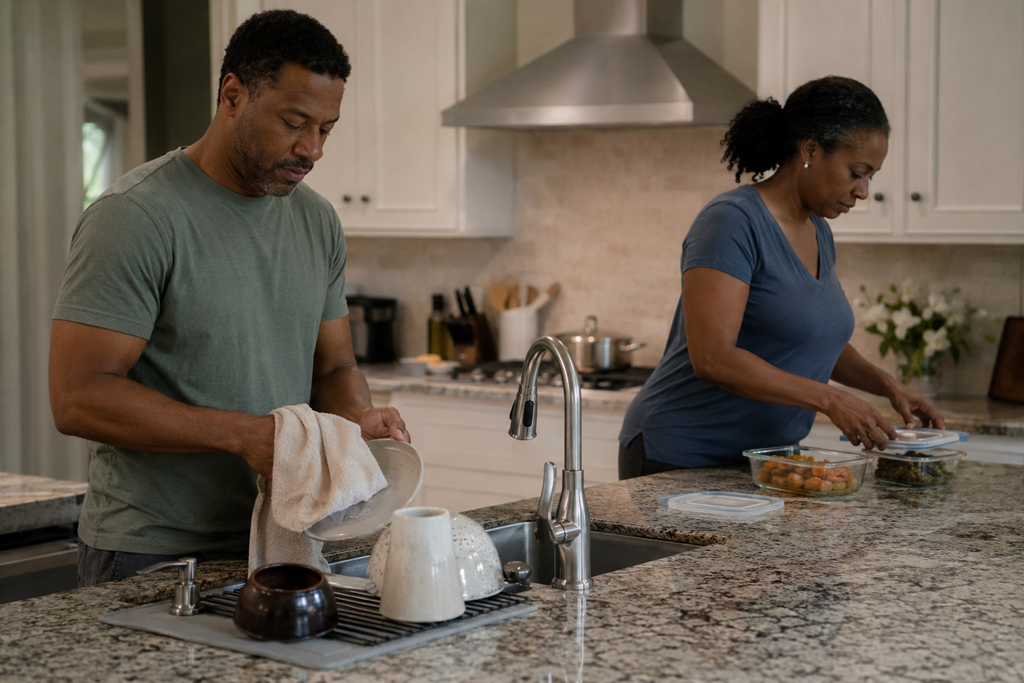
At first, those shifts may seem harmless. Conversations become shorter because both people are tired. Affection becomes less frequent because schedules are full. Thoughtful gestures happen less often because each person assumes the other already knows they are loved. Playfulness gets replaced by problem-solving. Quality time becomes time spent in the same room doing separate things.
None of these changes necessarily look serious on their own. That is why many couples do not notice what is happening until they start feeling more like teammates, housemates, or co-managers of daily life than romantic partners.
The relationship can still be loving and feel less romantic
One common misunderstanding is the belief that if romance is fading, the relationship must be failing. That is not always true.
A couple can still be loyal, caring, and committed while also feeling less emotionally and romantically connected than before. Love and romance are related, but they are not exactly the same. Love may stay present even when the relationship becomes less expressive, less attentive, and less emotionally alive.
This matters because many people dismiss the issue too quickly. They tell themselves, “We’re fine,” because there is no crisis. Or they assume the change is just what happens in long-term relationships. But when romance fades for too long, the relationship can begin to feel flatter, more distant, and less nourishing, even if both people still mean well.
Everyday life slowly reshapes the tone of a relationship
Romance often fades because daily life has a way of pulling attention toward what is urgent and away from what is meaningful.
Work pressure, parenting, errands, bills, health concerns, and mental fatigue all affect how people show up with each other. When energy is limited, the first things to disappear are often the things that seem optional: flirting, noticing, reaching out, being curious, planning small moments together, or expressing affection in ways that feel personal rather than automatic.
Over time, the relationship starts running on maintenance. The focus shifts to tasks, schedules, and responsibilities. That does not make anyone bad at love. It simply shows how easy it is for connection to become passive when life becomes demanding.
Romance usually needs attention to stay visible. Not grand gestures all the time, but signs that each person still sees the other as more than a role.
Familiarity can create comfort, but it can also create assumption
Another reason romance fades unnoticed is that familiarity makes it easy to stop actively seeing each other.
At the beginning of a relationship, people tend to notice more. They listen more closely, express appreciation more openly, and pay attention to emotional nuance. They are more intentional because the connection feels new and alive. Later, once the relationship feels secure and familiar, that attentiveness can weaken without anyone meaning for it to.
People start assuming they already know how the other person feels. They assume affection can wait. They assume the relationship will continue on its own because the bond is established.
But romance often lives in the opposite of assumption. It tends to grow where there is interest, presence, and a willingness to keep noticing the person you already know.
What many people are actually missing is emotional presence
When people say the romance is gone, they are not always talking about candlelit dinners or dramatic gestures. Often, what they miss is emotional presence.
They miss feeling chosen in small ways. They miss being looked at with attention instead of passing distraction. They miss moments that feel warm, playful, tender, or emotionally open. They miss the sense that the relationship includes more than logistics.
This is an important distinction because it helps explain why some couples feel disconnected even though they still spend a lot of time together. Time alone is not the same as presence. Proximity is not the same as connection.
A relationship can be full of contact and still feel low in romance if the interactions mostly revolve around obligations, corrections, or practical updates.
The problem gets worse when people wait for a bigger warning sign
Because romance often fades gradually, many people keep waiting for a more obvious problem before taking the feeling seriously.
They think it only counts if they are constantly fighting, considering a breakup, or feeling deeply unhappy. But a quiet loss of closeness matters too. In fact, it can be harder to address because it is so easy to minimize.
People also tend to misread the situation. One person may think, “This is just adulthood.” The other may think, “Maybe this is what long-term love becomes.” Both may feel the absence of something important without knowing how to name it.
That is part of why this experience can last for a long time. It is not always caused by a lack of love. Sometimes it is caused by a lack of awareness.
Romance fades fastest when the relationship becomes entirely practical
Practical partnership is valuable. Relationships need reliability, communication, and shared responsibility. But when practical functioning becomes the whole relationship, something essential can start to go missing.
Romance is often what keeps a relationship from feeling emotionally flat. It brings in delight, attention, appreciation, and a sense of “us” that goes beyond survival. Without it, the relationship may still operate, but it may stop feeling vivid.
That does not mean romance has to look flashy or constant. In healthy relationships, it is often built through ordinary moments: a softer conversation at the end of the day, affectionate touch that is not rushed, shared humor, genuine curiosity, a small thoughtful effort, or a pause long enough to really connect.
These things are easy to overlook precisely because they seem small. But small things are often what keep closeness from becoming purely functional.
This is why the change can feel so hard to describe
People often struggle to explain romance fading because the loss is subtle. There may not be one clear event to point to. Instead, there is often a vague sense that the relationship feels different now.
Less lightness. Less tenderness. Less emotional pull. Less feeling of being engaged with each other as romantic partners.
That can leave people second-guessing themselves. They may wonder if they are expecting too much or being overly sensitive. But in many cases, what they are noticing is real. They are sensing that the relationship has become more efficient than intimate.
Naming that shift matters. When people can identify what is missing, the experience tends to feel less confusing and less lonely.
What helps most is understanding that this pattern is usually gradual, not mysterious
Romance often fades without anyone noticing because the change is usually quiet, gradual, and woven into ordinary life. It does not always announce itself with conflict. Sometimes it appears as dullness, emotional drift, or a relationship that still works but no longer feels especially warm or alive.
That understanding can bring relief. It means the fading was not necessarily proof that the relationship was fake, broken, or doomed from the start. It may simply reflect what happens when attention moves elsewhere for too long and the relationship begins running on habit alone.
For many readers, the most useful insight is this: romance often fades not from one dramatic loss, but from the accumulation of many small absences. And because those absences are so ordinary, they can be missed until the relationship starts feeling different in a way that neither person fully understands.
Even recognizing that pattern can make the experience feel less confusing. It gives language to something many people feel long before they know how to describe it.
Download Our Free E-book!