Oslo is one of those cities where you can move easily between art, architecture, history, waterfront views, and outdoor experiences in the same day. Norway’s capital is compact enough to explore without feeling rushed, but layered enough to reward travelers who want more than a quick checklist.
This guide focuses on the best things to do in Oslo for first-time visitors and travelers who want a balanced trip. You’ll find classic landmarks, major museums, scenic walks, outdoor spaces, and cultural experiences that help you understand the city without overloading your itinerary.
Essential Oslo Landmarks And Cultural Experiences
1)) Walk On The Roof Of The Oslo Opera House
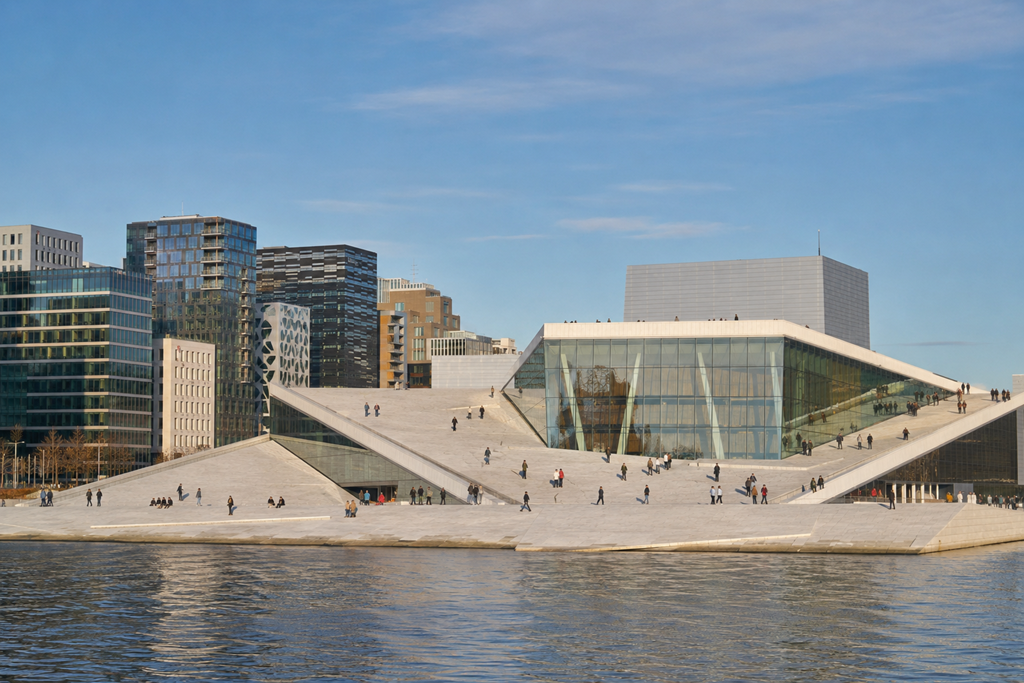
The Oslo Opera House is one of the city’s most memorable modern landmarks. Set along the waterfront in Bjørvika, its sloping marble roof is designed so visitors can walk up it and enjoy views over the harbor, city skyline, and surrounding hills.
This is one of the best first stops in Oslo because it immediately gives you a sense of the city’s relationship with the water. You do not need to attend a performance to appreciate the building, though travelers interested in music, architecture, or design may want to check the current performance schedule before visiting.
It is especially worthwhile for photographers, architecture lovers, and anyone who wants a simple outdoor experience close to the city center. Visit early or later in the day if you prefer fewer people and softer light.
2)) Explore Akershus Fortress
Akershus Fortress is a historic castle and fortress overlooking Oslofjord. It has played an important role in Oslo’s history and remains one of the city’s most atmospheric places to walk. Visit Oslo includes Akershus Fortress among the city’s major tourist attractions, alongside landmarks such as Vigeland Park, Holmenkollen, and the city’s leading museums.
The fortress grounds are useful for travelers who want history without committing to a long museum visit. You can wander the exterior areas, enjoy harbor views, and get a better feel for Oslo’s older layers beyond its modern waterfront.
It is a good choice for first-time visitors, history-minded travelers, and anyone building a walking route through central Oslo. Pair it with the waterfront, City Hall area, or the National Museum for an efficient sightseeing day.
3)) Visit The MUNCH Museum
MUNCH is one of Oslo’s most important cultural stops, dedicated to the work and legacy of Edvard Munch. The museum is located in Bjørvika near the Opera House, making it easy to combine both in the same half-day. The museum’s official site identifies its location in Bjørvika and provides current visitor information, which is worth checking before you go.
This is a strong choice even for travelers who do not usually plan trips around art museums. Munch’s work is emotionally direct, visually recognizable, and deeply connected to Norwegian cultural identity.
If your time in Oslo is limited, MUNCH works well because it sits near other major sights, waterfront walks, cafés, and modern public spaces. Allow enough time to move through the galleries without treating it as a quick photo stop.
4)) Spend Time At The National Museum
The National Museum is one of the best places in Oslo to understand Norwegian art, design, architecture, and cultural history in one setting. Visit Norway describes it as the largest museum in the Nordic region, with a large permanent collection across art, design, craft, and architecture.
This museum is best for travelers who want depth. Instead of seeing only one artist or one period, you can get a broader view of Norway’s visual culture and how it connects to European art and design.
Because the collection is extensive, it helps to prioritize. Choose a few areas that genuinely interest you rather than trying to see every room. It pairs well with a walk around Aker Brygge, the waterfront, or the City Hall area.
Parks, Viewpoints, And Outdoor Oslo
5)) See The Sculptures At Vigeland Park
Vigeland Park is one of Oslo’s most distinctive outdoor attractions. It is known for its large collection of sculptures by Gustav Vigeland, set within Frogner Park. Visit Oslo lists Vigeland Park among the city’s most visited attractions, making it a classic Oslo experience rather than a niche stop.
What makes it worth visiting is the combination of art, open space, and everyday city life. You can walk through the sculpture axis, pause at the bridge, and continue into the wider park if you want a longer outdoor break.
This is a practical choice for families, couples, solo travelers, and anyone who wants an experience that does not depend heavily on weather or strict scheduling. It is especially pleasant when you want a slower morning or afternoon outside the densest part of the city center.
6)) Take In The Views From Holmenkollen
Holmenkollen is one of Oslo’s best-known outdoor and sporting landmarks. The ski jump rises above the city and offers a different perspective from the waterfront, with views toward Oslo, the fjord, and the surrounding forested landscape.
This experience is especially useful because it shows how close Oslo is to nature. Even if you are not a skiing enthusiast, Holmenkollen helps explain the city’s outdoor culture and its connection to winter sports.
It is best for travelers who enjoy viewpoints, sports history, or scenic public transport rides. Check current access details before you go, especially if you plan to enter museum areas or observation spaces rather than simply seeing the structure from outside.
7)) Walk Along The Oslofjord Waterfront
A walk along Oslo’s waterfront is one of the easiest and most rewarding things to do in the city. The route can include Bjørvika, the Opera House, the MUNCH area, the harbor, Aker Brygge, and Tjuvholmen, depending on how much time and energy you have.
This is where modern Oslo feels most visible. You’ll pass contemporary architecture, public spaces, water views, swimming areas, restaurants, museums, and ferry connections. Visit Norway highlights Oslo’s mix of architecture, museums, urban areas, bathing spots, outdoor activities, and transportation options as part of planning a trip to the capital.
A waterfront walk is ideal early in your visit because it helps you understand the city’s layout. It also gives you flexibility: you can keep it short, stretch it into a long walk, stop for coffee, or connect it with museums and sightseeing.
8)) Experience Oslo’s Sauna And Fjord Culture
Oslo’s sauna culture has become one of the city’s most memorable ways to experience the waterfront. Floating saunas and fjordside bathing areas give visitors a practical introduction to the local relationship with water, weather, and outdoor living.
This is not just a trendy activity; it fits naturally into Oslo’s broader outdoor lifestyle. Visit Norway points travelers toward Oslo’s bathing spots, outdoor activities, and fjord experiences as part of the city’s appeal.
It is best for travelers who want a more local-feeling experience and are comfortable with simple, shared wellness spaces. Book ahead during busy travel periods, bring appropriate swimwear, and check the current rules for the sauna operator you choose.
Museums And Neighborhoods Worth Prioritizing
9)) Visit The Fram Museum And Bygdøy Peninsula
Bygdøy is one of Oslo’s best museum areas, especially for travelers interested in maritime history, polar exploration, and Norwegian cultural heritage. The Fram Museum is dedicated to polar exploration and centers on the original expedition ship Fram; the museum’s official site emphasizes that visitors can step aboard the original ship.
This is one of the strongest Oslo choices for families, history lovers, and travelers who want something specific to Norway rather than a museum experience they could find anywhere. It gives context to exploration, seafaring, and Norway’s relationship with extreme landscapes.
Bygdøy is worth planning as a half-day rather than a quick stop. Depending on your interests, you can combine the Fram Museum with nearby museums or simply enjoy the quieter peninsula setting before returning to central Oslo.
10)) Explore Grünerløkka For Local Food, Shops, And Everyday Oslo
Grünerløkka is one of Oslo’s best neighborhoods for seeing a more everyday side of the city. It is known for cafés, casual restaurants, independent shops, street life, parks, and a creative atmosphere.
This is not the place to rush through with a checklist. It works best as a neighborhood wander: stop for coffee, browse small shops, look for simple local meals, and walk along nearby green spaces. It adds balance to an Oslo trip that might otherwise be focused only on museums and landmarks.
Grünerløkka is especially good for travelers who enjoy food culture, relaxed shopping, and observing how a city feels outside its main tourist corridors. Go when you have time to linger rather than squeezing it between two major attractions.
How To Prioritize Your Time In Oslo
If you only have one day in Oslo, focus on the Opera House, MUNCH or the National Museum, Akershus Fortress, and a waterfront walk. This gives you architecture, culture, history, and scenery without too much transit.
With two or three days, add Vigeland Park, Holmenkollen, Bygdøy, and Grünerløkka. That gives the trip more variety and helps you experience Oslo beyond the central waterfront.
If you enjoy outdoor experiences, leave flexible time for the fjord, sauna culture, parks, or forest access. Oslo is a city where the best moments often come from combining one planned attraction with a simple walk, viewpoint, or pause by the water.
Practical Planning Notes For Visiting Oslo
Oslo is generally easy to navigate by public transportation, walking, and short ferry or tram connections. Many major sights are grouped around the center, Bjørvika, the waterfront, Bygdøy, and the western side of the city.
Weather can change quickly, so pack layers and comfortable shoes even if you are visiting in a mild season. Outdoor experiences are part of Oslo’s appeal, but they are more enjoyable when you are dressed for wind, rain, or cooler temperatures.
For museums and major attractions, check current opening hours before you go. Some places may use timed entry, seasonal schedules, or special closures. For restaurants, saunas, performances, and popular museum times, booking ahead can make the trip smoother during busy travel periods.
Oslo can also be expensive compared with many European cities. A good way to manage costs is to balance paid museums with free or low-cost experiences such as waterfront walks, parks, viewpoints, neighborhood exploring, and public outdoor spaces.
A Simple Way To Think About Oslo
The best Oslo trip is not only about checking off famous attractions. It is about seeing how the city fits together: the fjord, the forests, the museums, the architecture, the neighborhoods, and the quiet outdoor habits that shape daily life.
Start with the major landmarks, but leave room for walking, looking around, and moving at a realistic pace. Oslo rewards travelers who give it space to feel like a city, not just a list.
Download Our Free E-book!