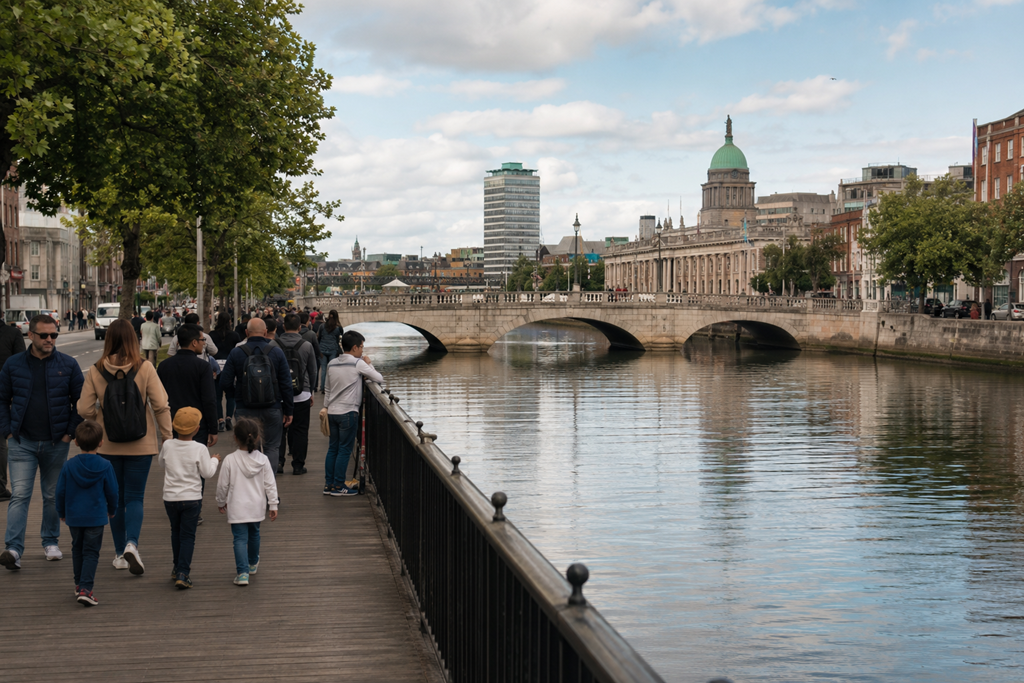
Dublin is one of those cities where a first visit can feel both easy and layered. The city center is walkable, the major sights are close enough to combine thoughtfully, and the best experiences often come from mixing historic landmarks with everyday moments: a riverside walk, a museum visit, a pub meal, a park afternoon, or a quiet hour in a Georgian square.
This guide focuses on classic, durable things to do in Dublin for first-time visitors. You’ll find historic sites, cultural stops, neighborhoods, food experiences, and practical suggestions that can help you plan a trip that feels full without becoming rushed.
Classic Dublin Experiences Worth Prioritizing
1)) See the Book of Kells and Walk Through Trinity College
Trinity College is one of Dublin’s most recognizable places, and it is especially worthwhile for first-time visitors who want a strong sense of the city’s academic, literary, and historic identity. The main draw is the Book of Kells, an illuminated manuscript connected to early medieval Ireland, but the experience is also about the setting.
The campus sits right in the heart of the city, which makes it easy to combine with Grafton Street, the National Gallery, St Stephen’s Green, or a walk toward the River Liffey. The Long Room Library has long been one of Dublin’s most photographed interiors, though access and displays can change over time, so check current visitor details before you go. Visit Dublin also recommends booking major timed-entry attractions such as the Book of Kells ahead of time during busier periods.
This is best for travelers who enjoy history, books, architecture, and iconic first-visit experiences. Even if you only spend a short time on campus, it gives you a memorable starting point for understanding Dublin’s cultural weight.
2)) Explore Dublin Castle and the City’s Medieval Core
Dublin Castle is a useful stop because it helps connect several parts of the city’s story: Viking Dublin, medieval power, British administration, and modern Irish state life. It is not a castle in the dramatic cliffside sense, but that is part of what makes it interesting. The site reflects how Dublin evolved over centuries rather than offering one simple postcard image.
After visiting the castle, spend time walking through the surrounding streets. This part of the city places you near City Hall, Christ Church Cathedral, the Chester Beatty, and the lanes that lead toward Temple Bar and the River Liffey. For first-time visitors, it is one of the easiest areas to explore slowly because so many historic layers sit close together.
Prioritize this if you want context. Dublin is more rewarding when you understand how its older streets, churches, civic buildings, and public spaces fit together.
3)) Visit Kilmainham Gaol for a Deeper Look at Irish History
Kilmainham Gaol is one of the most powerful historic sites in Dublin. The former prison is closely connected to Ireland’s struggle for independence, and a visit gives more emotional and political context to the city than many standard sightseeing stops.
This is not a light attraction, but it is one of the most meaningful. It is especially worthwhile if you want to understand modern Ireland beyond landmarks and pub culture. Because Kilmainham Gaol is a popular timed-entry attraction, Visit Dublin specifically notes it as one of the places worth booking ahead, especially during busy travel periods.
If your time in Dublin is limited, consider pairing Kilmainham Gaol with nearby Phoenix Park or the Irish Museum of Modern Art rather than trying to rush back and forth across the city.
4)) Walk Through Temple Bar, But Do Not Make It Your Whole Trip
Temple Bar is famous for its pubs, cobbled streets, nightlife, galleries, and central location. For first-time visitors, it is worth seeing because it is part of the Dublin image many people arrive with. It can be lively, photogenic, and convenient, especially during the day.
That said, Temple Bar is also one of the most tourist-heavy parts of the city. Treat it as one stop, not the full picture of Dublin. Walk through, enjoy the atmosphere, maybe visit a gallery or stop for music, but leave time for neighborhoods and pubs beyond the most crowded lanes.
This is best approached as a short wander rather than an all-evening commitment. Dublin has a much broader personality than Temple Bar alone.
5)) Tour the Guinness Storehouse
The Guinness Storehouse is one of Dublin’s best-known visitor attractions, and it remains a popular first-trip choice because it combines brand history, brewing heritage, city views, and a structured self-guided experience. It is polished and visitor-friendly, which can make it a good option if you want something easy to plan.
Even if you are not especially interested in beer, the experience offers a window into one of Dublin’s most globally recognized exports. The rooftop views are often a highlight, especially when the weather is clear.
This is a good choice for first-time visitors who want a classic Dublin experience and do not mind a more commercial attraction. Book ahead during busy periods, and check current entry details before visiting.
Museums, Culture, and Local Context
6)) Visit EPIC The Irish Emigration Museum
EPIC The Irish Emigration Museum is a strong choice for visitors who want to understand Ireland’s global story. Rather than focusing only on what happened within Ireland, the museum explores Irish emigration and the influence of Irish people around the world. Tourism Ireland describes it as a self-guided museum experience focused on the impact Irish people had in new communities.
This can be especially meaningful for travelers with Irish ancestry, but it is also worthwhile for anyone interested in migration, identity, music, politics, sport, literature, and culture. The museum is indoors, making it a practical option for rainy weather.
Plan enough time to move through it without rushing. It is the kind of place that works best when you let the stories build gradually.
7)) Spend Time at the National Museum of Ireland
The National Museum of Ireland gives first-time visitors a broader understanding of Irish history, archaeology, decorative arts, and culture. Depending on which branch you visit, you may encounter ancient gold, Viking artifacts, bog bodies, traditional crafts, or objects connected to everyday Irish life.
This is one of the best things to do in Dublin if you want substance without needing a full-day commitment. It also pairs well with nearby Georgian Dublin, Merrion Square, the National Gallery, or a walk through government and museum districts.
For a first visit, choose the branch that best fits your interests rather than trying to see everything. Dublin rewards selective planning.
8)) See St Patrick’s Cathedral and Christ Church Cathedral
Dublin’s two major cathedrals are close enough to visit on the same day, but they offer different perspectives on the city’s religious, architectural, and civic history. St Patrick’s Cathedral emphasizes more than 800 years of history and offers both guided and self-led visits.
Christ Church Cathedral, nearby, connects strongly with Dublin’s medieval core. Visiting both helps you understand how the city developed around faith, power, trade, and community life.
This is best for travelers who enjoy architecture, history, and quieter indoor spaces. If you only have time for one, choose based on your route rather than trying to force both into an already full day.
Walks, Parks, and Neighborhoods
9)) Walk Grafton Street, St Stephen’s Green, and Georgian Dublin
This is one of the easiest and most enjoyable walking routes for first-time visitors. Start around Grafton Street, Dublin’s well-known shopping and busking area, then continue to St Stephen’s Green for a break from the city streets. From there, wander toward Merrion Square and the Georgian streets nearby.
This route gives you a good mix of everyday Dublin: shops, street performers, park paths, townhouses, museums, cafés, and elegant squares. It is also flexible. You can turn it into a short stroll or stretch it into a half-day with museum stops.
This is ideal for travelers who like to get a feel for a city on foot. It is not about checking off one major monument. It is about understanding Dublin’s rhythm.
10)) Spend a Few Hours in Phoenix Park
Phoenix Park is one of Dublin’s best options when you need space. It is large, open, and different in mood from the compact city center. The park was originally formed as a royal hunting park in the 1660s and opened to the public in 1747; it remains home to a herd of wild fallow deer, along with gardens, visitor facilities, Dublin Zoo, and Áras an Uachtaráin.
For first-time visitors, Phoenix Park works well when paired with Kilmainham Gaol or when you want a slower morning or afternoon. You do not need to see the entire park. Choose a manageable section and enjoy the change of pace.
This is best for families, walkers, runners, park lovers, and anyone who wants a break from indoor attractions.
11)) Explore the Liberties
The Liberties is one of Dublin’s most characterful historic neighborhoods. It has long-standing market traditions, old churches, distilling heritage, local shops, and a working-city feeling that contrasts with more polished visitor zones.
This area is especially useful for first-time visitors because it sits near several major sights, including the Guinness Storehouse, St Patrick’s Cathedral, Christ Church Cathedral, and Dublin Castle. Rather than treating those places as isolated stops, use the Liberties to connect them.
Walk slowly, look down side streets, and leave space for a casual food or coffee stop. The neighborhood is best experienced as part of a broader route rather than as a single attraction.
12)) Take a Coastal Trip to Howth or Dún Laoghaire
Dublin’s city center is only part of the experience. If you have enough time, take a short coastal trip to see another side of the area. Howth is known for harbor views, cliff walks, seafood, and village atmosphere. Dún Laoghaire offers a seaside promenade, piers, coastal views, and an easy change of scenery.
This is especially worthwhile if you are spending three or more days in Dublin. A coastal outing can help balance museums, pubs, and historic sites with fresh air and open views.
Choose based on the kind of day you want. Howth is better if you want a more rugged walk and harbor feel. Dún Laoghaire is better for a gentler seaside stroll.
How to Prioritize Your Time in Dublin
For a short first visit, choose a mix of history, walking, and one classic visitor attraction. A balanced day might include Trinity College, Grafton Street, St Stephen’s Green, Dublin Castle, and Temple Bar. A second day could focus on Kilmainham Gaol, Phoenix Park, and the Guinness Storehouse. A third day gives you room for museums, cathedrals, the Liberties, or the coast.
Dublin’s center is fairly compact, and Visit Dublin notes that the River Liffey divides the city into the Northside and Southside, with the city center straddling both. The broader city is made up of distinct neighborhoods and districts, so it helps to plan by area rather than jumping around randomly.
The most satisfying first trip is usually not the one with the longest checklist. It is the one that gives you enough time to understand the city’s history, walk its streets, sit in its parks, hear its music, and leave with a clearer sense of place.
Download Our Free E-book!