Reykjavik is one of the easiest cities in the world to pair urban exploring with outdoor adventure. You can start the morning walking along the harbor, spend the afternoon soaking in geothermal water, and use the city as a practical base for waterfalls, lava fields, whale watching, hiking, and northern lights viewing.
This guide focuses on durable, first-time-friendly experiences that are especially worthwhile for travelers who want nature, scenery, and active days without making the trip feel overpacked. Some activities are right in Reykjavik, while others are classic day trips that fit naturally into a stay based in the city.
Outdoor Adventures In And Around Reykjavik
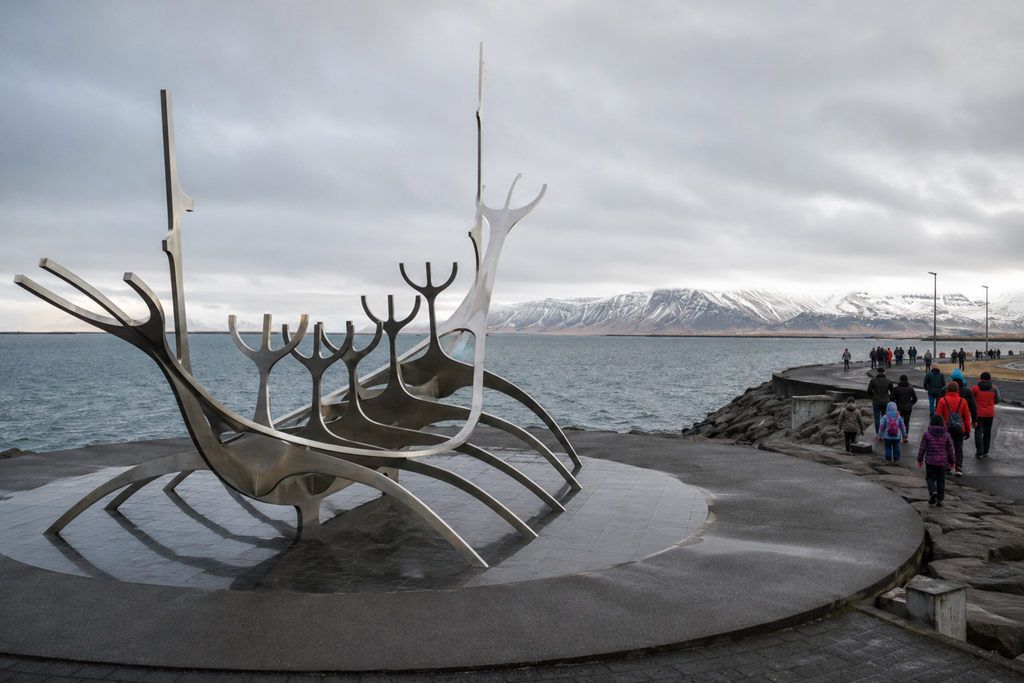
1)) Walk The Reykjavik Waterfront And Visit The Sun Voyager
The Reykjavik waterfront is one of the best places to get a first feel for the city. The path along the bay gives you open views toward Mount Esja, the harbor, and the changing North Atlantic light.
The Sun Voyager sculpture is the natural highlight of this walk. It is a simple, striking landmark that fits the mood of Reykjavik well: open, windswept, and connected to the sea. It is especially rewarding around sunrise, sunset, or after a meal when you want an easy walk without committing to a full excursion.
This is best for travelers who want a low-effort outdoor experience soon after arriving. It also helps you understand Reykjavik’s layout before branching out into bigger day trips.
2)) Take In The View From Hallgrimskirkja
Hallgrimskirkja is one of Reykjavik’s most recognizable landmarks, and its tower offers one of the clearest views over the city. From above, you can see the colorful rooftops, the harbor, the surrounding mountains, and the compact scale of central Reykjavik.
For nature and adventure travelers, this is useful for orientation. You can see how close the city sits to the water, how the mountains frame the skyline, and why Reykjavik works so well as a base for exploring southwest Iceland.
Go early or during a quieter part of the day if you prefer a more relaxed visit. Check current access details before you go, since tower availability can vary.
3)) Explore Perlan For Iceland’s Natural Wonders Indoors
Perlan is a strong choice if you want to understand Iceland’s glaciers, volcanoes, northern lights, and natural forces before heading out into the landscape. It sits on Öskjuhlíð Hill and combines exhibitions with wide views over Reykjavik. Visit Reykjavik and Perlan both highlight it as a major city attraction connected to Icelandic nature and scenery.
This is especially helpful at the start of a trip. Iceland’s landscapes are dramatic, but they make more sense when you understand how ice, lava, geothermal activity, and weather shape the country.
Perlan is also a good backup for bad weather days. Instead of losing a day to wind or rain, you can still build context for the outdoor experiences ahead.
4)) Hike Or Walk Around Öskjuhlíð Hill
Öskjuhlíð is the wooded hill surrounding Perlan, and it offers one of Reykjavik’s easiest nature breaks. The trails are simple, accessible, and close to the city center, making it a good option when you want fresh air without arranging transportation far outside town.
The area feels different from the busier parts of Reykjavik. You get trees, footpaths, occasional viewpoints, and a quieter rhythm. It is not a wilderness hike, but it is a practical way to add movement to your day.
Pair it with Perlan if you want a half-day plan that mixes education, walking, and city views.
5)) Visit Nauthólsvík Geothermal Beach
Nauthólsvík Geothermal Beach is one of Reykjavik’s more unusual outdoor experiences. It combines a beach setting with Iceland’s geothermal bathing culture, creating a place where locals and visitors can enjoy the water in a very Reykjavik way.
This is not a tropical beach experience, and that is exactly what makes it interesting. The appeal is the contrast: cool coastal air, geothermal warmth, and a city that treats outdoor bathing as part of everyday life.
It is best for travelers who want a local-feeling experience rather than only visiting major sightseeing stops. Check current conditions and facilities before you go, especially outside the warmer months.
Water, Wildlife, And Geothermal Experiences
6)) Go Whale Watching From Reykjavik Harbor
Whale watching is one of the most accessible adventure activities from Reykjavik because tours typically depart from the Old Harbor area. Visit Reykjavik lists whale watching as one of the city’s notable activities, and the harbor location makes it easy to fit into a half day.
The experience is about more than spotting whales. You also get time on Faxaflói Bay, views back toward the city, and a better sense of Reykjavik’s relationship with the sea.
Wildlife sightings are never guaranteed, so it helps to approach this as a nature outing rather than a checklist item. Dress warmly, even in mild seasons, because the wind on the water can feel much colder than it does in town.
7)) Soak In A Geothermal Pool Or Lagoon
A geothermal soak is one of the most satisfying things to do in and around Reykjavik. You can choose a local swimming pool for a more everyday Icelandic experience or visit a larger lagoon-style spa for a more scenic, destination-focused outing.
This is worth prioritizing because geothermal bathing is not just a tourist activity in Iceland. It is part of the culture. Many travelers remember the simple rhythm of hot water, cool air, and unhurried conversation as much as they remember the major landmarks.
The Blue Lagoon and other well-known geothermal lagoons are popular options from Reykjavik, while local city pools can feel more grounded and easier to fit into an ordinary day. Book ahead during busy travel periods and check current details before visiting.
8)) Search For The Northern Lights In The Right Season
Seeing the northern lights is one of the most memorable nature experiences near Reykjavik, but it is also one of the least predictable. Visit Reykjavik features northern lights guidance and viewing ideas, but weather, darkness, cloud cover, and solar activity all matter.
The best approach is to build flexibility into your trip. Avoid treating the aurora as something you can schedule with certainty. Instead, give yourself multiple possible nights, watch the forecast, and consider joining a tour if you do not want to manage logistics on your own.
Within Reykjavik, darker waterfront or coastal areas can sometimes work, but getting away from city lights usually improves your chances. This is a seasonal experience, so frame it as a bonus rather than the only reason for visiting.
Classic Nature Day Trips From Reykjavik
9)) Drive Or Tour The Golden Circle
The Golden Circle is one of the most classic day trips from Reykjavik because it combines several major natural and historic sites into one manageable route. The usual highlights include Þingvellir National Park, the Geysir geothermal area, and Gullfoss waterfall. Golden Circle tour operators and travel resources consistently frame these as the core stops of the route.
This is a strong choice for first-time visitors because it gives you a concentrated introduction to Iceland’s geology: rift valleys, erupting hot springs, wide landscapes, and a powerful waterfall.
You can visit by guided tour or self-drive if you are comfortable with the road conditions. In winter or poor weather, a guided tour can reduce stress. In summer, self-driving gives you more flexibility.
10)) Visit Þingvellir National Park
Þingvellir is often included in the Golden Circle, but it deserves attention on its own. It is both a historic site and a dramatic landscape where you can see the meeting point of tectonic plates expressed through cliffs, fissures, water, and wide open views.
For adventure-minded travelers, Þingvellir is valuable because it feels active and ancient at the same time. You can walk through the landscape, learn about Icelandic history, and understand how deeply geology shapes the country.
This is best for travelers who like meaningful scenery rather than quick photo stops. Give yourself time to walk, read the interpretive signs, and take in the scale of the place.
11)) See Waterfalls Near Reykjavik
Reykjavik is a practical base for seeing some of Iceland’s most memorable waterfalls. Gullfoss is the major waterfall on the Golden Circle, while other routes from the city can take you toward additional waterfalls along the south coast.
Waterfalls are worth prioritizing because they show Iceland’s landscape in motion. Glacial rivers, cliffs, mist, and changing light all make these places feel different depending on the season and weather.
If you only have one day, the Golden Circle is usually the simplest way to include a major waterfall. If you have more time, consider a longer south coast day trip, but be realistic about driving distances and daylight.
12)) Explore Lava Fields, Volcano Landscapes, Or A Lava-Focused Experience
Iceland’s volcanic landscape is one of the main reasons nature lovers come to Reykjavik. Depending on your comfort level, you can experience this through a guided lava field walk, a volcano-focused day tour, a lava cave experience, or an indoor lava exhibition in the city.
Visit Reykjavik highlights lava and volcano experiences as part of the city’s broader adventure appeal, including tours from Reykjavik and lava-focused attractions.
This is best for travelers who want to understand the raw foundation of Iceland’s scenery. The moss-covered lava fields, dark rock, steam, and geothermal features all help explain why the country feels so visually distinct.
For outdoor lava or cave experiences, go with a reputable guide when needed and follow local safety guidance. Conditions can change, and volcanic terrain is not the place to improvise.
How To Prioritize Your Reykjavik Nature And Adventure Plans
If you only have one full day, focus on the Reykjavik waterfront, Hallgrimskirkja, a geothermal pool or lagoon, and either whale watching or Perlan depending on the weather.
With two to three days, add the Golden Circle and leave room for a northern lights attempt if you are visiting during the darker season.
With four or more days, Reykjavik becomes a stronger adventure base. You can mix city walks, geothermal bathing, whale watching, lava landscapes, waterfalls, and a slower day for museums or indoor nature exhibits.
The main thing is not to overload every day. Iceland rewards flexibility. Weather, daylight, road conditions, and energy levels can shape your plans, so it is better to choose a few meaningful experiences than to rush through too many stops.
Practical Planning Notes For Nature-Focused Travelers
Reykjavik is compact, but the weather can make even short walks feel more demanding. Bring layers, a wind-resistant outer layer, comfortable shoes, and clothing that can handle changing conditions.
For day trips, think carefully about the season. Summer brings long daylight and easier road conditions. Winter brings atmosphere, northern lights potential, and shorter days, but it also requires more flexibility.
Book popular tours ahead during busy travel periods, especially whale watching, geothermal lagoons, guided day trips, and northern lights tours. For museums, pools, and major landmarks, check current opening hours before you go.
Most importantly, leave some space in the trip. Reykjavik works best when you have time to walk, look at the water, warm up in a pool, and adjust your plans when the weather changes.
Download Our Free E-book!