Budapest is one of Europe’s most rewarding city breaks because it gives you a little of everything: grand architecture, historic neighborhoods, thermal baths, river views, food markets, museums, parks, and walkable streets that make sightseeing feel natural instead of rushed.
This guide focuses on the best things to do in Budapest for first-time visitors and returning travelers who want a balanced trip. You’ll find major landmarks, local-feeling experiences, scenic viewpoints, and practical notes to help you decide what belongs on your itinerary.
Budapest’s Danube riverfront, Buda Castle Quarter, and Andrássy Avenue are part of a UNESCO World Heritage site, recognized for the city’s historic urban landscape and architectural importance. The city is also known for its thermal bath culture, food traditions, public transit, and a strong mix of Buda-side views and Pest-side energy.
Classic Budapest Landmarks
1. Explore the Buda Castle District
The Buda Castle District is one of the best places to begin your Budapest visit. Set above the Danube on the Buda side of the city, this historic area gives you cobbled streets, palace architecture, scenic terraces, museums, churches, and some of the most memorable views in Budapest.
It’s worth doing because it helps you understand the city’s geography right away. From here, you can look across the river toward Parliament, the Chain Bridge, and Pest’s flatter cityscape. It’s also a good area for slower wandering rather than checklist-style sightseeing.
Plan enough time to walk without rushing. The district includes Buda Castle, Matthias Church, Fisherman’s Bastion, small side streets, cafés, courtyards, and lookout points. Some interiors and museums may require tickets, so check current opening hours before you go.
Best for: first-time visitors, history lovers, photographers, and anyone who wants a strong overview of Budapest.
2. Take in the View From Fisherman’s Bastion
Fisherman’s Bastion is one of Budapest’s most recognizable viewpoints, with fairytale-like stone towers and panoramic views over the Danube and Hungarian Parliament Building. It sits in the Castle District near Matthias Church, making it easy to combine with other Buda-side sights.
The main reason to visit is the view. Even if you don’t spend long here, it gives you one of the clearest visual impressions of Budapest: river, bridges, domes, rooftops, and the Parliament building across the water.
Go early in the day or later in the afternoon if you prefer a quieter experience. The terraces can get busy, especially during peak travel periods. Some areas may be free to access while others may require a ticket depending on timing and current rules, so verify details before visiting.
Best for: views, photos, couples, families, and travelers short on time.
3. Visit Matthias Church
Matthias Church is one of the most beautiful historic buildings in Budapest, known for its patterned roof tiles, Gothic details, and long connection to Hungarian history. It stands beside Fisherman’s Bastion, so it fits naturally into a Castle District visit.
The exterior alone is worth seeing, but the interior gives more context and atmosphere. The colors, vaulted ceilings, stained glass, and decorative details make it feel distinct from many other European churches.
This is a good stop if you enjoy architecture, history, or quiet indoor sightseeing. Check current visitor access before you go, especially if services, concerts, or special events affect entry.
Best for: architecture lovers, history-focused travelers, and anyone already visiting Fisherman’s Bastion.
4. Walk Across the Széchenyi Chain Bridge
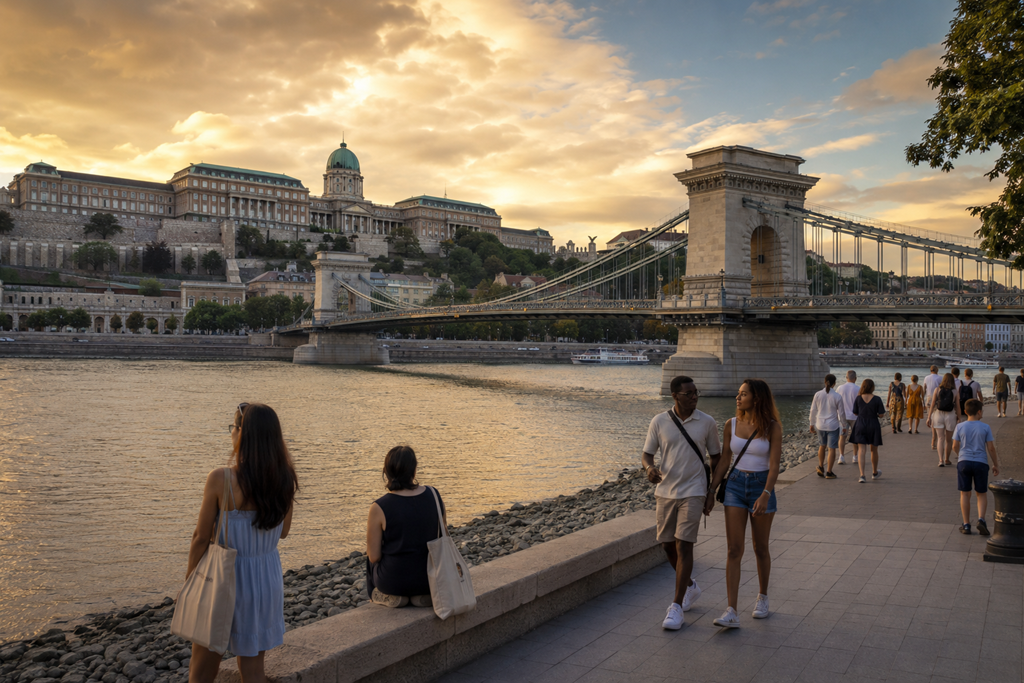
The Széchenyi Chain Bridge connects Buda and Pest across the Danube and is one of the most symbolic structures in the city. Walking across it gives you a simple but memorable way to experience Budapest’s two sides.
It’s not a long activity, but it’s one of those small moments that helps the city feel more connected. From the bridge, you get views of Buda Castle, the river, and Pest’s grand buildings. It’s especially atmospheric in the early morning, around sunset, or after dark when the riverside buildings are lit.
Pair it with a Castle District visit, a Danube promenade walk, or an evening stroll along the river.
Best for: first-time visitors, walkers, photographers, and anyone who likes scenic city moments.
5. See the Hungarian Parliament Building
The Hungarian Parliament Building is one of Budapest’s most impressive landmarks and one of the defining sights along the Danube. Its Gothic Revival architecture, riverfront position, and detailed façade make it worth seeing from several angles.
You can admire it from the Pest side up close, from across the river on the Buda side, or from a Danube cruise. If you want to see the interior, check current tour availability and book ahead during busy travel periods.
Even if you don’t go inside, it deserves a place on your itinerary. The view from the opposite bank near Batthyány tér is one of the best ways to appreciate the full scale of the building.
Best for: architecture, history, river views, and landmark-focused sightseeing.
Views, Walks, and Outdoor Experiences
6. Stroll Along the Danube Promenade
A walk along the Danube is one of the simplest and best things to do in Budapest. The river is central to the city’s identity, and many of Budapest’s most important landmarks are visible from the banks.
On the Pest side, you can walk near the Parliament Building, Chain Bridge, and riverfront hotels. On the Buda side, you’ll find excellent views back toward Parliament and Pest. This is a flexible activity that can fit into almost any part of your trip.
The Danube Promenade is especially good in the evening, when the bridges and major buildings are illuminated. Wear comfortable shoes, and leave room in your schedule to pause rather than treating it as just a route between attractions.
Best for: scenic walks, low-cost sightseeing, evening plans, and first-time orientation.
7. Visit the Shoes on the Danube Bank Memorial
The Shoes on the Danube Bank is a moving memorial along the river near Parliament. It honors Jewish victims who were killed along the Danube during World War II.
This is not a typical sightseeing stop, and it should be approached respectfully. It is brief in terms of time, but meaningful in emotional weight. Visiting can add important historical context to a city that is often viewed mainly through its architecture and scenery.
Because it is outdoors and centrally located, it can be included during a walk between Parliament and the Chain Bridge.
Best for: thoughtful travelers, history context, and those who want a deeper understanding of Budapest.
8. Climb or Walk Up to Gellért Hill
Gellért Hill offers one of Budapest’s broadest viewpoints, with sweeping views over the Danube, bridges, Buda, and Pest. It takes more effort than Fisherman’s Bastion, but the wider perspective makes it worthwhile.
This is a good choice if you enjoy walking and want a break from museums and dense city streets. The paths can be steep in places, so wear practical shoes and avoid rushing, especially in warm weather.
Because conditions and access around monuments or paths can change, check current details before planning your exact route. Even a partial walk can reward you with excellent views.
Best for: active travelers, viewpoint seekers, and people who want an outdoor break.
9. Relax on Margaret Island
Margaret Island sits in the Danube between Buda and Pest and offers a quieter green escape from the city center. It’s a good place for walking, jogging, picnicking, or simply taking a break from sightseeing.
The island has gardens, paths, open lawns, historic ruins, and recreational areas. It works especially well if you are traveling with children, visiting in warmer months, or spending enough time in Budapest to balance major attractions with slower moments.
It’s not the single most essential stop for a short first visit, but it’s a strong choice when you want fresh air and a local-feeling pause.
Best for: families, walkers, repeat visitors, and slower travel days.
10. Ride Tram 2 for a Scenic City View
Budapest’s public transportation is useful for getting around, but some routes are experiences in themselves. Tram 2 is especially popular with visitors because it follows the Pest-side riverfront and passes views of Parliament, the Danube, bridges, and Buda Castle.
This is a practical way to see the city when you don’t want to walk the whole riverfront. It’s also helpful in colder, hotter, or rainy weather.
Budapest’s public transport network includes metro, tram, bus, trolleybus, suburban railway, and other services, and official guidance recommends having a valid ticket, pass, or travelcard before riding. BKK also offers digital trip planning and ticket options through BudapestGO.
Best for: easy sightseeing, budget-conscious travelers, and anyone who wants a scenic ride without a formal tour.
Culture, Baths, and Museums
11. Experience a Budapest Thermal Bath
Thermal baths are one of Budapest’s signature experiences. The city has several historic bath complexes where visitors can soak in warm mineral pools, swim, use saunas, or simply enjoy the architecture and atmosphere.
Széchenyi Baths in City Park is one of the most famous and visitor-friendly choices, while Gellért and Rudas are also well-known for their architecture and history. Each bath has its own layout, rules, and atmosphere, so choose based on your comfort level and location.
Bring swimwear, check current entry rules, and look up whether reservations are recommended during your travel dates. Some baths have different access rules for certain areas, days, or services, so it’s better to verify before you arrive.
Best for: relaxation, wellness travelers, couples, solo travelers, and anyone wanting a very Budapest-specific experience.
12. Visit the Hungarian National Gallery or Budapest History Museum
If you’re already in the Buda Castle area, consider visiting either the Hungarian National Gallery or the Budapest History Museum. Both help add depth to the city beyond its views and architecture.
The Hungarian National Gallery is a good choice if you’re interested in Hungarian art and visual culture. The Budapest History Museum is better if you want more context on the city’s development, Castle Hill, and local history.
You don’t need to visit both on a first trip unless museums are a major priority. Choose one based on your interests and leave time for the surrounding Castle District.
Best for: museum-goers, rainy days, history lovers, and travelers who want more context.
13. Walk Andrássy Avenue to Heroes’ Square
Andrássy Avenue is one of Budapest’s grandest boulevards and part of the city’s UNESCO-listed area. It connects central Pest with Heroes’ Square and City Park, passing elegant buildings, cultural institutions, shops, cafés, and the Hungarian State Opera House.
You can walk the full avenue if you enjoy urban exploring, or use the metro for part of the route. The historic Millennium Underground line runs beneath Andrássy Avenue, making this area easy to navigate without overcomplicating your day.
At the end, Heroes’ Square offers a monumental public space, and City Park gives you access to museums, green space, Vajdahunyad Castle, and Széchenyi Baths.
Best for: architecture, urban walks, first-time visitors, and combining multiple attractions in one route.
Food, Markets, and Local Flavor
14. Browse the Great Market Hall
The Great Market Hall at Fővám Square is one of Budapest’s most popular food and shopping stops. The official tourism site describes it as the city’s most famous market hall, known for its wrought-iron architecture and atmosphere.
This is a good place to see Hungarian ingredients, paprika, produce, baked goods, meats, souvenirs, and casual food options. It can feel busy, but it is still a useful stop for visitors who want a food-focused experience without committing to a full restaurant meal.
Go with realistic expectations: it is both a working market and a visitor attraction. Visit earlier in the day for a more active market feel, and check current hours before going.
Best for: food lovers, souvenir shopping, rainy days, and first-time visitors.
15. Try Classic Hungarian Food
Budapest is a good city for hearty, flavorful food. Classic dishes and tastes to look for include goulash, chicken paprikash, lángos, chimney cake, stuffed cabbage, strudel, Hungarian wines, and paprika-forward stews.
You don’t need to chase the most talked-about restaurant to have a good food experience. A better approach is to mix a traditional meal, a market visit, a café stop, and perhaps one casual street-food-style snack. This gives you more variety without making the trip revolve around reservations.
For a more local-feeling experience, look beyond the most crowded streets near major landmarks. Neighborhoods in central Pest often have a wide range of traditional, modern, and casual options.
Best for: all travelers, food-focused trips, casual meals, and cultural context.
How to Prioritize Your Time in Budapest
For a short first visit, focus on the Castle District, Fisherman’s Bastion, Matthias Church, the Chain Bridge, Parliament views, a Danube walk, one thermal bath, and either the Great Market Hall or Andrássy Avenue.
With three or more days, add Gellért Hill, Margaret Island, museums, City Park, Heroes’ Square, and more time for food, cafés, and neighborhood wandering.
Budapest is easiest to enjoy when you group sights by area. Do Buda Castle District and the Chain Bridge together. Pair Parliament with the Danube Promenade and Shoes on the Danube Bank. Combine Andrássy Avenue, Heroes’ Square, City Park, and Széchenyi Baths into one logical route.
Public transportation can help reduce unnecessary walking. Daily travelcards allow unlimited transfers within their validity period, while special rules apply to the 100E Airport Express and some special services. Always check current ticket rules before riding.
Download Our Free E-book!