Carmel, California is one of the Monterey Peninsula’s most rewarding places to slow down and explore without overcomplicating your trip. The village is compact, walkable, and close to some of the most memorable coastal scenery in California, including Carmel Beach, Point Lobos, and the dramatic shoreline south of town.
This guide focuses on classic, long-lasting things to do in Carmel: beaches, scenic walks, art galleries, historic sites, wine tasting, village wandering, and easy nearby nature experiences. It is written to help you decide what is actually worth your time, whether you are visiting for a day, a weekend, or a longer coastal getaway.
Beaches And Coastal Views
1)) Spend Time At Carmel Beach
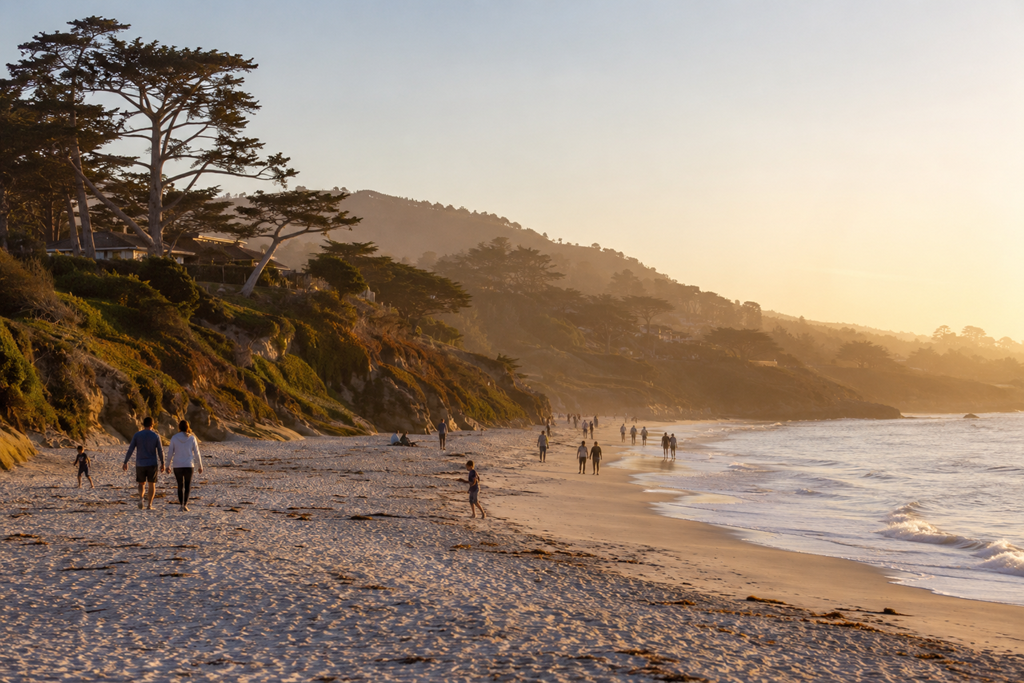
Carmel Beach is the classic first stop in Carmel. It sits at the foot of Ocean Avenue and gives you the full village-meets-Pacific experience: pale sand, cypress trees, open water, and an easy walk from the center of town. Carmel’s official visitor site describes the town as a walkable, one-square-mile village with beach access, galleries, shopping, dining, and wine tasting close together, which is one reason the beach feels so naturally connected to the rest of the visit.
This is not a beach you need to overplan. Walk along the sand, sit near the dunes, watch dogs play, or arrive near sunset for one of Carmel’s simplest and most memorable experiences.
It is best for first-time visitors, couples, photographers, dog owners, and anyone who wants the essential Carmel coastal view without driving to another destination.
2)) Walk Scenic Road Along The Shore
Scenic Road is one of the easiest ways to enjoy Carmel’s coastline without committing to a long hike. It follows the edge of the beach area and offers a mix of ocean views, cypress trees, coastal homes, and access points down toward the sand.
Start near the foot of Ocean Avenue and walk south at an easy pace. You can go as far as you like, then turn around when you are ready. This makes it a good option for travelers who want scenery but do not want a full trail day.
The walk is especially worthwhile in the morning or late afternoon, when the light is softer and the village feels less busy. Bring a light layer, because the ocean breeze can make the coast feel cooler than the inland streets.
3)) Visit Carmel River State Beach
Carmel River State Beach is a quieter alternative to Carmel Beach, located south of the main village area. California State Parks places it about one mile south of Ocean Avenue, with access via Rio Road and Carmelo Street.
This beach has a more natural feel, with the river, lagoon, sand, and ocean coming together in one scenic area. It is especially good for photography, birdwatching, and peaceful shoreline walks.
For most visitors, this is better as a scenic beach than a swimming beach. Ocean conditions along this part of the coast can change quickly, so pay attention to posted signs and enjoy the water from a safe distance.
4)) Explore Point Lobos State Natural Reserve
Point Lobos State Natural Reserve is one of the strongest reasons to spend extra time near Carmel. California State Parks notes that the reserve is on the central coast in Monterey County, with the entrance about three miles south of Carmel on Highway 1.
Point Lobos is known for rugged coves, coastal trails, Monterey cypress, wildlife viewing, and dramatic meeting points between land and sea. It feels wilder than Carmel-by-the-Sea, but it is close enough to visit as a half-day outing.
If your time is limited, choose one or two shorter trails rather than trying to see everything. This is one of the best choices for hikers, photographers, nature lovers, and travelers who want the coastal landscape to be the main event. Check current access, parking, and reservation guidance before you go, especially during busy travel periods.
5)) Watch The Sunset Near The Water
Carmel is a natural sunset town. The village slopes toward the Pacific, and the wide beach gives you an open view of the sky as the light changes over the water.
You do not need a complicated plan. Carmel Beach, Scenic Road, and the higher streets near the village all work well. Arrive before the sun gets too low, bring a warm layer, and stay a little after the sun drops, since the color can continue changing.
This is one of the easiest things to do in Carmel, but it often becomes one of the most memorable. It pairs well with an early dinner, a relaxed village walk, or the end of a day spent exploring Point Lobos or the Monterey Peninsula.
Art, Architecture, And Village Wandering
6)) Browse Carmel’s Art Galleries
Carmel has a long artistic identity, and gallery browsing is still one of the best ways to experience the village. The official Carmel visitor site highlights art galleries as part of the town’s core visitor experience, along with shopping, dining, wine tasting, and the beach.
You do not need to be a serious collector to enjoy this. Many galleries are easy to browse casually, and the range can include coastal landscapes, contemporary work, sculpture, photography, and regional artists.
This is a good activity between beach walks or when the weather turns cool or foggy. Instead of trying to see every gallery, wander slowly and step into the ones that catch your attention.
7)) Walk Ocean Avenue And The Village Center
Ocean Avenue is Carmel’s main village spine, running toward the beach and connecting many shops, galleries, cafés, inns, and restaurants. It is the obvious place to begin, but the better experience comes from using it as a starting point rather than the whole visit.
Carmel’s official visitor information describes Carmel-by-the-Sea as a walkable one-square-mile village, which is helpful for planning because you can see a lot without relying on a car once you are parked.
Give yourself time to explore side streets, garden entries, small courtyards, and passageways. Carmel is not a town that rewards rushing. Its charm is in the details.
8)) Look For Carmel’s Storybook Cottages
Carmel is famous for architecture that feels whimsical without feeling artificial. Around the village, you will notice steep roofs, stonework, arched doors, garden walls, and cottages that look like they belong in a storybook.
Many of these buildings are private homes, so enjoy them respectfully from public streets and avoid lingering too close. The goal is not to track down every famous cottage, but to notice how the village’s architecture shapes its atmosphere.
This is a good activity to combine with a casual walk after breakfast or before dinner. Bring comfortable shoes and leave room in your schedule to wander.
9)) Explore Hidden Courtyards And Passageways
One of Carmel’s best small pleasures is stepping into public courtyards and passageways tucked between shops, restaurants, galleries, and inns. These spaces often have tile, fountains, garden seating, stairways, and small storefronts that are easy to miss from the main sidewalk.
This is especially useful when the village feels busy. A courtyard can give you a quieter, more intimate sense of Carmel’s design and pace.
You do not need a map for this. When a passageway looks public and inviting, step in and look around. Carmel is built for this kind of gentle discovery.
10)) Visit The Carmel Mission Basilica
The Carmel Mission Basilica, formally Mission San Carlos Borromeo de Carmelo, is one of the area’s most important historic sites. The Mission’s own visitor guidance notes that it is an active parish, and access to the Basilica or some grounds may be limited because of services, weddings, events, or restoration work.
Visitors come for the architecture, gardens, museum spaces, and the deeper historical context it adds to a Carmel trip. It offers a very different experience from the beach and village shops.
Because it is still a religious site, visit respectfully and check current visitor information before you go. This is best for history-minded travelers, architecture lovers, and anyone who wants to understand more than Carmel’s scenic surface.
Wine, Food, And Local Flavor
11)) Try The Carmel-by-the-Sea Wine Walk
Carmel is a convenient wine destination because many tasting rooms are located within the walkable village. The official Carmel-by-the-Sea Wine Walk is a mobile guide that helps visitors explore local tasting rooms around town.
This is a good option if you want to taste Monterey County wines without driving between wineries. It works well for couples, small groups, and travelers who want an afternoon activity that stays close to restaurants, shops, and hotels.
Keep it simple. Choose a few tasting rooms, eat beforehand, drink water, and check current tasting policies before you go. The village setting is part of the appeal, so leave time to walk between stops rather than treating it like a checklist.
12)) Take A Slow Café Or Bakery Break
Carmel is well suited to a slower café stop. Instead of using food only as a quick break between attractions, build in time for coffee, a pastry, a light lunch, or a quiet table between walks.
This is especially helpful if Carmel is part of a larger Monterey, Pebble Beach, or Big Sur trip. The town can feel much more enjoyable when you stop trying to cover it quickly and let part of the day unfold.
For evergreen planning, avoid building your whole trip around one specific trendy place. Choose based on location, atmosphere, and what fits your route that day. If there is a particular café or bakery you care about, check current hours before you go.
13)) Enjoy A Relaxed Dinner In The Village
Dinner in Carmel is less about chasing the latest restaurant and more about ending the day in a pleasant setting. The village has a strong dining scene, and many restaurants are within walking distance of inns, tasting rooms, galleries, and the beach.
For a smoother experience, decide whether you want something casual, romantic, coastal, or wine-focused, then choose a restaurant that fits the mood of your trip. During busy travel periods, booking ahead can reduce last-minute stress.
This is a good time to slow the pace. After a day of beaches, trails, galleries, and village walks, a simple dinner nearby can be more satisfying than driving elsewhere.
Easy Nearby Experiences
14)) Drive Part Of 17-Mile Drive
17-Mile Drive is one of the classic scenic drives near Carmel, known for coastal views, cypress trees, golf courses, and dramatic viewpoints around Pebble Beach. It is close enough to pair with Carmel as a half-day or partial-day experience.
This is best for travelers who enjoy coastal driving and viewpoints more than hiking. Plan to stop at a few pullouts rather than rushing the whole route.
Because access details and fees can change, check current information before you go. If you are short on time, prioritize Carmel Beach, Scenic Road, and Point Lobos first, then add 17-Mile Drive if you want more scenery by car.
15)) Use Carmel As A Base For Monterey Or Big Sur
One of Carmel’s advantages is its location. It works well as a base for exploring the Monterey Peninsula, including Monterey, Pacific Grove, Pebble Beach, Point Lobos, and the northern Big Sur coast.
This is especially useful if you want a trip that combines village charm with bigger coastal scenery. You can spend one day mostly on foot in Carmel, another day at Point Lobos or Big Sur viewpoints, and another exploring nearby Monterey or Pacific Grove.
The key is not to overload each day. Distances may look short on a map, but coastal roads, parking, weather, and scenic stops can all slow the pace. Carmel is best enjoyed when you leave room for wandering, ocean views, and unplanned pauses.
How To Prioritize Your Time In Carmel
If you only have a few hours, focus on Carmel Beach, Ocean Avenue, the village center, and a short walk along Scenic Road. That gives you the clearest sense of Carmel without needing to move the car multiple times.
If you have a full day, add galleries, courtyards, a café or bakery stop, sunset, and either Carmel Mission or the Wine Walk, depending on your interests.
If you have two or more days, include Point Lobos, Carmel River State Beach, a relaxed dinner, and possibly 17-Mile Drive or a nearby Monterey Peninsula outing. This gives you a better balance of beach, nature, art, history, and village atmosphere.
Practical Notes For Visiting Carmel
Carmel is easiest to enjoy on foot once you are in the village, but parking can take patience during popular travel periods. Arrive earlier in the day if you want a smoother start.
The coastal weather can shift quickly. Even when the forecast looks mild, bring a layer for fog, wind, or cooler evening temperatures.
Many of Carmel’s best experiences are simple: walking, looking, pausing, and noticing details. Build your itinerary around a few anchors, then leave space between them. That is usually the best way to enjoy the town.
Download Our Free E-book!