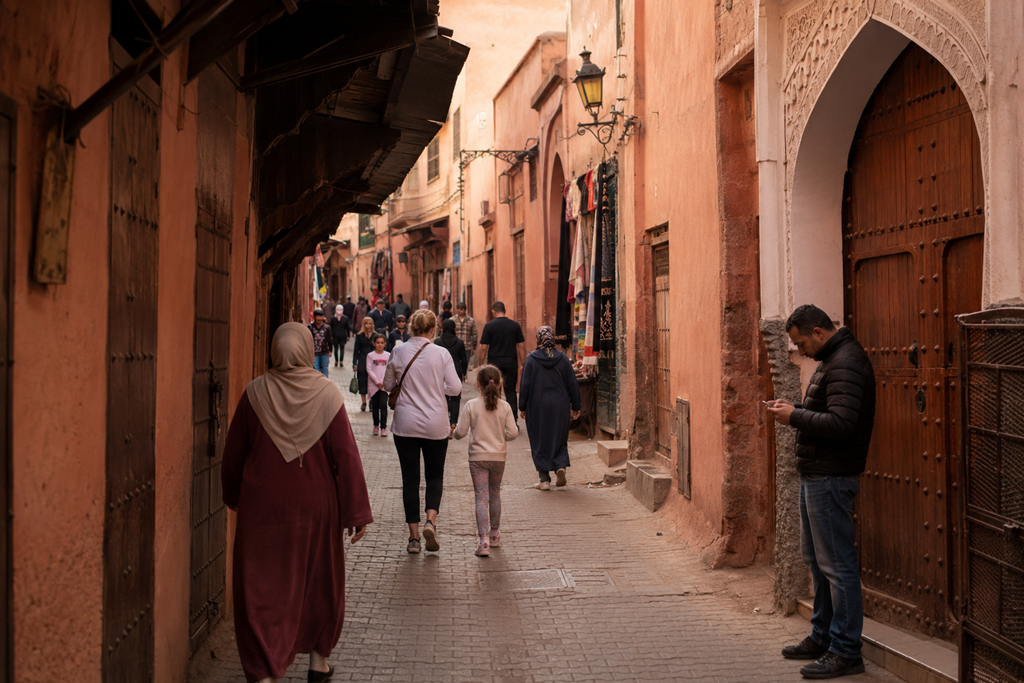
Marrakech is one of Morocco’s most memorable cities for first-time visitors because it brings together historic architecture, busy markets, garden spaces, food traditions, and everyday street life in a compact, highly walkable setting.
The city can feel intense at first, especially around the medina and Jemaa el-Fna, but it becomes easier to enjoy when you know what to prioritize. This guide focuses on classic, long-lasting Marrakech experiences: the places, walks, markets, gardens, and cultural stops that help you understand the city without trying to do everything.
Marrakech’s historic medina is a UNESCO World Heritage site, founded in the 11th century and known for landmarks such as the Koutoubia Mosque, city walls, monumental gates, gardens, and historic palaces.
Historic Marrakech Experiences
1)) Explore the Medina of Marrakech
The medina is the historic heart of Marrakech and one of the best places to begin understanding the city. Inside its walls, you will find narrow lanes, small workshops, local shops, riads, mosques, markets, and residential corners that reveal daily life beyond the major tourist sights.
It is worth exploring slowly rather than treating it as a checklist. The medina can be confusing, and that is part of the experience, but first-time visitors may want to start with a guided walk to understand the layout and avoid feeling overwhelmed.
This is best for travelers who enjoy history, architecture, street photography, shopping, and wandering through old city neighborhoods.
2)) Visit Jemaa el-Fna
Jemaa el-Fna is Marrakech’s most famous public square and one of the city’s defining experiences. During the day, it is a busy gathering place near the entrance to the souks. As evening approaches, it becomes livelier with food stalls, performers, vendors, and crowds moving between the square and surrounding streets.
The square is worth seeing because it gives you a strong sense of Marrakech’s public life. It can also be noisy, crowded, and hectic, so it helps to visit with realistic expectations.
Go in the late afternoon or early evening if you want to see the square transition from daytime activity into its more atmospheric evening rhythm. Keep small bills handy, be aware of your surroundings, and ask before taking close-up photos of performers or vendors.
3)) See the Koutoubia Mosque from the Outside
The Koutoubia Mosque is one of Marrakech’s most recognizable landmarks, known for its tall minaret that can be seen from several parts of the city. Non-Muslim visitors generally cannot enter the mosque, but it is still worth visiting from the outside.
The surrounding area gives you space to appreciate the mosque’s scale, symmetry, and importance in the city’s skyline. It is also a useful orientation point when moving between Jemaa el-Fna, the medina, and nearby gardens.
This is a simple but worthwhile stop, especially for first-time visitors who want to understand Marrakech’s architectural identity.
4)) Tour Bahia Palace
Bahia Palace is one of the most rewarding historic sites in Marrakech. Built with courtyards, carved woodwork, painted ceilings, tilework, and garden spaces, it gives visitors a close look at Moroccan decorative arts and palace architecture.
It is worth doing because the details are easier to appreciate than in some larger ruins. The rooms and courtyards feel intimate, and the craftsmanship gives the visit a strong sense of place.
Arrive earlier in the day if you prefer a quieter experience, and check current opening hours before you go.
5)) Visit the Saadian Tombs
The Saadian Tombs are a historic burial site known for their decorative tilework, carved plaster, and elegant architectural details. The site is smaller than some visitors expect, but it is still one of Marrakech’s classic cultural stops.
It is especially worthwhile if you enjoy historic architecture and want to pair it with nearby sights in the Kasbah area. Because the most famous viewing areas can become crowded, this is a good place to visit earlier in the day or during less busy periods.
Plan this as a shorter stop rather than a full outing.
6)) Walk Through El Badi Palace
El Badi Palace offers a different experience from Bahia Palace. Instead of polished rooms and decorative interiors, you will find open courtyards, large walls, ruins, and wide spaces that hint at the former scale of the palace.
It is worth visiting because it gives you breathing room and a sense of Marrakech’s layered history. The ruins are atmospheric, and the open layout makes it a good contrast to the denser medina.
This is best for travelers who enjoy historic ruins, photography, and slower sightseeing.
Markets, Shopping, And Craft Traditions
7)) Wander the Souks
Marrakech’s souks are among the city’s most memorable experiences. The market lanes are filled with textiles, lamps, leather goods, ceramics, spices, shoes, rugs, metalwork, and small craft workshops.
The souks are worth visiting even if you do not plan to buy much. They show how craft, commerce, and daily movement all mix together in the medina. The best approach is to slow down, browse respectfully, and avoid feeling pressured to purchase immediately.
Bargaining is common in many market settings, but it helps to stay friendly and only negotiate for items you genuinely want. If shopping is a major goal, consider going with a local guide who understands the market layout and can help you find better-quality goods.
8)) Look for Artisan Workshops
Beyond the main shopping lanes, Marrakech has many small workshops where artisans work with leather, metal, wood, textiles, and other materials. These spaces help you see the labor and skill behind the items sold in the souks.
This is one of the best things to do if you want your Marrakech experience to feel more connected to real craft traditions rather than just browsing finished products.
Be respectful when entering or photographing workshops. Some artisans are happy to explain their work, while others are focused on production. A guided craft-focused walk can make this experience easier and more meaningful.
9)) Shop for Spices and Pantry Goods
Spice shops are a classic part of the Marrakech market experience. You will often see colorful displays of cumin, saffron, paprika, ras el hanout blends, dried herbs, teas, preserved goods, and traditional ingredients used in Moroccan cooking.
This is worth doing if you enjoy food culture or want a practical souvenir. Even if you buy only a small amount, spice shopping can help you better understand the flavors you will encounter in tagines, couscous, soups, and grilled dishes.
Choose shops that feel transparent and patient, and avoid buying more than you can realistically use or pack.
Gardens, Design, And Quieter Spaces
10)) Visit Jardin Majorelle
Jardin Majorelle is one of Marrakech’s most famous garden attractions, known for its vivid blue architecture, cactus collections, lush planting, and strong design identity. It offers a different side of the city from the medina: more structured, shaded, and visually composed.
It is worth visiting if you enjoy gardens, design, photography, or places that give you a break from the busy market areas. Because it is popular, it is wise to book ahead or check current entry requirements before visiting.
This is one of the best choices for travelers who want a visually memorable stop that does not require a long visit.
11)) Spend Time in Le Jardin Secret
Le Jardin Secret is a restored garden and historic riad complex inside the medina. It is a good option when you want a peaceful pause without leaving the old city.
The appeal is not just the garden itself, but the contrast: after walking through narrow lanes and busy markets, stepping into an enclosed garden makes the city feel more layered and intentional.
This is a strong choice for travelers who enjoy architecture, courtyard design, gardens, and quieter cultural stops.
12)) Walk Around Menara Gardens
Menara Gardens offer a wider, more open landscape outside the dense medina. The gardens are known for their large reflecting pool, pavilion, olive groves, and views that can include the Atlas Mountains on clear days.
This is not the most elaborate garden in Marrakech, but it is useful if you want space, a slower walk, or a simple outdoor break. It is best approached as a low-pressure stop rather than a must-see architectural highlight.
Consider visiting when the light is softer, especially if you enjoy photography or scenic views.
Museums, Culture, And Local Context
13)) Visit Ben Youssef Madrasa
Ben Youssef Madrasa is one of Marrakech’s most beautiful architectural sites. This former Islamic college is known for its carved wood, tilework, courtyard proportions, and detailed ornamentation.
It is worth doing because it combines history, craftsmanship, and design in a way that is easy to appreciate even if you are not deeply familiar with Moroccan architecture. The central courtyard is especially memorable.
This is one of the best cultural stops in Marrakech for travelers who want beauty, history, and a quieter alternative to the markets.
14)) Explore the Maison de la Photographie
The Maison de la Photographie is a thoughtful museum focused on historic photography of Morocco. It offers helpful visual context for the country’s landscapes, people, architecture, and cultural history.
It is worth visiting because it gives you a slower, more reflective experience than many of the city’s busier attractions. It can also help you see Marrakech and Morocco with more historical perspective.
This is a good choice for travelers who enjoy photography, culture, history, and museums that are manageable in size.
15)) Try a Traditional Hammam Experience
A hammam is a traditional bathing experience and one of the most meaningful wellness-related activities you can try in Marrakech. Options range from local public hammams to more polished spa-style versions designed for travelers.
The experience usually involves steam, washing, exfoliation, and relaxation. It is worth doing because it connects you to a long-standing bathing tradition and offers a restorative break from sightseeing.
If you are new to hammams, choose a reputable place that clearly explains the process. Public hammams are more local and traditional, while hotel or spa hammams are often easier for first-time visitors.
How to Prioritize Your Time in Marrakech
If you only have one day in Marrakech, focus on the medina, Jemaa el-Fna, the souks, Koutoubia Mosque from the outside, and one major historic site such as Bahia Palace or Ben Youssef Madrasa.
With two or three days, add Jardin Majorelle, Le Jardin Secret, Saadian Tombs, El Badi Palace, and a hammam. This gives you a better balance of markets, architecture, gardens, and cultural experiences.
If you have more time, move more slowly. Marrakech is best when you leave room for wandering, tea breaks, rooftop views, and returning to areas at different times of day.
Practical Tips for Visiting Marrakech
Marrakech is easier to enjoy when you build in breaks. The medina can be busy, especially around market lanes and Jemaa el-Fna, so it helps to alternate crowded experiences with gardens, museums, or quiet courtyards.
Wear comfortable shoes, since many of the best experiences involve walking on uneven streets. Keep your phone charged, but do not rely entirely on maps inside the medina, where narrow lanes can make navigation less precise.
For shopping, take your time. Compare quality, ask questions, and do not feel obligated to buy from the first shop you enter. For cultural and historic sites, check current opening hours before you go, especially during holidays or religious observances.
Marrakech rewards travelers who move with patience. You do not need to see every palace, garden, and market lane to have a meaningful trip. Choose a balanced mix of history, markets, food, gardens, and daily life, and the city will feel much easier to understand.
Download Our Free E-book!