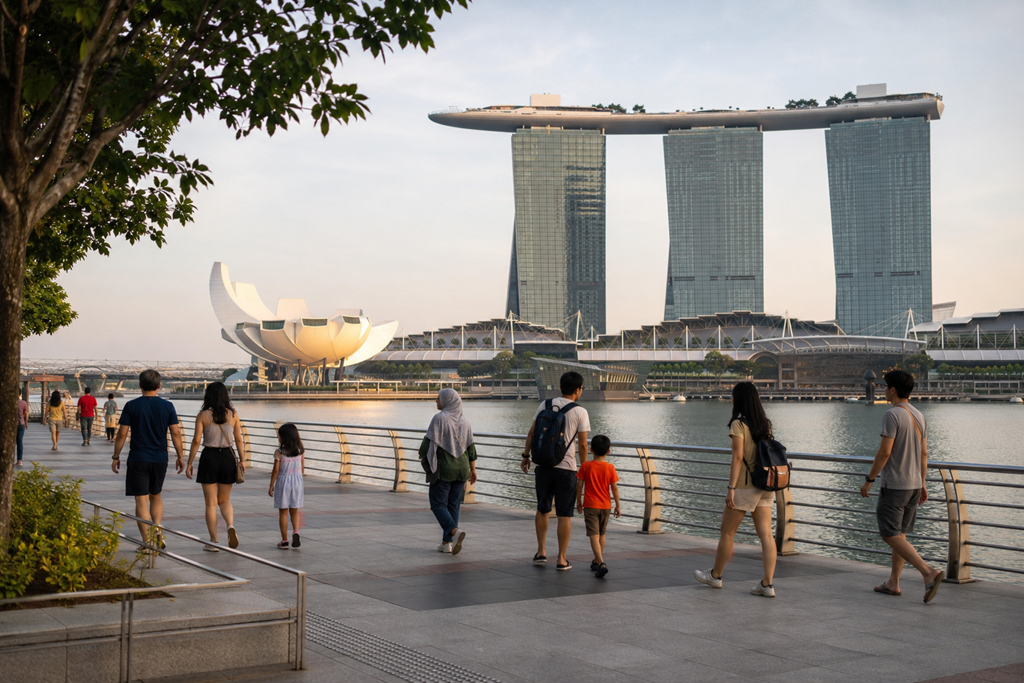
Singapore is compact, efficient, and full of variety, which makes it one of the easiest Southeast Asian destinations to explore without feeling rushed. In the same trip, you can walk through futuristic gardens, visit historic neighborhoods, eat at hawker centres, enjoy waterfront views, and find quieter green spaces away from the busiest sightseeing areas.
This guide focuses on durable, worthwhile things to do in Singapore—classic attractions, cultural neighborhoods, scenic walks, food experiences, museums, and a few less obvious stops that help the city feel more layered. Opening hours, reservation systems, and attraction access can change, so check current details before you go, especially for paid attractions or timed-entry experiences.
Modern Singapore Icons
1)) Walk Through Gardens by the Bay
Gardens by the Bay is one of Singapore’s signature experiences and a strong place to start if this is your first visit. The area combines landscaped outdoor gardens, the Supertree Grove, waterfront paths, and major indoor conservatories such as Cloud Forest and Flower Dome. The official Gardens by the Bay site describes the wider complex as a major plant-focused destination at Marina Bay, with attractions including Supertrees, Flower Dome, Cloud Forest, Floral Fantasy, and observatory viewpoints.
What makes it worth doing is the contrast: it feels highly modern, but it is still rooted in plants, climate, water, and public space. You can keep the visit simple by walking the outdoor gardens and Supertree Grove, or make it a longer stop by adding the conservatories.
This is best for first-time visitors, photographers, families, and anyone who wants the “modern Singapore” experience without spending the whole day indoors. Go earlier in the day for gentler walking conditions, or later for cooler temperatures and skyline views.
2)) Take In the Marina Bay Waterfront
Marina Bay is one of the best areas for understanding Singapore’s cityscape. The waterfront brings together skyline views, public promenades, bridges, hotels, museums, and open space in a way that is easy to explore on foot.
A good route is to walk around the bay at an unhurried pace, stopping near the Helix Bridge, Merlion Park, the ArtScience Museum exterior, and the promenade facing Marina Bay Sands. You do not need to treat it as a checklist. The real value is the overall view—the way Singapore’s architecture, water, and public spaces sit together.
This is one of the easiest things to do on your first evening in Singapore. It helps you get oriented and gives you a memorable sense of place without requiring a complicated plan.
3)) Visit the National Gallery Singapore
National Gallery Singapore is one of the city’s most rewarding indoor stops, especially if you want history, architecture, and art in one place. The museum is housed in two national monuments—the former Supreme Court and City Hall—and focuses on Singaporean and Southeast Asian art.
It is worth visiting even if you are not a museum-heavy traveler. The building itself is part of the experience, and the galleries give useful context for Singapore’s place in the region. It is also a practical choice during hot, rainy, or humid parts of the day.
Prioritize this if you enjoy architecture, cultural history, visual art, or slower travel days. Check current exhibitions and admission details before you go, since special exhibits may change.
4)) See Singapore From a Rooftop or Elevated Viewpoint
Singapore is a vertical city, and seeing it from above helps you appreciate how compact and carefully planned it is. Several elevated viewpoints around Marina Bay and the central area offer wide views of the skyline, waterfront, and Gardens by the Bay.
You do not need to build your whole day around a viewpoint, but it can be a strong addition after exploring Marina Bay or Gardens by the Bay. For many travelers, the best time is late afternoon into evening, when the light softens and the city begins to glow.
This is best for first-time visitors, photographers, couples, and anyone who wants a clearer visual sense of Singapore’s layout.
Cultural Neighborhoods and Local Character
5)) Explore Chinatown Beyond the Main Streets
Chinatown is one of Singapore’s most accessible heritage neighborhoods, with temples, restored shophouses, food streets, markets, and cultural sites close together. Visit Singapore describes Chinatown as a neighborhood with heritage temples, hawker food, street markets, and cultural attractions.
The key is not to rush it. Walk the side streets, look at the architecture, visit a temple respectfully, and leave time for food. Chinatown can feel busy in certain areas, but it also has quieter pockets where the historic streetscape is easier to appreciate.
It is a good choice for travelers who want culture, food, and photography in one compact area. Pair it with nearby Maxwell Food Centre or the Buddha Tooth Relic Temple area for a simple half-day plan.
6)) Spend Time in Little India
Little India offers a different rhythm from Marina Bay and the central business district. The streets are colorful, active, and sensory, with murals, flower garlands, spice shops, religious sites, jewelry stores, and traditional businesses. Visit Singapore describes Little India as one of the city’s most vibrant neighborhoods, known for bustling streets, markets, and vivid murals.
It is worth visiting because it shows how layered Singapore is. This is not just a polished city of skyscrapers; it is also a place of everyday commerce, worship, food, and neighborhood life.
Go with time to wander rather than trying to “finish” it quickly. Be respectful around places of worship, dress modestly if entering religious sites, and consider visiting in the morning or late afternoon when walking is more comfortable.
7)) Walk Kampong Gelam and Haji Lane
Kampong Gelam is one of Singapore’s most enjoyable neighborhoods for a relaxed walk. The area blends Malay-Muslim heritage, the golden dome of Sultan Mosque, traditional shops, cafés, textiles, murals, and narrow streets such as Haji Lane. Visit Singapore describes Kampong Gelam as a neighborhood where older traditions sit alongside boutiques, artisans, cafés, and traditional eateries.
This is a good place to slow down, browse small shops, look at architecture, and enjoy a meal or coffee break. Haji Lane is more photographed and can feel trendy, but the broader area has more depth when you explore beyond one street.
Kampong Gelam works well as a half-day paired with nearby Bugis, Little India, or Arab Street. It is especially good for travelers who like neighborhoods more than big-ticket attractions.
8)) Visit Katong-Joo Chiat for Peranakan Architecture and Food
Katong-Joo Chiat is a strong choice if you want a more neighborhood-based Singapore experience. The area is known for colorful heritage shophouses, Peranakan influence, local food, and a gentler pace than the major tourist zones.
The appeal here is not one single attraction. It is the combination of streets, facades, small businesses, bakeries, cafés, and food traditions. This is a good place to walk slowly, take photos respectfully, and try dishes associated with the area, such as laksa.
Prioritize Katong-Joo Chiat if you have already seen Marina Bay and the central neighborhoods, or if you prefer local character over major landmarks.
Nature, Parks, and Outdoor Escapes
9)) Visit the Singapore Botanic Gardens
The Singapore Botanic Gardens is one of the city’s most important green spaces and Singapore’s first UNESCO World Heritage Site. UNESCO describes it as a tropical colonial botanic garden that evolved from a pleasure garden to a scientific, conservation, recreational, and educational landscape.
This is one of the best things to do in Singapore when you want space, shade, and a break from dense urban areas. The gardens are large enough for a long walk but easy enough to enjoy casually. The National Orchid Garden is often a highlight for visitors who want a more focused botanical experience.
It is best for nature lovers, families, repeat visitors, and anyone who needs a slower morning. Bring water, wear comfortable shoes, and plan for humidity.
10)) Walk the Southern Ridges
The Southern Ridges is a scenic walking route that connects several parks and green spaces, including elevated walkways, forested paths, and viewpoints. It is a good reminder that Singapore’s nature experiences are not limited to manicured gardens.
This is best for active travelers who want a longer walk without leaving the city. The route can be done in sections, so you do not need to commit to the full distance if the heat or humidity feels too much.
Go early in the day, bring water, and wear shoes with good grip. The experience is less about a single dramatic viewpoint and more about moving through Singapore’s greener side at a slower pace.
11)) Explore Pulau Ubin
Pulau Ubin feels very different from central Singapore. This small island offers cycling paths, rustic scenery, mangroves, wetlands, and a glimpse of a slower, older side of the country.
It is worth the extra effort if you like nature, cycling, birds, or low-key outdoor experiences. Many visitors go for bike rentals and a relaxed ride, while others focus on Chek Jawa Wetlands and coastal scenery.
This is not the best choice for a very short Singapore trip unless you specifically want nature. But if you have several days, Pulau Ubin can balance out the city’s polished, urban side beautifully. Check ferry and weather conditions before planning your day.
12)) Spend a Day on Sentosa
Sentosa is Singapore’s main resort island, with beaches, family attractions, walking paths, viewpoints, and historic sites such as Fort Siloso. The official Sentosa site presents the island as a leisure destination with beaches, attractions, dining, nature areas, and family-friendly experiences.
The best way to enjoy Sentosa is to decide what kind of day you want before you go. Families may focus on attractions. Beachgoers may choose a simple sand-and-sea afternoon. History-minded travelers may prefer Fort Siloso and coastal walks.
Sentosa can be as active or as relaxed as you make it. It is especially useful if you are traveling with children or want a change of scenery from the city center.
Food, Markets, and Everyday Singapore
13)) Eat at a Hawker Centre
A hawker centre meal is one of the most essential Singapore experiences. It is practical, affordable compared with many restaurant meals, and deeply connected to daily life. Instead of chasing one famous stall, think of hawker centres as a way to try several local dishes in a casual setting.
Good starting points include Maxwell Food Centre, Chinatown Complex Food Centre, Lau Pa Sat, Old Airport Road Food Centre, and Tekka Centre. Each has its own rhythm, crowds, and specialties.
For a smoother experience, go slightly outside peak meal times, bring tissues or napkins, and be patient if a stall has a queue. Hawker centres are best for travelers who want local flavor without formal dining.
14)) Browse a Wet Market or Local Food Market
Markets give you a closer look at everyday Singapore: produce, seafood, spices, flowers, snacks, and neighborhood routines. Tekka Centre in Little India and markets near Chinatown are useful places to start because they are close to other attractions.
This is not necessarily a polished sightseeing experience, and that is the point. Markets help you understand the city beyond skyline views and museums. Go in the morning for the most activity, be mindful of vendors doing their work, and avoid blocking narrow aisles for photos.
This is best for curious travelers, food lovers, and anyone who enjoys ordinary local scenes as much as major landmarks.
15)) Visit Haw Par Villa
Haw Par Villa is one of Singapore’s most unusual attractions. It is known for its vivid statues, folklore scenes, moral tales, and mythological imagery. It is not a conventional theme park, museum, or garden, which is exactly why it stands out.
This is a good hidden-gem-style stop for travelers who like offbeat cultural places. Some scenes can be intense or strange, so it may not be the right fit for every family or every traveler. But if you want something memorable and different from the polished Marina Bay experience, it is worth considering.
Pair it with another west-side or nature-focused stop, or visit when you want a shorter activity away from the most crowded tourist areas.
Simple Planning Notes for Singapore
Singapore is easy to navigate by public transport. The Land Transport Authority notes that travelers can use options such as contactless bank cards, mobile wallets, stored value cards, and other payment methods for MRT, LRT, and bus rides; single-trip train tickets have been phased out, so it is worth understanding payment options before your first ride.
Plan outdoor activities for mornings or late afternoons when possible, and keep indoor options such as museums, galleries, malls, or conservatories for hotter or rainy parts of the day. Singapore’s tropical weather can change quickly, so a flexible plan is more useful than a rigid hour-by-hour schedule.
For a first trip, a balanced itinerary might include Marina Bay and Gardens by the Bay, one or two cultural neighborhoods, a hawker centre meal, the Botanic Gardens, and either Sentosa, Pulau Ubin, or a museum depending on your travel style.
Download Our Free E-book!