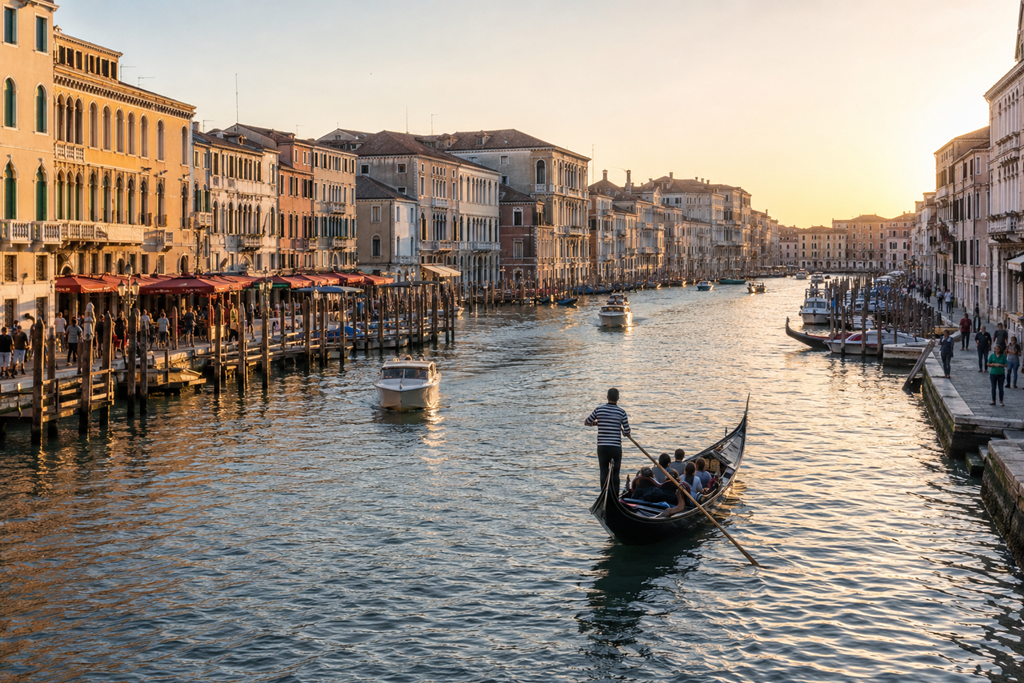
Venice is one of those destinations where the setting is part of the experience. The canals, bridges, stone walkways, historic churches, hidden courtyards, and quiet side streets all work together to make the city feel unlike anywhere else.
This guide focuses on classic, long-lasting things to do in Venice: the major landmarks, meaningful cultural experiences, scenic walks, lagoon islands, food traditions, and practical first-time visitor moments that are likely to remain worth your time for years to come.
Venice and its lagoon have been recognized as a UNESCO World Heritage Site since 1987, reflecting the city’s historic, artistic, architectural, and cultural importance.
Essential Venice Landmarks
1)) Visit St. Mark’s Square
St. Mark’s Square is the natural starting point for many first-time visits to Venice. It is the city’s most famous public space, surrounded by some of Venice’s most recognizable architecture, including St. Mark’s Basilica, the Doge’s Palace, and the Campanile.
It is worth seeing early in your trip because it helps you understand Venice’s role as a historic maritime power and cultural crossroads. The square can get very busy, so visiting early in the morning or later in the day can make the experience feel more spacious.
Best for: first-time visitors, architecture lovers, photographers, and anyone wanting to see Venice’s classic center.
2)) Step Inside St. Mark’s Basilica
St. Mark’s Basilica is one of Venice’s defining landmarks, known for its Byzantine-influenced design, mosaics, domes, and richly layered history. Even if you only spend a short time inside, it offers a strong sense of Venice’s connection to trade, religion, art, and the Eastern Mediterranean.
Because entry procedures and reservation rules may change, check current visitor information before you go. During busy travel periods, booking ahead can make the visit easier.
Best for: history, architecture, sacred art, and travelers who want to understand Venice beyond the canals.
3)) Tour the Doge’s Palace
The Doge’s Palace sits beside St. Mark’s Basilica and offers one of the clearest windows into Venice’s political history. Once the seat of Venetian government, the palace combines grand rooms, ceremonial spaces, artwork, and historic passageways.
This is one of the best attractions in Venice if you want more context for the city’s power, wealth, and governance. It is especially worthwhile for visitors who enjoy places where architecture and history are closely connected.
Best for: history lovers, art lovers, and travelers who want one major indoor cultural experience.
4)) Cross the Rialto Bridge
The Rialto Bridge is one of Venice’s most famous crossings and one of the best-known views over the Grand Canal. It connects busy areas of the city and places you close to shops, markets, and scenic canal viewpoints.
It is not a place you need to rush through. Stop for a few minutes, look both directions along the Grand Canal, and then explore the surrounding streets. The area can be crowded, but it remains a classic Venice experience for good reason.
Best for: first-time visitors, photography, and anyone who wants an easy iconic stop while walking through the city.
5)) Ride Along the Grand Canal
The Grand Canal is Venice’s main waterway, lined with palaces, churches, hotels, museums, and everyday boat traffic. Seeing it from the water helps the city make more sense, because Venice was built to be approached and experienced by boat.
A vaporetto ride is a practical way to enjoy the canal without needing a private tour. It gives you views of architecture and daily movement that are harder to appreciate from the narrow streets alone. Venezia Unica, the city’s official visitor platform, provides travel planning and transportation information for getting around Venice.
Best for: first-time visitors, budget-conscious travelers, architecture lovers, and anyone who wants a simple scenic overview.
Museums, Churches, And Cultural Experiences
6)) Explore the Peggy Guggenheim Collection
The Peggy Guggenheim Collection is one of Venice’s best-known modern art museums, located in the Dorsoduro area along the Grand Canal. It offers a different kind of Venice experience, shifting from churches and palaces to modern art, sculpture, and a more intimate museum setting.
This is a good choice if you want a cultural stop that feels manageable rather than overwhelming. It also pairs well with a slow walk through Dorsoduro.
Best for: art lovers, repeat visitors, and travelers who want a museum that contrasts with Venice’s older historic sites.
7)) Visit the Gallerie dell’Accademia
The Gallerie dell’Accademia is one of the most important art museums in Venice, especially for visitors interested in Venetian painting. It is a strong choice if you want to understand the city’s artistic legacy through major works connected to Venice’s history and culture.
Plan enough time to move slowly, but do not feel pressured to see everything. A focused visit can still be rewarding, especially if you pair it with nearby Dorsoduro, the Accademia Bridge, or the Zattere waterfront.
Best for: art history, indoor sightseeing, and travelers who want a deeper cultural experience.
8)) See La Fenice Opera House
Teatro La Fenice is one of Venice’s most famous cultural landmarks. Even if you do not attend a performance, the building itself is worth considering for its historic role in Venice’s performing arts scene.
A guided or self-guided visit can be a good fit if you enjoy music, theater, or ornate interiors. If attending a performance is important to you, check the current schedule well ahead of your trip.
Best for: music lovers, theater fans, and travelers looking for an elegant cultural experience.
9)) Visit the Basilica di Santa Maria della Salute
Santa Maria della Salute stands near the entrance to the Grand Canal and is one of Venice’s most recognizable churches. Its large dome appears in many classic views of the city, especially from across the water near St. Mark’s and the Accademia area.
The church is worth visiting not only for its architecture, but also for the quieter feeling of the surrounding area. It is a strong stop to combine with Dorsoduro, the Peggy Guggenheim Collection, or a walk along the waterfront.
Best for: architecture, photography, quieter sightseeing, and travelers who want a beautiful church outside the busiest central route.
Neighborhoods, Walks, And Local Atmosphere
10)) Wander Through Dorsoduro
Dorsoduro is one of the best areas in Venice for a slower walk. It has museums, churches, canals, small squares, university energy, and waterfront views, but it often feels less intense than the busiest parts of San Marco.
This is a good neighborhood for travelers who want to enjoy Venice without turning every moment into a checklist. You can visit a museum, stop for coffee, walk along the Zattere, and cross smaller bridges at an easy pace.
Best for: relaxed walks, art museums, scenic corners, and travelers who want a slightly quieter base of exploration.
11)) Walk Through Cannaregio
Cannaregio offers another side of Venice, with residential streets, canals, local shops, and historic areas that feel more lived-in than the main tourist corridors. It is also home to the historic Jewish Ghetto, an important cultural and historical area.
This neighborhood is especially useful for visitors who want to balance famous landmarks with everyday Venice. It rewards wandering, but it is still accessible enough for first-time travelers.
Best for: local atmosphere, history, quieter walks, and travelers who like neighborhoods with a more residential feel.
12)) Spend Time Around the Rialto Market Area
The Rialto Market area gives you a glimpse of Venice’s food culture and daily rhythm. While the market experience can vary depending on timing and season, the surrounding area remains a worthwhile place to explore.
This is a good stop if you enjoy seeing how a city shops, eats, and moves in the morning. It also helps connect the Rialto Bridge with the broader history of Venice as a trading city.
Best for: food-curious travelers, market lovers, photographers, and visitors who enjoy everyday city life.
13)) Take a Quiet Walk Along the Zattere
The Zattere is a waterfront promenade in Dorsoduro with open views across the Giudecca Canal. It offers a more spacious walking experience than many of Venice’s narrow lanes and can be especially pleasant when you want a break from crowded sightseeing areas.
This is not necessarily a “must-see” in the same way as St. Mark’s Basilica or the Rialto Bridge, but it is one of the best ways to enjoy Venice at a gentler pace.
Best for: scenic walks, slower afternoons, repeat visitors, and anyone who needs breathing room between major attractions.
Lagoon Islands And Water Experiences
14)) Visit Murano And Burano
Murano and Burano are two of the most popular island trips from Venice. Murano is closely associated with glassmaking, while Burano is known for colorful houses, lace traditions, and a village-like atmosphere. The lagoon islands are a major part of the broader Venice experience, not just an add-on.
You can visit both in one day, but it is better not to overpack the schedule. Give yourself time for boat transfers, walking, and simple observation rather than treating the islands like quick photo stops.
Best for: travelers with at least two or three days in Venice, craft traditions, color, photography, and lagoon scenery.
15)) Take a Gondola Ride—or Choose a Simpler Canal Experience
A gondola ride is one of Venice’s most recognizable experiences. It can be memorable, especially if you choose a quieter route through smaller canals rather than focusing only on the busiest areas.
That said, it is not the only way to enjoy Venice from the water. A vaporetto ride, a traghetto crossing, or simply pausing beside smaller canals can also give you a meaningful sense of the city. The best choice depends on your budget, expectations, and travel style.
Best for: special occasions, first-time visitors, romantic trips, and travelers who value traditional experiences.
How To Prioritize Your Time In Venice
If you only have one day, focus on St. Mark’s Square, St. Mark’s Basilica, the Doge’s Palace, the Rialto Bridge, and a ride or walk along the Grand Canal.
With two days, add Dorsoduro, the Peggy Guggenheim Collection or Gallerie dell’Accademia, Santa Maria della Salute, and a slower neighborhood walk.
With three or more days, consider Murano and Burano, Cannaregio, the Zattere, La Fenice, and more time simply wandering. Venice is one of those places where unplanned walking often becomes part of the trip’s best memories.
Practical Venice Travel Notes
Venice is best explored on foot and by boat, so comfortable walking shoes are essential. Many routes involve bridges, uneven stone, and narrow lanes.
Book ahead for major attractions during busy periods, especially if there is something you know you do not want to miss. For details that can change, such as opening hours, timed entry, transportation passes, or visitor rules, check current official information before finalizing plans.
Try to avoid treating Venice like a checklist. The city is compact, but it can feel tiring if you move too quickly. Give yourself time to sit by a canal, take a wrong turn, cross a quiet bridge, or watch boats move through the water.
Download Our Free E-book!