Vienna is one of Europe’s most rewarding cities for travelers who enjoy architecture, history, music, museums, and unhurried wandering. It has the grandeur of a former imperial capital, but it also works well as a practical city break: walkable central streets, excellent public transportation, beautiful parks, and plenty of places to pause over coffee or dessert.
This guide focuses on the best things to do in Vienna for a first or return visit, with an emphasis on classic experiences that are likely to stay relevant over time. You will find palaces, museums, historic streets, scenic viewpoints, food traditions, and relaxed places to enjoy the city at a comfortable pace.
Historic Vienna and Imperial Landmarks
1)) Walk Through Vienna’s Historic Center
Vienna’s historic center is the best place to start because it gives you an immediate sense of the city’s layers: medieval streets, Baroque architecture, imperial monuments, elegant squares, churches, shops, cafés, and hidden courtyards. UNESCO describes the Historic Centre of Vienna as a place shaped by medieval, Baroque, and late 19th-century urban design, with a long role in European music and architecture.
Spend time around Stephansplatz, Graben, Kohlmarkt, Kärntner Strasse, and the surrounding side streets. The area is polished but still interesting, especially if you allow yourself to wander beyond the busiest pedestrian routes.
This is best for first-time visitors, architecture lovers, and anyone who wants to understand Vienna before diving into specific attractions.
2)) Visit St. Stephen’s Cathedral
St. Stephen’s Cathedral is one of Vienna’s most recognizable landmarks and a natural anchor point for exploring the old town. Its patterned roof, Gothic details, and central location make it both a major attraction and an everyday reference point for getting oriented in the city.
Even a short visit is worthwhile. Step inside to take in the height and atmosphere of the nave, then spend a few minutes outside viewing the cathedral from different angles. Travelers with extra energy can look into tower access for city views, but check current conditions before planning around it.
This is one of the easiest major sights to fit into almost any Vienna itinerary.
3)) Explore the Hofburg Palace Complex
The Hofburg is not just one building; it is a large imperial complex tied to centuries of Habsburg history. The area includes museums, courtyards, monuments, and ceremonial spaces, and it sits close to many other central sights.
You do not need to see every part of the Hofburg to appreciate it. A simple walk through the courtyards and surrounding streets can be satisfying, especially if you pair it with nearby stops like Heldenplatz, the Austrian National Library exterior, or the museums around Maria-Theresien-Platz.
Choose a specific museum or experience inside the complex if you are especially interested in imperial history. Otherwise, treat the Hofburg as one of the best atmospheric walks in central Vienna.
4)) Tour Schönbrunn Palace and Gardens
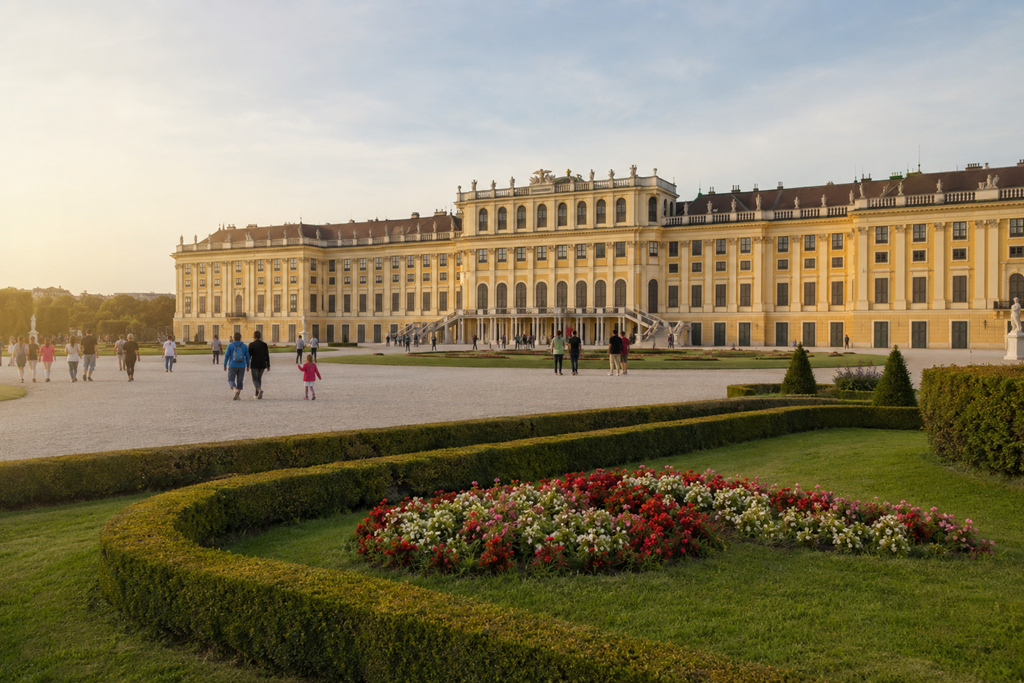
Schönbrunn Palace is one of Vienna’s essential experiences. The palace and gardens reflect the city’s imperial past, and the site is large enough to feel like a half-day outing rather than a quick stop. Austria’s official travel information lists Schönbrunn among Vienna’s top highlights.
The palace interiors are the main draw for history-minded travelers, while the gardens are especially appealing if you prefer open-air sightseeing. Walk the formal garden paths, look back toward the palace from higher ground, and allow time to simply enjoy the scale of the place.
Book ahead during busy travel periods, and check current visitor details before you go.
5)) See the Belvedere
The Belvedere combines palace architecture, landscaped grounds, and one of Vienna’s most important art experiences. It is especially known for Austrian art, including Gustav Klimt, but the setting itself is part of the appeal.
For many travelers, the Belvedere is easier to manage than trying to see every major museum in Vienna. You can enjoy the palace views outside, visit the art collection inside, and still leave time for another activity later in the day.
It is a strong choice for art lovers, couples, photographers, and anyone who wants a classic Vienna experience that feels elegant without being complicated.
Art, Music, and Culture
6)) Spend Time at the Kunsthistorisches Museum
The Kunsthistorisches Museum is one of the great art museums of Europe and a strong choice if you want a deeper cultural stop in Vienna. The building alone is impressive, with grand staircases, ornate interiors, and a sense of occasion that fits the city.
Inside, expect major collections spanning painting, antiquities, and decorative arts. Rather than trying to see everything, choose a few galleries and move slowly. This approach makes the museum more memorable and less tiring.
It is best for art lovers, history enthusiasts, and travelers who want a substantial indoor activity, especially on a cold, rainy, or very hot day.
7)) Visit the MuseumsQuartier
MuseumsQuartier offers a more contemporary contrast to Vienna’s imperial sights. It is a large cultural district with museums, courtyards, cafés, and public spaces, making it useful even if you do not plan a full museum visit.
This is a good place to experience Vienna beyond palaces and classical music. You can choose one museum, stop for a drink, sit in the courtyard, or use the area as a break between the historic center and nearby neighborhoods.
It is especially good for modern art fans, design-minded travelers, and repeat visitors who want a broader view of the city.
8)) Experience the Vienna State Opera Area
Vienna’s State Opera is one of the city’s defining cultural landmarks. Even if you do not attend a performance, the building and surrounding area are worth seeing. Austria’s official travel information includes the State Opera among Vienna’s top cultural highlights.
If you love music, consider planning ahead for a performance or a guided visit, depending on your interests and schedule. If not, simply include the opera house as part of a walk along the Ringstrasse or an evening stroll near the old town.
This experience is best for music lovers, architecture fans, and travelers who want to connect with Vienna’s long classical tradition without overloading their itinerary.
9)) Watch the Spanish Riding School
The Spanish Riding School is one of Vienna’s most distinctive cultural experiences, known for classical equestrian tradition. It is not for every traveler, but it can be memorable if you are interested in heritage, ceremony, horses, or highly disciplined performance.
Because schedules and formats can vary, it is best to check current options before building your day around it. Some visitors may prefer a performance, while others may be satisfied with a shorter visit or a related tour.
This is a good choice for travelers looking for something uniquely Viennese beyond museums and palaces.
Streets, Markets, and Everyday Vienna
10)) Walk or Ride Along the Ringstrasse
The Ringstrasse is one of the best ways to understand Vienna’s 19th-century grandeur. It follows the route of the former city walls and is lined with major buildings, monuments, parks, and cultural institutions. UNESCO highlights the Ringstrasse as a major part of Vienna’s historic urban ensemble.
You can explore it on foot in sections or use the tram to rest your legs while still seeing the city. Notable sights along or near the Ringstrasse include the State Opera, Parliament, City Hall, Burgtheater, museums, and landscaped public spaces.
This is ideal for first-time visitors because it connects many landmarks in a logical route.
11)) Browse the Naschmarkt
Naschmarkt is Vienna’s best-known market and a useful change of pace from palaces and museums. It offers produce, specialty foods, casual places to eat, and plenty of visual energy. Austria’s official travel information notes Naschmarkt as part of Vienna’s wider culinary life.
Go for a casual lunch, a snack, or a slow browse. It is not necessary to treat it as a formal dining destination; the value is in walking through, seeing the stalls, and getting a taste of local everyday food culture.
Naschmarkt works especially well between the city center and neighborhoods such as Wieden or Mariahilf.
12)) Pause in a Traditional Viennese Coffee House
A coffee house visit is one of the most enjoyable ways to slow down in Vienna. The experience is less about rushing through a checklist and more about sitting with coffee, cake, a newspaper, or conversation.
Try a classic coffee drink and a slice of cake, such as Sachertorte or apple strudel, depending on what appeals to you. Some historic cafés are very popular, so it helps to be flexible. If one place feels too crowded, another coffee house nearby may offer a better experience.
This is one of the simplest and most rewarding things to do in Vienna, especially after a long walk or museum visit.
13)) Enjoy the Prater and the Giant Ferris Wheel
The Prater gives Vienna a playful, open-air contrast to its formal palaces and museums. The Giant Ferris Wheel is one of the city’s iconic sights and is listed by Austria’s official travel information as a top highlight.
You can visit for the amusement park atmosphere, a ride on the Ferris wheel, or a walk through the larger green park area. It is especially useful if you are traveling with children, but adults can enjoy it too, particularly in the late afternoon or early evening.
This is a good reminder that Vienna is not only polished and historic; it also has relaxed public spaces where locals and visitors unwind.
Parks, Views, and Slower Moments
14)) Relax in Stadtpark or One of Vienna’s Green Spaces
Vienna has many parks and green spaces, and they help make the city feel balanced rather than overwhelming. The official Vienna travel guide highlights parks, green spaces, and recreation as part of the visitor experience.
Stadtpark is one of the easiest green spaces to add to a central itinerary. It is close to the old town and known for the Johann Strauss monument, but it is also simply a pleasant place to sit, walk, and reset between attractions.
This is a smart addition if your itinerary is heavy on museums, churches, and palaces. A short park break can make the rest of the day feel much more enjoyable.
15)) Take in the View from Kahlenberg or the Danube Area
For a different perspective on Vienna, head toward a viewpoint or the city’s river landscapes. Kahlenberg is known for panoramic views, while the Danube and related recreation areas show a more spacious side of the city. Austria’s official travel information points to parks, the Danube, the Prater, and viewpoints such as Kahlenberg as part of Vienna’s outdoor appeal.
Kahlenberg is especially worthwhile if you want a scenic break from the historic center. The Danube area can be better if you prefer a flatter, easier outing with walking, cycling, or riverside views.
This is best for travelers with more than two days in Vienna or anyone who wants to balance culture with fresh air.
How to Prioritize Your Time in Vienna
If you have only one full day, focus on the historic center, St. Stephen’s Cathedral, the Hofburg area, the Ringstrasse, and one coffee house stop.
With two days, add Schönbrunn Palace, the Belvedere or Kunsthistorisches Museum, and an evening around the State Opera area.
With three or more days, include MuseumsQuartier, Naschmarkt, the Prater, parks, and a viewpoint such as Kahlenberg. This slower pace gives Vienna room to feel graceful rather than rushed.
Practical Notes for Planning
Vienna is generally easy to explore with a mix of walking and public transportation. The official Vienna tourism site includes visitor resources for getting around, arrival information, accessibility, city cards, and practical services, so it is worth checking current details before finalizing your trip.
For major attractions, verify current opening hours and reservation requirements before you go. Some palace, museum, performance, or timed-entry experiences may require advance planning during busy travel periods.
The best Vienna itinerary usually leaves space between major sights. The city rewards lingering: a quiet square, a café table, a park bench, a tram ride, or a side street can become just as memorable as a famous landmark.
Download Our Free E-book!