Florence is one of those cities where the main sights are famous for good reason. The historic center is compact, walkable, and filled with Renaissance art, landmark churches, river views, markets, and quiet side streets that reward unhurried exploring.
This guide focuses on the best things to do in Florence for first-time visitors and returning travelers who want a balanced trip. You will find major art museums, classic viewpoints, food experiences, historic neighborhoods, and practical suggestions to help you decide what deserves space in your itinerary.
Florence’s historic center is a UNESCO World Heritage Site, recognized for its extraordinary artistic and architectural legacy, including the Cathedral of Santa Maria del Fiore, Santa Croce, the Uffizi, and Pitti Palace.
Essential Florence Landmarks
1)) Visit the Cathedral of Santa Maria del Fiore
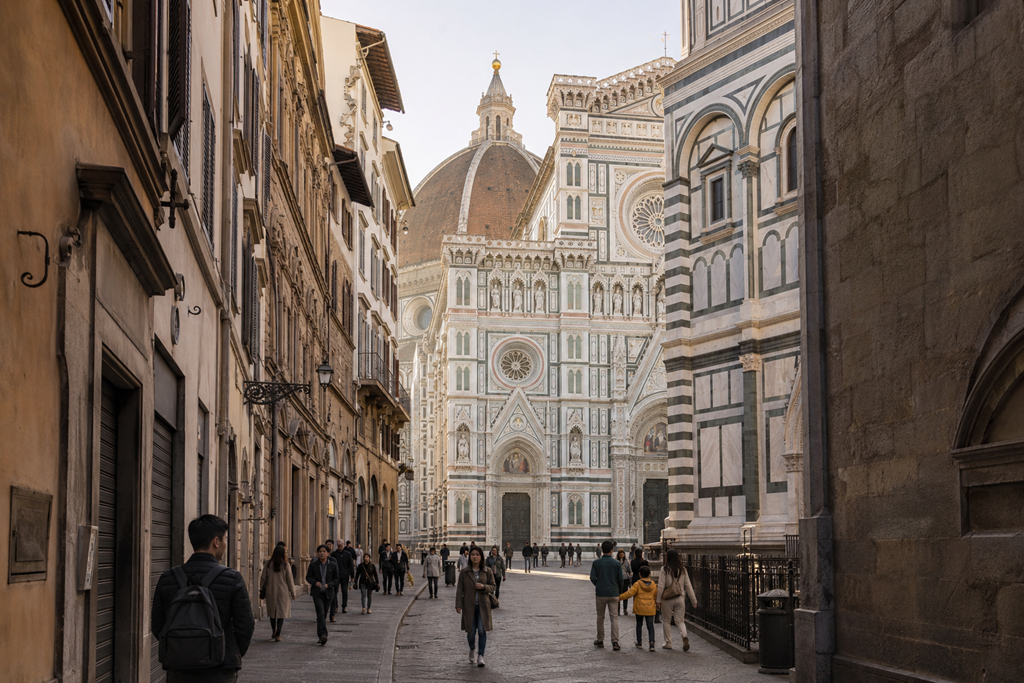
Florence’s cathedral, often called the Duomo, is the visual center of the city. Its marble facade, enormous dome, and surrounding piazza make it one of the most recognizable landmarks in Italy.
The cathedral is worth visiting even if you only admire it from outside, but travelers with more time can explore the wider Duomo complex, including the Baptistery, Giotto’s Bell Tower, and Brunelleschi’s Dome. The dome is especially meaningful if you enjoy architecture, city views, or the history of Renaissance engineering.
This is one of Florence’s busiest areas, so go early in the day or later in the afternoon if you want a slightly easier experience. Check current entry requirements and reservation options before you go, especially during busy travel periods.
2)) Climb Brunelleschi’s Dome or Giotto’s Bell Tower
For one of the most memorable views in Florence, climb either Brunelleschi’s Dome or Giotto’s Bell Tower. Both offer a more physical experience than simply visiting the cathedral, and both reward you with close-up views of the Duomo complex and the red rooftops of the city.
The dome climb is best for travelers interested in the cathedral’s structure and interior details. The bell tower is a good choice if you want a view that includes the dome itself. Neither climb is ideal for anyone uncomfortable with narrow stairs or heights, so choose based on your comfort level.
3)) Walk Across Ponte Vecchio
Ponte Vecchio is Florence’s most famous bridge and one of its most photographed places. It crosses the Arno River and is lined with small shops, creating a bridge experience that feels different from almost anywhere else in the city.
It is usually crowded during the middle of the day, but it is still worth seeing. For a better sense of the bridge itself, view it from a nearby bridge such as Ponte Santa Trinita. Early morning and evening are especially good times for a quieter walk and softer light.
4)) Spend Time in Piazza della Signoria
Piazza della Signoria is one of Florence’s most important public squares. It sits near Palazzo Vecchio and the Uffizi Gallery, making it a natural stop while exploring the historic center.
The square feels like an outdoor museum, with statues, arcades, and centuries of civic history layered into one space. It is a good place to pause between major sights, take in the architecture, and understand Florence as more than a museum city. This was, and still feels like, a center of public life.
5)) Visit Palazzo Vecchio
Palazzo Vecchio is Florence’s historic town hall and one of the best places to connect the city’s art, politics, and Medici history. From the outside, it looks fortress-like. Inside, it opens into grand rooms, painted ceilings, courtyards, and civic spaces.
This is a strong choice if you want a museum experience that is not only about paintings on walls. It helps you understand Florence as a powerful city-state, not just a beautiful travel destination. If you enjoy history, architecture, or old city halls, make time for it.
Florence Art and Museums
6)) Explore the Uffizi Gallery
The Uffizi Gallery is one of the most important art museums in the world and a must for many Florence visitors. Its collection includes major Renaissance works and helps explain why Florence became such a central city in European art.
This is not a museum to rush through. If you are not an art expert, focus on a few key rooms and give yourself permission to move slowly. Booking ahead is usually wise, especially in busy seasons, and a guided visit can be helpful if you want more context without feeling overwhelmed.
The Uffizi, Pitti Palace, and Boboli Gardens are among the major Florence landmarks specifically noted in UNESCO’s description of the city’s historic artistic importance.
7)) See Michelangelo’s David at the Accademia Gallery
The Accademia Gallery is best known for Michelangelo’s David. Even if you have seen photos many times, the sculpture has a different presence in person. Its scale, detail, and placement make it one of Florence’s essential art experiences.
Because many visitors come mainly for David, this museum can be more focused than the Uffizi. It is a good option if you want a major Florence art experience but do not want to spend half a day in a large museum. Reserve ahead when possible.
8)) Visit the Bargello Museum
The Bargello is one of Florence’s most rewarding museums, especially for sculpture lovers. It is often less overwhelming than the Uffizi and offers a quieter way to experience Renaissance art.
The building itself, a former civic and judicial structure, adds to the atmosphere. Inside, you can see important works by artists such as Donatello and Michelangelo while enjoying a museum experience that often feels more spacious and reflective than Florence’s headline attractions.
9)) Step Inside the Basilica of Santa Croce
Santa Croce is one of Florence’s most meaningful churches. It is known for its architecture, frescoes, and tombs or memorials connected to major Italian figures.
This is a good stop for travelers interested in art, literature, history, or sacred spaces. It also helps balance a Florence itinerary because it combines beauty with a sense of memory and place. The surrounding Santa Croce neighborhood is worth exploring before or after your visit.
10)) Visit the Basilica of Santa Maria Novella
Santa Maria Novella sits near Florence’s main train station, but it deserves more than a quick glance on arrival or departure. The church has a striking facade, important artworks, and a quieter atmosphere than some of the city’s most crowded sights.
It is especially useful to include if you are staying near the station or want a meaningful first or last stop in Florence. The piazza outside is also a pleasant place to pause.
Views, Gardens, and Outdoor Experiences
11)) Watch the Sunset from Piazzale Michelangelo
Piazzale Michelangelo offers one of the best panoramic views of Florence. From here, you can see the Duomo, Palazzo Vecchio, the Arno River, Ponte Vecchio, and the hills surrounding the city.
Sunset is popular for a reason, but it can be crowded. For a quieter experience, go earlier in the morning or continue walking toward San Miniato al Monte. Bring comfortable shoes, because the walk up can be steep depending on your route.
12)) Visit San Miniato al Monte
San Miniato al Monte sits above Florence and is one of the most beautiful places to visit if you want views with a quieter, more contemplative setting. The church’s position above the city makes the approach feel special, and the view is excellent.
Many travelers stop at Piazzale Michelangelo and turn back, but continuing to San Miniato al Monte is often worth the extra effort. It is best for visitors who enjoy historic churches, peaceful spaces, and scenic walks.
13)) Walk Through the Boboli Gardens
The Boboli Gardens sit behind Pitti Palace and offer a change of pace from Florence’s dense historic center. They are formal gardens with paths, sculpture, greenery, and elevated views.
This is a good choice if you need a break from museums and crowded streets. The gardens involve walking and some slopes, so wear comfortable shoes and give yourself enough time. They pair naturally with Pitti Palace or an afternoon in the Oltrarno.
14)) Explore Pitti Palace
Pitti Palace is a large palace complex across the Arno River from the main historic center. It gives visitors a deeper look at Medici power, court life, art collections, and grand interiors.
Because it is large, it helps to choose your focus before you go. You may not need to see every section. Pairing part of the palace with the Boboli Gardens can make for a satisfying half-day on the Oltrarno side of Florence.
Neighborhoods, Markets, and Food
15)) Wander the Oltrarno
Oltrarno means “beyond the Arno,” and this side of Florence offers a slightly different feel from the busiest museum core. You will find artisan workshops, smaller streets, local squares, churches, cafes, and a more lived-in atmosphere.
Good areas to explore include Santo Spirito and San Frediano. This is not about checking off one major attraction. It is about slowing down, walking without too rigid a plan, and seeing a side of Florence that feels more residential and creative.
16)) Browse San Lorenzo Market and Mercato Centrale
The San Lorenzo area combines outdoor market stalls with the indoor Mercato Centrale food market. It is a practical stop for travelers who want a casual food break, local ingredients, or a look at Florence’s market culture.
The outdoor market is known for leather goods, clothing, and souvenirs, while the indoor market focuses more on food. Quality can vary, especially with souvenirs, so browse thoughtfully and do not feel pressured to buy. The market is best treated as an experience, not just a shopping stop.
17)) Try Classic Florentine Food
Florence is a good city for simple, traditional Tuscan food. Look for dishes and ingredients such as ribollita, pappa al pomodoro, crostini, handmade pasta, beans, local olive oil, and bistecca alla fiorentina if you eat meat.
Instead of chasing the most talked-about restaurant of the moment, focus on neighborhood trattorias, seasonal menus, and places that feel grounded in local cooking. Make reservations for popular restaurants, but leave room for casual meals, bakeries, markets, and gelato.
18)) Take a Slow Walk Along the Arno
A walk along the Arno is one of the easiest and most satisfying things to do in Florence. It gives you views of the bridges, the riverfront buildings, and the changing light across the city.
This is a good activity for your first evening, your final morning, or any moment when you need a break from structured sightseeing. Walk between Ponte Vecchio and Ponte Santa Trinita, or continue farther for a quieter feel.
How to Prioritize Your Time in Florence
If you only have one day in Florence, focus on the Duomo area, Piazza della Signoria, Ponte Vecchio, one major museum, and a viewpoint such as Piazzale Michelangelo.
With two or three days, add the Accademia, Santa Croce, Oltrarno, Pitti Palace or Boboli Gardens, and more time for food and wandering. Florence is compact, but the art and architecture are easier to appreciate when you do not overload each day.
For a first visit, the most essential experiences are usually the Duomo, Uffizi, Accademia, Ponte Vecchio, Piazza della Signoria, and a city viewpoint. After that, choose based on your interests: churches, gardens, sculpture, food, shopping, or quieter neighborhoods.
Practical Florence Travel Notes
Florence is best explored on foot, especially within the historic center. Comfortable shoes matter because many streets are stone, sidewalks can be narrow, and several viewpoints require uphill walking.
Book ahead for the most famous attractions during busy travel periods. Museums and landmark sites may use timed-entry systems, and hours can change around holidays or special circumstances. Always check current details before finalizing your plans.
The city can feel crowded around the Duomo, Uffizi, Ponte Vecchio, and main shopping streets. Balance those areas with quieter stops such as the Bargello, San Miniato al Monte, Santa Maria Novella, Boboli Gardens, or the Oltrarno.
Florence is also a city where less can be more. A good trip does not require seeing every museum or every church. Choose the experiences that match your interests, leave space for walking, and let the city’s details become part of the trip.
Download Our Free E-book!