Mexico City is one of the most rewarding cities in North America for travelers who like history, food, art, architecture, and walkable neighborhoods. It can also feel large at first, so the best way to plan a trip is to focus on a few strong areas instead of trying to see everything.
This guide highlights 18 of the best things to do in Mexico City, with a focus on classic attractions, meaningful cultural experiences, food traditions, neighborhoods, museums, parks, and practical first-time visitor choices. Use it to build a trip that feels full without becoming rushed.
Historic Mexico City
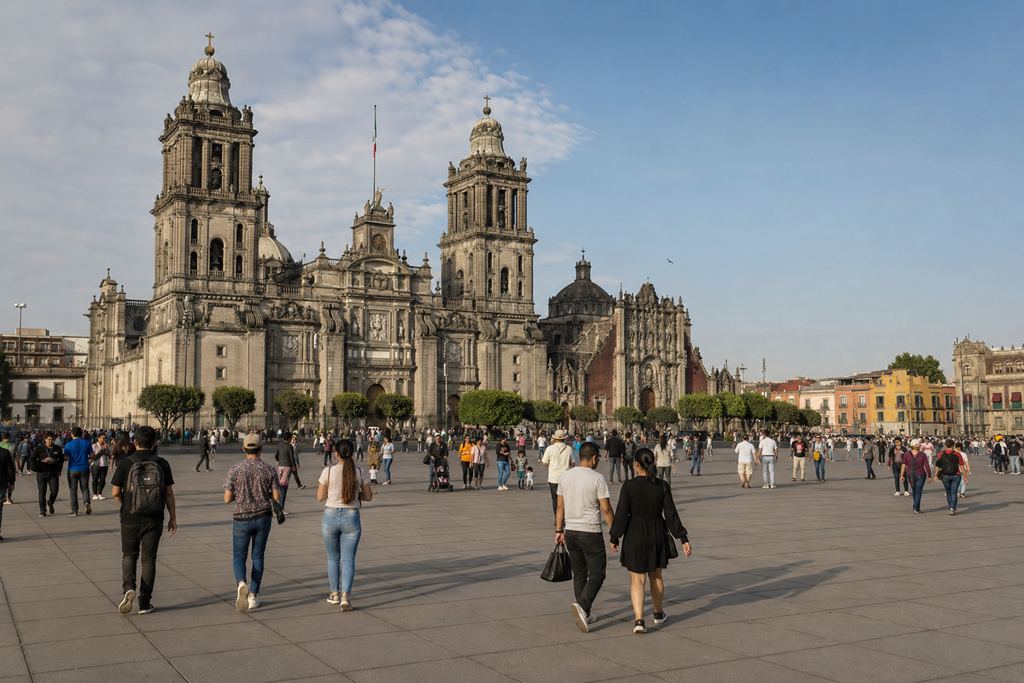
1)) Explore the Zócalo and the Historic Center
The Zócalo is one of the most important places to begin a Mexico City trip. This large central square places you close to several major landmarks, including the Metropolitan Cathedral, the National Palace area, pedestrian streets, historic buildings, and the remains of the ancient Mexica city beneath modern Mexico City.
UNESCO recognizes the Historic Centre of Mexico City and Xochimilco as a World Heritage Site, noting the city’s layered history from Tenochtitlan to the colonial and modern capital.
This area is best for first-time visitors, history lovers, architecture fans, and anyone who wants to understand the city’s origins. Plan to walk slowly, look up at the buildings, step into courtyards when open, and allow extra time for security lines or changing access around government buildings.
2)) Visit Templo Mayor
Templo Mayor is one of the most important archaeological sites in the city because it shows the remains of the ceremonial center of ancient Tenochtitlan. What makes it especially powerful is its location: the ruins sit beside colonial and modern buildings, making the city’s layers visible in one place.
This is worth prioritizing if you are interested in pre-Hispanic history or want more context before visiting museums. It pairs naturally with the Zócalo and the Metropolitan Cathedral, so it works well as part of a half-day Historic Center route.
Check current opening hours before you go, and consider visiting earlier in the day if you want a less rushed experience.
3)) Walk Along Madero Street to Palacio de Bellas Artes
Madero Street is one of the most useful walking routes for visitors because it connects the Zócalo area with Alameda Central and Palacio de Bellas Artes. Along the way, you pass historic façades, shops, churches, and busy street life.
Palacio de Bellas Artes is one of Mexico City’s signature architectural landmarks. The official Mexico City tourism site lists it among the city’s notable attractions, and UNESCO also points to it as one of the city’s important 19th- and 20th-century public buildings.
Even if you do not attend a performance, the exterior is worth seeing. For a classic view, walk toward Alameda Central or look back from nearby streets where the building’s dome and white façade stand out against the city.
4)) Spend Time in Alameda Central
Alameda Central is a historic public park next to Palacio de Bellas Artes. It gives you a natural pause between major sightseeing stops and helps break up the energy of the Historic Center.
It is best treated as a walking and resting stop rather than a standalone attraction. Visit after Bellas Artes, continue toward nearby museums, or use it as a place to sit briefly before heading to your next neighborhood.
This is a good example of how to plan Mexico City well: combine major sights with slower moments so the day does not become a checklist.
Museums, Art, and Cultural Landmarks
5)) Visit the National Museum of Anthropology
The National Museum of Anthropology is one of the most important museums in Mexico City and one of the strongest choices for first-time visitors. It focuses on Mexico’s archaeological and ethnographic heritage and is located near Chapultepec, making it easy to combine with the park or Chapultepec Castle. The museum’s official INAH site lists its collections under archaeology and ethnography and places it at Av. Paseo de la Reforma and Calzada Gandhi in the Chapultepec-Polanco area.
This museum is best for travelers who want deeper context on Mexico before exploring archaeological sites, historic neighborhoods, or regional food traditions. It is also a good rainy-day option.
Do not try to absorb every room in one visit. Choose a few priority sections, give yourself breaks, and leave time to appreciate the architecture of the museum itself.
6)) See Chapultepec Castle
Chapultepec Castle sits inside Bosque de Chapultepec and gives visitors a mix of history, architecture, city views, and landscaped grounds. It is one of the most memorable cultural stops in the city because the setting feels very different from the dense streets nearby.
This is a strong choice if you enjoy museums but also want fresh air and views. It pairs well with the National Museum of Anthropology, although doing both in one day can be a lot. If you prefer a slower pace, split Chapultepec into two visits.
Wear comfortable shoes because the approach includes uphill walking, and check current access details before you go.
7)) Visit the Frida Kahlo Museum in Coyoacán
The Frida Kahlo Museum, also known as Casa Azul, is one of Mexico City’s most meaningful art-related stops. The museum’s official site describes the Blue House in Coyoacán as a place where visitors can learn about Frida Kahlo’s life and work, with personal belongings that help connect visitors to her creativity and legacy.
This visit is best for art lovers, design-minded travelers, and anyone interested in the personal world behind Kahlo’s public image. It also works well as part of a broader Coyoacán day.
Because this is one of the city’s most popular museums, plan ahead. The official visitor information notes that there are no in-person ticket sales, so verify current ticketing requirements before building your day around it.
8)) Explore Museo Soumaya and Nearby Polanco
Museo Soumaya is known for its distinctive modern architecture and large art collection. It is located in the Polanco area, which makes it a good addition if you are already planning to visit this part of the city.
This stop is especially useful for travelers who want a mix of modern Mexico City, museums, restaurants, shopping areas, and polished urban design. You can pair it with a walk through Polanco or a slower lunch nearby.
For a balanced itinerary, consider this a half-day cultural stop rather than trying to squeeze it between too many historic attractions.
Parks, Neighborhoods, and Everyday City Life
9)) Spend a Slow Morning in Bosque de Chapultepec
Bosque de Chapultepec is one of Mexico City’s most useful areas for travelers because it combines green space, museums, walking paths, monuments, and access to nearby neighborhoods. The official Mexico City tourism site includes Bosque de Chapultepec among its walking areas, along with Centro Histórico, Coyoacán, Roma, Condesa, and Paseo de la Reforma routes.
This is best for visitors who want a break from heavy sightseeing without leaving the city. You can walk, visit a museum, see the castle, or simply reset between busier days.
Chapultepec is large, so choose one or two goals instead of trying to cover the whole park. A good first visit might include the National Museum of Anthropology, a walk through the park, and Chapultepec Castle if you have enough energy.
10)) Walk Through Roma and Condesa
Roma and Condesa are two of the most popular neighborhoods for walking, cafés, restaurants, parks, bookstores, and architecture. They are especially good for travelers who want to experience Mexico City beyond major monuments.
These neighborhoods are best explored without rushing. Walk through Parque México, look for Art Deco details, stop for coffee, and leave room for a relaxed meal. Roma tends to feel more varied and creative, while Condesa often feels greener and more residential.
This is a good area to schedule after a museum day or before an evening meal. It gives your itinerary a more local, lived-in rhythm.
11)) Spend an Afternoon in Coyoacán
Coyoacán feels different from the denser central areas of Mexico City. Its plazas, markets, colorful streets, and historic homes make it one of the best neighborhoods for a slower afternoon.
Many visitors come for the Frida Kahlo Museum, but Coyoacán is worth more than a single museum stop. Walk around the central plazas, browse the market, sit with a coffee, and give yourself time to enjoy the neighborhood atmosphere.
This area is best for travelers who like culture, photography, neighborhood walks, and less hurried days. If you combine it with Xochimilco, start early and avoid overpacking the schedule.
12)) Walk Paseo de la Reforma
Paseo de la Reforma is one of Mexico City’s grand avenues and a helpful orientation route for first-time visitors. It connects major areas and landmarks, including monuments, museums, hotels, office districts, and access toward Chapultepec.
This is a good activity when you want a simple, flexible plan. You can walk a section, stop near the Angel of Independence, continue toward Chapultepec, or use Reforma as a way to understand the city’s scale.
For the most enjoyable experience, choose a specific segment instead of trying to walk the entire avenue.
Food, Markets, and Local Flavor
13)) Try Mexico City Street Food Thoughtfully
Street food is one of the essential Mexico City experiences. Tacos, tlacoyos, tamales, quesadillas, tortas, elotes, and fresh juices are part of the city’s everyday rhythm.
The best approach is to be curious but selective. Look for busy stands with steady turnover, watch how food is handled, and start with simple, popular items if you are new to the city. Tacos al pastor are a classic choice, but the broader joy is discovering how varied the food culture is from block to block.
Street food is best for flexible travelers, food lovers, and anyone who wants a more everyday connection to the city. Carry small cash, go earlier in the day for market food, and avoid treating one famous stand as the entire goal.
14)) Visit a Traditional Market
Markets help visitors understand Mexico City through ingredients, prepared foods, flowers, household goods, and neighborhood routines. Instead of focusing only on famous restaurants, spend time in a market where you can see how local food culture works.
Good market visits are sensory but not complicated. Walk slowly, try a snack, notice regional ingredients, and be respectful when taking photos. Some markets are better for food, while others are known for crafts, flowers, or neighborhood shopping.
This is best for food-minded travelers and people who enjoy practical local experiences. Go during active daytime hours and keep valuables secure, as you would in any busy urban market.
15)) Have Churros and Hot Chocolate
Churros and hot chocolate are a simple but satisfying Mexico City food experience. This works especially well as a break between sightseeing stops or as an easy evening treat.
The point is not to chase a trend but to build a small ritual into your trip. After a museum, a long walk, or an afternoon in the Historic Center, sitting down for churros gives the day a natural pause.
This is a good option for families, couples, solo travelers, and anyone who wants a low-effort food experience that still feels connected to the city.
Day Trips and Distinctive Experiences
16)) Float Through the Canals of Xochimilco
Xochimilco is one of Mexico City’s most distinctive experiences because of its canal landscape and colorful trajineras. UNESCO includes Xochimilco with the Historic Centre of Mexico City in its World Heritage listing and notes its location south of the city.
This is best for groups, families, and travelers who want a social, visual experience that feels very different from museums and urban walks. It can be lively, especially during busy times, so choose your timing and embarcadero carefully.
For a more thoughtful visit, consider the ecological side of Xochimilco as well as the boat ride. The official Mexico City tourism site lists Embarcadero Cuemanco and ecological tours of Xochimilco among city attractions.
17)) Take a Day Trip to Teotihuacán
Teotihuacán is one of the most important archaeological day trips from Mexico City. INAH describes it as a great Mesoamerican city that was central to politics, economy, trade, religion, and culture, and notes that it was placed on the UNESCO World Heritage List in 1987.
This is best for travelers who want to understand the region beyond the modern city. It is also a strong choice if you enjoy archaeology, monumental architecture, and open-air historic sites.
Plan this as a real half-day or full-day outing rather than a quick add-on. Bring sun protection, water, comfortable shoes, and patience. Access rules and visitor flow can change, so check current guidance before going.
18)) Experience Lucha Libre
Lucha libre is one of Mexico City’s most entertaining cultural experiences. It combines athletic performance, theatrical storytelling, masks, crowd energy, and a long-standing popular tradition.
This is best for travelers who want an evening activity that feels different from museums and restaurants. It is especially fun with a group, but solo travelers can also enjoy it with a guided outing or by choosing seats carefully.
Because schedules and venues can change, keep this flexible. Check current event listings, avoid bringing valuables, and plan transportation home before the show begins.
How to Prioritize Your Mexico City Trip
If you only have a few days, focus on a mix of history, food, neighborhoods, and one major museum. A strong first-time plan might include the Historic Center and Templo Mayor, the National Museum of Anthropology, Chapultepec, Roma or Condesa, Coyoacán, and one larger experience such as Xochimilco or Teotihuacán.
If you have more time, slow down. Mexico City rewards repeat walks, long meals, market visits, and afternoons where you are not rushing between attractions.
For most visitors, the best trip is not the one with the longest checklist. It is the one that balances major landmarks with enough open space to enjoy the city as it unfolds.
Practical Planning Notes for Mexico City
Mexico City is large, so organize your days by area. Pair nearby attractions together instead of crossing the city multiple times in one day. The Historic Center, Chapultepec and Polanco, Roma and Condesa, Coyoacán, and Xochimilco each work better when planned geographically.
Use a mix of walking, rideshare, official taxis when appropriate, public transportation, and guided tours depending on your comfort level and schedule. For museums, major attractions, and popular experiences, check current hours and ticket requirements before you go.
Give yourself more time than the map suggests. Traffic, museum lines, security checks, weather, altitude, and long meals can all affect the pace of the day.
Download Our Free E-book!