New York City can feel overwhelming the first time you visit, but it becomes much easier to enjoy when you focus on the experiences that truly define the city. This guide highlights classic landmarks, neighborhoods, museums, parks, viewpoints, food experiences, and walking areas that are especially useful for first-time visitors.
The goal is not to see everything. It is to choose the places that help you understand New York City, move around with more confidence, and build a trip that feels exciting without becoming exhausting.
Essential New York City Landmarks
1)) See the Statue of Liberty and Ellis Island
The Statue of Liberty is one of the most meaningful first-time visitor experiences in New York City. Seeing it from the harbor gives you a sense of the city’s history, geography, and role as an arrival point for millions of people.
A full visit usually includes ferry access to Liberty Island and Ellis Island. The National Park Service notes that ferry tickets are required and should be purchased through the official ferry provider, and Ellis Island ferries serve both Liberty Island and Ellis Island.
This is best for visitors who want a historic, symbolic New York experience rather than just a quick photo stop. Book ahead during busy travel periods, and leave more time than you think you need.
2)) Walk through Times Square
Times Square is crowded, bright, loud, and not especially relaxing—but for first-time visitors, it is still worth seeing once. It captures the sensory overload many people associate with New York City.
The best way to approach Times Square is briefly and intentionally. Walk through, take in the lights, notice the theaters nearby, and then continue to another part of Midtown. It is more of a “see it and understand it” stop than a place most travelers need to linger for hours.
3)) Visit the Empire State Building
The Empire State Building remains one of New York City’s classic skyline experiences. Its Art Deco design, central Midtown location, and observation decks make it especially appealing for first-time visitors who want a traditional city view.
This is a good choice if you want a historic landmark and a high viewpoint in one stop. For a smoother visit, check current ticket options and reservation requirements before you go.
4)) Take in the view from Top of the Rock
Top of the Rock, at Rockefeller Center, is especially popular because its views include Central Park in one direction and the Empire State Building in another. That makes it one of the most useful observation decks for first-time visitors who want recognizable skyline photos.
If you are deciding between observation decks, choose based on what you want to see in the view. Top of the Rock is often a strong pick for travelers who want the Empire State Building in their photos rather than under their feet.
5)) Walk across the Brooklyn Bridge
Walking the Brooklyn Bridge is one of the best free things to do in New York City. It gives you views of Lower Manhattan, the East River, Brooklyn, and the bridge’s own historic architecture.
Start early in the day if you want a quieter walk. Many first-time visitors enjoy walking from Manhattan into Brooklyn, then spending time in DUMBO or Brooklyn Bridge Park afterward.
Parks, Walks, and Outdoor Views
6)) Spend time in Central Park
Central Park is not just a park—it is one of the best ways to slow down during a first trip to New York City. It gives you space, greenery, walking paths, lakes, bridges, and skyline views all in the middle of Manhattan.
Good first-visit areas include Bethesda Terrace, The Mall, Bow Bridge, Sheep Meadow, and the paths near the southern end of the park. You do not need to see all of Central Park in one visit. Choose one section and enjoy it at a reasonable pace.
7)) Walk the High Line
The High Line is an elevated park on Manhattan’s west side, built along a former rail line. NYC Parks directs visitors to the Friends of the High Line for current park information, which is worth checking because access points and hours can vary.
The walk is best for visitors who like design, city views, landscaping, and neighborhoods that feel a little different from Midtown. Pair it with Chelsea Market, the Meatpacking District, or Hudson Yards to make the most of the area.
8)) Explore Brooklyn Bridge Park and DUMBO
Brooklyn Bridge Park offers some of the most memorable skyline views in New York City. The park describes itself as an 85-acre waterfront park with promenades, gardens, and sweeping views of the city.
DUMBO is a good area to explore before or after walking the Brooklyn Bridge. Expect cobblestone streets, waterfront views, photo spots, casual food options, and a slower pace than Midtown Manhattan.
9)) Ride the Staten Island Ferry
The Staten Island Ferry is a practical, scenic way to see New York Harbor, Lower Manhattan, and the Statue of Liberty from the water. It is especially useful for travelers who want harbor views without committing to a longer Statue of Liberty and Ellis Island visit.
This is best treated as a relaxed sightseeing ride, not a replacement for actually visiting Liberty Island if that is important to you. Check current ferry schedules before planning your timing.
10)) Visit Washington Square Park and Greenwich Village
Washington Square Park is one of the best places to feel the local rhythm of Lower Manhattan. Street musicians, students, families, performers, and longtime residents all move through the space.
After visiting the park, walk through Greenwich Village. The neighborhood’s smaller streets, townhouses, cafes, comedy clubs, and historic character offer a different kind of New York experience than Midtown’s big landmarks.
Museums and Cultural Experiences
11)) Visit The Metropolitan Museum of Art
The Metropolitan Museum of Art is one of the most important museums in New York City and a strong choice for first-time visitors who want depth, beauty, and variety. The Met describes its collection as spanning more than 5,000 years of art from around the world.
Because the museum is large, it helps to choose a few areas in advance rather than trying to see everything. Many visitors pair The Met with Central Park because they are easy to combine geographically.
12)) See the American Museum of Natural History
The American Museum of Natural History is a good choice for families, science lovers, and anyone who wants a museum experience that feels broad and accessible. The museum highlights the natural world and the known universe, making it especially useful if you want something engaging across ages and interests.
This is one of the better indoor options for a rainy, very hot, or very cold day. It also pairs well with Central Park’s west side.
13)) Visit the Museum of Modern Art
The Museum of Modern Art, often called MoMA, is a classic stop for travelers interested in modern and contemporary art. The museum presents art and ideas in Midtown Manhattan, making it easy to fit into a day focused on Rockefeller Center, Fifth Avenue, or Central Park’s southern edge.
MoMA is best for visitors who want a more focused art experience than The Met. Check current exhibitions before you go, but do not build your whole visit around a temporary show unless it is especially important to you.
14)) Reflect at the 9/11 Memorial & Museum
The 9/11 Memorial & Museum is one of New York City’s most important places of remembrance. The memorial’s design includes twin waterfall pools set within the footprints of the Twin Towers, surrounded by names inscribed on bronze parapets.
The outdoor memorial is a powerful stop on its own. The museum is more emotionally intensive and is best visited when you have enough time and attention to take it in respectfully.
15)) Experience a Broadway show
Seeing a Broadway show is one of the most memorable cultural experiences in New York City. The Theater District is close to Times Square, so it is easy to combine the two in one evening.
Choose a show based on your interests rather than simply picking whatever is most talked about. Long-running musicals, classic plays, family-friendly productions, and smaller-feeling performances can all be good choices. Buy tickets from reputable sources, and check current show schedules before planning your night.
Neighborhoods Worth Exploring
16)) Walk through SoHo
SoHo is known for cast-iron architecture, shopping, galleries, and stylish side streets. It is a good neighborhood for wandering without a strict plan.
First-time visitors often enjoy SoHo because it feels very New York but is easy to explore on foot. Pair it with nearby Nolita, Little Italy, Chinatown, or the Lower East Side if you want a fuller downtown walking day.
17)) Eat and walk through Chinatown
Chinatown is one of the best neighborhoods for first-time visitors who want food, street life, markets, bakeries, and a strong sense of local history. It is especially rewarding when explored slowly on foot.
Try dumplings, noodles, roasted meats, bakeries, tea shops, or small casual restaurants. Instead of chasing one “best” place, look for busy neighborhood spots and leave room to try more than one thing.
18)) Visit Little Italy briefly, then keep walking
Little Italy is much smaller than many first-time visitors expect, but it can still be worth a short walk, especially if you are already exploring Chinatown, Nolita, or SoHo.
Treat it as part of a larger downtown route rather than a full-day destination. Walk the main streets, stop for a pastry or espresso if you like, and continue into nearby neighborhoods for a fuller experience.
19)) Explore the Lower East Side
The Lower East Side is a strong choice for travelers interested in immigrant history, nightlife, casual food, and older New York streetscapes. It feels different from Midtown and gives first-time visitors a broader understanding of the city.
This neighborhood works especially well for travelers who like walking, small museums, independent shops, and food stops. It is also close enough to Chinatown and the East Village to combine into a flexible downtown day.
20)) Spend time in Harlem
Harlem is one of New York City’s most culturally significant neighborhoods, known for music, history, architecture, churches, restaurants, and the legacy of the Harlem Renaissance.
First-time visitors can explore major avenues, see historic theaters from the outside, enjoy soul food or Caribbean food, and take in the neighborhood’s brownstone blocks. Go with respect for the area as a living neighborhood, not just a sightseeing stop.
Food, Markets, and Local Flavor
21)) Try classic New York pizza
New York pizza is one of the simplest and most satisfying food experiences for a first-time visit. A slice shop is quick, affordable compared with many sit-down meals, and easy to fit between sightseeing stops.
You do not need to find the single most famous slice in the city. Many neighborhoods have reliable local spots. Look for steady turnover, a simple menu, and slices that are reheated properly before serving.
22)) Get a bagel with cream cheese or lox
A New York bagel is a practical breakfast and a small cultural experience at the same time. It is especially good on a busy sightseeing morning when you want something filling without a long sit-down meal.
Try a classic bagel with cream cheese, or choose lox if you want something more traditional. Order decisively, keep the line moving, and take it to a nearby park or bench if the shop is crowded.
23)) Visit Chelsea Market
Chelsea Market is a useful stop because it combines food, shops, indoor space, and easy access to the High Line. It works well for groups because everyone can choose something different.
This is not the quietest food experience in the city, but it is convenient and especially helpful when the weather is not ideal. Pair it with the High Line for an efficient west side itinerary.
24)) Eat your way through a neighborhood instead of chasing reservations
One of the best food experiences in New York City is choosing a neighborhood and sampling casually. Chinatown, the East Village, Jackson Heights, Flushing, Harlem, and the Lower East Side all offer strong food-focused wandering.
This approach keeps your trip flexible and helps you avoid overplanning every meal. For first-time visitors, it can also be more memorable than building the itinerary around hard-to-get reservations.
25)) Learn the subway basics and use it confidently
The subway is one of the most useful tools for a first trip to New York City. The MTA explains that riders can tap a contactless credit or debit card, smartphone, wearable device, or OMNY card at subway turnstiles.
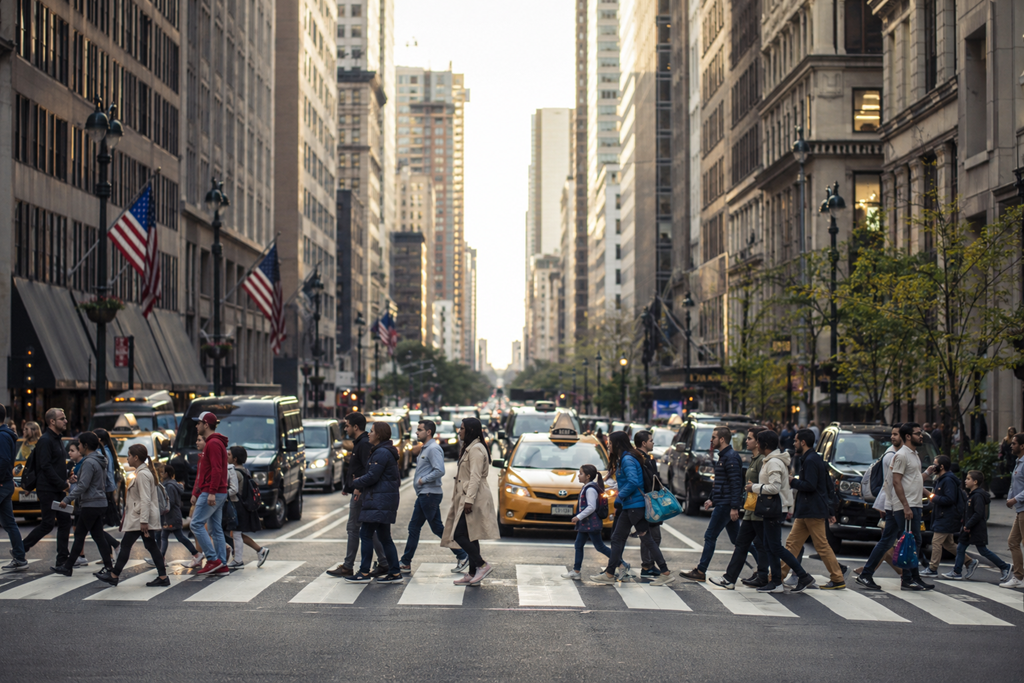
Use the subway for longer distances, then walk once you are in the neighborhood you want to explore. This combination saves time, reduces taxi dependence, and helps you experience the city more like a local visitor.
How to Prioritize Your First New York City Trip
For a first visit, avoid trying to do all 25 things in one trip. Instead, choose a balanced mix:
Pick one major skyline view, one major museum, one park, one waterfront experience, one Broadway or cultural night, and two or three neighborhoods to explore on foot. That gives you a strong introduction without turning the trip into a checklist.
A good first-time route might include Midtown and Central Park on one day, Lower Manhattan and the Brooklyn Bridge on another, and downtown neighborhoods like SoHo, Chinatown, and the Lower East Side on a third. Add museums, food stops, and evening plans based on your energy.
New York City rewards curiosity, but it also rewards pacing. Leave space between major sights, wear comfortable shoes, check current opening hours before you go, and book ahead for attractions that require timed entry or advance tickets.
Download Our Free E-book!