Paris can feel like a lot on a first visit. There are famous landmarks, world-class museums, historic neighborhoods, scenic walks, beautiful parks, and more pastry counters than any reasonable person can visit in one trip.
The good news is that a first trip to Paris does not need to be complicated. The best approach is to focus on the experiences that give you a real sense of the city: its art, architecture, river views, neighborhood life, food traditions, and slower everyday rhythms.
This guide covers 25 of the best things to do in Paris for first-time visitors, with practical notes to help you decide what deserves a place in your itinerary.
Classic Paris Landmarks
1)) See the Eiffel Tower from Trocadéro or Champ de Mars
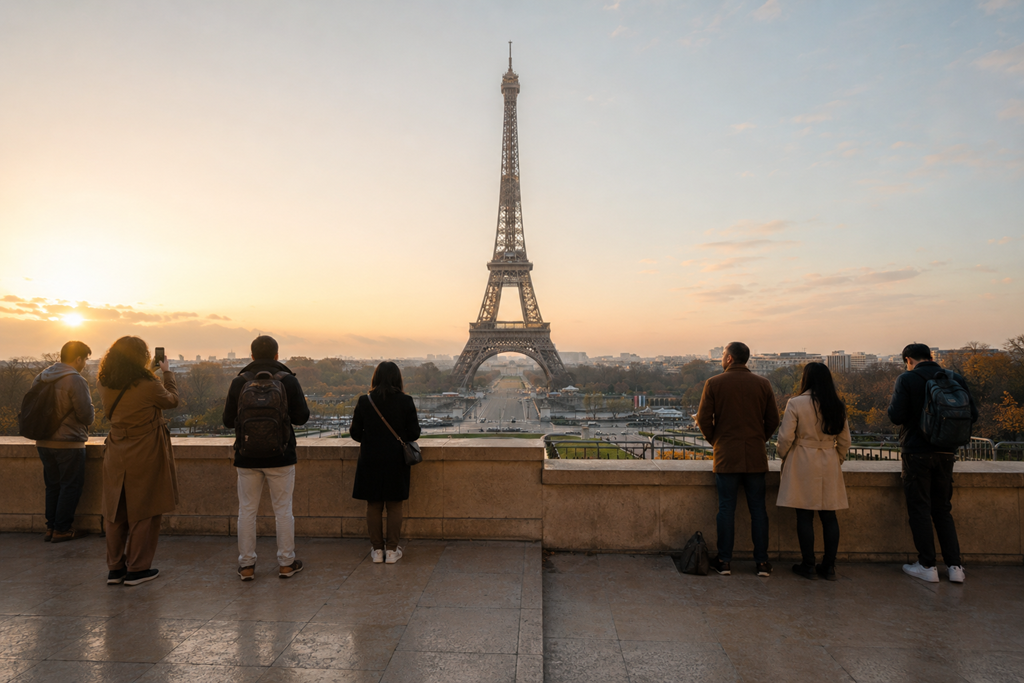
For many first-time visitors, the Eiffel Tower is the moment Paris starts to feel real. You can go up the tower, admire it from the lawns of Champ de Mars, or see one of the best classic views from Trocadéro across the Seine.
Going up the tower is memorable, but it is not required to enjoy it. If your schedule is tight, seeing it from the ground may be enough. If you do want to visit the upper levels, book ahead and check current access details before you go. The Eiffel Tower stands 330 meters high and remains one of the defining symbols of Paris.
Best for: first-time visitors, photographers, couples, families, and anyone who wants the classic Paris experience.
2)) Visit the Louvre Museum with a focused plan
The Louvre is one of the most important museums in the world, and it can also be one of the easiest places to overdo. First-time visitors should avoid trying to “see everything.” Instead, choose a short list of priorities, such as the Mona Lisa, Venus de Milo, Winged Victory, French paintings, or the former palace architecture itself.
Give yourself time to enjoy the building, not just the famous works. The Louvre is closed on Tuesdays, and current hours or entry procedures should always be checked before visiting.
Best for: art lovers, history fans, rainy days, and travelers who want a major cultural anchor for their trip.
3)) Walk around Notre-Dame and Île de la Cité
Notre-Dame is one of Paris’s most meaningful landmarks, and the surrounding Île de la Cité is one of the best places to understand the city’s older layers. Even if you only walk around the exterior, the cathedral, bridges, riverbanks, and nearby historic streets make this area worth your time.
Because cathedral access can vary around services, security, restoration work, and visitor demand, check current visiting guidance before you go. Notre-Dame reopened in December 2024 after its post-fire restoration, and visitor interest has remained high.
Best for: history lovers, architecture fans, first-time visitors, and anyone building a central Paris walking route.
4)) Step inside Sainte-Chapelle
Sainte-Chapelle is smaller than many Paris landmarks, but it can be one of the most memorable. The upper chapel is known for its soaring stained glass, which fills the space with color when the light is right.
This is a good attraction to combine with Notre-Dame, the Conciergerie, or a walk along the Seine. Since entry may require a timed ticket, plan ahead during busy travel periods. The monument is especially known for its 1,113 stained glass windows.
Best for: architecture lovers, photographers, and visitors who prefer high-impact sights that do not take half a day.
5)) Climb the Arc de Triomphe for one of the best city views
The Arc de Triomphe gives you one of the most useful views in Paris because you can actually see the Eiffel Tower, the Champs-Élysées, and the city’s grand avenues from above.
It is a better viewpoint than many first-time visitors expect. The climb is part of the experience, so be ready for stairs. The official monument site describes the terrace view as one of the highlights of visiting.
Best for: skyline views, photographers, and travelers deciding between observation points.
Museums, Art, and Culture
6)) Visit the Musée d’Orsay for Impressionist art
If the Louvre feels too large or classical for your taste, the Musée d’Orsay may be the better fit. Housed in a former railway station, it is famous for Impressionist and Post-Impressionist art, including works associated with Monet, Van Gogh, Manet, and other major artists.
It is still a major museum, but many visitors find it easier to navigate than the Louvre. Check access conditions before visiting, especially during renovation periods or busy seasons.
Best for: art lovers, couples, museum-first travelers, and anyone who wants a more manageable museum experience.
7)) See the Musée de l’Orangerie and Monet’s Water Lilies
The Musée de l’Orangerie is best known for Monet’s large Water Lilies rooms. It is a quieter, more focused museum experience than the Louvre or Orsay, and it pairs naturally with a walk through the Tuileries Garden.
This is a strong choice if you want a meaningful art stop without spending most of the day indoors. It also works well as a backup plan if the weather turns rainy.
Best for: Impressionist art fans, slower travelers, and visitors who want a shorter museum visit.
8)) Explore the Rodin Museum and gardens
The Rodin Museum offers a different kind of Paris museum experience: sculpture, gardens, and elegant surroundings rather than massive galleries. The gardens are a major part of the visit, making this a good choice when the weather is pleasant.
It is especially worthwhile if you want culture without the intensity of the larger museums. The Thinker and The Gates of Hell are major highlights, but the setting itself is part of the appeal.
Best for: garden lovers, sculpture fans, and travelers looking for a quieter cultural stop.
9)) Visit the Panthéon in the Latin Quarter
The Panthéon is one of the most impressive monuments on the Left Bank. Its grand interior, dome, crypt, and role as a burial place for important French figures make it both architectural and historical.
It is also easy to combine with the Latin Quarter, Luxembourg Gardens, and nearby cafés. For first-time visitors, it adds depth beyond the most obvious Paris landmarks.
Best for: history lovers, architecture fans, and visitors spending time on the Left Bank.
10)) Attend a performance or tour Palais Garnier
Palais Garnier, the historic Paris opera house, is one of the city’s most ornate interiors. Even if you do not attend a performance, a daytime visit can be worthwhile for the grand staircase, painted ceiling, balconies, and richly decorated public spaces.
This is a good choice if you enjoy interiors, music history, or places that feel theatrical before the performance even begins.
Best for: architecture lovers, performing arts fans, and visitors who enjoy grand historic interiors.
Paris Neighborhoods and Walks
11)) Wander through Montmartre
Montmartre is famous for Sacré-Cœur, hillside streets, artists, stairways, and wide views over Paris. It can be crowded in the most popular areas, but it is still worth visiting on a first trip.
The key is to move beyond the busiest square and give yourself time to wander. Side streets, small cafés, and quiet staircases are part of what makes the neighborhood memorable.
Best for: walkers, photographers, couples, and visitors who want a village-like feel within the city.
12)) Visit Sacré-Cœur Basilica
Sacré-Cœur sits at the top of Montmartre and offers one of the most recognizable views over Paris. The basilica itself is striking, but the setting is just as important.
Go earlier in the day if you want a quieter experience, or later if you want atmosphere and evening views. Be prepared for crowds and keep an eye on your belongings in busy areas.
Best for: skyline views, architecture, and pairing with a Montmartre walk.
13)) Explore Le Marais
Le Marais is one of the best neighborhoods for first-time visitors because it combines history, shopping, food, museums, and everyday street life in a compact area. You can wander without a strict plan and still find something interesting.
Highlights include old mansions, narrow lanes, galleries, boutiques, falafel shops, bakeries, and Place des Vosges. It is a good neighborhood for travelers who want Paris to feel lively without being limited to major monuments.
Best for: food, shopping, history, and flexible wandering.
14)) Walk through the Latin Quarter
The Latin Quarter is associated with students, bookshops, historic streets, and the intellectual life of Paris. It is a good area to explore on foot, especially if you pair it with the Panthéon, the Sorbonne area, Shakespeare and Company, or the Seine.
This neighborhood is useful for first-time visitors because it gives you a different feel from the grand boulevards and museum-heavy areas.
Best for: book lovers, history-minded travelers, and Left Bank exploring.
15)) Stroll Saint-Germain-des-Prés
Saint-Germain-des-Prés is classic Left Bank Paris: cafés, galleries, churches, boutiques, and elegant streets. It is polished, walkable, and easy to combine with the Seine, Luxembourg Gardens, or the Musée d’Orsay.
This is not a checklist neighborhood. It is better experienced slowly, with time for a coffee, a bakery stop, or a look inside a bookshop.
Best for: café culture, slow walks, design shops, and classic Paris atmosphere.
Parks, Gardens, and Scenic Places
16)) Relax in Luxembourg Gardens
Luxembourg Gardens is one of the best places to take a break from sightseeing. The lawns, fountains, tree-lined paths, chairs, and palace views make it ideal for a slower hour between bigger attractions.
It is especially useful if you are traveling with children, feeling tired, or building a Left Bank day around the Latin Quarter and Saint-Germain-des-Prés.
Best for: families, slower travelers, picnic-style breaks, and anyone needing a pause.
17)) Walk through the Tuileries Garden
The Tuileries Garden sits between the Louvre and Place de la Concorde, making it one of the easiest green spaces to include in a first-time Paris itinerary. It works well before or after the Louvre, or as part of a longer walk toward the Champs-Élysées.
It is not just a shortcut. The garden gives you open views, sculpture, fountains, and a chance to rest in the middle of a busy sightseeing day.
Best for: Louvre visitors, walkers, families, and first-day orientation.
18)) Spend time along the Seine
Some of the best moments in Paris happen along the river. Walking the Seine lets you see bridges, booksellers, museum façades, Notre-Dame, river islands, and everyday city life at a manageable pace.
You do not need a complicated route. Start near the Louvre, Notre-Dame, Saint-Michel, or Musée d’Orsay and walk until you feel ready to stop.
Best for: first-time orientation, photography, couples, and low-cost sightseeing.
19)) Take a Seine River cruise
A Seine cruise is popular for a reason. It gives you a different view of the city, especially if you have limited time or tired feet. You can see several major landmarks from the water without navigating traffic, stairs, or metro transfers.
This is best treated as a simple sightseeing experience rather than a luxury must-do. Choose a basic cruise if your goal is just to enjoy the views. Paris’s official tourism site includes Seine cruises among classic first-time visitor experiences.
Best for: first-time visitors, families, couples, and travelers who want a restful overview.
20)) Visit Place des Vosges
Place des Vosges is one of the most beautiful squares in Paris and a natural stop while exploring Le Marais. Its symmetrical arcades, brick façades, trees, and benches make it feel composed and peaceful without requiring much time.
It is a good reminder that not every worthwhile Paris experience needs a ticket. Sometimes the best stop is simply a square where you can sit for a few minutes.
Best for: Marais walks, architecture, easy breaks, and low-pressure sightseeing.
Food, Markets, and Local Experiences
21)) Try classic Paris pastries from a neighborhood bakery
A first trip to Paris should include at least one bakery stop. Croissants, pain au chocolat, fruit tarts, éclairs, madeleines, and seasonal pastries are part of the pleasure of being in the city.
You do not need to chase the most famous bakery. A good neighborhood boulangerie or pâtisserie near your hotel can be just as satisfying. Go earlier in the day for better selection.
Best for: everyone, especially travelers who want simple daily rituals rather than complicated food plans.
22)) Visit a Paris market street
Market streets give you a practical, everyday version of Paris. Depending on where you are staying, you might explore areas such as Rue Cler, Rue Montorgueil, Rue Mouffetard, or another neighborhood market street with produce shops, cheese shops, bakeries, cafés, and small specialty stores.
These areas are useful because they combine food, walking, and local atmosphere. They are also easy to fit into a morning or lunch plan.
Best for: food lovers, photographers, and travelers who enjoy browsing without a strict schedule.
23)) Have a simple café meal
Paris café culture is not only about famous literary cafés or elaborate meals. A simple breakfast, omelet, salad, croque monsieur, coffee, or afternoon drink can be one of the easiest ways to settle into the city.
Choose a café based on location, menu, and atmosphere rather than online hype. For a first trip, the goal is not to find the “best” café in Paris. The goal is to enjoy a comfortable pause during the day.
Best for: slower travel, people-watching, solo travelers, and flexible meals.
24)) Taste French cheese, bread, and picnic foods
A picnic-style meal can be one of the most enjoyable food experiences in Paris. Pick up bread, cheese, fruit, pastries, or prepared foods from local shops, then enjoy them in a park or back at your accommodation.
Be respectful of local rules in parks and public spaces, and avoid turning delicate lawns or busy monuments into a full dining setup. Keep it simple and easy to clean up.
Best for: budget-conscious travelers, families, couples, and anyone who prefers casual meals.
Easy Day Trips and Bigger Experiences
25)) Take a day trip to Versailles
Versailles is one of the most popular day trips from Paris, and it is best approached as a full or nearly full day rather than a quick side stop. The palace, gardens, fountains, Trianon estate, and grounds can take more energy than visitors expect.
If you go, book ahead during busy periods, arrive with a realistic plan, and avoid scheduling a major evening activity afterward. The official Versailles site recommends planning around the palace, gardens, and Estate of Trianon if you want a fuller visit.
Best for: history lovers, garden lovers, palace interiors, and travelers with at least four or five days in Paris.
How to Prioritize Your First Paris Trip
If you only have two or three days, focus on the Eiffel Tower, the Louvre or Musée d’Orsay, Notre-Dame and Île de la Cité, a Seine walk or cruise, one major neighborhood, and one park or garden.
If you have four or five days, add Montmartre, Sainte-Chapelle, the Arc de Triomphe, Le Marais, Saint-Germain-des-Prés, and more food-focused wandering.
If you have a week, you can slow down and include Versailles, smaller museums, market streets, longer walks, and more time sitting in parks and cafés.
The best first trip to Paris is not the one where you see the most things. It is the one where you leave understanding the city a little better than when you arrived.
Practical Notes for First-Time Visitors
Paris is easiest when you group activities by area. Avoid crossing the city repeatedly in one day if you can help it. Pair the Louvre with the Tuileries, Notre-Dame with Sainte-Chapelle, Montmartre with Sacré-Cœur, and the Latin Quarter with Luxembourg Gardens.
Public transportation is useful, especially the Metro and RER, but walking is part of the experience. Build in extra time for getting oriented, entering major attractions, security checks, and breaks.
For major museums and monuments, check current opening hours, reservation rules, and access conditions before you go. Some attractions may require timed-entry reservations, and conditions can change during renovations, holidays, services, strikes, or busy travel periods.
Download Our Free E-book!