Emotional eating can affect weight loss progress when food becomes a way to manage feelings instead of simply responding to hunger. It may not look extreme or obvious. It can show up as extra snacking after a hard day, eating past fullness when you feel overwhelmed, or reaching for comfort foods when you are bored, lonely, tired, frustrated, or mentally drained.
This does not mean you lack discipline. It means food may be serving more than one role in your life.
For many people, emotional eating is not a dramatic binge or a total loss of control. It is often much quieter than that. A few bites here, a second portion there, late-night grazing after everyone else has gone to bed, or choosing food for relief even when your body is not asking for it. Over time, these small moments can make progress feel confusing because the person may be “doing most things right” and still not seeing the results they expected.
Emotional Eating Often Feels Normal in the Moment
One reason emotional eating is easy to miss is that it can feel reasonable while it is happening.
You may tell yourself you deserve something after a stressful day. You may eat while scrolling, watching TV, working late, or cleaning up the kitchen. You may not feel especially upset. You may simply feel worn down and want something that gives a quick sense of comfort.
That is why emotional eating is not always connected to obvious sadness or anxiety. Sometimes it is connected to mental fatigue. Sometimes it is connected to being overstimulated. Sometimes it comes from needing a pause, but using food as the easiest available pause.
The issue is not that one snack ruins progress. The issue is that emotional eating can become a repeated pattern that quietly adds more food than your body needs, while never fully addressing what you were actually needing in the first place.
The Progress Problem Is Usually the Pattern, Not One Meal
Many people blame one “bad” food or one imperfect day when their progress slows. But emotional eating usually affects progress through repetition.
A cookie after lunch is not automatically a problem. A bowl of cereal at night is not automatically a problem. Takeout after a long day is not automatically a problem.
The question is whether food is regularly being used to soften emotions, delay discomfort, reward exhaustion, or create a sense of escape.
When that happens often enough, it can make weight loss harder in several ways. It may increase overall calorie intake without feeling like a major change. It may make hunger and fullness cues harder to notice. It may create guilt, which can lead to stricter eating the next day, which can then increase cravings later. It may also keep the real emotional need hidden.
That cycle can leave someone feeling confused because they are not “overeating all day.” They may be eating well at breakfast, making thoughtful lunch choices, and planning dinner with care. But the emotionally driven moments around the edges can still matter.
It Can Hide Behind Healthy Intentions
Emotional eating does not always involve sweets, fast food, or large portions. It can happen with foods that look healthy too.
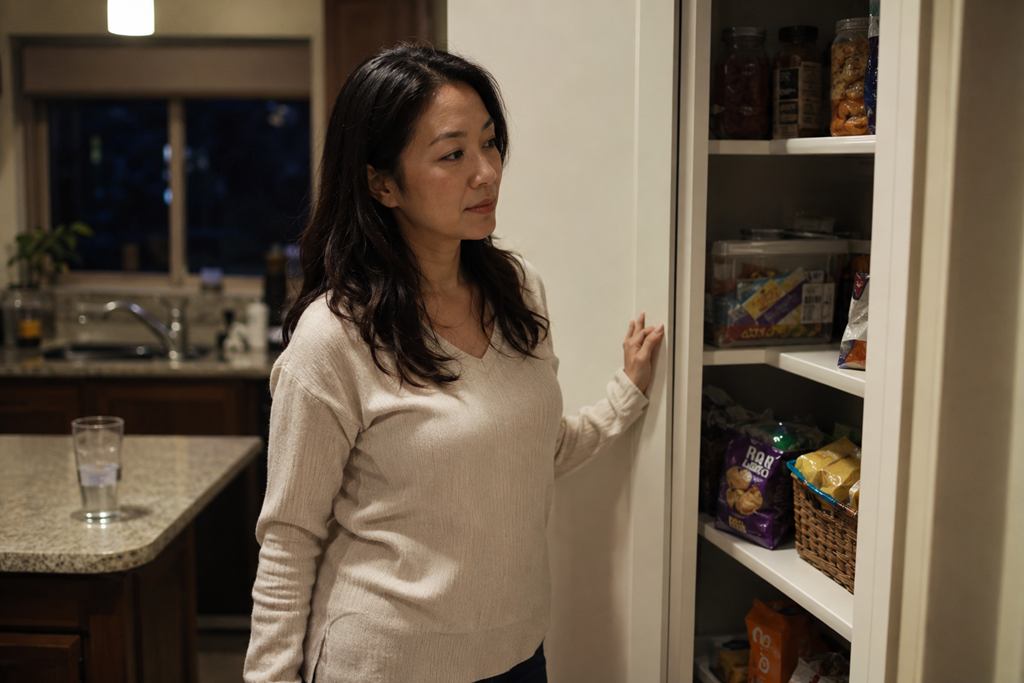
Someone may keep returning to the pantry for handfuls of nuts. They may eat extra portions of a nutritious dinner because the meal feels comforting. They may have a smoothie, protein bar, or “better choice” snack when they are not hungry because they are trying to avoid a less healthy option.
This is where people can get stuck. They may think, “But I’m eating better foods, so why am I not progressing?”
Food quality matters, but emotional eating is not only about the type of food. It is also about the reason for eating, the frequency of the pattern, and whether the body actually needed more energy at that moment.
A nutritious food can still be used emotionally. That does not make it wrong. It simply means the pattern deserves attention.
Emotional Eating Is Often a Signal, Not a Character Flaw
A helpful way to understand emotional eating is to see it as information.
It may be telling you that your days are too packed. It may be showing you that you do not have enough non-food ways to recover from stress. It may reveal that certain times of day feel especially vulnerable. It may point to loneliness, pressure, resentment, boredom, or decision fatigue.
This matters because shame rarely improves the pattern. In many cases, shame makes it stronger.
When someone feels guilty for emotional eating, they may try to “make up for it” by eating very little the next day. That can increase physical hunger, make cravings louder, and set up another emotionally loaded eating moment later. The person may then believe they have no willpower, when the real issue is a loop of restriction, pressure, stress, and relief-seeking.
Understanding the signal gives you more room to respond differently.
The Quietest Triggers Are Often the Most Powerful
Some emotional eating triggers are easy to identify, such as a fight, bad news, or a stressful workday. Others are more subtle.
You may eat emotionally when you finally sit down after holding everything together all day. You may eat when the house is quiet because it is the first moment that feels like yours. You may eat after being around people because you feel drained. You may eat while avoiding a task that feels uncomfortable. You may eat because the day felt dull and food adds something pleasant.
These moments matter because they are easy to dismiss. They do not feel serious enough to count as emotional eating. But if they happen often, they can shape your results more than you realize.
Weight loss progress is influenced by daily patterns, not just big decisions. Emotional eating often lives inside those daily patterns.
Why “Just Stop Snacking” Often Does Not Work
Telling yourself to stop emotional eating can sound logical, but it often misses the point.
If food is meeting an emotional need, removing the food without addressing the need may leave you feeling more deprived, tense, or restless. That is why strict rules can backfire. They may control the behavior temporarily, but they do not always help you understand what is driving it.
A more useful question is not only, “How do I stop eating this?”
It is also, “What is this food helping me get through?”
That question creates a different kind of awareness. Maybe the answer is rest. Maybe it is comfort. Maybe it is a break from responsibility. Maybe it is something enjoyable at the end of a day that felt demanding.
Once you understand the role food is playing, you can begin to separate hunger from emotion without treating yourself like the enemy.
You Can Notice the Pattern Without Overanalyzing Everything
Emotional eating does not require endless self-examination. You do not have to analyze every craving or turn every snack into a personal investigation.
The goal is simply to notice the moments that repeat.
For example, you might notice that evening is harder than morning. You might notice that you eat differently after stressful conversations. You might notice that certain foods are not the issue by themselves, but become harder to manage when you are tired or under pressure.
That kind of awareness is practical. It helps you stop treating every food choice as a random failure and start seeing the context around it.
This is especially helpful for weight loss because progress often improves when the pattern becomes visible. Not perfect. Visible.
Progress Becomes Easier to Understand When the Emotional Layer Is Named
Emotional eating can quietly affect progress because it often blends into normal life. It may not feel like overeating. It may not look dramatic. It may even happen with foods you consider healthy.
But when food regularly becomes a way to manage stress, fatigue, boredom, loneliness, or pressure, it can add up in ways that make weight loss feel harder to understand.
The answer is not to shame yourself or create harsher food rules. The first useful shift is to name what is happening with honesty. Emotional eating is a pattern, not a personality flaw. Once you can see where it shows up, you have more room to make choices that support both your body and your emotional needs.
Download Our Free E-book!