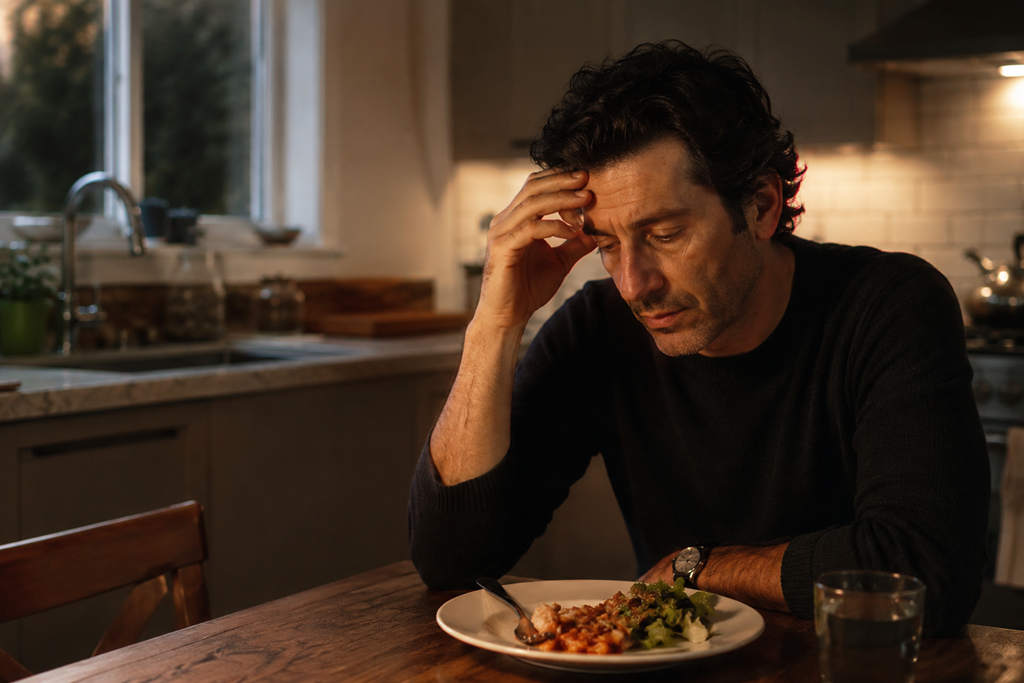
Stress does not only affect how a man feels emotionally. It can also influence his body, habits, energy, sleep, appetite, heart health, digestion, relationships, and the way he responds to everyday responsibilities.
For many men, this is easy to miss because stress often does not show up as obvious worry. It may look like irritability, poor sleep, tight muscles, low patience, stomach discomfort, reduced motivation, headaches, high tension, or feeling worn down even when life appears manageable from the outside.
That is what makes stress such an important men’s health issue. It can quietly move through the body long before a man thinks of it as a health concern.
Stress Can Show Up In The Body Before It Feels Emotional
Many men expect stress to feel like anxiety, sadness, or being mentally overwhelmed. Sometimes it does. But stress can also appear in physical ways that do not seem connected at first.
A man may notice he is more tired than usual, even after getting enough hours in bed. He may feel tense in his shoulders, neck, jaw, or lower back. He may get more headaches, feel more stomach discomfort, or have a harder time recovering after workouts. He may also feel like his patience is shorter, his focus is weaker, or his body is always slightly “on.”
This does not mean every ache, pain, or energy change is caused by stress. Physical symptoms should not be dismissed automatically. But stress can be one of the reasons the body feels different, especially when the symptoms appear during a demanding season of life.
The Body Does Not Separate Pressure From Health
Men often treat stress as a mental issue: something to push through, ignore, or handle privately. But the body responds to ongoing pressure as a full-body experience.
When stress is frequent, the nervous system may stay more activated than it should. That can affect sleep quality, digestion, appetite, muscle tension, and energy. Over time, it can also influence habits that shape long-term health, such as food choices, movement, alcohol use, screen time, and how consistently a man keeps up with medical care.
This is one reason stress can affect men’s health beyond mental well-being. It does not stay in one lane. It often changes the way a man lives, reacts, rests, eats, works, and connects with others.
Many Men Do Not Recognize Stress Because They Are Still Functioning
One of the most misunderstood parts of stress is that a man can still be productive while his health is being affected.
He may go to work, provide for his family, keep commitments, pay bills, exercise, and appear fine to everyone else. From the outside, he may not look like someone who is struggling. But internally, his body may be carrying more strain than he realizes.
This is especially common for men who are used to being dependable. They may not label something as stress unless they are falling apart. But stress does not need to reach a crisis point before it matters. Sometimes the earlier signs are more ordinary: shorter patience, more fatigue, more body tension, less interest in things, disrupted sleep, or a constant sense of being behind.
Functioning is not the same as being unaffected.
Stress Can Change Sleep, Even When A Man Feels Exhausted
Stress often interferes with sleep in frustrating ways. A man may feel tired all day, then become alert at night. He may wake up several times, sleep lightly, or wake up feeling as if he never fully rested.
This can create a cycle. Poor sleep makes the body more sensitive to pressure the next day. The next day’s pressure then makes sleep harder again. Over time, the man may start thinking he is simply “bad at sleeping” when his body may actually be responding to ongoing tension, responsibilities, or unresolved pressure.
This matters because sleep affects nearly everything else: energy, appetite, mood, decision-making, physical recovery, and patience. When stress starts affecting sleep, it can make other areas of health feel harder to manage.
Stress Can Influence Appetite, Weight, And Food Choices
Stress can affect eating patterns in different ways. Some men lose their appetite when they are under pressure. Others eat more often, crave heavier foods, snack late at night, or use food as a way to disconnect after a long day.
Neither pattern should be treated as a character flaw. Stress can change what feels appealing, what feels manageable, and how much effort a man has available for meal planning, cooking, or making healthier choices.
This is why advice like “just eat better” can feel incomplete. If stress is driving the pattern, food choices may not only be about knowledge. They may also be about fatigue, emotional load, convenience, and the need for relief.
A useful reframe is this: the eating pattern may be a signal, not just a behavior. It may point to a body and mind trying to manage more pressure than usual.
Stress Can Affect Men’s Relationships Without Looking Like Stress
Stress can also show up socially. A man may become more withdrawn, less patient, more defensive, or less emotionally available. He may avoid conversations, snap over small things, or feel irritated by responsibilities that normally feel manageable.
This can be confusing because he may not feel sad or anxious. He may simply feel overloaded, tired, or constantly interrupted. People close to him may notice the change before he does.
In men’s health, this matters because relationships often affect how supported a man feels. When stress causes distance or tension, the man may lose some of the connection that could help him recover. The stress then becomes more isolating.
This does not mean every relationship issue is caused by stress. But stress can lower a man’s capacity to communicate, listen, apologize, ask for help, or stay emotionally present.
Pushing Through Can Sometimes Make The Pattern Harder To Notice
Many men are taught, directly or indirectly, to keep moving when life gets difficult. In some situations, that resilience is useful. There are times when responsibilities must be handled, even when a person is tired.
The problem is when pushing through becomes the only response.
If a man always overrides what his body is telling him, he may stop noticing early warning signs. He may wait until sleep is badly disrupted, blood pressure is a concern, relationships are strained, or his energy is consistently low before taking stress seriously.
A healthier way to think about this is not “stop being strong.” It is “pay attention sooner.” Strength and self-awareness can exist together. A man can handle responsibilities while still noticing when his body is showing signs of strain.
The Signs Are Often Ordinary, Which Is Why They Get Ignored
Stress-related health changes are easy to overlook because they often seem too normal to question.
A man may say:
“I’m just tired.”
“I just need a weekend.”
“This is what work is like.”
“I’m getting older.”
“I’ll deal with it later.”
“Everyone is stressed.”
Sometimes those statements are partly true. Life does include pressure. Work can be demanding. Aging can change energy and recovery. Everyone does deal with stress at times.
But common does not always mean harmless. If the pattern keeps repeating, lasts longer than expected, or starts changing sleep, appetite, patience, physical comfort, or daily functioning, it deserves attention.
The goal is not to turn every stressful week into a medical concern. The goal is to stop treating ongoing stress as if it has no effect on the body.
Men Do Not Have To Wait Until Something Feels Serious
One of the most helpful shifts is recognizing stress as part of health, not separate from it.
A man does not have to wait until he feels emotionally overwhelmed to take stress seriously. He does not have to have a dramatic breakdown, a major conflict, or a health scare before making adjustments. Noticing early changes is enough reason to pause and take inventory.
That might mean looking at sleep, workload, movement, caffeine, alcohol, food patterns, relationship strain, recovery time, or whether he has been avoiding a needed checkup. It may also mean talking with a healthcare professional if physical symptoms are persistent, new, worsening, or concerning.
Stress is not always the whole explanation. But it is often part of the picture.
A More Honest Way To Understand Stress And Men’s Health
Stress affects men’s health beyond mental well-being because the body carries pressure physically, behaviorally, and relationally. It can influence how a man sleeps, eats, moves, recovers, communicates, and responds to everyday life.
The important insight is that stress does not have to look dramatic to matter. It may look like fatigue, tension, poor sleep, irritability, stomach discomfort, headaches, low motivation, or feeling disconnected from things that used to feel easier.
Recognizing that connection does not make a man weak. It gives him better information. And better information makes it easier to respond before small signs become harder to ignore.
Download Our Free E-book!