Budgeting for an Indy 500 weekend is less about finding one perfect number and more about building a realistic spending plan around the way the weekend actually works. The biggest costs usually come from tickets, lodging, transportation, parking, food, race-day supplies, and the extra time you spend in Indianapolis before and after the race.
The reason this trip can feel hard to budget for is simple: it is not just “buy a ticket and show up.” The Indy 500 is a major event weekend built around crowds, early arrivals, traffic, weather, long hours, and optional add-ons. Indianapolis Motor Speedway’s own race-weekend planning information highlights details such as parking, shuttles, digital tickets, cooler rules, and its cashless facility setup, all of which can affect how you spend and prepare.
A better budget starts by separating the weekend into the decisions you can price ahead of time and the flexible spending you need to control once you are there.
The Indy 500 Weekend Budget Is Really Several Smaller Budgets
Many people underbudget the Indy 500 because they think of it as one event. In reality, it often becomes a small travel weekend wrapped around race day.
You may be paying for a hotel night or several, gas or flights, rental car costs, rideshares, parking, race tickets, meals, snacks, drinks, souvenirs, sunscreen, ponchos, and time spent around Indianapolis. If you attend other race-weekend events, visit the museum, meet friends, or stay downtown, the budget can stretch quickly.
The goal is not to make the trip feel restrictive. The goal is to prevent the weekend from becoming a series of surprise purchases.
A useful Indy 500 budget usually has these categories:
- Race tickets
- Lodging
- Transportation to Indianapolis
- Local transportation and parking
- Food and drinks
- Race-day supplies
- Merchandise and souvenirs
- Extra activities
- Emergency cushion
That may sound like a lot, but once each category has a place, the weekend becomes easier to manage.
Start With the Ticket, But Do Not Let the Ticket Define the Whole Trip
Your race ticket is the most obvious cost, but it is not always the biggest one. Depending on where you are traveling from and how long you stay, lodging and transportation may matter more.
For the 110th Running of the Indianapolis 500, Indianapolis Motor Speedway lists race day reserved seats starting at $85, while noting that reserved seats include general admission access and that anyone in a reserved seating area needs a ticket regardless of age.
That starting price is helpful as a planning anchor, but it should not be treated as your total event cost. Seat location, group size, fees, timing, and add-on events can change the final number. If you are bringing family or friends, the ticket category should be calculated per person before you move on to anything else.
A calm way to think about it is this: the ticket gets you into the experience, but the rest of the budget determines how comfortable and prepared the weekend feels.
Lodging Is Where Guessing Gets Expensive
Hotel costs around major sporting events can change dramatically based on timing, location, demand, and cancellation flexibility. For an Indy 500 weekend, lodging is often where people feel the most financial pressure because there are trade-offs in every direction.
Staying close to downtown Indianapolis may make restaurants, nightlife, and shuttle access easier, but it can cost more. Staying farther away may lower the nightly rate, but it can add transportation time, parking decisions, and race-morning stress. Staying with friends or family may save money, but only if the location still works for the event.
The key is to budget lodging as a weekend decision, not just a nightly price.
Ask yourself:
- How many nights do you actually need?
- Will you arrive the day before race day or earlier?
- Are you willing to drive on race morning?
- Does the hotel charge for parking?
- Is breakfast included?
- Can you cancel if plans change?
A cheaper room is not always cheaper if it adds expensive rideshares, extra meals, or a difficult race-day commute.
Transportation Costs Depend on Your Race-Day Plan
Transportation is one of the easiest parts of an Indy 500 weekend to underestimate because it has several layers.
First, you have to get to Indianapolis. That may mean fuel, flights, rental cars, airport transfers, or road-trip meals. Then you have to get around once you are there. Finally, you need a specific race-day transportation plan.
Indianapolis Motor Speedway offers race day shuttle service for purchase from locations including Indianapolis International Airport and a downtown shuttle parking location, according to its transportation information. That can be worth comparing against parking, rideshare costs, rental car expenses, and the convenience of where you are staying.
If you plan to drive to the Speedway, parking should be treated as its own budget line, not a vague afterthought. IMS parking information shows that parking options vary by day and lot, and race-day lots may open very early. Some official lot pages advise fans to arrive at the gate closest to their seating location before 10 a.m.
That timing matters financially because a poor transportation plan can lead to extra spending on last-minute parking, rideshares, food while waiting, or changes to your schedule.
Food and Drinks Should Be Planned Around a Long Day, Not a Normal Meal Schedule
Race day is not a normal sightseeing day. You may leave early, spend hours outside, wait in lines, walk more than expected, and stay longer than planned after the race.
That changes the food budget.
Instead of thinking, “We will just grab something,” think through the full day:
- Breakfast before leaving
- Coffee or drinks
- Snacks before entering
- Food inside or near the venue
- Water and nonalcoholic drinks
- Dinner after the race
- Extra food if traffic delays your exit
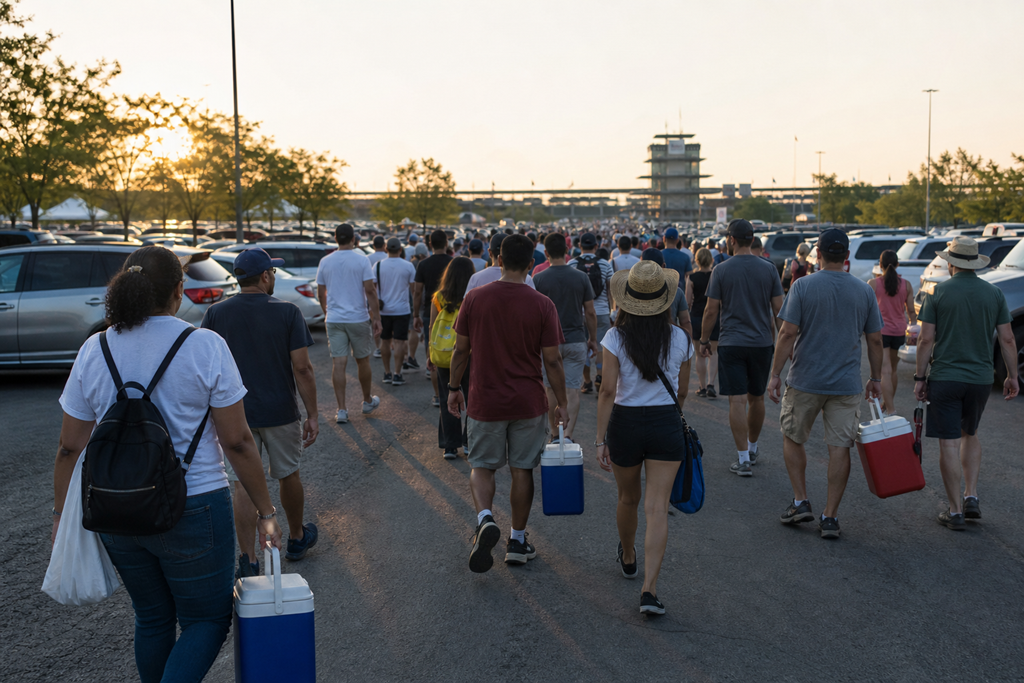
IMS notes that fans can bring their own snacks and refreshments in a cooler, as long as they follow cooler and gate regulations. It also notes that the facility is cashless, so ticket, parking, concession, and merchandise purchases are handled by debit or credit card.
That gives you two practical budgeting choices. You can save money by packing allowed items thoughtfully, and you can avoid payment friction by making sure everyone in your group has a working card or a shared spending plan.
Race-Day Supplies Are Small Costs Until You Forget Them
Some Indy 500 expenses are not glamorous, but they can make the day much easier.
Think sunscreen, sunglasses, hats, ear protection, portable phone chargers, rain gear, comfortable shoes, refillable water plans, seat cushions, and weather-appropriate clothing. None of these items may be expensive individually, but buying them last-minute near a major event can make them feel more costly than they needed to be.
This is one of the clearest places where budgeting and comfort overlap.
A person who brings what they need is less likely to overspend out of discomfort. They are also less likely to miss parts of the experience because they are trying to solve preventable problems in the middle of race day.
Merchandise Spending Needs a Limit Before You See the Merchandise
Souvenirs are part of the fun for many spectators. A hat, shirt, program, diecast car, or gift for someone back home can make the trip feel memorable.
The issue is not buying merchandise. The issue is pretending you will decide rationally after you are already inside the atmosphere of a major sporting event.
Set a merchandise number before the weekend. It can be small, generous, or somewhere in between. The point is to make the decision before the emotion of the day takes over.
This is especially helpful if you are traveling with children, a group, or first-time race fans. A clear souvenir budget prevents small purchases from becoming a quiet source of stress later.
Build a Budget Cushion for the Parts of the Weekend You Cannot Fully Control
A good Indy 500 budget should include a cushion. Not because something will go wrong, but because event weekends have moving parts.
You may need an extra rideshare, an earlier meal, unexpected parking, replacement sunscreen, more water, a late checkout, or a backup plan if weather changes your day. You may also decide that one extra experience is worth it once you are there.
A cushion gives you room to adapt without feeling like the whole budget has failed.
For many travelers, this is the difference between “we overspent” and “we planned for some flexibility.”
A Simple Way to Estimate Your Indy 500 Weekend Budget
A practical starting method is to build your estimate in three layers.
First, calculate fixed costs. These are the expenses you can usually know before the trip:
- Tickets
- Hotel or lodging
- Flights or fuel estimate
- Rental car, if needed
- Prepaid parking or shuttle
- Any reserved activities
Second, estimate daily costs. These are predictable but more flexible:
- Meals
- Snacks and drinks
- Local transportation
- Race-day supplies
- Tips or small purchases
Third, add optional spending:
- Merchandise
- Museum visits or extra attractions
- Extra events
- Post-race meals or drinks
- Group activities
Then add a cushion at the end.
This method works because it keeps you from blending everything into one vague number. It also helps you see which decisions are driving the cost. If the total feels too high, you can adjust lodging, length of stay, transportation, or optional spending before you are already committed.
The Most Common Budgeting Mistake Is Planning the Race, Not the Weekend
A lot of first-time spectators budget for the race itself and forget the time around it.
They price the ticket but not the hotel parking. They think about food during the race but not breakfast before leaving early. They plan the drive to the Speedway but not the slow exit afterward. They remember the souvenir they want but forget the supplies that make sitting outside more comfortable.
This is easy to misunderstand because the Indy 500 is marketed as a single iconic event. But for a traveler, it behaves more like a full sports tourism weekend.
Once you accept that, budgeting becomes less mysterious.
You are not guessing. You are accounting for the real shape of the experience.
A Smarter Indy 500 Budget Makes Race Day Easier
Budgeting for an Indy 500 weekend does not have to remove the excitement from the trip. It usually does the opposite.
When you know where your money is likely to go, you can enjoy the atmosphere with less second-guessing. You can choose where to spend more, where to save, and where convenience is worth the price. You can also avoid the quiet frustration that comes from realizing too late that the ticket was only one part of the cost.
A good Indy 500 budget should feel realistic, flexible, and personal. It should reflect how you are traveling, who is coming with you, how comfortable you want the day to be, and how much room you want for the unexpected.
The goal is not to make the cheapest possible trip. The goal is to make a trip that feels prepared, manageable, and worth remembering.
Download Our Free E-book!