Formula 1 Grand Prix travel is most enjoyable when you treat the race as the centerpiece of the trip, not the entire trip. For a first-time fan, the best approach is to plan around three things: where you will watch from, how you will move around on race weekend, and how much energy you realistically want to spend before and after the event.
A Grand Prix can be thrilling, but it is not like attending a regular local sporting event. The crowds are larger, the schedule stretches across multiple days, the venue may be spread out, and the most memorable parts often happen outside the actual race itself. A calmer, more realistic plan can help you enjoy the atmosphere without feeling rushed, lost, or worn out.
A Grand Prix Weekend Is Bigger Than Race Day
Many first-time fans picture Formula 1 travel as showing up on Sunday, watching the race, and heading home. In reality, a Grand Prix weekend usually feels more like a multi-day festival built around motorsport.
There may be practice sessions, qualifying, fan zones, concerts, merchandise areas, food vendors, support races, team displays, and long walks between entrances, grandstands, and transportation points. Even if you only care about the main race, the surrounding environment affects your comfort and energy.
This is why it helps to think of the trip as a full weekend experience. You are not just buying a seat. You are choosing how you want to experience the noise, movement, crowds, travel time, and atmosphere around one of the biggest spectator events in sports.
Your Seat Shapes More Than Your View
For a first-time fan, ticket choice can feel confusing because every grandstand or viewing area seems to promise a different kind of experience. The right choice depends less on finding the “perfect” seat and more on understanding what kind of race day you want.
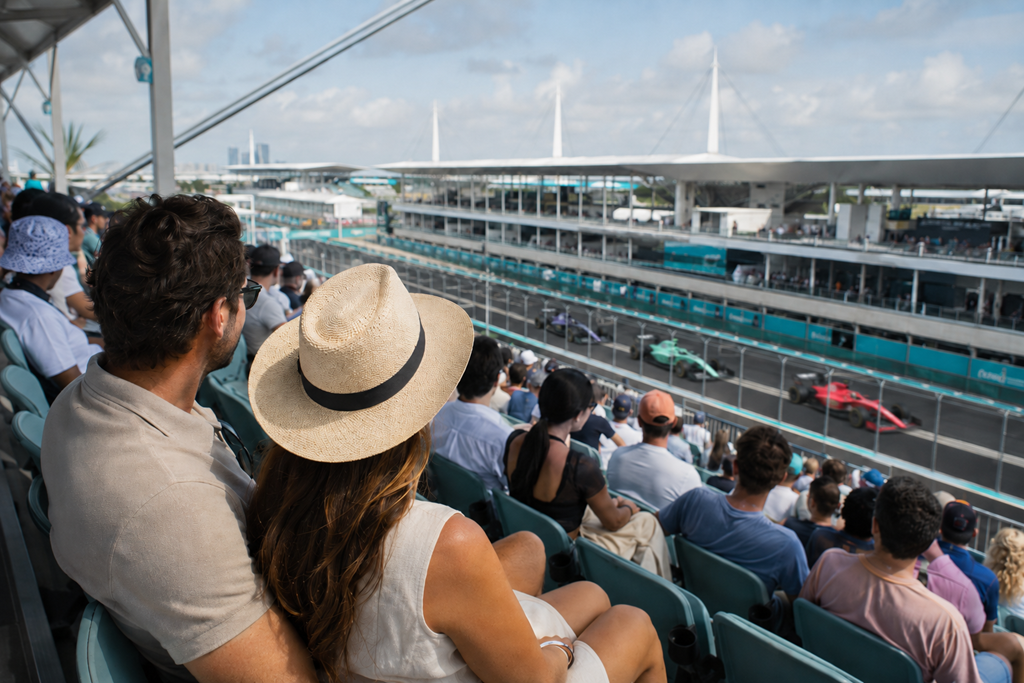
A grandstand seat can make the day feel more settled because you know where you are watching from. General admission may offer more flexibility, but it often requires more walking, earlier arrival, and a willingness to stand or move around to find a good view. Premium areas can reduce some stress, but they do not remove the need to plan transportation, timing, and crowd movement.
The clearest question is not “Where is the best place to watch Formula 1?” It is “What will make the day manageable and enjoyable for me?” For some first-time fans, that means shade, assigned seating, nearby restrooms, and easier access. For others, it means exploring the circuit and soaking in different vantage points.
The Sound, Scale, And Pace Can Be Surprising
One thing first-time fans often underestimate is how physically intense the weekend can feel. Formula 1 has a polished global image, but attending in person still involves ordinary travel realities: lines, heat or rain, crowded transit, packed walkways, expensive food, and long periods of waiting.
The cars are fast, loud, and sometimes difficult to follow from one spot on the circuit. You may only see them for a few seconds at a time depending on where you sit. Much of the drama may be easier to understand through timing screens, commentary, or a race app than through sight alone.
That does not make the in-person experience less valuable. It simply means the joy of a Grand Prix is different from watching on television. You are there for the speed, sound, shared energy, setting, and atmosphere. Accepting that difference helps prevent disappointment.
Getting There And Leaving May Be The Hardest Part
The race itself is usually not the most stressful part of Grand Prix travel. The biggest pressure often comes from getting to the circuit and leaving afterward.
Major race weekends can strain local transportation, roads, rideshare zones, parking areas, and pedestrian routes. A trip that looks simple on a map may take much longer when thousands of people are moving in the same direction. Leaving immediately after qualifying or the race can also involve bottlenecks, long waits, and slow-moving crowds.
A first-time fan should build extra time into every movement around the event. Arriving earlier than feels necessary often creates a calmer day. Leaving later, if it is safe and practical, can sometimes be less stressful than rushing out with everyone else.
This is also where lodging matters. Staying close to the circuit can be convenient, but it may be expensive or limited. Staying farther away may save money, but it can add transportation complexity. Neither option is automatically better. The better choice is the one that matches your budget, patience, mobility, and comfort with crowds.
Do Not Overpack The Weekend
It is tempting to turn a Formula 1 trip into a packed travel itinerary: sightseeing in the morning, race events all afternoon, dinner reservations at night, and early plans again the next day. That can work for some travelers, but it can also make the weekend feel exhausting.
A Grand Prix already asks a lot from your schedule and attention. Long walks, weather exposure, noise, crowds, and transportation delays can drain energy faster than expected. For a first-time fan, it is usually better to leave space around the race weekend rather than filling every open hour.
A lighter plan does not mean you are missing out. It means you are giving yourself room to enjoy the main reason you traveled.
Common First-Time Formula 1 Travel Mistakes
One common mistake is assuming the event will feel like a typical stadium experience. Many circuits are much larger and less centralized than a traditional arena. Getting from one area to another may take real time, especially when crowds are heavy.
Another mistake is choosing tickets based only on race views without considering shade, walking distance, restroom access, food options, and transportation exits. A dramatic corner may sound exciting, but comfort can matter just as much over a long day.
Some first-time fans also underestimate the value of Friday and Saturday. Race day is the headline, but practice and qualifying can help you understand the venue, test your transportation plan, and settle into the rhythm of the weekend before the largest crowds arrive.
Finally, many travelers forget that weather can shape the experience. Heat, rain, wind, or sun exposure can affect how long you want to stay, what you carry, and how comfortable your seat or viewing area feels. A Grand Prix is still an outdoor travel experience, even when the event itself feels glamorous.
Think Like A Traveler, Not Just A Fan
The best first-time Formula 1 trips balance excitement with ordinary travel judgment. You can love the sport and still need quiet time. You can be thrilled to attend and still want a practical exit plan. You can enjoy the atmosphere without trying to see every session, visit every fan zone, or buy every piece of merchandise.
This mindset makes the trip feel more personal. Instead of chasing the “ultimate” Grand Prix experience, you are building a weekend that fits your energy, budget, and reason for going.
For some people, that means being at the circuit as much as possible. For others, it means attending qualifying and race day, then keeping the rest of the trip simple. Both can be valid ways to enjoy Formula 1 travel.
A More Prepared Way To Enjoy Your First Grand Prix
Formula 1 Grand Prix travel can be unforgettable, but it becomes easier to enjoy when you prepare for the full spectator experience, not just the race. Choose tickets based on comfort as well as view. Give yourself more transportation time than you think you need. Keep your itinerary lighter than a normal city trip. Expect crowds, walking, waiting, and sensory intensity.
Most of all, let your first Grand Prix be a learning experience. You do not need to master every detail before you go. You only need a plan that helps you arrive prepared, move through the weekend with less stress, and enjoy the rare feeling of being there in person when the cars come alive.
Download Our Free E-book!