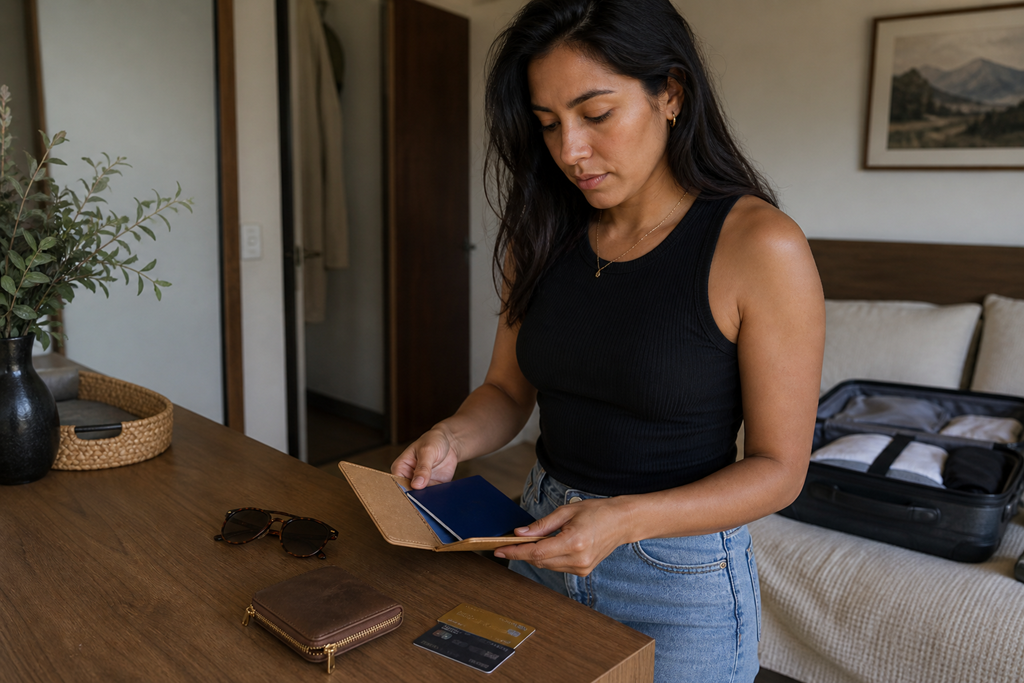
Keeping your credit cards safe while traveling comes down to a few steady habits: bring only what you need, separate your cards instead of keeping them all in one place, use secure payment methods when possible, monitor your transactions, and know how to quickly report a card if it goes missing.
The goal is not to travel nervously or treat every purchase like a risk. It is to make small decisions before and during your trip that reduce avoidable problems. A lost wallet, a questionable card reader, or an unexpected charge feels much less overwhelming when you already have a simple plan.
Travel often puts your normal financial habits into unfamiliar places. You may be paying at airports, hotels, restaurants, taxis, train stations, markets, ticket counters, gas stations, and websites you do not usually use. That does not mean you should expect something to go wrong. It simply means your cards are being used in more settings than usual, and a little preparation can help you stay calm if something feels off.
Bring Fewer Cards Than You Own
One of the easiest ways to keep your credit cards safer while traveling is to avoid carrying your entire wallet.
Most people do not need every card they own on a trip. Bringing too many cards creates more work if your wallet is lost or stolen. You may have to contact multiple issuers, monitor several accounts, replace several cards, and remember which subscriptions or travel reservations were connected to each card.
A calmer approach is to bring one primary travel card, one backup card, and possibly a debit or ATM card if you need cash access. Leave the rest at home in a secure place.
This is not about being overly cautious. It is about limiting the size of the problem if something goes missing.
Keep Your Backup Card Separate
A common travel mistake is keeping every card in the same wallet, purse, or phone case. That feels simple until the one item holding everything disappears.
A backup card only helps if it is stored separately from your main card. For example, you might keep your primary card in your wallet and your backup card in a separate zippered pocket, hotel safe, hidden pouch, or another secure part of your luggage.
The point is not to hide cards in complicated places you will forget. The point is to avoid having one lost item turn into a full payment problem.
If your main wallet is misplaced, a separated backup card can help you pay for food, transportation, lodging, or emergency needs while you handle the missing card.
Use Credit Cards More Carefully Than Casually
Credit cards can be a practical choice for travel purchases because they often offer stronger protections than cash, debit cards, or checks. The FTC notes that paying by credit card can provide protections if card information is lost or stolen, and may also help if you need to dispute a charge for something you did not receive.
That does not mean every credit card use is automatically safe. It means you should use the card in ways that reduce exposure.
Try to keep your card in sight when paying. Use tap-to-pay or a digital wallet when available. Be more cautious with payment terminals that look damaged, loose, or unusual. Avoid handing your card to someone in a situation that feels rushed, confusing, or poorly explained.
Most normal travel purchases are routine. The useful habit is simply to pause when a payment situation feels strange.
Be Thoughtful With ATMs
Credit card safety and travel money safety often overlap at ATMs. Even if you mostly use credit cards, you may still need cash at some point.
When possible, use ATMs located inside banks, airports, hotels, or other visible, well-lit areas. Be cautious with isolated machines, especially ones that appear loose, altered, blocked, or poorly maintained. Cover the keypad when entering your PIN and avoid accepting help from strangers while using the machine.
It is also wise to limit debit card use to cash withdrawals when needed, rather than using a debit card for everyday purchases. A debit card connects more directly to your bank account, so problems can feel more disruptive while you are away from home.
This does not mean you should never use an ATM while traveling. It means you should choose the setting with care.
Turn On Account Alerts Before You Leave
Transaction alerts are one of the simplest ways to notice a problem early.
Before traveling, consider turning on alerts for purchases, online transactions, international transactions, ATM withdrawals, or charges above a certain amount. These alerts can help you spot unfamiliar activity without constantly logging into your account.
This is especially helpful while traveling because your spending pattern may look different from normal. You may have more restaurant charges, transportation charges, hotel deposits, or currency conversions. Alerts help you tell the difference between expected travel spending and something that needs attention.
The key is not to obsess over every notification. It is to create a quiet safety net.
Know How To Lock or Report a Card
Many card issuers now allow you to lock or freeze a card from their app. Before your trip, it helps to know where that feature is and how to use it.
You should also save your card issuer’s contact information somewhere separate from your physical card. If your wallet is gone, the phone number printed on the back of the card is gone with it.
If a credit card is lost or stolen, report it as soon as possible. The FTC explains that federal law limits your liability for unauthorized charges, but the protection depends on the type of card and when you report the loss. The CFPB also states that if you report a lost or stolen credit card before it is used, you cannot be held responsible for unauthorized charges.
This is one reason preparation matters. You do not want to be searching for phone numbers, passwords, or account details while stressed in an unfamiliar place.
Be Careful With Travel Websites and Unusual Payment Requests
Credit card safety is not only about the card in your wallet. It also includes how you pay for hotels, flights, tours, rentals, and travel packages online.
Be cautious if a travel seller pushes you to pay by wire transfer, gift card, cryptocurrency, or payment app only. The FTC warns that requests for wire transfers, gift cards, cryptocurrency, or payment apps can be signs of travel scams, especially when there is pressure or no clear way to recover money if something goes wrong.
When booking travel, slow down enough to read cancellation terms, refund rules, fees, and the exact business name you are paying. A few extra minutes before paying can prevent a much larger problem later.
Do Not Rely on One Form of Payment
A safe travel money setup usually has more than one layer.
That might mean carrying a primary credit card, a backup credit card, a small amount of local cash, and a debit card stored separately for ATM access. It might also mean adding your card to a digital wallet before your trip, so you still have a payment option if a physical card is unavailable.
This kind of backup plan is not dramatic. It is practical. Travel involves delays, closed banks, weak phone service, card declines, misplaced bags, and occasional account holds. Having more than one way to pay keeps a small inconvenience from becoming a major disruption.
Check Your Charges Without Letting It Take Over the Trip
It is useful to review your card activity while traveling, but you do not need to turn your trip into a financial audit.
A quick daily glance or every-few-days check is usually enough for most travelers. Look for charges you do not recognize, duplicate restaurant charges, strange small test charges, or amounts that do not match what you expected.
If you see something unfamiliar, do not panic immediately. Some hotel, rental car, or gas station charges may appear as holds before the final amount settles. Still, if a charge clearly looks unauthorized, contact your card issuer.
The calm middle ground is awareness without anxiety.
The Real Goal Is Fewer Problems, Not Perfect Control
Credit card safety while traveling is easy to overcomplicate. You may see advice about special wallets, hidden pouches, blocking technology, backup accounts, fraud alerts, travel notices, card locks, and every possible scam.
Some of those tools can be useful. But the foundation is simpler:
Bring fewer cards. Separate your backup. Use safer payment methods. Watch your charges. Know how to report a problem.
That is enough to make most travelers better prepared.
You cannot control every payment terminal, website, hotel desk, restaurant, or crowded train station. But you can reduce the chances that one lost card or strange charge derails your trip.
Travel feels better when your money setup is simple, protected, and easy to recover from if something goes wrong.
Download Our Free E-book!