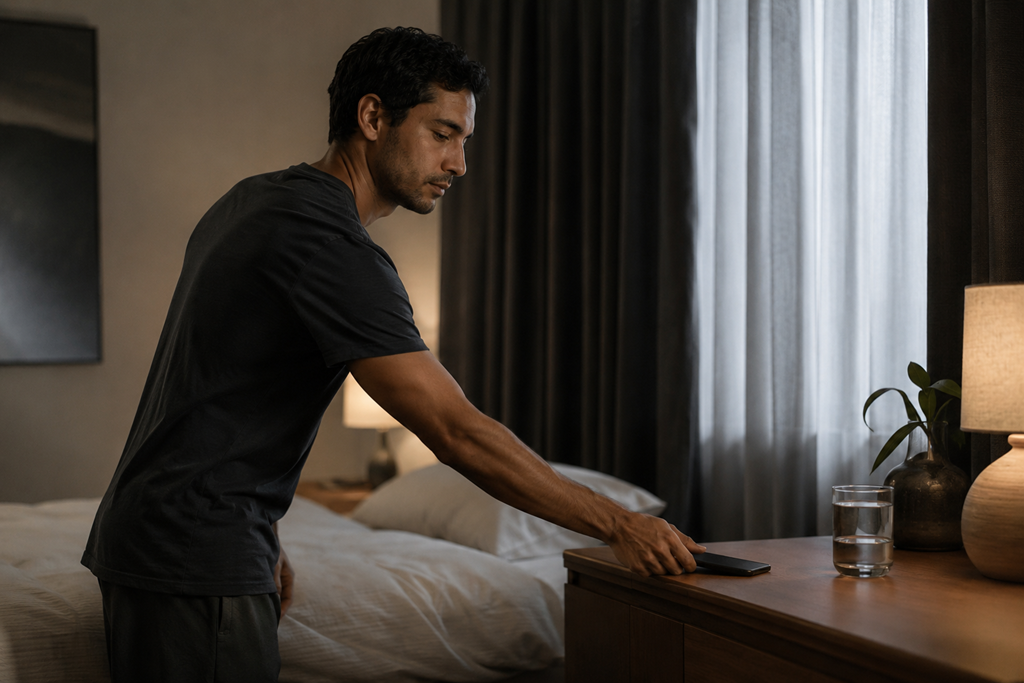
Protecting your sleep window after overnight work means treating your daytime rest like real sleep, not leftover time.
When you work nights, your sleep may happen while the rest of the world is waking up. That makes it easier for light, noise, phone alerts, errands, chores, and other people’s expectations to interrupt the recovery you need.
The problem is not always that you cannot sleep. Sometimes the problem is that your sleep window is not protected well enough.
A better sleep window gives your body a clearer message:
This is rest time.
This time is not available for everything else.
Your Sleep Window Needs A Boundary
A sleep window is the block of time you protect for rest after work.
It does not mean you will sleep perfectly every time. It means you have a defined period where sleep is the priority.
For example:
- 8:00 a.m. to 2:00 p.m.
- 9:00 a.m. to 3:00 p.m.
- 7:30 a.m. to 1:30 p.m.
The exact time depends on your shift, commute, family responsibilities, and next obligation. But without a clear window, other things will fill the space.
You may get home and think:
“I’ll just answer this message.”
“I’ll do one chore first.”
“I’ll help with this real quick.”
“I’ll sleep after I handle that.”
Then the sleep window shrinks before it even begins.
A protected window gives you a practical line to work from.
Daytime Sleep Is Easy For Other People To Misunderstand
One of the hardest parts of sleeping after overnight work is that other people may not see your sleep as real sleep.
If you slept from 11:00 p.m. to 6:00 a.m., most people would understand not to interrupt you.
But if you sleep from 8:00 a.m. to 2:00 p.m., people may treat that time as flexible.
They may call, knock, text, ask for help, make noise, or assume you can “just nap later.”
This is not always intentional. Many people simply forget that your schedule is reversed.
That is why your sleep window may need to be stated plainly.
You might say:
“I sleep after my shift from about 8:30 to 2:30.”
“Please only wake me for something urgent.”
“I’ll answer messages after I’m up.”
“If the door is closed, I’m sleeping.”
You do not need to sound harsh. You just need to be clear.
Light Is One Of The Biggest Sleep Window Breakers
Morning light can make sleep harder after overnight work because it tells your body the day has started.
Even if you feel exhausted, bright light can make your brain more alert. That may happen during the commute, when you walk into a bright home, or when sunlight leaks into your bedroom.
To protect your sleep window, reduce light before and during sleep.
That might mean:
- using blackout curtains
- wearing a sleep mask
- keeping hallway light low
- using a dim lamp instead of overhead lights
- keeping your phone screen away from your face in bed
- closing curtains before the room becomes too bright
You do not need a perfect blackout setup immediately. Start with the strongest light source.
If the window is the issue, address the window.
If the hallway is the issue, address the doorway.
If the phone is the issue, address the phone.
The goal is to make your room feel less like daytime.
Noise Needs A Plan Before It Wakes You
Daytime noise is different from nighttime noise.
During the day, people move around. Cars pass. deliveries happen. neighbors do yard work. family members talk. pets make noise. appliances run.
You may not be able to control every sound, but you can reduce how sharply those sounds interrupt you.
Some options include:
- a fan
- white noise
- earplugs
- a closed door
- soft background sound
- household quiet agreements
- placing the bed away from the loudest wall if possible
The key is to create a steady sound environment that makes sudden noises less noticeable.
This does not have to be expensive. A fan can help. A white noise app can help. Earplugs can help if they are comfortable.
Start with whatever reduces the most common interruption.
Your Phone Should Not Control Your Sleep Window
Your phone can break your sleep window in two ways.
First, it can wake you with notifications.
Second, it can tempt you to re-enter the day when you are supposed to be resting.
After overnight work, the rest of the world is awake. That means messages, alerts, emails, and social media may all be active right when you need to disconnect.
A useful phone boundary might be:
- Do Not Disturb during your sleep window
- emergency contacts allowed
- phone face down
- alarm set before getting into bed
- no scrolling once you are in bed
- messages answered after waking
The goal is not to disappear from life. The goal is to keep your sleep from being interrupted by things that can wait.
If someone truly needs to reach you, create an emergency exception. Everything else can wait until your sleep window ends.
Chores Can Quietly Steal Recovery
Many night workers lose sleep because they try to be productive before bed.
You get home and see dishes, laundry, trash, mail, bills, or something that needs to be picked up. You think, “I’ll just do this first.”
Sometimes that is unavoidable. But often, one chore becomes three.
Chores send your body a wake-up signal because they involve movement, decisions, light, and momentum.
A protected sleep window requires deciding what can wait.
A helpful rule is:
If it does not protect sleep or handle a true need, it waits.
That does not mean your home stops functioning. It means you stop spending your recovery window on tasks that can be done after you wake.
Protecting Sleep Does Not Mean Ignoring Real Life
A sleep boundary should be realistic.
Some people have children, caregiving responsibilities, shared housing, pets, appointments, or unpredictable work schedules. You may not be able to create a perfect sleep block every day.
That is okay.
Protecting your sleep window is not about pretending nothing else exists. It is about reducing unnecessary interruptions where you can.
You might not be able to control everything, but you can often control something:
- the phone setting
- the curtains
- the bedroom door
- the conversation with family
- the first 20 minutes after arriving home
- the decision not to start non-urgent chores
Small boundaries add up.
Tell People What You Need Before You Are Exhausted
It is harder to explain your sleep needs when you are already tired and frustrated.
If possible, set expectations before the issue happens again.
You might tell family or roommates:
“After my overnight shifts, I need my sleep window protected. I’m going to sleep from around 8:30 to 2:30. Unless it’s urgent, please let me handle things after I wake up.”
This works better than trying to negotiate every morning.
You can also create simple signals:
- closed bedroom door
- phone on Do Not Disturb
- agreed quiet hours
- chores handled later
- messages answered after waking
The more predictable the boundary, the less you have to defend it each time.
Common Mistakes That Weaken A Sleep Window
One common mistake is keeping the sleep window vague.
If you do not know when you are sleeping, other people will not know either.
Another mistake is making exceptions too often. If you regularly answer non-urgent calls, respond to messages, and handle small tasks during your sleep window, people learn that the boundary is flexible.
Another mistake is leaving the bedroom environment unchanged. A room that is bright, noisy, warm, or full of interruptions will not support daytime sleep well.
Another mistake is thinking that protecting sleep is selfish. It is not. If you work overnight, sleep is maintenance. You need it to function, recover, and return to your responsibilities.
When You Need A More Complete Post-Shift Plan
Protecting your sleep window is one important part of sleeping after overnight work, but it is not the whole picture. Your body may also need help lowering stimulation, calming physical tension, handling caffeine timing, and quieting work replay.
If you want a more structured way to put those pieces together, How to Fall Asleep After a Night Shift When You Feel Wired but Tired gives you a practical system for moving from work mode into sleep mode while protecting the rest you need.
The Main Takeaway
Your sleep window after overnight work needs protection because the world around you may not naturally support it.
Light, noise, phone alerts, chores, and other people’s expectations can all make daytime sleep harder.
You do not need a perfect setup. Start by defining your sleep window, reducing the biggest disruption, and making the boundary easier for yourself and others to respect.
Your daytime sleep is not leftover time. It is recovery time.
Download Our Free E-book!