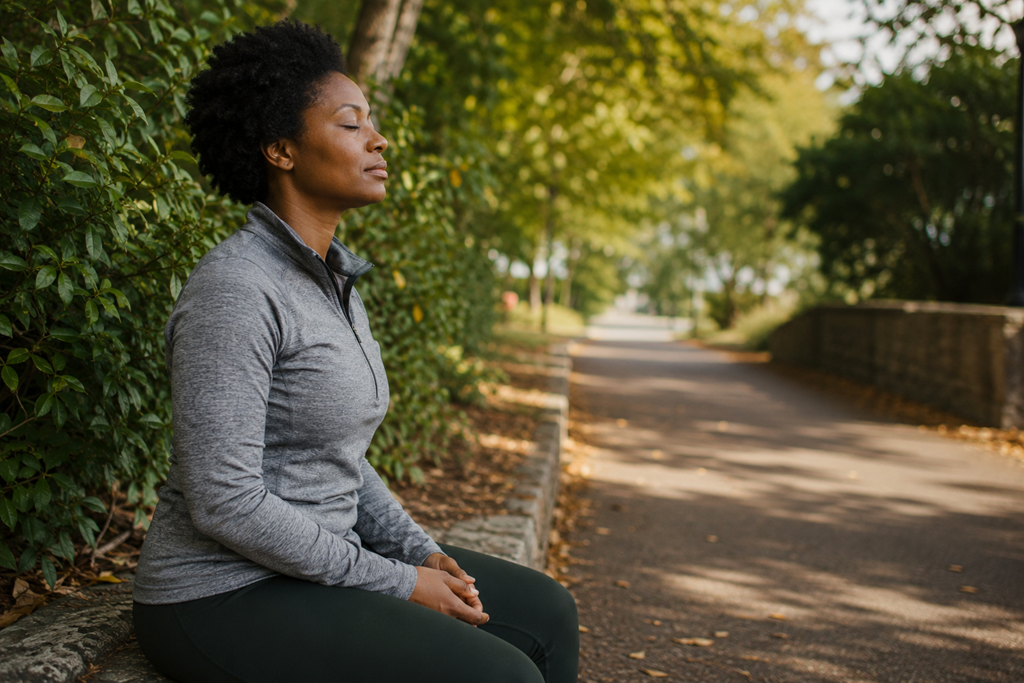
Meditation for everyday stress does not have to be long, silent, perfect, or deeply spiritual. At its simplest, it is the practice of pausing long enough to notice your breathing, your body, and your thoughts without immediately reacting to everything happening inside you.
That pause matters because stress often builds in ordinary moments. It can show up while answering messages, managing work, dealing with family responsibilities, sitting in traffic, making decisions, or trying to fall asleep after a full day. You may not feel like you are in crisis, but your mind keeps moving, your body stays tense, and your attention feels pulled in too many directions.
Simple meditation practices help by giving your nervous system a small place to settle. They do not erase responsibilities or make difficult emotions disappear. They create enough space for you to respond with a little more steadiness.
Meditation Can Be Smaller Than You Think
Many people avoid meditation because they picture something too formal: sitting perfectly still for a long time, clearing the mind completely, or becoming calm on command. That version can feel impossible when life is already busy.
Everyday meditation is much smaller than that.
It can be one quiet minute before opening your laptop. It can be three slow breaths before responding to a stressful message. It can be noticing your feet on the floor while your thoughts are racing. It can be sitting in your car for a moment before walking into the house.
The point is not to perform calmness. The point is to practice returning to the present moment, gently and repeatedly.
Stress Often Feels Like Being Pulled Out Of Yourself
Everyday stress can make you feel scattered. Your mind jumps ahead to what might go wrong, replays what already happened, or keeps scanning for the next thing you need to handle.
In the body, stress may feel like tight shoulders, shallow breathing, jaw tension, a restless stomach, or a general sense of being “on.” Sometimes it does not feel dramatic at all. It simply feels like you are moving through the day with less patience, less focus, and less room inside yourself.
Meditation helps because it gives you a simple way to notice that state before it completely takes over. You are not trying to judge the stress or force it away. You are learning to recognize, “This is stress in my body right now,” which is often the first step toward feeling less controlled by it.
A Few Breaths Can Interrupt The Stress Loop
One of the most useful meditation practices for daily stress is intentional breathing. This does not need to be complicated.
You can pause, breathe in slowly, breathe out a little longer, and notice what changes. Longer exhales can be especially grounding because they encourage the body to soften out of constant alertness.
The benefit is not that one breath fixes everything. The benefit is that one breath interrupts the automatic loop. Instead of immediately reacting, rushing, snapping, scrolling, worrying, or pushing through, you create a brief opening.
That opening may be small, but it is real.
Body Awareness Brings You Back To The Present
Stress often lives in the body before the mind fully understands it. You may only realize how tense you are after your neck aches, your chest feels tight, or you feel exhausted for no obvious reason.
A simple body-based meditation can help you reconnect.
You might notice where your body touches the chair. You might relax your shoulders slightly. You might feel your feet on the ground. You might scan from your forehead to your hands and simply observe where you are holding tension.
This kind of meditation is helpful because it gives your attention something steady and physical. When thoughts feel too busy to calm down, the body can become an anchor.
You Do Not Have To Empty Your Mind
One of the biggest misunderstandings about meditation is the belief that a “good” meditation means having no thoughts.
For most people, that is not realistic. The mind thinks. It plans, remembers, compares, worries, and comments. During meditation, you may notice even more thoughts than usual because you have finally slowed down enough to hear them.
That does not mean you are doing it wrong.
A more helpful goal is to notice thoughts without following every one of them. You might silently name what is happening: planning, worrying, remembering, judging, rushing. Then you return to your breath, your body, or the sounds around you.
Meditation is not about stopping the mind. It is about changing your relationship with the mind.
Quiet Moments Count Even When They Feel Imperfect
Everyday meditation is often imperfect. You may feel distracted. You may only have two minutes. You may forget for several days and then return to it later. You may feel calmer sometimes and restless other times.
That is normal.
The value comes from repetition, not perfection. A short practice done regularly can become a familiar signal to your body: we are allowed to pause now. Over time, that signal can make it easier to notice stress earlier and recover from it more gently.
This is especially helpful for people who live with constant responsibility. When your day has many demands, meditation does not need to become another demand. It can become a small place where you stop demanding more from yourself for a moment.
Simple Practices That Fit Into Real Life
A practical meditation habit can begin with ordinary moments you already have.
You can take a few steady breaths before checking your phone in the morning. You can pause between tasks instead of carrying the tension from one thing into the next. You can sit quietly for a minute before eating. You can place a hand on your chest or stomach and notice your breathing before bed.
These practices are simple, but they work because they are easy to return to. The easier a practice is to repeat, the more likely it is to become part of your real life instead of something you only do when everything is already calm.
Meditation Is Support, Not Self-Pressure
Meditation can become less helpful when people turn it into another way to criticize themselves.
If you think, “I should be calmer by now,” or “I’m bad at this,” the practice starts creating pressure instead of relief. Stress management does not need that extra layer.
A kinder approach is to treat meditation as support. Some days it may help you feel noticeably calmer. Other days it may only help you realize how overwhelmed you are. That awareness still matters. It gives you information. It helps you respond more honestly to what your body and mind are carrying.
Meditation is not a test of discipline. It is a gentle practice of returning.
Everyday Stress Needs Everyday Places To Soften
Stress becomes harder to manage when there is never a pause between one responsibility and the next. Simple meditation practices create small pauses that help you come back to yourself.
You do not need a perfect routine. You do not need complete silence. You do not need to feel peaceful before you begin.
You only need a moment where you stop, breathe, notice, and return. Done gently and repeatedly, that small practice can make everyday stress feel less consuming and more workable.
Download Our Free E-book!