Tips To Plan Stanley Cup Travel For First-Time Fans: What To Do, When, And How
Understanding Stanley Cup Travel: Definition, Context, and Reality
Traveling to the Stanley Cup Finals means planning a trip around the final championship series of the NHL season, not a single, fixed sporting event. The Finals are played as a best-of-seven series across two cities, with dates, locations, and even the total number of games determined only as the playoffs unfold.
For first-time fans, this reality often clashes with how most travel planning works. Flights, hotels, and time off usually rely on firm dates. Stanley Cup travel does not offer that certainty. Teams clinch late, schedules shift, and prices change quickly based on results on the ice.
This disconnect is why many first-time fans find Stanley Cup travel stressful. The challenge is not enthusiasm or effort—it is planning within uncertainty.
Insight: Stanley Cup travel rewards flexibility more than perfect timing.
Why Planning Stanley Cup Travel Is Challenging for First-Time Fans
Stanley Cup travel compresses decision-making into a short window. Fans often must plan before knowing:
- Which cities will host games
- How many games will be played
- Which dates will actually occur
This pressure leads to common problems: rushed bookings, overcommitment, or hesitation that results in missed opportunities.
Crowded airports, unfamiliar cities, packed transit systems, and long arena days also add friction for first-time travelers. Many fans underestimate how physically demanding Finals travel can be.
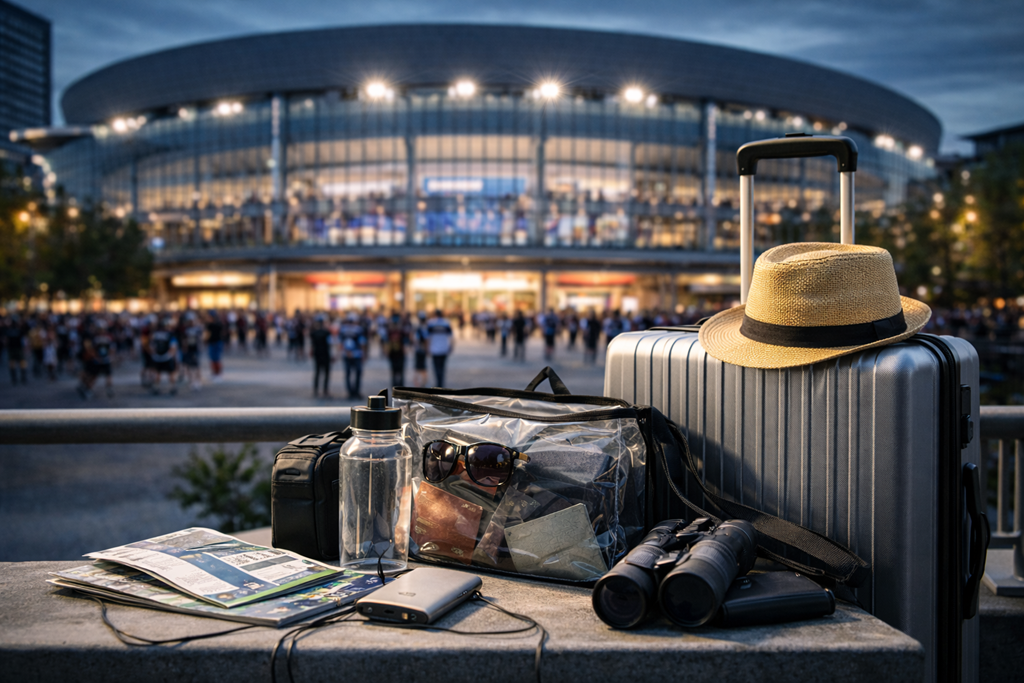
For these reasons, choosing secure, easy-to-manage personal items, such as a crossbody or anti-theft day bag, can quietly reduce stress when navigating airports, transit, and fan-heavy areas without requiring constant attention to belongings.
Insight: Most first-time Stanley Cup travel stress comes from underestimating logistics, not the games themselves.
How Stanley Cup Finals Scheduling Actually Works
What the Series Structure Means for Travel
The Finals follow a 2-2-1-1-1 format. Games are split between two cities, and the series ends as soon as one team reaches four wins.
That means:
- Later games may never be played
- Travel tied to specific games can become unnecessary
- Trip length can shrink or expand unexpectedly
Long days are common. Travel, pre-game events, and late finishes can stretch schedules beyond what first-time fans expect. Staying hydrated and managing energy becomes more important than during a typical sports trip, which is why many experienced travelers rely on a refillable, insulated water bottle to stay comfortable without constant venue purchases.
Insight: Not every Stanley Cup Finals game on the calendar will actually happen.
When Should First-Time Fans Start Planning Stanley Cup Travel?
Method: Early Framework Planning (Low Commitment)
Early planning focuses on structure, not bookings.
This includes:
- Budget ranges
- Time-off flexibility
- Preferred cities
Packing considerations also begin here. Choosing lightweight, carry-on–size rolling luggage supports flexibility if plans change, reduces airport delays, and allows faster pivots when schedules shift.
Method: Conditional Booking Planning (Moderate Commitment)
As potential matchups emerge, some fans monitor refundable flights and hotels. Keeping personal items organized during short or shifting stays becomes important. A travel-size toiletry organizer helps maintain order when hotel nights are added or removed unexpectedly.
Insight: Planning early does not mean booking early—it means preparing to decide faster.
How to Choose Which Stanley Cup Final Game to Attend
Certainty vs Stakes
Games 1 and 2 are guaranteed. Games 6 and 7 may never occur. For first-time fans, certainty often leads to a better experience than waiting for a potentially historic moment that never materializes.
Long arena walks, standing-room fan zones, and city exploration are part of the experience. Wearing comfortable, all-day walking shoes helps reduce fatigue, so the focus stays on the event rather than sore feet.
From upper or angled seating, visual clarity can vary. Some fans quietly enhance their experience with compact, travel-size binoculars, especially when choosing seats based on availability rather than ideal sightlines.
Insight: First-time fans benefit more from guaranteed experiences than hypothetical ones.
Best Practices for Booking Flights and Hotels
Prioritize Flexibility Over Discounts
Refundable or changeable bookings protect against the series ending early or shifting cities. Flexibility may cost slightly more upfront, but it often prevents larger losses.
Staying near reliable transit often matters more than staying closest to the arena. Travel days can be long, and convenience reduces stress.
When packing for unpredictable weather and late nights, a packable, weather-resistant outer layer, such as a packable jacket, allows fans to adapt to temperature swings without overpacking.
Insight: Flexibility is a form of insurance, not inefficiency.
Budgeting for Stanley Cup Travel Without Overcommitting
Stanley Cup travel costs rise quickly once matchups are confirmed.
Budgeting should assume:
- Price volatility
- Possible changes
- Some inefficiency
Instead of chasing the lowest possible cost, setting a comfort ceiling reduces stress and regret.
Staying organized during airport security and venue entry helps avoid delays. A clear, game-approved stadium bag simplifies compliance with arena policies while keeping essentials accessible.
Insight: Budget confidence matters more than budget perfection.
Common Mistakes First-Time Fans Make (And How to Avoid Them)
Mistake: Overpacking for uncertain schedules
Correction: Flexible luggage and streamlined packing
Mistake: Forgetting power needs during long days
Correction: A portable phone power bank ensures access to tickets, navigation, and updates without anxiety
Mistake: Ignoring arena and crowd conditions
Correction: Managing noise and comfort with noise-reducing earplugs designed for events can make long games more enjoyable without dulling the atmosphere
Insight: Most mistakes are small individually but compound quickly during Finals travel.
How to Stay Flexible as the Series Unfolds
Flexibility is both logistical and mental. Monitoring series progress, delaying irreversible decisions, and accepting plan changes reduce frustration.
Keeping devices powered, belongings secure, and energy managed allows fans to focus on the experience rather than logistics. Small tools often make the biggest difference when plans shift.
Insight: Flexibility turns uncertainty into control.
How to Decide If Stanley Cup Travel Is Right for You
Before committing, first-time fans benefit from honest self-assessment:
- Comfort with uncertainty
- Willingness to adapt
- Budget tolerance
Stanley Cup travel is rewarding when expectations align with reality. It is not about perfection—it is about preparation.
Insight: The best Stanley Cup trip is the one planned with realistic expectations.
Key Takeaways
- Stanley Cup Finals travel is inherently unpredictable
- First-time fans struggle when expecting fixed schedules
- Flexible planning reduces financial and emotional risk
- Early games offer certainty; later games offer stakes
- Comfort, organization, and preparedness improve outcomes
- Small, practical tools can quietly enhance the experience
Conclusion
Planning travel around the Stanley Cup Finals is different from planning almost any other sports trip. Uncertainty is built into the event itself, and first-time fans often struggle not because they plan poorly, but because they expect clarity too early.
The most successful Stanley Cup trips are not defined by perfect timing or flawless execution. They are defined by realistic expectations, flexible decisions, and an understanding of how the series actually works. When fans plan with adaptability in mind—choosing certainty where it matters and accepting trade-offs where it does not—the experience becomes far less stressful and far more enjoyable.
Preparation does not mean predicting outcomes. It means being ready for change, managing risk thoughtfully, and making decisions that support comfort and confidence throughout the trip. For first-time fans, that mindset matters more than any single booking choice.
When expectations align with reality, Stanley Cup travel becomes what it is meant to be: a memorable experience rooted in the energy of the Finals, not overshadowed by avoidable stress.
Download Our Free E-book!