Florence is one of those cities where a short trip can still feel meaningful if you plan it well. The historic center is compact, many major sights are within walking distance, and the city’s best experiences often come from slowing down between museums, churches, markets, bridges, and neighborhood streets.
This 3-day Florence itinerary is designed for a first-time visit, with a practical balance of art, architecture, food, viewpoints, and time to wander. It focuses on classic Florence experiences that remain worth building a trip around: the Duomo, the Uffizi, Michelangelo’s David, Ponte Vecchio, Oltrarno, Boboli Gardens, and the city’s everyday food culture.
Florence’s most popular museums and monuments can require timed entry or advance booking, especially during busy travel periods, so check current details before you go.
Before You Start: How To Approach 3 Days In Florence
Florence is best explored on foot. If you stay near the historic center, you can reach many major sights without relying much on public transportation. Buses and trams are useful for the airport, outer neighborhoods, or longer distances, but most of this itinerary is built around walking-friendly routes.
For museum-heavy days, avoid stacking too many major sites back-to-back. Florence’s art and architecture are rich, and a slower pace will help the city feel memorable instead of exhausting.
A good 3-day structure looks like this:
Day 1: The historic center, the Duomo area, and an introduction to Florence
Day 2: The Uffizi, the Arno, Ponte Vecchio, and Oltrarno
Day 3: Michelangelo’s David, San Lorenzo, gardens, and a final viewpoint
Day 1: Historic Florence, The Duomo, And First Impressions
Morning: Start In Piazza del Duomo
Begin your first morning in Piazza del Duomo, the natural starting point for understanding Florence. The Cathedral of Santa Maria del Fiore is one of the city’s defining landmarks, with Brunelleschi’s dome rising above the historic center. The cathedral complex also includes the Baptistery, Giotto’s Bell Tower, the Opera del Duomo Museum, and Santa Reparata beneath the cathedral.
Even if you do not climb the dome or bell tower, spend time walking around the exterior. The scale, marble patterning, and tight urban setting make the Duomo feel different from every angle.
If you want a climb, choose one rather than trying to do everything. Brunelleschi’s Dome is the more iconic experience, while Giotto’s Bell Tower gives you a view that includes the dome itself. The dome climb includes a long stair route, so it is best for travelers comfortable with enclosed spaces and steps. Brunelleschi’s Dome is reached by 463 steps, while Giotto’s Bell Tower involves 414 steps.
Late Morning: Visit The Baptistery Or Opera del Duomo Museum
If you want a deeper look at the Duomo complex without overloading the day, choose either the Baptistery or the Opera del Duomo Museum.
The Baptistery of San Giovanni sits across from the cathedral and is one of Florence’s oldest religious landmarks. Its bronze doors and mosaic tradition are central to the city’s artistic history, though restoration work can affect what is visible inside, so check current conditions before visiting.
The Opera del Duomo Museum is often a better choice if you want context. It holds important works originally connected to the cathedral complex and gives you a clearer sense of how Florence’s religious art, sculpture, and architecture developed over time.
Lunch: Keep It Simple Near The Center
For lunch, avoid planning around one “must-visit” restaurant. Florence has plenty of casual places for sandwiches, pasta, soups, and Tuscan classics, but the area around the Duomo can be busy and uneven. Walk a few streets away from the busiest squares, look for a menu that feels focused rather than oversized, and give yourself enough time to sit down before the afternoon.
Good Florence lunch options include ribollita, pappa al pomodoro, panzanella in warmer months, crostini, fresh pasta, or a simple panino with Tuscan ingredients.
Afternoon: Piazza della Signoria And Palazzo Vecchio
After lunch, walk toward Piazza della Signoria. This square feels like an open-air introduction to Florence’s civic history, with Palazzo Vecchio, sculptures, arcades, and a direct connection to the Uffizi area.
You do not need to tour every building on the first day. The main goal is orientation. Stand in the square, notice how close the political, religious, and artistic centers of Florence are to one another, then continue toward the river.
Late Afternoon: First Walk To The Arno And Ponte Vecchio
From Piazza della Signoria, walk toward the Arno River and Ponte Vecchio. This medieval bridge is one of Florence’s most familiar sights, but it is still worth seeing early in the trip because it helps you understand the city’s layout.
Walk across the bridge, then look back from the riverbanks on either side. The best experience is often not the bridge itself, which can be crowded, but the views of it from nearby.
Evening: Dinner And A Slow Walk Through The Historic Center
For your first evening, stay central and keep dinner relaxed. Florence rewards wandering after dark, when the day crowds thin and the stone streets, piazzas, and church facades feel more atmospheric.
A simple evening route could include Piazza della Repubblica, Piazza della Signoria, the Duomo exterior, and a slow return through smaller side streets. This gives you a strong first impression without adding another museum or scheduled activity.
Day 2: The Uffizi, Ponte Vecchio, And Oltrarno
Morning: Visit The Uffizi Gallery
Start your second day with the Uffizi Gallery. This is one of the most important art museums in the world and a central experience for many Florence trips. The Uffizi occupies the first and second floors of a building designed by Giorgio Vasari and is known for major collections of painting and sculpture from the Middle Ages through the modern period.
Book ahead when possible, especially if your dates are during spring, summer, holidays, or weekends. Rather than trying to see every room with equal attention, focus on a few highlights and give yourself permission to move steadily.
A good approach is to pay special attention to early Renaissance works, Botticelli, Leonardo, Michelangelo, and the way the galleries show the development of Florentine art over time.
Lunch: Cross Toward Santo Spirito
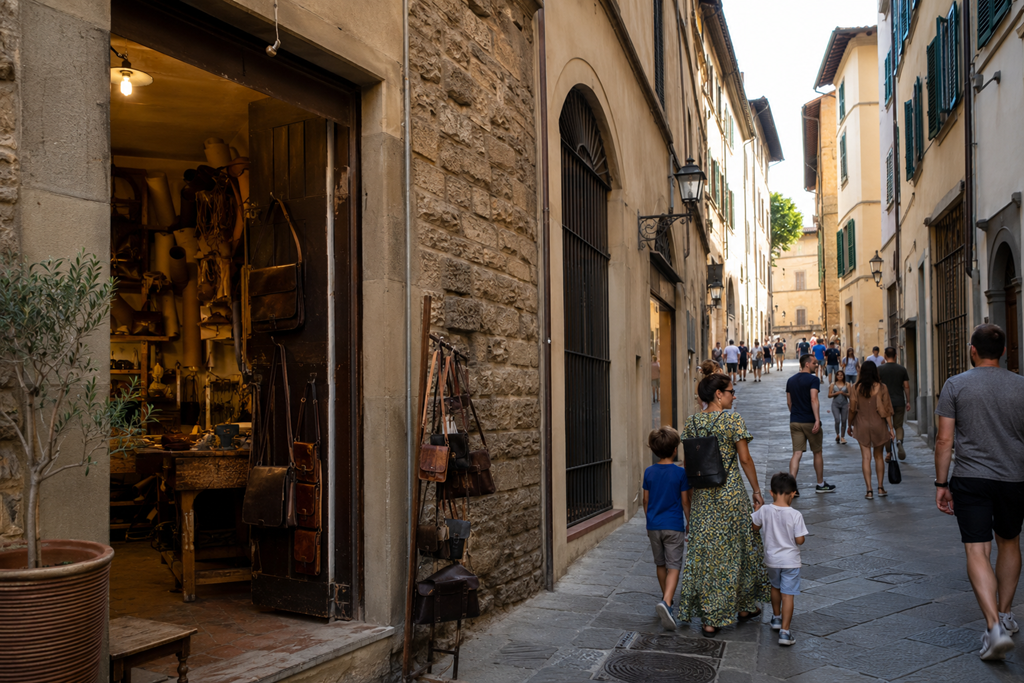
After the Uffizi, cross the Arno and head into Oltrarno, the area “beyond the Arno.” This side of Florence generally feels more residential and craft-oriented than the busiest streets around the Duomo and Uffizi.
Look for lunch near Santo Spirito or along quieter streets leading away from Ponte Vecchio. This is a good part of the city for a slower meal, especially after a museum-heavy morning.
Afternoon: Explore Oltrarno And Artisan Streets
Spend the afternoon exploring Oltrarno at a comfortable pace. The neighborhood is known for workshops, small shops, traditional crafts, churches, and local-feeling squares. You do not need a rigid route here.
Good stops include Piazza Santo Spirito, the exterior of Basilica di Santo Spirito, small artisan streets, and the walk toward Palazzo Pitti. If you enjoy design, paper goods, leatherwork, jewelry, or handmade objects, this is a rewarding area to browse without treating shopping as the main goal.
Optional Add-On: Palazzo Pitti Or Boboli Gardens
If you still have energy, choose either Palazzo Pitti or Boboli Gardens. Do not rush both unless you are especially interested in palace museums and formal gardens.
Boboli Gardens are connected to the Pitti Palace area and offer a different experience from Florence’s dense historic center: greenery, sculpture, long pathways, and elevated perspectives. The gardens are part of the Uffizi Galleries system, and opening times can vary by season, so check current hours before planning your visit.
Late Afternoon: Walk To Piazzale Michelangelo
For one of the best views of Florence, walk or take transportation up to Piazzale Michelangelo. The climb is worthwhile if you are comfortable with uphill walking, and the view helps tie the whole city together: the Duomo, the Arno, Ponte Vecchio, towers, rooftops, and surrounding hills.
Late afternoon into early evening is especially popular, but you do not need to make the experience perfect. Even outside peak sunset time, the viewpoint gives you one of the clearest visual memories of Florence.
Evening: Dinner In Oltrarno
Stay in Oltrarno for dinner if you like a slightly less tourist-centered atmosphere. Look for traditional Tuscan dishes such as bistecca alla fiorentina, pappardelle with ragù, beans, seasonal vegetables, crostini, or a simple wine bar meal.
Florence is a city where food works best when it feels grounded. A memorable dinner does not need to be elaborate; it just needs good ingredients, a comfortable setting, and enough time to enjoy it.
Day 3: Michelangelo’s David, San Lorenzo, Markets, And Final Florence Moments
Morning: See Michelangelo’s David At The Accademia Gallery
Begin your final day at the Accademia Gallery to see Michelangelo’s David. This is one of Florence’s essential art experiences, and it is best visited with a reserved time when possible. The Accademia is strongly associated with Michelangelo’s sculpture, but the visit also gives context through other works and galleries.
Try not to treat David as a quick checklist stop. Give yourself time to walk around the sculpture, notice the scale, and observe how the figure changes from different angles. It is one of those works that is familiar from images but much more powerful in person.
Late Morning: San Lorenzo And The Market Area
After the Accademia, walk toward San Lorenzo. This area is useful for a final-day mix of food, shopping, and everyday city movement. The market area can be busy, but it gives visitors a more practical side of Florence beyond major museums.
This is a good time to browse for food items, leather goods, paper products, or small gifts, while staying selective. As in many heavily visited cities, quality can vary, so slow down before buying and avoid feeling pressured.
Lunch: Try A Classic Florentine Food Experience
Use your final lunch for a classic Florence food experience. Depending on your preferences, that might mean a market meal, a simple trattoria, a panino, or a plate of pasta with Tuscan flavors.
Foods to consider during a Florence trip include:
Ribollita, a Tuscan bread and vegetable soup
Pappa al pomodoro, a tomato and bread dish
Bistecca alla fiorentina, best shared if you eat meat
Crostini with traditional toppings
Cantucci with vin santo
Gelato from a shop that displays flavors naturally rather than in bright, piled-high mounds
The goal is not to chase every famous dish. Choose a few and enjoy them well.
Afternoon: Choose One Final Cultural Stop
For your last afternoon, choose one final stop based on your travel style.
If you want more Renaissance art, consider returning to a museum you did not have time for. If you want architecture and religious history, visit a major church such as Santa Croce or Santa Maria Novella. If you want a gentler final afternoon, stay outside and walk through quieter streets, courtyards, and riverside areas.
A good final-day rule: do not add a large museum just because it is famous. Choose the experience that will make your trip feel complete.
Late Afternoon: Revisit Your Favorite View Or Walk The Arno
Before dinner, return to the Arno for a final walk. Florence is especially beautiful when you let the city repeat itself a little: the same bridge from a different side, the Duomo from a side street, a piazza you crossed earlier but did not fully notice.
You could walk from Ponte Santa Trinita toward Ponte Vecchio, continue along the river, or cross back into the historic center for one last look at Piazza della Signoria.
Evening: A Simple Final Dinner
For your final dinner, keep the plan easy. Choose a neighborhood you enjoyed most rather than trying to force a complicated reservation across town. Florence is compact, but after three full days of walking, a relaxed dinner close to your hotel can be the best decision.
End with a short walk if you still have energy. The city’s atmosphere after dinner is part of the experience.
Where To Stay For This Itinerary
For a first visit, staying in or near the historic center is the most convenient choice. You will be closer to the Duomo, Uffizi, Accademia, Ponte Vecchio, and major piazzas, which makes this itinerary easier to follow.
Good areas to consider include:
Near the Duomo, for maximum central convenience
Santa Maria Novella, for train station access and walkability
Santa Croce, for atmosphere and access to the eastern historic center
Oltrarno, for a more neighborhood-oriented stay
San Lorenzo, for markets, food access, and a practical central base
If you are sensitive to noise, look for lodging on a quieter side street rather than directly on a major piazza or nightlife corridor.
Practical Florence Travel Tips
Book Key Sights Ahead
For the Uffizi, Accademia, and Duomo climbs, advance planning can make a big difference. Some attractions use timed entry, and availability can be tighter during busy seasons. Check current opening hours, reservation rules, and entry requirements before you finalize your daily schedule.
Wear Comfortable Shoes
Florence is a walking city, and the historic center includes stone streets, uneven surfaces, stairs, and museum floors that can feel tiring after a few hours. Comfortable shoes will improve your trip more than almost anything else you pack.
Avoid Overplanning Every Hour
Florence has world-class museums, but the city itself is part of the experience. Leave space for coffee, gelato, quiet churches, river views, and unplanned streets.
Be Strategic With Museum Timing
Plan major museums earlier in the day when your attention is fresh. Save easier walks, viewpoints, markets, and piazzas for later.
Think In Neighborhood Clusters
Group nearby sights together. The Duomo, Piazza della Signoria, Uffizi, and Ponte Vecchio fit naturally together. Oltrarno, Palazzo Pitti, Boboli Gardens, and Piazzale Michelangelo also pair well.
A Flexible 3-Day Florence Itinerary Summary
Day 1: Duomo area, Baptistery or Opera del Duomo Museum, Piazza della Signoria, Arno, Ponte Vecchio, historic center dinner
Day 2: Uffizi Gallery, Oltrarno lunch, Santo Spirito, Palazzo Pitti or Boboli Gardens, Piazzale Michelangelo, Oltrarno dinner
Day 3: Accademia Gallery, San Lorenzo, market lunch, final church or cultural stop, Arno walk, relaxed final dinner
Final Thoughts For Planning Florence Well
Three days in Florence is enough time to see the city’s major highlights without turning the trip into a race. The key is to choose your anchors carefully: one or two major sights per day, a logical walking route, and enough space for the streets, food, views, and small pauses that make Florence memorable.
Let the famous art and architecture shape the trip, but do not overlook the quieter moments. A simple walk along the Arno, a well-timed museum visit, a neighborhood lunch, or a final view from across the river can stay with you just as much as the major landmarks.
Download Our Free E-book!