Barcelona is the kind of city that rewards a thoughtful plan. Its biggest sights are spread across different neighborhoods, and many of its best experiences come from slowing down: walking through historic streets, lingering over food, noticing architecture, and giving yourself time between major attractions.
This 4-day Barcelona itinerary is designed for first-time visitors who want a clear, realistic plan without packing every hour. It balances Gaudí landmarks, historic neighborhoods, museums, markets, waterfront time, scenic views, and practical breathing room. It also keeps the guidance evergreen: for major attractions like Sagrada Família and Park Güell, book ahead and check current visiting details before you go.
Before You Start: How to Use This Barcelona Itinerary
Barcelona is very walkable in individual neighborhoods, but you will likely use public transportation between areas. The metro, tram, FGC, and buses are practical ways to move around the city, and Barcelona’s tourism office describes public transport as one of the quickest and most convenient ways to get around.
For this itinerary, it helps to group your days by geography:
- Day 1: Gothic Quarter, El Born, waterfront
- Day 2: Sagrada Família, Eixample, Gaudí architecture
- Day 3: Park Güell, Gràcia, Montjuïc
- Day 4: Markets, museums, beaches, flexible favorites
Try not to schedule two major timed-entry attractions too close together. Barcelona is best enjoyed when you leave room for walking, meals, and small discoveries.
Day 1: Historic Barcelona, El Born, and the Waterfront
Your first day focuses on Barcelona’s older core. This is a good way to ease into the city because much of the day can be done on foot.
Start in the Gothic Quarter
Begin in the Gothic Quarter, one of Barcelona’s most atmospheric areas. This is where narrow medieval streets, small plazas, old stone buildings, and historic churches create the feeling many travelers imagine before visiting the city.
Give yourself time to wander rather than rushing from landmark to landmark. Useful stops include:
- Barcelona Cathedral
- Plaça del Rei
- Plaça Sant Jaume
- The small streets around Carrer del Bisbe
- Quiet side lanes away from the busiest routes
This area can get crowded, especially in the middle of the day. Starting earlier gives you a better chance to enjoy the streets before they become too busy.
Walk Toward La Rambla and La Boqueria
From the Gothic Quarter, you can walk toward La Rambla, Barcelona’s famous pedestrian boulevard. It is popular and often busy, so it is best treated as a short connecting walk rather than the main focus of your day.
Stop by La Boqueria Market if you enjoy food markets. It is a classic Barcelona experience, especially for seeing fresh produce, seafood, prepared foods, and local food culture in one place. Go with curiosity, but keep expectations realistic: it is both a functioning market and a major visitor attraction.
Spend the Afternoon in El Born
After the Gothic Quarter, continue into El Born, one of Barcelona’s most enjoyable neighborhoods for walking, eating, and browsing. It has a slightly more relaxed feel than the busiest parts of the old city, with boutiques, cafés, wine bars, and historic streets.
Good stops in and around El Born include:
- Basilica of Santa Maria del Mar
- Passeig del Born
- The area around the Picasso Museum
- Parc de la Ciutadella
The Picasso Museum is especially worth considering if you enjoy art and want a museum that fits naturally into this part of the city. As with major museums anywhere, check current visiting hours and ticket requirements before you go.
End Near Port Vell or Barceloneta
In the late afternoon, walk toward Port Vell and the waterfront. This gives your first day a nice change of scenery after the tighter streets of the old city.
You can continue toward Barceloneta if you want a seaside walk. The beach area is not always the quietest part of Barcelona, but it is a classic place to see the city’s Mediterranean side.
For dinner, you can stay around El Born, Barceloneta, or the Gothic Quarter depending on your energy. For a first night, choose convenience over chasing a “must-visit” restaurant.
Day 2: Sagrada Família, Eixample, and Gaudí’s Barcelona
Day 2 is built around Barcelona’s most famous architectural experiences. This is the day where advance planning matters most.
Visit Sagrada Família
Start with Sagrada Família, Antoni Gaudí’s extraordinary basilica and one of Barcelona’s defining landmarks. The official Sagrada Família site recommends buying tickets ahead, and timed entry is important for guaranteeing admission.
This is not a place to rush. Give yourself time to see the exterior façades and the interior light, columns, and details. Even if you are not usually drawn to churches, Sagrada Família is as much an architectural and artistic experience as a religious site.
Practical notes:
- Book ahead during busy travel periods.
- Choose a morning visit if you want to start the day with the biggest attraction.
- Leave time before and after your entry slot so you are not stressed by transportation delays.
- Check current visitor rules before your visit.
Walk or Ride Into the Eixample
After Sagrada Família, spend the rest of the day in the Eixample, the elegant grid-patterned district known for wide avenues, Modernista architecture, shopping streets, and landmark buildings.
This area is excellent for walking because many architectural highlights are visible from the street. Even without entering every building, you can enjoy the façades, balconies, and details that make the district distinctive.
See Casa Batlló and Casa Milà
Two of the most famous Eixample landmarks are Casa Batlló and Casa Milà, also known as La Pedrera. Both are closely associated with Gaudí and offer different ways to understand his style.
You do not have to tour both interiors unless architecture is a major priority for your trip. For many visitors, one interior visit plus exterior views of the other is enough.
A simple approach:
- Choose Casa Batlló if you are drawn to color, curves, and a more immersive visual experience.
- Choose Casa Milà if you are especially interested in structure, rooftop forms, and a broader sense of Gaudí’s residential architecture.
Check current ticketing and entry details before deciding.
Enjoy Passeig de Gràcia
Spend the late afternoon around Passeig de Gràcia, one of Barcelona’s grandest avenues. It works well as a slower part of the day after sightseeing.
You can use this time to:
- Take photos of Modernista façades
- Browse shops
- Stop for coffee or a snack
- Walk back through quieter Eixample side streets
- Return to your hotel before dinner
For dinner, consider staying in Eixample or heading toward Gràcia if you want a neighborhood feel.
Day 3: Park Güell, Gràcia, and Montjuïc
Day 3 combines one major Gaudí site with a local-feeling neighborhood and one of Barcelona’s best scenic areas.
Start at Park Güell
Begin at Park Güell, Gaudí’s colorful hillside park. Like Sagrada Família, this is one of Barcelona’s best-known attractions, and advance booking is recommended for busy periods. Barcelona’s tourism FAQ specifically notes that Park Güell and Sagrada Família receive millions of visitors and recommends booking through official websites.
Park Güell is worth visiting for its mosaic details, curving forms, garden paths, and city views. It is also more enjoyable when you do not rush. Wear comfortable shoes because the park and surrounding area involve slopes and walking.
Practical notes:
- Go earlier in the day if possible.
- Bring water, especially in warmer months.
- Check current entry rules and access details.
- Be considerate of the surrounding residential neighborhood.
Explore Gràcia
After Park Güell, head into Gràcia, a neighborhood that feels different from the more formal Eixample and the busier old city. Gràcia has plazas, local shops, cafés, and a village-like feel in places.
This is a good area for a slower lunch. Instead of trying to find the “best” restaurant, look for a place that feels comfortable and not overly crowded. Gràcia is ideal for letting the itinerary loosen a little.
Good ways to spend time here:
- Sit in a neighborhood plaza
- Browse small shops
- Have a long lunch
- Walk without a strict route
- Notice the difference between Gràcia and central Barcelona
Spend the Afternoon on Montjuïc
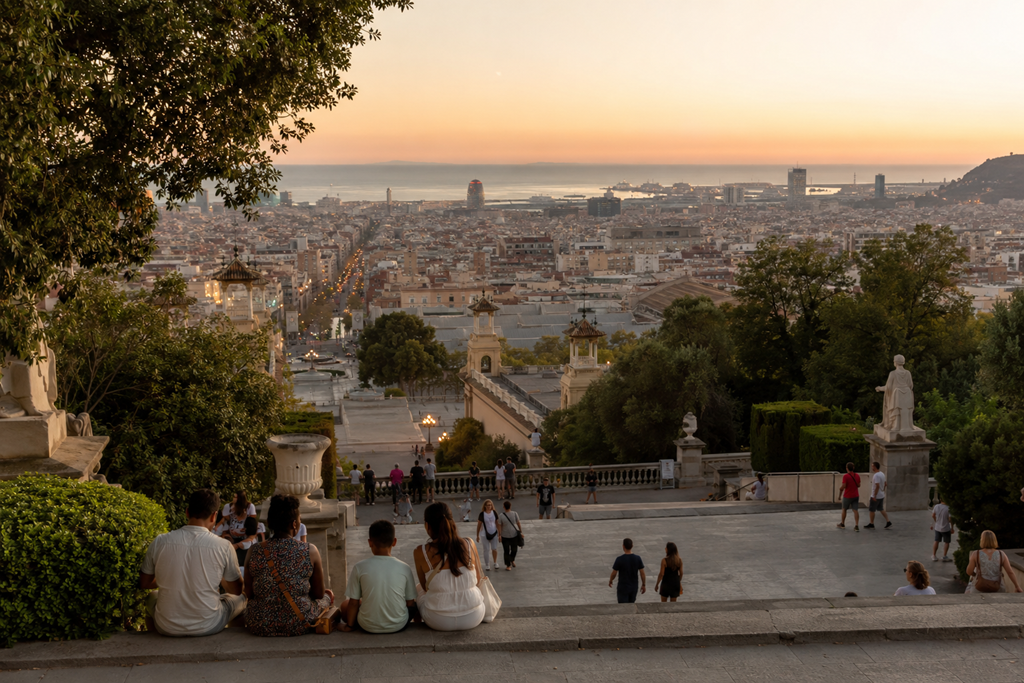
In the afternoon, make your way to Montjuïc, the hill overlooking the city and harbor. Montjuïc is one of the best places to add open space and views to your Barcelona itinerary.
Depending on your interests, you can choose from:
- Montjuïc Castle exterior and viewpoints
- Gardens and walking paths
- Museu Nacional d’Art de Catalunya exterior and terrace views
- Fundació Joan Miró if you enjoy modern art
- Olympic-area landmarks
You do not need to do everything on Montjuïc. Pick one museum or one scenic walking route, then leave time to enjoy the views.
End With Sunset Views
If the timing works, stay on Montjuïc into the early evening. The city views are a strong way to close the day, especially after seeing Gaudí’s work and Gràcia earlier.
Before planning around any evening display, performance, or fountain schedule, check current details. Those kinds of experiences can change by season, maintenance, or local policy.
Day 4: Markets, Museums, Beach Time, and Flexible Favorites
Your final day should not feel like a race. Use it to fill in what matters most to you: food, art, beach time, shopping, another neighborhood, or a return to a favorite area.
Start With a Food-Focused Morning
If you enjoyed La Boqueria but found it crowded, consider visiting another market area or simply planning a food-focused morning around a neighborhood you liked.
Barcelona is a good city for simple food pleasures:
- Coffee and pastries
- Tortilla, pan con tomate, or a light breakfast
- Market browsing
- Tapas-style lunches
- Seafood near the waterfront
- A relaxed vermouth stop
Avoid building your day around one trendy restaurant. Food experiences are more durable when you focus on neighborhoods, traditions, and flexibility.
Choose One Museum or Cultural Stop
For your final full day, choose one cultural experience that fits your interests. Good options include:
- Picasso Museum if you did not visit on Day 1
- Fundació Joan Miró on Montjuïc
- Museu Nacional d’Art de Catalunya
- Palau de la Música Catalana
- A smaller gallery or cultural center
Barcelona has a wide range of architecture, museums, art galleries, and cultural attractions, which makes it easy to tailor this day to your travel style.
Add Beach or Waterfront Time
If the weather is pleasant, spend part of the afternoon near the waterfront. Barceloneta is the classic choice, but you can also walk farther along the coast if you want more space.
This does not need to be a full beach day. Even an hour by the water can balance the city’s museums, streets, and architecture.
Revisit One Favorite Neighborhood
Use your final evening to return somewhere you liked instead of forcing a new area. This is often one of the best travel decisions you can make in Barcelona.
Good choices include:
- El Born for dinner and evening walks
- Gràcia for a neighborhood feel
- Eixample for a polished final meal
- The Gothic Quarter for atmosphere
- Barceloneta for seafood and waterfront air
A strong final night does not need to be complicated. Choose the area that made you want more time.
Where to Stay for This 4-Day Barcelona Itinerary
For a first visit, it helps to stay somewhere central and well connected by public transportation.
Good areas to consider:
Eixample
Best for: First-time visitors, architecture, transportation, comfort
Eixample is one of the easiest bases for this itinerary. It is central, connected, and close to many Gaudí landmarks. It also tends to feel more open than the old city.
Gothic Quarter or El Born
Best for: Atmosphere, history, walking, nightlife access
These areas put you close to historic streets, restaurants, and many first-day sights. They can be busy, so choose lodging carefully if noise is a concern.
Gràcia
Best for: Neighborhood feel, longer stays, slower evenings
Gràcia is slightly removed from the most central tourist flow but still connected. It is a good fit if you like local plazas, independent shops, and a less formal pace.
Barceloneta or Waterfront Areas
Best for: Beach access and Mediterranean atmosphere
Staying near the water can be appealing, especially in warmer months. Just make sure the location still works for sightseeing, since many major attractions are inland.
Practical Barcelona Travel Tips
Book Major Attractions Ahead
Sagrada Família and Park Güell are the two places where advance planning matters most. Timed-entry reservations can help you avoid disappointment, especially during busy travel periods.
Group Your Days by Neighborhood
Barcelona becomes easier when you avoid zigzagging across the city. Pair nearby sights together and leave space between reservations.
Use Public Transportation Strategically
Walking is part of the pleasure of Barcelona, but the metro and buses are useful for longer distances. TMB notes that the metro network connects neighborhoods, districts, and tourist attractions across the city.
Watch Your Belongings
As in many major tourist cities, keep your bag secure in crowded places, on public transportation, at markets, and around major attractions. This is not a reason to feel anxious; it is simply smart city travel.
Leave Room for Wandering
Barcelona has major landmarks, but some of its best moments happen between them: a quiet plaza, a bakery stop, a street musician, a small shop, a view you did not plan for. Do not overfill the itinerary.
The Best Way to Think About 4 Days in Barcelona
Four days gives you enough time to see Barcelona’s major highlights without turning the trip into a checklist. You can experience Gaudí’s architecture, the Gothic Quarter, El Born, Park Güell, Montjuïc, local markets, museums, and the waterfront at a pace that still feels enjoyable.
The key is to plan the big pieces, then stay flexible around the edges. Book the major attractions, group your days by area, use public transportation when it saves time, and give yourself permission to slow down.
That balance is what makes Barcelona memorable: not just what you see, but how the city feels while you are moving through it.
Download Our Free E-book!