Bali is one of those destinations that can feel simple from a distance and surprisingly layered once you start planning. It has beaches, rice terraces, temples, surf towns, wellness retreats, mountain villages, and busy resort areas, all within a relatively compact island.
This guide is designed to help you understand Bali before you go: when to visit, where to stay, what to prioritize, how to get around, what to eat, and how to travel with more confidence. Bali rewards travelers who plan thoughtfully, move at a reasonable pace, and leave room for both culture and rest.
Bali At A Glance
Bali is an island province of Indonesia known for its tropical scenery, Hindu traditions, beaches, temples, rice terraces, crafts, and food culture. The island’s official tourism site describes Bali as having a tropical climate, white-sand beaches, maintained customs, ceremonies, and culture.
For first-time visitors, the easiest way to understand Bali is by region:
- South Bali is where many travelers arrive and stay, with beach towns, resorts, restaurants, nightlife, and surf.
- Central Bali offers rice terraces, arts, temples, yoga, wellness, and cultural experiences.
- East Bali feels quieter and more traditional, with temples, coastal villages, mountain views, and snorkeling areas.
- North Bali is less crowded and better for waterfalls, slower coastal stays, and nature.
- The Bukit Peninsula has dramatic cliffs, surf beaches, beach clubs, and sunset viewpoints.
- Nearby islands such as Nusa Penida, Nusa Lembongan, and Nusa Ceningan are popular for coastal scenery, snorkeling, and day trips.
Bali can be relaxing, but it is not always quiet. Traffic, busy tourist areas, and long drive times can surprise visitors. The best trips usually balance popular highlights with slower days in one or two well-chosen areas.
Best Time To Visit Bali
Bali has two broad travel seasons: a drier season and a wetter season. The dry season is generally from April to October, while the rainy season is generally from November to March. Coastal areas such as Sanur, Kuta, Seminyak, Canggu, Padangbai, and Candidasa are warm and humid year-round, while higher areas such as Ubud, Sidemen, Kintamani, Bedugul, and Batukaru are cooler and can receive more rain.
Dry Season
The dry season is often the easiest time for beaches, outdoor sightseeing, hiking, and boat trips. Skies are generally clearer, humidity tends to feel lower, and sea conditions are often more favorable.
This is also the busier period, especially during school holidays and major vacation windows. Book accommodation ahead if you are traveling during peak months.
Rainy Season
The rainy season does not usually mean constant rain every day. It often brings heavy showers, higher humidity, and greener landscapes. It can still be a rewarding time to visit if you are flexible and do not build your trip around back-to-back outdoor activities.
Rain can affect beach conditions, road travel, and boat trips. In wetter months, leave extra time between plans and check local conditions before heading to exposed viewpoints, waterfalls, or island transfers.
Best Overall Months For Many Travelers
For a balanced trip, many visitors prefer the shoulder periods around the beginning or end of the dry season. These months can offer a good mix of pleasant weather and somewhat lighter crowds, though conditions vary by year.
Where To Stay In Bali
Choosing the right base matters more in Bali than many first-time visitors expect. Distances may look short on a map, but traffic and winding roads can make travel slow. Instead of trying to see the whole island from one hotel, consider splitting your stay between two areas.
South Bali: Seminyak, Legian, Kuta, And Canggu
South Bali is convenient, busy, and full of restaurants, beach access, shopping, nightlife, and accommodation options.
Seminyak
Seminyak is a good fit for travelers who want beach access, dining, boutique hotels, and a more polished resort-town feel. It is still lively, but generally less chaotic than Kuta.
Legian And Kuta
Kuta and Legian are among Bali’s long-established tourist areas. They can be useful for budget-friendly stays, nightlife, surfing lessons, and proximity to the airport, but they are also busy and commercial.
Canggu
Canggu is popular with surfers, digital nomads, café-goers, and travelers who want a social beach-town atmosphere. It has grown quickly, so expect traffic and crowds in popular areas.
Ubud And Central Bali
Ubud is one of the best bases for travelers interested in culture, rice terraces, crafts, yoga, wellness, temples, and day trips into the highlands.
It is not a beach destination, but it gives you easier access to central landscapes and cultural sites. Stay near the center if you want walkability, or choose a village stay outside town if you want more quiet and greenery.
Sanur
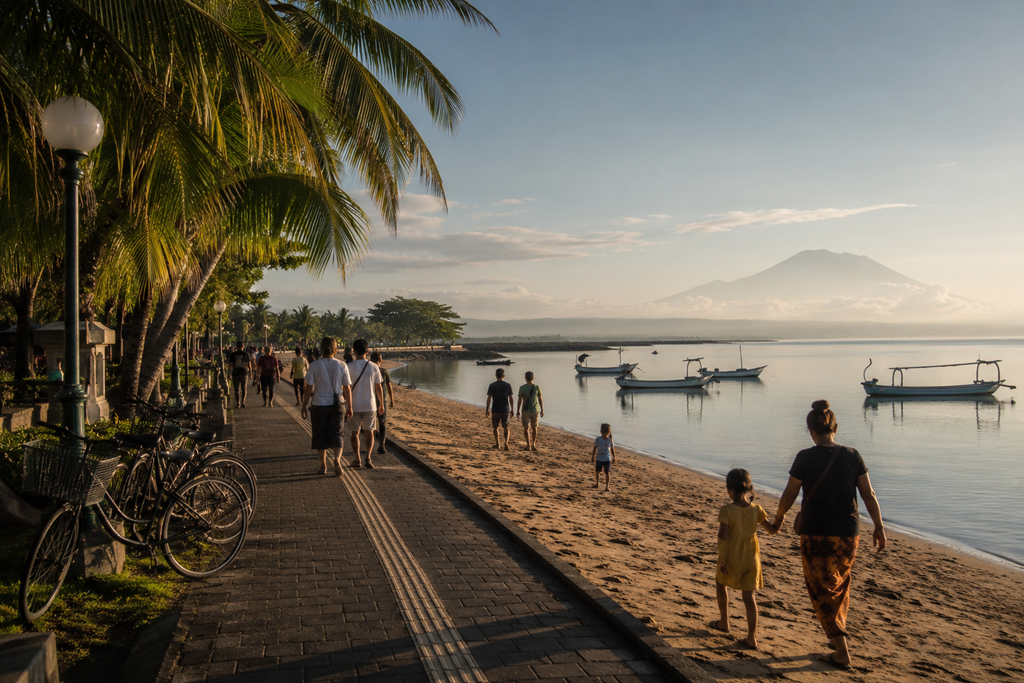
Sanur is a good choice for travelers who want a gentler coastal base. The beach path, calmer water, and relaxed pace make it appealing for couples, families, and older travelers. It is also a practical departure point for some boats to nearby islands.
Uluwatu And The Bukit Peninsula
Uluwatu and the Bukit Peninsula are known for cliffs, surf breaks, beach coves, sunset views, and dramatic coastal scenery. This area is better for travelers who are comfortable with spread-out beaches and limited walkability.
It can feel more open and scenic than the busiest parts of South Bali, but you will need transport to move between beaches, viewpoints, and restaurants.
Nusa Dua
Nusa Dua is a resort-focused area with large hotels, manicured beaches, and a more contained vacation feel. It is a strong option for travelers who want an easy beach resort stay with fewer planning decisions.
East Bali: Sidemen, Candidasa, Amed, And Around
East Bali is a good fit for slower travelers, couples, photographers, snorkelers, and those who want a more traditional feel.
Sidemen offers rice fields, mountain views, and a peaceful village atmosphere. Amed is known for black-sand beaches, diving, snorkeling, and views toward Mount Agung. Candidasa can work as a quieter coastal base for exploring temples and eastern landscapes.
North Bali
North Bali is less visited than the south and center. It is useful for travelers who want waterfalls, quieter beaches, dolphin-watching departures around Lovina, and a slower rhythm. Because it is farther from the airport and many classic first-trip sights, it works best for longer stays.
Top Attractions And Experiences In Bali
Bali is not just a beach destination. The strongest trips usually combine coastal time, cultural sites, scenic landscapes, food, and rest.
Visit Ubud For Culture And Greenery
Ubud is one of Bali’s most useful cultural bases. Spend time around its art markets, temples, galleries, cafés, rice field walks, and nearby villages.
The area is also a good starting point for visiting rice terraces, traditional craft villages, water temples, and scenic highland routes.
See The Rice Terraces
Bali’s rice terraces are among its most recognizable landscapes. The terraces around Tegallalang are especially popular because they are close to Ubud, while Jatiluwih offers a broader, more open landscape.
Go early if you want fewer crowds and softer light. Wear comfortable shoes, expect uneven paths, and bring water.
Explore Balinese Temples Respectfully
Temples are central to Balinese culture. Popular temple experiences include Tanah Lot, Uluwatu Temple, Tirta Empul, Besakih Temple, and Ulun Danu Beratan.
Dress modestly, use a sarong where required, and follow local instructions. Some temple customs are specific and important, so approach sacred spaces with patience and respect.
Watch Sunset On The West Coast Or Cliffs
Bali has memorable sunset areas, especially along the west-facing beaches and the cliffs around Uluwatu. Tanah Lot, Seminyak, Canggu, Jimbaran, and Uluwatu are all common sunset choices.
Choose based on the experience you want. For atmosphere and dining, try a beach town. For scenery, consider the cliffs or a temple viewpoint.
Spend A Day On The Bukit Peninsula
The Bukit Peninsula offers some of Bali’s most dramatic coastal views. Beaches such as Padang Padang, Bingin, Balangan, and Dreamland are known for surf, cliffs, and blue water.
Some beaches require stairs, and swimming conditions vary. Check local warnings, watch the waves, and do not assume every beautiful beach is safe for casual swimming.
Relax In Sanur
Sanur is ideal when you want a slower beach day. Walk or bike along the coastal path, have a simple meal near the water, and enjoy the easier pace.
It is a good place to recover after arrival or before departure because it offers comfort without the intensity of busier beach towns.
Take A Thoughtful Day Trip To Nusa Penida Or Nusa Lembongan
The Nusa Islands are popular for dramatic cliffs, beaches, snorkeling, and clear water. Nusa Penida is more rugged and famous for viewpoints, while Nusa Lembongan and Nusa Ceningan can feel easier for a slower island stay.
Boat conditions can vary. Choose reputable operators, avoid overloaded boats, and leave flexibility in your schedule if seas are rough.
Explore Waterfalls And Highland Nature
Bali’s waterfalls are especially beautiful during greener periods, but trails can be slippery. Popular waterfall areas include the north and central regions.
Go with appropriate footwear, be cautious around wet rocks, and avoid visiting during heavy rain or unsafe water conditions.
Learn Through Food, Markets, And Cooking Classes
Food is one of the easiest ways to connect with Bali beyond sightseeing. Visit local warungs, explore markets, or take a cooking class that introduces Balinese spices, sambal, satay, lawar, vegetables, and rice-based dishes.
A cooking class can be especially useful for first-time visitors because it gives context to ingredients and everyday food traditions.
Build In Time For Rest
Bali can become exhausting if every day includes long drives and multiple attractions. A better approach is to alternate sightseeing days with lighter days.
Plan one day for Ubud and rice fields, another for temples, another for beach time, and another for simply staying near your hotel. Bali is easier to enjoy when you do not treat it like a checklist.
Food And Drink In Bali
Bali’s food scene ranges from simple local warungs to international restaurants, vegan cafés, seafood grills, hotel dining, and cooking schools.
Look for dishes such as:
- Nasi campur: rice served with small portions of vegetables, meat, egg, tofu, tempeh, sambal, and other sides
- Mie goreng: fried noodles with vegetables, egg, and optional meat or seafood
- Nasi goreng: fried rice, often served with egg and sambal
- Satay: skewered grilled meat or seafood with sauce
- Babi guling: Balinese-style roast pork, common in local eateries
- Gado-gado: vegetables with peanut sauce
- Lawar: a traditional Balinese mixture often made with vegetables, coconut, spices, and meat
For a simple food strategy, mix local meals with easy hotel or café meals. Choose busy places with steady turnover, drink bottled or properly filtered water, and be cautious with raw foods if you have a sensitive stomach.
Getting Around Bali
Transportation is one of the most important planning details in Bali. Public transport is limited for most tourist routes, and many visitors rely on private drivers, taxis, ride-hailing apps, hotel transfers, or scooters.
Private Drivers
Hiring a private driver is often the easiest option for day trips, especially for temples, waterfalls, rice terraces, or multi-stop routes. It reduces stress, avoids parking issues, and helps you cover more ground efficiently.
This is usually best for Ubud day trips, East Bali, North Bali, and routes with several stops.
Taxis And Ride-Hailing
Taxis and ride-hailing services can be useful in tourist areas, though pickup rules may vary by location. For airport arrivals, late-night travel, or trips with luggage, a pre-arranged transfer can make the first day easier.
Scooters
Scooters are common in Bali, but they are not the right choice for every traveler. Traffic, unfamiliar roads, rain, narrow lanes, and different driving habits can make riding risky. The Government of Canada warns that motorcycle and scooter accidents are a major cause of death and serious injury among foreigners in Indonesia, including Bali.
Only ride if you are experienced, properly licensed, insured, wearing a helmet, and comfortable with local traffic.
Walking
Some areas are walkable in short sections, such as parts of Ubud, Sanur’s beach path, and certain resort zones. But Bali is not generally a walking-first destination. Sidewalks can be uneven or missing, and traffic can be close.
Travel Times
Always leave more time than the map suggests. A short distance can take much longer during busy periods, especially around Canggu, Seminyak, Kuta, Ubud, and routes near the airport.
Practical Bali Travel Tips
Stay In Fewer Places
For a first trip, two bases are often enough. A beach area plus Ubud is a classic combination. For longer trips, add East Bali, North Bali, or the Nusa Islands.
Respect Local Customs
Bali has a strong cultural and religious identity. Dress modestly at temples, do not climb sacred structures, avoid interrupting ceremonies, and follow posted rules.
If you come across a ceremony, observe respectfully from a distance unless invited closer.
Check Conditions Before Outdoor Plans
Weather, tides, road conditions, and boat schedules can affect plans. This is especially important for waterfalls, beaches with strong surf, volcano hikes, and island transfers.
Avoid Overpacking The Itinerary
A good Bali day may include one major attraction, one meal experience, and time to relax. Trying to fit in too much usually means spending the day in traffic.
Be Careful Around Animals
Avoid touching or feeding monkeys, stray dogs, cats, and other unfamiliar animals. The CDC advises travelers in Indonesia to avoid wild animals and unfamiliar dogs and cats, and to seek immediate medical attention if bitten, scratched, or licked by an unfamiliar animal.
Prepare For Natural Conditions
Indonesia can experience natural hazards, including earthquakes, volcanic activity, tsunamis, and severe weather. The U.S. Department of State advises travelers to exercise increased caution in Indonesia and to monitor local information for breaking events.
This does not mean you should avoid Bali, but it does mean you should stay aware, follow local guidance, and have flexible plans.
Bring Comfortable Clothing
Pack light, breathable clothing, sandals, walking shoes, swimwear, sun protection, and a light layer for cooler highland areas. A sarong is useful for temple visits, though many temples provide or rent them.
Use A Simple Daily Rhythm
Bali works well when you start early, rest during the hottest or busiest part of the day, and enjoy the late afternoon or sunset somewhere scenic.
Suggested First-Time Bali Trip Structure
For a balanced first visit, consider this simple structure:
3 To 4 Days
Choose one base. Stay in Ubud if you want culture and scenery, or Sanur/Seminyak/Uluwatu if you want beach time.
5 To 7 Days
Split your stay between Ubud and a beach area. This gives you rice terraces, temples, food, culture, and coastal relaxation without too many hotel changes.
8 To 10 Days
Add East Bali, North Bali, or the Nusa Islands. This gives you room for slower travel and less crowded landscapes.
2 Weeks Or More
You can experience Bali with more depth: Ubud, Sidemen, Amed, Sanur, Uluwatu, and possibly nearby islands. With more time, prioritize fewer moves and longer stays.
A Balanced Way To Experience Bali
Bali is best approached with curiosity and patience. The island offers beautiful scenery, but its deeper appeal comes from the mix of daily rituals, village life, food, landscapes, craftsmanship, and ocean views.
For a first trip, do not worry about seeing everything. Choose a few strong bases, plan around geography, respect local customs, and leave open space in your days. Bali becomes more enjoyable when you give it enough room to feel like a place, not just a list of stops.
Download Our Free E-book!