Bangkok is one of Southeast Asia’s most rewarding cities for travelers who enjoy layered culture, memorable food, and a mix of old and modern city life. It can feel busy at first, but with a little planning, the city becomes much easier to understand.
This guide will help you plan a Bangkok trip with practical advice on where to go, when to visit, what to eat, how to get around, and how to make the most of the city without overloading your schedule.
Bangkok At A Glance
Bangkok is Thailand’s capital and one of the country’s main gateways for international travelers. The city is especially known for its temples, royal landmarks, riverside views, markets, shopping areas, food culture, and strong neighborhood variety.
For first-time visitors, Bangkok is best approached in sections. The historic riverside and old city areas are where you’ll find many of the major temples and cultural landmarks. Sukhumvit, Siam, Silom, and Sathorn offer easier access to modern hotels, shopping, dining, and public transportation. Chinatown and the riverside add a more atmospheric side of the city, especially for food, walking, and photography.
The Tourism Authority of Thailand highlights Bangkok’s historic and religious sites, markets, museums, parks, shopping centers, and food experiences as key parts of the city’s travel appeal.
Best Time To Visit Bangkok
Bangkok is a year-round destination, but your experience will depend heavily on heat, humidity, rain, and crowd levels.
Cooler, Drier Months
Many travelers prefer visiting from roughly November through February, when the weather is usually more comfortable for walking, temple visits, markets, and outdoor sightseeing. This is also one of the busier periods, so popular attractions and hotels may be more crowded.
Hot Season
The hotter months can make daytime sightseeing more tiring, especially around temples, markets, and open plazas. During hotter periods, plan outdoor activities earlier in the day, take breaks indoors, and avoid packing too many major sights into one afternoon.
Rainy Season
Rainy season does not mean every day is unusable. Showers may come and go, and many travelers still enjoy Bangkok during this time. Build flexibility into your plans, carry a small umbrella or light rain jacket, and keep indoor options in mind, such as malls, museums, cafés, and massage or spa experiences.
Where To Stay In Bangkok
Bangkok is large, and the best area to stay depends on your travel style. Instead of choosing only by hotel price, think about transportation, nearby food, and how much time you want to spend moving across the city.
Sukhumvit
Sukhumvit is a practical base for many first-time visitors. It has hotels in many price ranges, restaurants, malls, nightlife, cafés, and access to the BTS Skytrain in several areas. It is not the most historic part of Bangkok, but it is convenient.
Best for: first-time visitors, restaurants, nightlife, shopping, easy transit access.
Siam
Siam is one of Bangkok’s major shopping and transit hubs. It works well if you want central access, large malls, and easy connections to other parts of the city.
Best for: shopping, families, central convenience, public transportation.
Silom And Sathorn
Silom and Sathorn combine business districts, hotels, restaurants, nightlife, and access to both rail and river connections depending on where you stay. These areas can be a good balance between convenience and a slightly less tourist-focused feel.
Best for: couples, business travelers, food, convenient city access.
Riverside
The Chao Phraya River gives Bangkok a more scenic and historic feel. Staying near the river can be beautiful, especially if you want views, boat access, and a slower start or end to the day.
Best for: river views, couples, temple access, a more atmospheric stay.
Old City And Rattanakosin
This area puts you close to the Grand Palace, Wat Phra Kaew, Wat Pho, and other historic sites. It is excellent for sightseeing but may be less convenient for modern rail transportation depending on the exact location.
Best for: culture-focused travelers, temple visits, history, slower exploration.
Chinatown And Yaowarat
Chinatown is one of Bangkok’s most memorable food and street-life areas. It is a strong choice for travelers who enjoy markets, food walks, photography, and older urban texture.
Best for: food lovers, photographers, repeat visitors, lively evenings.
Temples And Cultural Landmarks
Bangkok’s temples are among the city’s most important travel experiences. They are active religious sites as well as architectural landmarks, so visitors should dress respectfully, move thoughtfully, and check current opening details before going.
The Grand Palace And Wat Phra Kaew
The Grand Palace is one of Bangkok’s signature landmarks and has been associated with the Thai monarchy since the late 18th century. The official Grand Palace website describes it as a complex of buildings in the heart of Bangkok and notes its long role as the official residence of the Kings of Siam and later Thailand.
Within the complex, Wat Phra Kaew, also known as the Temple of the Emerald Buddha, is one of Thailand’s most revered religious sites. This is a must-see for many first-time visitors, but it is also one of the busiest attractions in the city. Go early when possible, dress modestly, and allow more time than you think you’ll need.
Wat Pho
Wat Pho is best known for the Reclining Buddha and is one of Bangkok’s most important temple experiences. It is also close to the Grand Palace, making the two easy to pair in one half-day or full-day sightseeing plan.
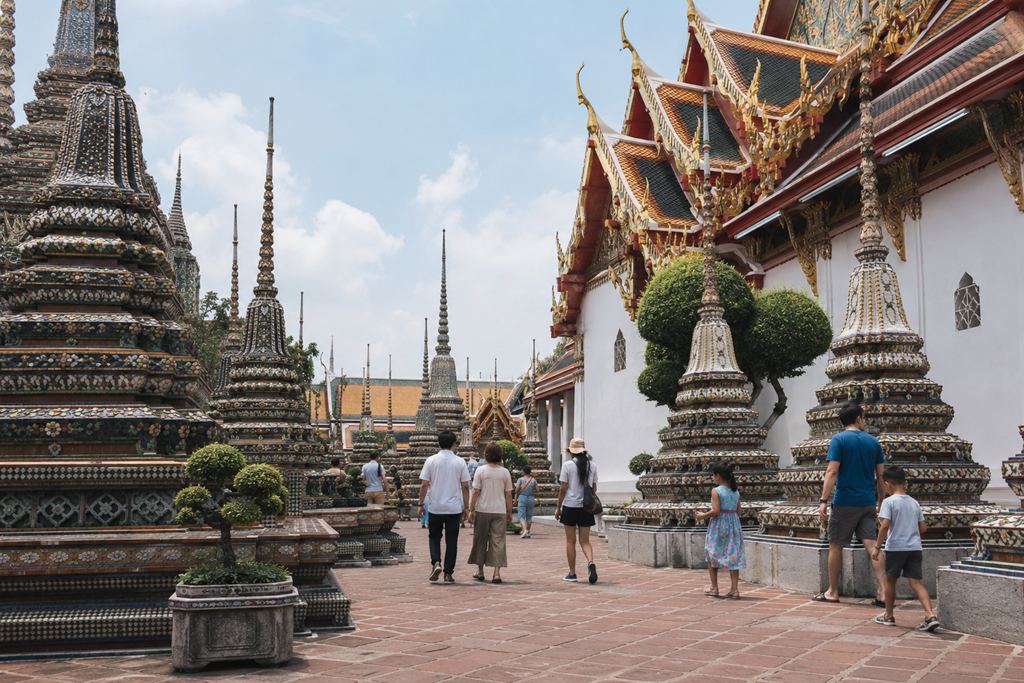
Wat Pho is a good choice for travelers who want a temple visit that feels rich in detail but slightly easier to manage than the Grand Palace. Look for the temple’s ornate chedis, courtyards, Buddha images, and traditional architectural details.
Wat Arun
Wat Arun, often called the Temple of Dawn, sits along the Chao Phraya River and is one of Bangkok’s most recognizable sights. Its tall central tower and riverside setting make it especially memorable from across the water.
Wat Arun pairs naturally with Wat Pho because the two are located on opposite sides of the river. Many visitors enjoy seeing Wat Arun from the riverbank, by boat, or in softer light later in the day.
Wat Saket And The Golden Mount
Wat Saket, commonly associated with the Golden Mount, offers a different type of temple experience. Instead of only visiting courtyards and halls, you climb gradually to a hilltop area with city views.
It is a good addition if you want a temple visit with movement, atmosphere, and a broader perspective over older Bangkok.
Wat Traimit
Wat Traimit is known for housing a large golden Buddha image and is commonly visited with Chinatown because of its location near Yaowarat. It can be a helpful stop before or after exploring the area’s food streets and markets.
Markets, Neighborhoods, And City Experiences
Bangkok is not only a checklist of temples. Some of the best experiences come from walking, eating, riding boats, and spending time in different neighborhoods.
Chinatown
Bangkok’s Chinatown is one of the city’s best areas for food, street scenes, markets, and evening exploration. Yaowarat Road and the surrounding lanes are known for street food, gold shops, herbal medicine stores, old shophouses, and busy market energy.
Go with patience rather than a strict plan. Choose a few foods to try, wander side streets carefully, and give yourself time to absorb the atmosphere.
Chao Phraya River
The Chao Phraya River helps connect many of Bangkok’s most important sights. Boats can be useful for reaching temples, riverside hotels, local neighborhoods, and scenic viewpoints.
The Tourism Authority of Thailand notes that Bangkok has rivers and canals and that long-tail boats remain part of river and canal transport in Bangkok and nearby provinces.
Even if you do not take a formal cruise, using river transport can help you understand the city from a different angle.
Chatuchak Weekend Market
Chatuchak is one of Bangkok’s best-known markets and is often included in first-time travel plans. It is large, busy, and varied, with stalls selling clothing, home goods, crafts, souvenirs, plants, accessories, and food.
Because the market is large, it helps to go with a loose plan. Wear comfortable shoes, bring water, and avoid treating it like a place you need to fully “complete.”
Pak Khlong Talat Flower Market
Bangkok’s flower market is a memorable place for color, everyday commerce, and photography. It is especially interesting for travelers who enjoy markets that feel connected to local rituals, hotels, temples, and daily life.
Visit respectfully, keep pathways clear, and remember that it is a working market rather than a staged attraction.
Lumphini Park
Lumphini Park gives travelers a break from traffic, heat, and city density. It is useful for a morning walk, a quiet pause, or a gentler activity between busier sightseeing days.
It is not a dramatic attraction, but it helps balance a Bangkok itinerary.
What To Eat In Bangkok
Bangkok is one of the world’s great food cities. The best approach is not to chase one perfect restaurant, but to try a range of everyday Thai dishes, market foods, casual meals, and regional flavors.
Dishes To Look For
Pad Thai is widely available, but it is only one small part of Bangkok’s food culture. Also look for boat noodles, green curry, mango sticky rice, som tam, grilled skewers, tom yum, khao man gai, stir-fried noodles, coconut-based desserts, and fresh fruit.
Noodle shops, rice-and-curry counters, markets, food courts, and casual local restaurants can all be rewarding. In Bangkok, some of the easiest meals are also the most satisfying.
Street Food And Food Courts
Street food is part of Bangkok’s identity, but it is wise to choose vendors with steady turnover, visible cooking, and ingredients that appear fresh. Food courts in malls can also be useful, especially during hot or rainy weather, because they offer variety, seating, and a less overwhelming environment.
Eating With Dietary Needs
Vegetarian and vegan travelers can eat well in Bangkok, but they may need to be specific. Fish sauce, oyster sauce, shrimp paste, and meat-based broths are common in Thai cooking. Learn a few basic phrases, use translation tools, and consider restaurants that clearly label vegetarian options.
How To Think About Restaurant Planning
Avoid building your trip around too many “must-eat” places. Bangkok traffic, heat, and changing schedules can make rigid dining plans stressful. It is usually better to choose food areas, such as Chinatown, Sukhumvit, Silom, or riverside zones, and keep a few nearby options in mind.
Getting Around Bangkok
Bangkok is easier to navigate once you understand that no single transportation method works perfectly everywhere. Use a combination of rail, river boats, taxis, walking, and ride-hailing depending on the route.
BTS Skytrain And MRT
The BTS Skytrain and MRT subway are often the easiest ways to move through modern parts of the city. They are especially useful around Sukhumvit, Siam, Silom, Sathorn, and many shopping or hotel districts.
The Tourism Authority of Thailand lists sky train and subway among public transportation options available to travelers in Bangkok and other areas.
Airport Rail Link
If you arrive at Suvarnabhumi Airport, the Airport Rail Link can be a useful connection into the city. It connects the airport with Phaya Thai, where travelers can connect to the BTS, and with Makkasan, which connects near the MRT system.
Check current schedules and your hotel location before deciding whether airport rail, taxi, or private transfer makes the most sense.
Taxis And Ride-Hailing
Taxis and ride-hailing can be convenient, especially for door-to-door trips, late evenings, luggage, or areas not close to rail stations. The tradeoff is traffic. During busy periods, short distances can take longer than expected.
Build in extra time when heading to airports, dinner reservations, tours, or timed-entry attractions.
Tuk-Tuks
Tuk-tuks are part of Bangkok’s travel image and can be fun for short rides, but they are not always the most practical or comfortable option. Agree on the price before riding, avoid unclear detours, and treat tuk-tuks as an occasional experience rather than your main transportation plan.
River Boats
River boats are useful for reaching some historic and riverside areas. They can also be more pleasant than sitting in traffic. For temple days, especially around the Grand Palace, Wat Pho, and Wat Arun, river transport can make the day feel more connected and scenic.
Practical Travel Tips For Bangkok
Dress Respectfully At Temples
For major temples and royal sites, dress modestly. Cover shoulders and knees, avoid overly revealing clothing, and bring a light layer if needed. Some places may have specific dress rules, so check current guidance before visiting.
Start Early For Major Sights
Bangkok gets hot, and popular landmarks can become crowded. Start early for major temple visits, especially the Grand Palace and Wat Pho. Save indoor activities, meals, cafés, massages, or shopping for the hotter part of the day.
Plan By Area, Not By Distance
Bangkok can look manageable on a map, but traffic and transfers change the experience. Group nearby sights together. For example, pair the Grand Palace, Wat Pho, Wat Arun, and the river area rather than crossing the city multiple times in one day.
Carry Small Essentials
A light day bag can make sightseeing easier. Bring water, sun protection, tissues, hand sanitizer, a portable charger, and a modest cover-up for temple visits.
Use Malls Strategically
Bangkok’s malls are not only shopping centers. They can be useful places for food courts, clean restrooms, air-conditioning, cafés, pharmacies, and a break from heat or rain.
Be Careful With Overplanning
Bangkok rewards curiosity, but it can be tiring if every day is packed. Choose one or two main experiences per day, then leave room for meals, rest, and unplanned discoveries.
A Simple First-Time Bangkok Plan
For a first trip, three to five days gives you enough time to see major highlights without rushing too much.
Day One: Settle In And Explore Nearby
Use your arrival day to adjust, eat close to your hotel, take a short walk, and learn your nearest transit options. Avoid scheduling major temple visits immediately after a long flight.
Day Two: Grand Palace, Wat Pho, Wat Arun, And The River
Focus on Bangkok’s historic core. Visit the Grand Palace and Wat Phra Kaew early, continue to Wat Pho, cross or travel along the river to Wat Arun, then end with a relaxed riverside meal or walk.
Day Three: Chinatown, Markets, And Food
Spend time in Chinatown, visit nearby temples or markets, and use the evening for street food or casual dining. This is a good day to move slowly and follow your appetite.
Day Four: Modern Bangkok
Explore Siam, Sukhumvit, Silom, or Sathorn depending on your interests. Add shopping, cafés, parks, museums, massage, or a rooftop view if it fits your budget and comfort level.
Day Five: Flexible Add-On Day
Use an extra day for Chatuchak Weekend Market, a canal or river experience, a cooking class, more temples, or a slower neighborhood day. If you are continuing to another part of Thailand, keep this day lighter so you are not exhausted before traveling onward.
Final Thoughts For Planning Bangkok
Bangkok is best understood through contrast. It is historic and modern, busy and reflective, practical and sensory. One moment you may be standing in a temple courtyard surrounded by gold and mosaic detail; later, you may be eating noodles in a market lane or riding past the skyline on the river.
A good Bangkok trip does not need to include everything. Choose a few meaningful sights, give yourself time for food and wandering, and use the city’s transit options thoughtfully. With a flexible plan, Bangkok becomes less overwhelming and much more rewarding.
Download Our Free E-book!