Cape Town is one of the world’s most scenic city destinations, shaped by mountains, ocean, history, gardens, beaches, and layered cultural neighborhoods. It is a place where you can ride a cable car up Table Mountain in the morning, walk through colorful historic streets in the afternoon, and watch the sun drop over the Atlantic by evening.
This guide is designed to help you understand Cape Town before you arrive: when to go, where to stay, how to get around, which attractions are worth prioritizing, and how to plan a trip that feels balanced rather than rushed.
Cape Town works especially well for travelers who enjoy a mix of outdoor beauty and city experiences. The city sits beside Table Mountain National Park, which stretches from Signal Hill and Table Mountain down the Cape Peninsula to Cape Point and includes protected coastal and marine areas.
Cape Town At A Glance
Cape Town is located on South Africa’s southwestern coast, where dramatic mountains meet the Atlantic Ocean. The city is known for Table Mountain, Robben Island, the V&A Waterfront, Kirstenbosch National Botanical Garden, Cape Point, historic neighborhoods, coastal drives, and beaches.
It is not a destination to treat like a simple beach escape. The beaches are beautiful, but the water can be cold, the wind can be strong, and the best trip usually includes a blend of nature, history, food, scenic walks, and day trips.
For a first visit, many travelers do well with at least four to six days. That gives enough time for Table Mountain, Robben Island, the city center, the Atlantic Seaboard, Kirstenbosch, the Cape Peninsula, and a slower day for beaches or cafés.
Best Time To Visit Cape Town
Cape Town can be visited year-round, but the experience changes by season.
Summer: December To February
Summer is warm, dry, bright, and popular. This is one of the best times for beaches, outdoor dining, sunset viewpoints, and scenic drives. It is also one of the busiest travel periods, especially around local school holidays and the Christmas and New Year period. Cape Town Tourism notes that summer is a popular time to visit, while winter brings colder and rainier weather with fewer crowds.
If you visit in summer, book accommodation early, plan key attractions in advance, and build flexibility into your schedule because wind can affect outdoor plans.
Autumn: March To May
Autumn is one of the most comfortable times to visit. The weather is often pleasant, the busiest holiday crowds have eased, and outdoor sightseeing can feel more manageable.
This is a good season for travelers who want beaches, hikes, gardens, food, and scenic drives without the highest peak-season pressure.
Winter: June To August
Winter is cooler and wetter, especially compared with Cape Town’s dry summer months. It can still be a rewarding time to visit if you prefer fewer crowds, greener landscapes, and a slower pace.
The tradeoff is that some outdoor plans may need more flexibility. Table Mountain views, ferry crossings, and coastal drives can all be affected by weather, so keep your itinerary adaptable.
Spring: September To November
Spring brings fresh landscapes, milder weather, and good conditions for gardens, walks, viewpoints, and outdoor exploring. It is also a strong choice for travelers who want a balance between pleasant weather and manageable crowds.
Where To Stay In Cape Town
Cape Town has several useful base areas. The best choice depends on whether you want nightlife, beach access, easy sightseeing, mountain views, or a quieter neighborhood feel.
City Bowl
The City Bowl is a practical base for first-time visitors who want easy access to restaurants, museums, Table Mountain, Bo-Kaap, Company’s Garden, and the V&A Waterfront. It includes areas such as the central city, Gardens, Tamboerskloof, and nearby neighborhoods.
This area is convenient if you plan to use rideshares or guided tours rather than rent a car for your whole trip.
V&A Waterfront
The V&A Waterfront is polished, busy, and visitor-friendly. It offers hotels, restaurants, shops, the Two Oceans Aquarium, harbor views, and the departure point for Robben Island ferries from the Nelson Mandela Gateway. Robben Island Museum notes that ferries depart from the V&A Waterfront and that the standard tour takes about 3.5 hours, including ferry travel.
This area is especially good for travelers who want convenience, easy dining, and a more contained base.
Sea Point And Green Point
Sea Point and Green Point are good choices for travelers who want access to the Atlantic Seaboard, the Sea Point Promenade, cafés, casual restaurants, and sunset walks. They are close enough to the city center for sightseeing but feel more residential and coastal.
Sea Point is particularly useful if you like morning walks, ocean views, and easy access to Clifton and Camps Bay.
Camps Bay And Clifton
Camps Bay and Clifton are best for travelers who want a beach-focused stay with dramatic mountain and ocean scenery. Camps Bay has a lively beachfront strip, while Clifton is more residential and known for its sheltered coves.
These areas are beautiful but can be more expensive and less central for museum-heavy or city-focused itineraries.
Constantia
Constantia is a quieter, greener area known for historic wine estates, leafy roads, and a more relaxed suburban feel. It is best for travelers who plan to rent a car or want a softer base away from the busiest parts of the city.
It works well for repeat visitors, couples, and travelers who want access to Kirstenbosch, wine estates, and scenic drives.
Cape Town’s Key Areas And Neighborhoods
Bo-Kaap
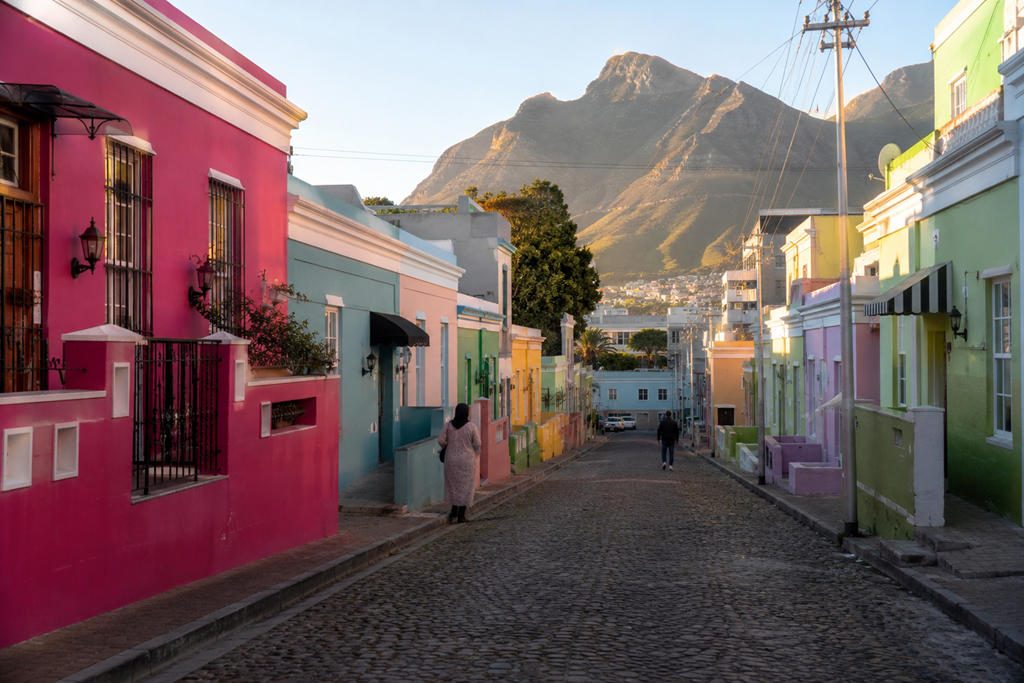
Bo-Kaap is one of Cape Town’s most recognizable historic neighborhoods, known for its colorful houses, cobbled streets, Cape Malay heritage, and hillside views. It is close to the city center and can be visited on foot, ideally with a respectful approach to the fact that it is a living neighborhood, not just a photo location.
Consider visiting the Bo-Kaap Museum or joining a guided cultural walk if you want more context.
The Central City
Cape Town’s central city includes museums, historic buildings, galleries, cafés, Company’s Garden, Greenmarket Square, and access to nearby neighborhoods. It is a good place to understand Cape Town’s urban history and everyday rhythm.
During the day, the central city is useful for walking between cultural stops. At night, use common-sense precautions and choose reliable transport.
Woodstock
Woodstock is known for design, food markets, murals, studios, and creative businesses. It can be rewarding, but it is best explored with a clear plan, during the day, or with a local guide if you are unfamiliar with the area.
Kalk Bay
Kalk Bay is a seaside village-style area on the False Bay side of the peninsula. It is known for harbor views, small shops, cafés, tidal pools, seafood, and a slower coastal feel.
It pairs well with Muizenberg, St. James, Simon’s Town, and Boulders Beach.
Muizenberg
Muizenberg is one of Cape Town’s best-known surf areas, especially for beginners. It is also recognized for its colorful beach huts and broad beach.
It is a good choice for families, beginner surfers, and travelers who want a more laid-back beach experience than the Atlantic Seaboard.
Essential Attractions And Experiences
Table Mountain
Table Mountain is Cape Town’s defining landmark. You can ride the cableway or hike, depending on your fitness, experience, weather conditions, and available time. The Table Mountain Cableway gives visitors access to the summit, with views over the city bowl, Table Bay, and Robben Island.
Weather changes quickly on the mountain. Clouds, wind, and visibility can affect the experience, so avoid locking Table Mountain into your only available morning. Check conditions before you go, and choose a clear day when possible.
Lion’s Head And Signal Hill
Lion’s Head and Signal Hill are popular for views, especially around sunrise and sunset. Lion’s Head is a hike, while Signal Hill is easier to access by road.
If you hike, go prepared with water, sun protection, appropriate shoes, and awareness of changing conditions. For sunset visits, plan your return before it gets too dark or use reliable transport.
Robben Island
Robben Island is one of Cape Town’s most important historical sites. It is closely associated with South Africa’s apartheid history and Nelson Mandela’s imprisonment. The visit usually includes ferry transport from the V&A Waterfront and a guided tour.
Because ferry trips can be affected by weather and sea conditions, book ahead and leave some flexibility in your itinerary. Avoid scheduling Robben Island immediately before a flight or other fixed commitment.
V&A Waterfront
The V&A Waterfront is one of the easiest places for visitors to begin. It combines harbor views, restaurants, shopping, hotels, boat trips, museums, and family-friendly attractions.
It is not the most local-feeling part of Cape Town, but it is useful, safe-feeling, walkable, and convenient.
Kirstenbosch National Botanical Garden
Kirstenbosch sits against the eastern slopes of Table Mountain and is one of Cape Town’s most beautiful places to slow down. The South African National Biodiversity Institute describes Kirstenbosch as one of the great botanic gardens of the world, with a dramatic mountain setting.
It is ideal for garden walks, picnics, photography, and learning about South African plant life. Wear comfortable shoes, bring sun protection, and allow more time than you think you need.
Cape Point And The Cape Peninsula
Cape Point is part of the southern section of Table Mountain National Park and is one of the major scenic day trips from Cape Town. The Cape Point area offers viewpoints, coastal scenery, wildlife, walking routes, and maritime history.
A Cape Peninsula day is best done slowly. Instead of trying to rush every stop, choose a few priorities: Chapman’s Peak Drive, Hout Bay, Noordhoek, Cape Point, Simon’s Town, Boulders Beach, Muizenberg, or Kalk Bay.
Boulders Beach
Boulders Beach near Simon’s Town is known for its African penguin colony. It is often included on a Cape Peninsula route and works well for families, wildlife lovers, and first-time visitors.
Stay on marked paths, give wildlife space, and follow posted guidance.
Chapman’s Peak Drive
Chapman’s Peak Drive is one of Cape Town’s most scenic coastal roads, linking Hout Bay and Noordhoek. It is best enjoyed when the weather is clear and you are not rushing.
Check road conditions before you go, as closures can happen due to weather or maintenance.
Beaches: Clifton, Camps Bay, Llandudno, And Muizenberg
Cape Town’s beaches are visually stunning, but they offer different experiences.
Clifton is known for sheltered coves and dramatic scenery. Camps Bay has a social beachfront atmosphere. Llandudno feels more secluded and scenic. Muizenberg is better for surfing and family-friendly beach time.
The Atlantic beaches can have cold water even on warm days. Treat them as places for sun, views, picnics, and short swims rather than assuming a tropical beach experience.
District Six Museum
The District Six Museum helps visitors understand the forced removals and human impact of apartheid-era urban planning. It is a meaningful stop for travelers who want context beyond Cape Town’s scenery.
Pairing District Six with Robben Island, Bo-Kaap, or a guided city tour can give a deeper understanding of the city.
Zeitz MOCAA
Zeitz MOCAA, located at the V&A Waterfront’s Silo District, focuses on contemporary art from Africa and the African diaspora. It is a strong choice for travelers interested in art, architecture, and modern cultural perspectives.
Check current exhibitions and opening hours before visiting.
Food And Drink In Cape Town
Cape Town’s food scene reflects many influences, including Cape Malay, African, European, Indian, and coastal traditions. A good food-focused visit might include Cape Malay flavors, seafood, local markets, wine estates, casual bakeries, and South African braai culture.
Cape Malay Food
Cape Malay food is an important part of Cape Town’s identity. Look for dishes such as bobotie, bredie, samoosas, rotis, pickled fish, and fragrant curries.
A cooking class or guided food walk can be a helpful way to understand the history behind the flavors.
Seafood
With its coastal location, Cape Town is a good place to enjoy seafood. Harbor areas, seaside towns, and coastal restaurants often feature fish, calamari, mussels, and other seafood dishes.
Choose places that feel established and busy, and check recent reviews before committing to a special meal.
Markets And Casual Food
Food markets are useful for travelers because they allow you to try several things without planning a formal restaurant meal. They can also be good for families or groups with different tastes.
Because market schedules can change, check current days and hours before planning around one.
Wine Experiences
Cape Town is close to several wine areas, including Constantia and the broader Cape Winelands. Constantia is the easiest wine area to reach from the city, while Stellenbosch, Franschhoek, and Paarl work better as half-day or full-day trips.
Book tastings or restaurants ahead during busy travel periods, especially on weekends.
Getting Around Cape Town
Cape Town is spread out. Some areas are walkable once you arrive, but many major attractions require a car, rideshare, tour, or bus.
Airport Transfers
Cape Town International Airport is the main airport serving the city. Many travelers use rideshare services, private transfers, hotel transfers, rental cars, or the MyCiTi bus depending on where they are staying.
MyCiTi operates an airport service between the airport and the city center, with connections to other routes.
Rideshare And Taxis
Rideshare is commonly used by visitors for getting between neighborhoods, especially in the evening or when public transport is inconvenient.
For safety and ease, use reliable transport rather than walking long distances at night in unfamiliar areas.
Rental Car
A rental car can be helpful if you plan to explore the Cape Peninsula, Constantia, the Winelands, or beaches beyond the central areas. It is less necessary if you are staying centrally and focusing on the V&A Waterfront, Table Mountain, museums, and guided tours.
If you rent a car, avoid leaving valuables visible and choose secure parking where possible.
Public Transport
The MyCiTi bus system is useful on certain routes and can work well for planned daytime travel. It is especially helpful when your accommodation and sightseeing plans line up with the network.
For first-time visitors, a mix of rideshare, walking in selected areas, guided tours, and occasional bus use is often simpler than relying entirely on public transport.
Guided Tours
Guided tours can be useful for Robben Island, Cape Peninsula day trips, wine areas, township visits, and history-focused walks. A good guide can add context and reduce planning stress, especially if you have limited time.
Safety And Common-Sense Travel Notes
Cape Town is a rewarding destination, but visitors should use practical city awareness. Cape Town Tourism advises travelers to avoid carrying large amounts of cash, keep belongings attended, avoid displaying cameras unnecessarily, be careful at ATMs, and seek local advice about where to go after dark.
A few simple habits can make the trip smoother:
Use reliable transport at night.
Keep valuables discreet.
Avoid isolated hiking routes unless you are with others or a guide.
Check weather before mountain or ocean activities.
Do not leave bags, phones, or cameras unattended.
Ask your hotel or host for current neighborhood-specific guidance.
Treat safety as part of good planning, not a reason to avoid the city.
Suggested First-Time Cape Town Itinerary
Day One: City Bowl, Bo-Kaap, And The V&A Waterfront
Start with the central city, Company’s Garden, Bo-Kaap, and a relaxed afternoon or evening at the V&A Waterfront. This gives you an easy introduction without overloading the first day.
Day Two: Table Mountain And The Atlantic Seaboard
Use the clearest weather window for Table Mountain. Afterward, spend time in Camps Bay, Clifton, Sea Point, or Signal Hill depending on your energy level.
Day Three: Robben Island And Local Museums
Plan Robben Island for the morning or early afternoon, then add District Six Museum, Zeitz MOCAA, or a slower waterfront meal. Keep this day flexible because ferries may be affected by weather.
Day Four: Kirstenbosch And Constantia
Spend the morning at Kirstenbosch, then continue to Constantia for a wine estate, garden setting, or long lunch. This day is a good counterbalance to the busier city and waterfront areas.
Day Five: Cape Peninsula
Make this your scenic road-trip day. Consider Chapman’s Peak Drive, Noordhoek, Cape Point, Simon’s Town, Boulders Beach, Kalk Bay, and Muizenberg. Choose your stops carefully so the day does not become rushed.
Day Six: Beaches, Markets, Or A Slower Neighborhood Day
Use this day to revisit a favorite area, relax at the beach, explore Kalk Bay or Sea Point, take a food tour, visit a market, or enjoy a slower café-and-walk day.
Practical Planning Tips For Cape Town
Build Your Schedule Around Weather
Table Mountain, Robben Island, Chapman’s Peak, Cape Point, and beach days are all better with decent weather. Keep your most weather-dependent activities flexible and move them earlier if conditions look good.
Do Not Overpack Each Day
Cape Town looks compact on a map, but travel times, traffic, weather, and scenic stops can slow you down. A good day might include one major attraction, one neighborhood, and one meal or viewpoint.
Book Major Experiences Ahead
For popular experiences such as Robben Island, Table Mountain, guided peninsula tours, and wine tastings during busy periods, booking ahead can prevent disappointment. Always check current opening hours, weather notices, and reservation requirements before you go.
Respect Natural Areas
Cape Town’s landscapes are beautiful but not casual theme-park environments. Stay on marked trails, carry water, protect yourself from sun and wind, and follow local safety guidance.
Bring Layers
Even when the day starts warm, wind and temperature changes can be noticeable near the coast or on the mountain. A light jacket or layer is useful year-round.
Think In Clusters
Plan Cape Town geographically. Pair Bo-Kaap with the central city. Pair Robben Island with the V&A Waterfront. Pair Kirstenbosch with Constantia. Pair Boulders Beach with Cape Point and Kalk Bay. This reduces backtracking and makes the trip feel easier.
A Better Way To Experience Cape Town
The best Cape Town trip usually balances big sights with breathing room. Table Mountain, Robben Island, Cape Point, Kirstenbosch, and the beaches are all worth considering, but the city becomes more memorable when you leave time for smaller moments: a walk on the Sea Point Promenade, a slow lunch in Kalk Bay, a clear sunset from Signal Hill, or a quiet hour in a garden with the mountain behind you.
Cape Town rewards travelers who plan thoughtfully, stay flexible, and make space for both the scenery and the story of the place.
Download Our Free E-book!