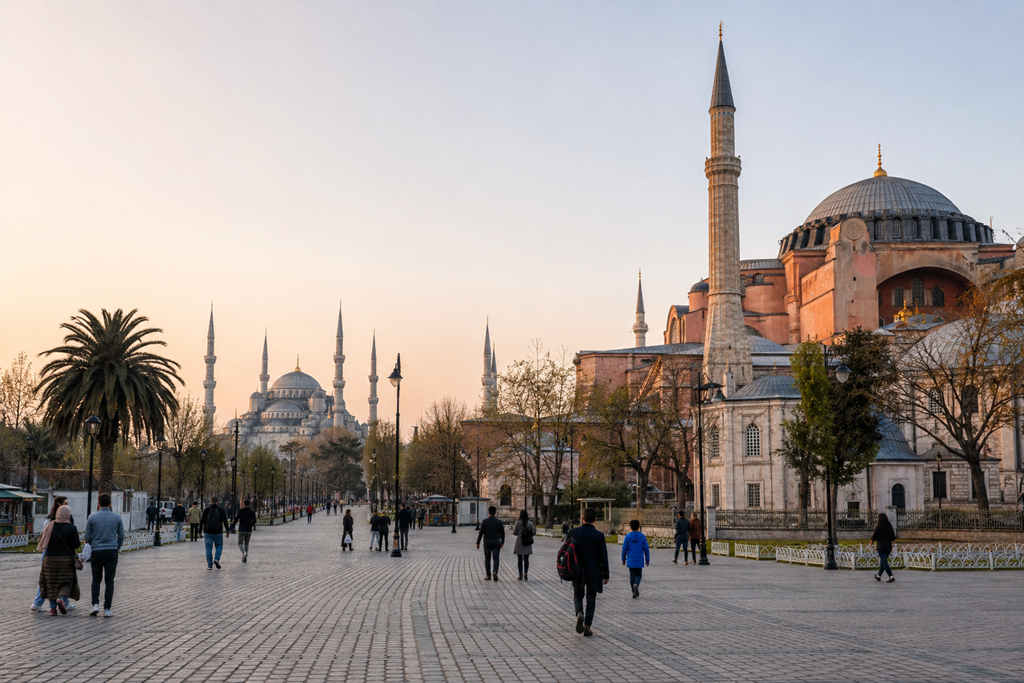
Istanbul is one of the world’s great crossroads: a city shaped by empires, waterways, trade routes, faith, food, and everyday neighborhood life. It is large, layered, and full of contrasts, but it becomes much easier to understand when you plan around its geography.
This guide will help you get oriented before your trip, choose the right areas to explore, understand the major sights, plan realistic days, and move through the city with more confidence. Istanbul rewards travelers who slow down, group nearby attractions together, and leave room for tea, ferry rides, markets, and unexpected views.
Istanbul At A Glance
Istanbul sits on both sides of the Bosphorus, with one part of the city in Europe and the other in Asia. The historic core is on the European side, especially around Sultanahmet and the old city, while neighborhoods like Beyoğlu, Karaköy, Beşiktaş, Kadıköy, and Üsküdar each offer a different feel.
The city’s historic importance is difficult to overstate. UNESCO describes the Historic Areas of Istanbul as a place associated with major political, religious, and artistic events for more than 2,000 years, with landmarks such as the Hippodrome, Hagia Sophia, and Süleymaniye Mosque among its masterpieces.
For a first trip, Istanbul is best approached in layers:
Start with the historic peninsula for the major monuments. Add a Bosphorus ferry or cruise to understand the city from the water. Spend time in at least one lively neighborhood beyond Sultanahmet so the trip feels less like a checklist and more like a real introduction to the city.
Best Time To Visit Istanbul
Istanbul can be visited year-round, but spring and autumn are often the most comfortable seasons for walking, sightseeing, and spending time outdoors. The weather is generally milder, and the city’s parks, waterfronts, and historic neighborhoods are more pleasant to explore on foot.
Summer can be hot and busy, especially around major attractions and ferry routes. It is still a popular time to visit, but you may want to plan indoor sights during the warmest part of the day and save waterfront walks for morning or evening.
Winter is quieter and can be a good fit for travelers who prefer museums, mosques, cafés, markets, and lower crowd levels. Days are shorter, and weather can be damp or chilly, so it helps to build a flexible itinerary.
No matter when you go, check current opening hours before visiting major attractions, especially mosques, palaces, museums, and restored historic sites. Some places may use timed-entry systems or have special closures.
How Many Days Do You Need In Istanbul?
Three full days is enough for a strong first visit, especially if you focus on the old city, the Bosphorus, and one or two neighborhoods beyond the main tourist zone.
Four to five days gives you a better pace. You can see the classic sights without rushing, enjoy a ferry ride to the Asian side, visit markets, try more local foods, and include quieter areas such as Balat, Üsküdar, or the Princes’ Islands if they fit your travel style.
A week allows for a deeper trip, including museums, hammams, longer waterfront walks, day trips, and more time in residential neighborhoods.
For most first-time visitors, the best approach is not to pack every famous attraction into every day. Istanbul is dense, traffic can be slow, and the city is more enjoyable when your plans follow a logical route.
Key Areas And Neighborhoods To Know
Sultanahmet And The Historic Peninsula
Sultanahmet is where many first-time visitors begin. This area includes Hagia Sophia, the Blue Mosque, Topkapı Palace, the Hippodrome area, and the Basilica Cistern. It is highly convenient for sightseeing and gives you immediate access to Istanbul’s most famous landmarks.
This is a practical place to stay if your priority is early access to major historic sights. The tradeoff is that it can feel more visitor-focused than residential, especially around the main monuments.
Eminönü And Sirkeci
Eminönü and Sirkeci sit near the Golden Horn and are useful for ferries, markets, and walks toward the Grand Bazaar and Spice Bazaar. The area is busy, energetic, and practical rather than polished.
It is a good base for travelers who want transit convenience and easy access to both the old city and the waterfront.
Galata, Karaköy, And Beyoğlu
Across the Golden Horn, Galata and Karaköy offer a different side of Istanbul: steep streets, cafés, galleries, boutique hotels, waterfront dining, and views back toward the old city. Nearby Beyoğlu includes İstiklal Avenue, Taksim, historic passages, and cultural venues.
This area works well for travelers who want nightlife, restaurants, shopping streets, and a more urban feel while still being close to the historic center.
Beşiktaş And Ortaköy
Beşiktaş is a lively district with ferry connections, local food spots, markets, and access to waterfront areas. Ortaköy, nearby, is known for its mosque by the Bosphorus and scenic views of the bridge.
These neighborhoods are good for travelers who want to experience Istanbul’s waterfront life and stay near the Bosphorus rather than the old city.
Kadıköy
Kadıköy, on the Asian side, is one of Istanbul’s best areas for food, markets, coffee, nightlife, and everyday local atmosphere. It is not where you go for the biggest imperial monuments, but it is excellent for understanding modern Istanbul.
A ferry ride to Kadıköy is one of the easiest ways to add variety to a first visit.
Üsküdar
Üsküdar is also on the Asian side and has a more traditional, waterfront feel. It offers mosque complexes, tea gardens, Bosphorus views, and easy access to the area around the Maiden’s Tower.
It is especially worthwhile around sunset, when the views back toward the European side can be memorable.
Balat And Fener
Balat and Fener are historic neighborhoods known for colorful streets, old houses, religious heritage, cafés, and layered community history. They are best explored slowly and respectfully, since they are also real residential areas.
These neighborhoods are good for travelers who enjoy wandering, photography, and seeing a more textured side of the city.
Top Attractions And Experiences In Istanbul
Hagia Sophia
Hagia Sophia is one of Istanbul’s defining landmarks. Its history as a Byzantine cathedral, Ottoman mosque, museum, and mosque again reflects the city’s layered identity. Even from the outside, its dome, scale, and setting make it essential to see.
Because access rules can change, check current visitor guidance before you go. Dress modestly, expect crowds, and try to visit early or later in the day when possible.
Blue Mosque
The Sultan Ahmed Mosque, widely known as the Blue Mosque, stands opposite Hagia Sophia and remains an active place of worship. Its domes, minarets, courtyard, and interior tilework make it one of the city’s most recognizable sights.
Visitors should be respectful of prayer times and dress requirements. If you are visiting several religious sites, carrying a lightweight scarf and wearing easy-to-remove shoes can make the day smoother.
Topkapı Palace
Topkapı Palace was the imperial residence and administrative center of the Ottoman sultans for centuries. The palace complex includes courtyards, pavilions, treasury rooms, views of the Bosphorus, and sections that help explain Ottoman court life.
This is a place where pacing matters. It can take several hours, especially if you include additional sections. Go with a clear plan, but leave enough time to enjoy the courtyards and viewpoints.
Basilica Cistern
The Basilica Cistern is an atmospheric underground structure near Hagia Sophia. Its columns, lighting, water, and Medusa-head bases make it one of the most distinctive historic experiences in the old city.
It pairs well with Hagia Sophia, the Blue Mosque, and the Hippodrome area because they are close together.
Grand Bazaar
The Grand Bazaar is not just a shopping stop; it is part of Istanbul’s long history as a trading city. Its covered lanes, shops, jewelry, textiles, ceramics, lamps, and leather goods can be fascinating even if you do not plan to buy much.
Go with patience. Prices may vary, bargaining is common in many shops, and it helps to compare before purchasing. If you prefer a quieter visit, go earlier in the day and avoid treating the bazaar like a quick errand.
Spice Bazaar
The Spice Bazaar is smaller than the Grand Bazaar and easier to fit into a shorter visit. It is known for spices, teas, sweets, dried fruits, nuts, and edible souvenirs.
It pairs naturally with Eminönü, the Galata Bridge, and a ferry ride. Even a short walk through the area gives you a strong sense of Istanbul’s food and market culture.
Süleymaniye Mosque
Süleymaniye Mosque is one of Istanbul’s most impressive mosque complexes, with elegant architecture and sweeping views over the city. It is often less hectic than the area around Hagia Sophia and the Blue Mosque, though still popular.
Its hilltop setting makes it a rewarding stop for travelers who enjoy architecture, city views, and quieter historic spaces.
Galata Tower And The Surrounding Streets
Galata Tower is one of the most recognizable landmarks north of the Golden Horn. Whether or not you go inside, the surrounding streets are worth exploring for cafés, shops, historic buildings, and views down toward the water.
This area is best enjoyed as part of a walking route that includes Karaköy, Galata, and perhaps İstiklal Avenue.
Bosphorus Ferry Or Cruise
Seeing Istanbul from the Bosphorus helps the city make sense. From the water, you can see palaces, mosques, neighborhoods, bridges, ferries, fishing boats, and the way the city stretches along both continents.
You do not need to overcomplicate this. A public ferry ride can be just as rewarding as a formal sightseeing cruise, depending on your schedule and comfort level.
Kadıköy Food And Market Walk
Kadıköy is one of the best places to spend a half day eating, browsing, and wandering without a strict sightseeing agenda. Explore the market streets, try Turkish breakfast items, sample sweets, drink tea or coffee, and enjoy the neighborhood’s everyday rhythm.
It is a good counterbalance to the monument-heavy old city.
Turkish Bath Experience
A traditional hammam can be a memorable part of a trip to Istanbul. Some historic baths are beautifully restored, while others are more local and simple. Choose based on your comfort level, budget, and whether you want a more polished or traditional experience.
Book ahead during busy periods, and read the service details carefully so you know what is included.
Food And Drink In Istanbul
Istanbul is an excellent food city because it blends palace traditions, street food, regional Turkish cooking, seafood culture, bakeries, markets, and neighborhood cafés.
Some classic foods and drinks to look for include:
Simit, a sesame-crusted bread ring often eaten as a snack or light breakfast.
Menemen, a soft egg dish often made with tomatoes and peppers.
Meze, small shared plates that may include yogurt-based dishes, vegetables, seafood, and spreads.
Kebabs and grilled meats, which vary by region and style.
Balık ekmek, a fish sandwich associated with waterfront areas.
Lahmacun and pide, thin or boat-shaped flatbreads with savory toppings.
Baklava, Turkish delight, rice pudding, and other sweets.
Turkish tea, served throughout the day, and Turkish coffee, usually enjoyed slowly.
For a practical food plan, think by neighborhood. Try classic old-city stops near Sultanahmet and Eminönü, explore seafood and meze near the waterfront, and spend time in Kadıköy for a more local food experience. Avoid building your trip around “must-visit” restaurant rankings, since restaurants change. Instead, use food traditions and neighborhoods as your guide.
Transportation Basics
Istanbul is large, and traffic can be heavy, so public transportation is often the most practical way to move around. The city’s transit system includes metro, tram, funicular, Marmaray rail, buses, Metrobus, and ferries. The official Visit Istanbul guidance notes that Istanbulkart can be used across major public transportation options, including bus, subway, tram, cable car, Marmaray, Metrobus, and ferry.
For first-time visitors, the tram is especially useful around the historic peninsula, while ferries are both practical and scenic. The Marmaray line can help connect the European and Asian sides, and metro lines may be helpful depending on where you stay.
Airport transportation depends on which airport you use. Istanbul Airport has official airport transportation options, including Havaist routes between the airport and city areas. Sabiha Gökçen Airport, on the Asian side, is served by HAVABUS shuttles connecting the airport with hubs such as Kadıköy and Taksim.
Taxis and ride-hailing can be useful, especially late at night or with luggage, but allow extra time during traffic-heavy periods. For sightseeing days, walking plus tram, ferry, or metro is often simpler.
Practical Planning Tips
Group Your Days By Area
Istanbul is easier when you avoid zigzagging across the city. Spend one day around Sultanahmet, one day around Galata and Beyoğlu, one day along the Bosphorus or Asian side, and so on.
This saves time and helps each day feel more coherent.
Start Early For Major Sights
The most famous landmarks can get crowded. Starting early gives you a better chance of enjoying places like Hagia Sophia, Topkapı Palace, the Basilica Cistern, and the Grand Bazaar with less pressure.
Dress Respectfully For Mosques
When visiting mosques, dress modestly. Shoulders and knees should generally be covered, and women may need a head covering. Shoes are removed before entering prayer areas.
Rules can vary by site, so follow posted guidance and staff instructions.
Keep Some Cash Available
Cards are widely used in many places, but cash can still be helpful for small purchases, markets, tips, restrooms, local snacks, and certain transportation situations.
Build In Ferry Time
A ferry ride is not just transportation in Istanbul. It is part of the experience. Even a simple crossing between Eminönü, Karaköy, Kadıköy, or Üsküdar can become one of the most memorable parts of the trip.
Be Realistic About Hills And Walking
Istanbul has many hills, uneven sidewalks, stairs, cobblestones, and crowded streets. Comfortable shoes matter. If you are planning a full day of sightseeing, leave space for breaks.
Verify Details Before You Go
Opening hours, entrance rules, restoration work, ticket systems, and prayer-time access can change. Check current details before visiting major attractions, especially if a site is central to your itinerary.
A Simple First-Time Istanbul Plan
For a three-day first visit, you might structure your trip like this:
Day one: Focus on Sultanahmet. Visit Hagia Sophia, the Blue Mosque, the Hippodrome area, Basilica Cistern, and Topkapı Palace if you have enough time and energy.
Day two: Explore the Grand Bazaar, Spice Bazaar, Eminönü, Galata Bridge, Karaköy, Galata Tower area, and Beyoğlu.
Day three: Take a Bosphorus ferry or cruise, visit Üsküdar or Kadıköy, enjoy a neighborhood food walk, and watch the sunset from the Asian side or waterfront.
With four or five days, add Süleymaniye Mosque, Balat and Fener, a hammam, more time in Kadıköy, Dolmabahçe Palace, or the Princes’ Islands depending on your interests.
Who Istanbul Is Best For
Istanbul is especially rewarding for travelers who enjoy history, architecture, food, markets, photography, water views, religious heritage, and complex cities with many layers.
It may feel overwhelming if you prefer small, quiet destinations or very simple logistics. But with a thoughtful plan, Istanbul becomes much more manageable. Stay in an area that matches your travel style, group sights by neighborhood, use ferries when possible, and leave room for unplanned moments.
The city is not just a place to “see.” It is a place to move through slowly: crossing the water, hearing the call to prayer, drinking tea near a ferry dock, walking through market lanes, and watching domes and minarets shift in the afternoon light.
Download Our Free E-book!