London is one of those cities that can feel both exciting and slightly overwhelming the first time you visit. It has royal landmarks, world-class museums, historic streets, big parks, busy markets, theatre, riverside walks, and neighborhoods that each feel a little different from the next.
This guide is designed to help you understand London before you arrive. You’ll find practical guidance on when to visit, where to stay, how to get around, what to prioritize, what to eat, and how to make your first trip feel easier to plan.
London At A Glance
London is large, layered, and full of contrast. A first-time visit might include Westminster’s famous landmarks, the museums of South Kensington, the shops and theatres of the West End, the historic streets around the Tower of London, and a quieter walk through one of the city’s parks.
The best way to approach London is not to try to see everything. Instead, choose a few major sights, group your days by area, and leave space for walking, meals, and slower discoveries. London rewards both planning and wandering.
For first-time visitors, classic experiences often include Buckingham Palace, the Tower of London, Westminster Abbey, the British Museum, the National Gallery, the West End, Borough Market, Hyde Park, and a walk along the River Thames. Visit London, the city’s official visitor guide, highlights many of these as key first-visit experiences.
Best Time To Visit London
London is a year-round destination, but each season has a different feel.
Spring
Spring is one of the most pleasant times to visit. Parks and gardens begin to bloom, temperatures are usually comfortable for walking, and the city feels lively without always being at peak summer intensity. It is a strong choice for visitors who want a mix of museums, outdoor walks, markets, and classic sightseeing.
Summer
Summer brings long daylight hours and the most outdoor energy. It is a good time for parks, riverside walks, rooftop views, and open-air experiences. It can also be one of the busiest travel periods, so book major attractions and popular restaurants ahead when possible.
Autumn
Autumn is a practical and atmospheric time to visit. The weather can still be comfortable, crowds may feel more manageable than summer, and London’s parks are especially appealing as the leaves change. It is a good season for museum-heavy trips, walking neighborhoods, and theatre.
Winter
Winter can be chilly and damp, but London still works well as a city break. Museums, galleries, shops, pubs, theatre, and historic interiors make it easy to build a satisfying trip even when the weather is not ideal. Outdoor sightseeing is still possible, but it helps to plan shorter walking stretches and more indoor breaks.
How Many Days Do You Need In London?
For a first visit, four to five days is a comfortable amount of time. It gives you room to see the major landmarks without rushing every hour.
A shorter two- or three-day trip can still work if you focus on the essentials. A longer week-long stay lets you add slower neighborhood exploring, day trips, more museums, and extra food experiences.
A simple first-time structure could look like this:
- One day around Westminster, St James’s Park, Buckingham Palace, and the South Bank
- One day around the Tower of London, Tower Bridge, the City, and Borough Market
- One day for major museums and Kensington or Hyde Park
- One day for Covent Garden, Soho, the West End, and nearby galleries
- One flexible day for Greenwich, Notting Hill, Camden, Hampstead, or a day trip
Where To Stay In London For A First Visit
London has many good areas to stay, but first-time visitors usually benefit from choosing a neighborhood with easy public transport, good walking access, and a convenient base for sightseeing.
Covent Garden
Covent Garden is one of the easiest areas for a first visit. It is central, walkable, close to theatres, restaurants, shops, the West End, the National Gallery, Trafalgar Square, and the River Thames. It can be busy and expensive, but the convenience is hard to beat.
Best for: first-time visitors who want to be close to major sights, theatre, dining, and evening activity.
Westminster And St James’s
This area puts you near Big Ben, the Houses of Parliament, Westminster Abbey, Buckingham Palace, St James’s Park, and the Thames. It is excellent for sightseeing, especially if your trip is short.
Best for: visitors who want iconic London landmarks within easy reach.
South Bank And Waterloo
The South Bank is a practical base with river views, walking access to major sights, and good transport connections. You can walk to the London Eye, Westminster Bridge, Tate Modern, Shakespeare’s Globe, Borough Market, and across the river into central London.
Best for: visitors who like riverside walks and easy access to both classic and cultural attractions.
Kensington And South Kensington
Kensington and South Kensington are good choices for a slightly more residential feel while still staying close to major museums, Hyde Park, Kensington Gardens, and good Tube connections. The Natural History Museum, Victoria and Albert Museum, and Science Museum are all nearby.
Best for: museum lovers, families, and travelers who want a polished but slightly quieter base.
Bloomsbury
Bloomsbury is a good fit if you want a central location with literary history, garden squares, and access to the British Museum. It can be more low-key than Covent Garden while still being very useful for sightseeing.
Best for: travelers who want a central but less hectic base.
Shoreditch
Shoreditch has a more creative, nightlife-oriented feel, with street art, restaurants, cafés, markets, and independent shops. It is not as close to some classic landmarks, but it works well for visitors who want a more contemporary side of London.
Best for: food, nightlife, street art, and a less traditional base.
Getting Around London
London is easier to navigate once you understand the basics. You usually do not need a car. In fact, driving in London can be slow, expensive, and complicated because of traffic and central driving charges. VisitBritain notes that driving around London can be time-consuming and costly, and that central areas may involve charges such as the Congestion Charge.
The Tube
The London Underground, often called the Tube, is one of the fastest ways to move around the city. It is especially useful for longer distances and for connecting major sightseeing areas.
London’s public transport network is divided into travel zones, with Zone 1 covering central London. The Underground has 11 lines and is operated by Transport for London.
For a first visit, do not worry about memorizing the whole map. Focus on the station nearest your hotel, the station nearest each attraction, and whether your route requires a line change.
Buses
London buses are useful when you want to see the city as you travel. They are slower than the Tube in traffic, but they can be more scenic and simpler for short distances.
A bus ride through central London can feel like a low-cost sightseeing route, especially when passing areas such as Westminster, Trafalgar Square, Oxford Street, or the City.
Walking
Walking is one of the best ways to experience London. Many famous sights are closer than they look on a map. For example, Westminster, St James’s Park, Buckingham Palace, Trafalgar Square, Covent Garden, and the South Bank can be combined into a rewarding walking day.
Use public transport for longer jumps, then explore each area on foot.
Contactless Cards And Oyster Cards
Transport for London offers several ways to pay for travel, including contactless payment options and Oyster products. A Visitor Oyster card can be used as a pay-as-you-go smartcard on the Tube, buses, tram, DLR, London Overground, Elizabeth line, River Bus, and many National Rail services in London.
Before your trip, check the latest Transport for London guidance so you know which payment method works best for your cards, phone, and travel plans.
Taxis And Rideshares
Black cabs and rideshare services can be useful late at night, with luggage, or when traveling between places that are awkward by Tube. They are not usually necessary for everyday sightseeing, and traffic can make them slower than expected.
Best Areas To Explore In London
London is best understood by neighborhoods. Instead of crossing the city constantly, choose one or two areas per day and explore them well.
Westminster
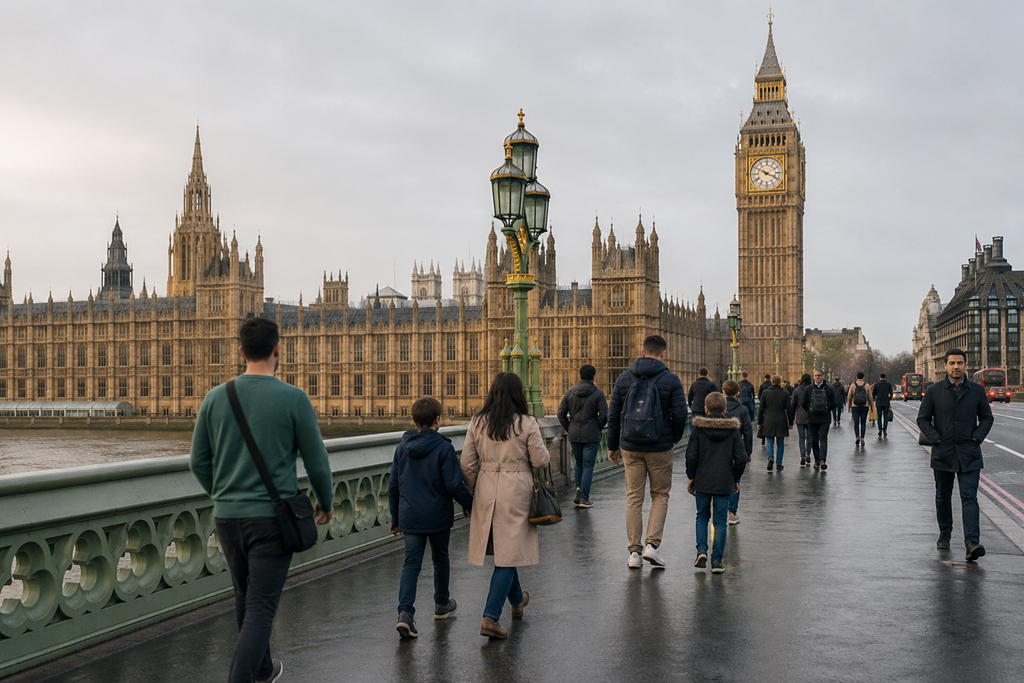
Westminster is the London many first-time visitors picture before arriving. It includes Big Ben, the Houses of Parliament, Westminster Abbey, Whitehall, St James’s Park, and Buckingham Palace.
It is best visited early in the day if you want quieter photos and a gentler start. You can pair Westminster with a walk through St James’s Park and continue toward Trafalgar Square or the South Bank.
The West End, Covent Garden, And Soho
This is London’s entertainment core. Covent Garden has shops, restaurants, street performers, and easy access to theatres. Soho is lively, dense, and full of restaurants, bars, cafés, and nightlife. The West End is the place to see a show.
This area is best in the afternoon and evening, especially if you are planning dinner and theatre.
South Bank
The South Bank runs along the River Thames and is one of the best walking areas in London. You can take in views of Parliament, cross bridges, visit cultural venues, and continue toward Tate Modern, Shakespeare’s Globe, Millennium Bridge, and Borough Market.
It is a great area for first-time visitors because it combines landmarks, culture, river views, and easy navigation.
The City Of London
The City is London’s historic and financial core. Here you’ll find the Tower of London, Tower Bridge, St Paul’s Cathedral, old lanes, modern skyscrapers, and traces of Roman and medieval London.
It is especially rewarding if you enjoy history and architecture.
South Kensington
South Kensington is known for major museums, including the Natural History Museum, the Victoria and Albert Museum, and the Science Museum. It is also close to Hyde Park and Kensington Gardens.
This area works well for families, museum lovers, and rainy-day planning.
Notting Hill
Notting Hill is known for colorful streets, Portobello Road Market, antique shops, cafés, and a village-like feel. It is popular, so it helps to go earlier in the day if you want a quieter walk.
This is a good area for visitors who want a softer neighborhood experience away from the biggest landmark zones.
Greenwich
Greenwich feels like a separate historic town within London. It offers maritime history, riverside views, Greenwich Park, markets, and the Royal Observatory area. It is a good choice for visitors who have already covered central landmarks or want a more spacious day.
Camden
Camden is energetic and alternative, with markets, music history, food stalls, canals, and a more eclectic atmosphere. It can be crowded, but it offers a different side of London than Westminster or Kensington.
Classic Attractions And Experiences
London has more attractions than you can reasonably see in one trip. For a first visit, focus on a balanced mix of landmarks, museums, neighborhoods, parks, and food experiences.
Tower Of London
The Tower of London is one of the city’s essential historic sites. It combines royal history, fortress architecture, the Crown Jewels, and centuries of stories in one place.
Historic Royal Palaces recommends allowing at least two hours to explore the Tower, including the Crown Jewels.
For first-time visitors, it is worth booking ahead during busy travel periods and arriving with enough time so the visit does not feel rushed.
Tower Bridge
Tower Bridge is one of London’s most recognizable landmarks. You can admire it from the riverside, walk across it, or visit the bridge experience if you want views and more background.
A good first-time route is to visit the Tower of London, walk across or photograph Tower Bridge, then continue along the river toward Borough Market or the South Bank.
Westminster Abbey
Westminster Abbey is deeply connected to British royal, political, and literary history. It is close to Parliament, Big Ben, and St James’s Park, making it easy to include in a Westminster sightseeing day.
If you plan to go inside, check current visiting details before you go.
Buckingham Palace And St James’s Park
Buckingham Palace is a classic first-time stop, even if you only view it from outside. Pair it with St James’s Park, one of central London’s most scenic green spaces.
This area works especially well as part of a walk from Westminster to Trafalgar Square.
The British Museum
The British Museum is one of London’s major cultural institutions and is especially good for visitors interested in world history and ancient civilizations. General admission to the permanent collection is free, though special exhibitions may require a ticket, and timed-entry booking can be useful or required depending on current visitor arrangements.
Because the museum is large, it helps to choose a few galleries rather than trying to see everything.
The National Gallery
The National Gallery sits on Trafalgar Square and is one of the easiest major museums to include in a first trip. It is especially useful because its central location makes it simple to combine with Covent Garden, Soho, Westminster, or the West End.
The gallery’s official visitor information notes that general admission is free, while some exhibitions may require tickets.
Tate Modern And The Millennium Bridge
Tate Modern is a major modern and contemporary art museum on the South Bank. Even if you are not deeply into modern art, the building, riverside location, and nearby Millennium Bridge make this a worthwhile area.
You can walk from Tate Modern across Millennium Bridge toward St Paul’s Cathedral for one of the city’s most memorable views.
St Paul’s Cathedral
St Paul’s Cathedral is one of London’s great architectural landmarks. Its dome is a defining feature of the skyline, and the surrounding area connects well with the City, Millennium Bridge, and the river.
It is a good choice for visitors interested in architecture, history, and classic London views.
Hyde Park And Kensington Gardens
Hyde Park and Kensington Gardens offer a spacious break from museums, shopping, and traffic. Hyde Park is one of London’s Royal Parks and includes gardens, monuments, open space, and walking routes.
This area is especially useful if you are staying near Kensington, Marble Arch, Knightsbridge, or South Kensington.
Regent’s Park And Primrose Hill
Regent’s Park is one of London’s most attractive green spaces, and Primrose Hill offers one of the city’s classic skyline viewpoints. The Royal Parks describes Regent’s Park and Primrose Hill as home to gardens, sports facilities, wildlife areas, playgrounds, and the famous view from Primrose Hill.
This is a good option when you want a slower morning or a scenic break after Camden.
Borough Market
Borough Market is one of London’s best-known food markets and a strong choice for first-time visitors who want a casual meal with lots of options. It pairs naturally with London Bridge, Southwark Cathedral, the South Bank, Tate Modern, or the Tower Bridge area.
Go with patience, especially around lunch, when it can get crowded.
A West End Show
Seeing a West End show is one of London’s classic evening experiences. You do not need to build your whole trip around theatre, but one show can add a memorable rhythm to your visit.
Book ahead for popular productions, or look for same-day options if your plans are flexible.
A Thames Walk
One of the simplest and best London experiences is walking along the Thames. Good stretches include Westminster Bridge to the South Bank, South Bank to Tate Modern, London Bridge to Tower Bridge, and Greenwich riverside.
This is a low-pressure way to connect landmarks, take photos, and absorb the city without constantly entering attractions.
What To Eat In London
London’s food scene is broad, international, and much better than old stereotypes suggest. For a first trip, mix traditional British food with markets, pubs, cafés, and global cuisines.
Traditional British Food
Classic dishes to try include fish and chips, a Sunday roast, full English breakfast, pies, sticky toffee pudding, and afternoon tea. You do not need to try everything, but choosing one or two traditional meals can make the trip feel more rooted.
For fish and chips, look for a well-reviewed pub or dedicated fish-and-chip shop rather than choosing only by location near a major attraction.
Pubs
Pubs are part of everyday London life. Some are historic and atmospheric; others are casual neighborhood gathering places. They can be good for a relaxed meal, especially at lunch or early evening.
A pub meal is often easiest on a sightseeing day when you want something simple, filling, and not overly formal.
Markets And Food Halls
Food markets are helpful for first-time visitors because everyone can choose something different. Borough Market is the most famous, but London has many other markets and food halls across different neighborhoods.
Markets are best approached as flexible experiences rather than must-eat checklists. Walk around first, compare options, then choose what genuinely appeals.
Afternoon Tea
Afternoon tea can be a memorable London experience, especially if you enjoy slower meals and classic hospitality. It ranges from formal hotel teas to more casual versions.
Book ahead for well-known places, and consider whether you want this to replace lunch rather than adding it to an already full food day.
International Food
London is one of the world’s great cities for international food. Depending on where you go, you can find excellent Indian, Middle Eastern, Caribbean, Chinese, Thai, Nigerian, Turkish, Italian, French, and many other cuisines.
For a more interesting food trip, plan at least one meal around a neighborhood rather than only eating near major landmarks.
Practical Planning Tips For First-Time Visitors
Group Your Days By Area
London is big, and crossing the city repeatedly can waste time. Build each day around one main area and nearby attractions.
For example:
- Westminster, St James’s Park, Trafalgar Square, and Covent Garden
- Tower of London, Tower Bridge, Borough Market, and South Bank
- South Kensington museums, Hyde Park, and Kensington Gardens
- Camden, Regent’s Park, and Primrose Hill
- Greenwich as a slower half-day or full-day outing
Book Major Attractions Ahead When It Matters
Some attractions may use timed-entry reservations or have limited availability during busy periods. This is especially true for major historic sites, special exhibitions, popular viewpoints, and theatre.
For evergreen planning, the best habit is simple: once your travel dates are set, check current entry requirements for your highest-priority attractions.
Leave Space Between Activities
London sightseeing takes longer than it looks. Museums are large, Tube transfers take time, meals can stretch, and walking routes invite stops.
A good first-time pace is two major activities per day, plus one flexible walk, meal, market, or neighborhood wander.
Use Parks As Breathing Room
London’s parks are not just filler. They are part of the city’s character and can make a busy trip feel much easier. Hyde Park, Kensington Gardens, St James’s Park, Regent’s Park, Greenwich Park, and Hampstead Heath all offer different versions of outdoor London.
Check Walking Distances Before Taking The Tube
Sometimes two places are close enough to walk, even if the Tube map makes them look far apart. This is especially true in central London. Walking can also help you discover small streets, shops, churches, cafés, and viewpoints you would miss underground.
Keep Rain Plans Flexible
London weather can change quickly. Bring layers, comfortable shoes, and a compact umbrella or rain jacket. On wet days, lean into museums, galleries, covered markets, afternoon tea, theatre, and pubs.
Be Sensible With Belongings
London is generally manageable for visitors, but it is still a major city. Keep your phone and wallet secure, especially in crowded areas, stations, markets, and on public transport. Avoid leaving bags hanging loosely from chairs in busy restaurants or cafés.
Do Not Overpack Your Schedule
The biggest mistake first-time visitors make is trying to see too much. London is more enjoyable when you give yourself time to look around, sit in a park, take a longer walk, or enjoy a meal without rushing.
A Simple First-Time London Itinerary Framework
This is not a strict itinerary, but it can help you organize your trip.
Day One: Westminster And Classic London
Start around Westminster Abbey, Big Ben, and the Houses of Parliament. Walk through St James’s Park toward Buckingham Palace, then continue toward Trafalgar Square and Covent Garden. End with dinner or a West End show.
Day Two: The Tower, The City, And The River
Visit the Tower of London, see Tower Bridge, and walk along the river. Continue toward Borough Market for lunch, then explore the South Bank, Tate Modern, or St Paul’s Cathedral depending on your interests.
Day Three: Museums And Parks
Spend time in South Kensington at one or two major museums. Add Hyde Park or Kensington Gardens for a slower break. In the evening, consider Notting Hill, Kensington, or a relaxed dinner near your hotel.
Day Four: Neighborhood London
Choose a neighborhood based on your travel style. Notting Hill works well for colorful streets and markets. Camden pairs nicely with Regent’s Park and Primrose Hill. Greenwich is ideal for maritime history, river views, and a more spacious day.
Day Five: Flexible Favorites
Use your final day for anything you missed: another museum, shopping, afternoon tea, a river walk, a viewpoint, or a slower return to your favorite area.
What To Know Before You Go
London is best when you plan enough to feel oriented but leave enough space to enjoy the city naturally. Choose a convenient base, learn the basic transport system, prioritize a few major attractions, and build your days around neighborhoods rather than scattered checklists.
For a first visit, you do not need to see everything. You need a trip that gives you a clear sense of the city: its history, its parks, its museums, its food, its neighborhoods, and its everyday rhythm.
London has enough depth for many return visits. Let the first trip be a strong introduction, not a race.
Download Our Free E-book!