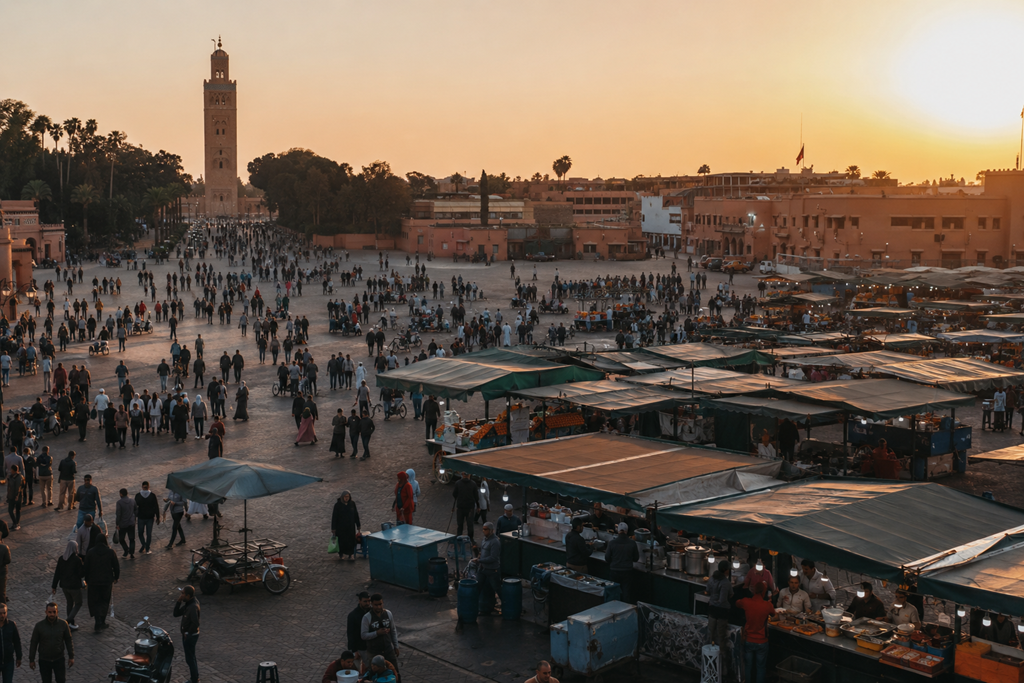
Marrakech is one of Morocco’s most memorable cities: layered, colorful, historic, and full of sensory detail. It is a place where a short walk can take you from quiet tiled courtyards to busy souks, from garden paths to rooftop views, and from centuries-old architecture to everyday local life.
This guide is designed to help you plan a thoughtful first trip to Marrakech with less confusion. You’ll find practical guidance on when to visit, where to stay, how to understand the main areas, what to see, how to approach the markets, what to eat, and how to move through the city with more confidence.
Marrakech’s historic medina is a UNESCO World Heritage site, recognized for its long-standing cultural importance and monuments such as the Koutoubia Mosque, ramparts, monumental gates, gardens, and historic quarters. Jemaa el-Fna, the city’s famous central square, is also recognized by UNESCO as an important cultural space connected to performance, storytelling, food, and public gathering.
Overview: What Marrakech Is Really Like
Marrakech is often described as intense, but that word can be misleading if it makes the city sound difficult rather than layered. The city is lively, especially in the medina, where narrow lanes, market stalls, motorbikes, carts, shopkeepers, residents, and travelers all share space.
For first-time visitors, Marrakech is best approached with flexible expectations. Some parts of the city are busy and disorienting. Others are peaceful and beautifully designed. A good trip usually balances both: time in the souks and squares, time in gardens and palaces, time on foot, and time resting at your riad or hotel.
Marrakech rewards travelers who slow down enough to notice the details: carved cedar ceilings, patterned zellige tilework, brass lanterns, spice displays, mint tea poured from a height, and the changing mood of Jemaa el-Fna from daytime movement to evening food stalls and gathering crowds.
Best Time To Visit Marrakech
Marrakech can be visited year-round, but the most comfortable periods are generally spring and fall, when daytime temperatures are more manageable for walking, sightseeing, and market exploration.
Spring
Spring is one of the most pleasant times to visit. Gardens feel especially appealing, and the weather is often comfortable enough for long walks through the medina. It is also a popular travel period, so book accommodations and guided experiences ahead when possible.
Fall
Fall is another strong choice, especially if you want warm days without the sharper heat of midsummer. It is a good season for exploring palaces, souks, rooftops, and nearby day trips without building your schedule around avoiding the hottest hours.
Summer
Summer in Marrakech can be very hot. If you visit during this period, plan your days carefully. Start early, rest during the hottest part of the day, and save lighter activities for evening. Choose accommodations with comfortable cooling and shaded common areas.
Winter
Winter can be a good option for travelers who prefer cooler sightseeing weather. Evenings may feel chilly, especially on rooftops or in traditional buildings, so bring layers. Winter can also be a practical season for travelers who want a less heat-intensive experience.
How Many Days Do You Need In Marrakech?
For most first-time visitors, three to four days is a comfortable amount of time. This gives you enough space to explore the medina, visit major landmarks, experience the souks, enjoy a garden or two, try local food, and take breaks without rushing.
Two days can work if Marrakech is part of a larger Morocco trip, but it will feel selective. Five days or more allows for a slower rhythm, more neighborhood wandering, cooking classes, hammam experiences, and possible day trips to nearby landscapes.
A good first-trip structure might look like this:
Day one: Settle in, explore near your accommodation, and visit Jemaa el-Fna in the evening.
Day two: Focus on the medina, souks, Koutoubia area, and a rooftop meal.
Day three: Visit Bahia Palace, the Saadian Tombs, Mellah, and a garden.
Day four: Add a hammam, cooking class, museum, or day trip.
Key Areas And Neighborhoods To Understand
Marrakech is easier to navigate once you understand the basic difference between the historic medina and the newer districts outside the old walls.
The Medina
The medina is the historic heart of Marrakech and the area many travelers picture first: narrow lanes, souks, riads, traditional workshops, food stalls, small mosques, and hidden courtyards. It is atmospheric and highly walkable, but it can also be confusing at first.
Staying in the medina puts you close to major sights and gives you a strong sense of place. The tradeoff is that taxis often cannot drive directly to your door, and you may need help finding your riad on arrival.
Jemaa el-Fna And The Koutoubia Area
Jemaa el-Fna is the city’s most famous public square and a central reference point for visitors. During the day, it is active with vendors and movement. In the evening, it becomes more atmospheric as food stalls and performers draw larger crowds. UNESCO describes Jemaa el-Fna as one of the main cultural spaces in Marrakesh.
Nearby, the Koutoubia Mosque is one of Marrakech’s most recognizable landmarks. Non-Muslim visitors generally do not enter the mosque itself, but the exterior, gardens, and minaret are important orientation points in the city.
The Souks
The souks are the market lanes north of Jemaa el-Fna. They are not one single market but a network of shops and workshops selling textiles, leather goods, ceramics, spices, metalwork, lamps, slippers, baskets, and many other traditional items.
The souks are best enjoyed without trying to see everything. Pick a loose route, expect to get turned around, and allow time to browse without feeling pressured to buy.
Mellah
Mellah is the historic Jewish quarter of Marrakech. It offers a different perspective on the city’s layered history and is often visited alongside Bahia Palace and the nearby spice market area. It can be a meaningful addition for travelers interested in cultural history beyond the main tourist routes.
Kasbah
The Kasbah area, south of the main medina, is home to important historic sites such as the Saadian Tombs and sections of the old city walls. It can feel slightly less overwhelming than the most central souk lanes and is a good area for walking between major landmarks.
Gueliz
Gueliz is part of modern Marrakech, with wider streets, contemporary shops, cafés, galleries, and hotels. It is less atmospheric than the medina but easier to navigate. Travelers who prefer modern comforts, taxi access, and a quieter base may prefer staying here or dividing time between Gueliz and the medina.
Hivernage
Hivernage is known for larger hotels, broad avenues, and a more polished resort-like feel. It can be convenient for travelers who want easy transport, spacious accommodations, and a quieter retreat after sightseeing.
Essential Attractions And Experiences
Marrakech is not just about checking off landmarks. The best experiences combine architecture, public life, craft, food, and atmosphere.
Bahia Palace
Bahia Palace is one of Marrakech’s most rewarding historic sites for first-time visitors. It is known for courtyards, carved woodwork, painted ceilings, tilework, and gardens. The palace gives travelers a strong introduction to Moroccan design and the way traditional architecture uses shade, water, pattern, and enclosed outdoor space.
Go earlier in the day if you want a quieter visit, and check current opening hours before you go.
Saadian Tombs
The Saadian Tombs are a compact but important historic site in the Kasbah area. They are especially known for detailed decorative work and the sense of stepping into a preserved royal burial place. Because the site is relatively small, it pairs well with nearby landmarks rather than needing a half-day on its own.
Koutoubia Mosque
The Koutoubia Mosque is one of Marrakech’s defining monuments and a useful landmark for orienting yourself near the medina. The minaret can be seen from many surrounding viewpoints, and the adjacent gardens offer a pleasant place to pause between busier parts of the city. UNESCO lists the Koutoubia among the impressive monuments associated with the Medina of Marrakesh.
Jemaa el-Fna
Jemaa el-Fna is worth experiencing at different times of day. Morning and afternoon visits are useful for orientation. Evening brings a more energetic atmosphere, with food stalls, performers, and larger crowds.
Approach the square as a cultural space rather than a simple attraction. Walk slowly, keep your valuables secure, and understand that some interactions may involve requests for payment, especially photography or performances.
The Souks
The souks are one of the defining Marrakech experiences. You can browse leather bags, woven rugs, ceramics, lanterns, spices, jewelry, woodwork, and traditional shoes. Some shops are clearly geared toward tourists, while others are tied to ongoing craft traditions and local trade.
Bargaining is common in many market settings, but it is best handled respectfully. Decide what an item is worth to you, keep the tone friendly, and walk away politely if the price does not feel right. The goal is not to “win” every negotiation, but to have a fair exchange.
Jardin Majorelle
Jardin Majorelle is one of the city’s best-known garden experiences, especially for travelers interested in color, design, plants, and photography. Its vivid blue architecture, cactus collections, palms, pathways, and shaded corners make it a useful contrast to the density of the medina.
Because it is popular, check current ticketing procedures and consider booking ahead during busy travel periods.
Ben Youssef Madrasa
Ben Youssef Madrasa is a beautiful example of Islamic educational architecture, with detailed tilework, carved plaster, cedar wood, and a central courtyard. It is one of the most visually striking cultural sites in the medina and a strong choice for travelers who appreciate architecture, craftsmanship, and history.
Marrakech Museum And Nearby Cultural Stops
The Marrakech Museum and nearby cultural sites can help deepen your understanding of the city’s art, architecture, and history. This area works well as part of a medina walking route, especially if you want a structured break from the souks.
Menara Gardens
Menara Gardens offer open space, olive groves, a reflecting basin, and views toward the Atlas Mountains on clear days. It is not as visually intricate as some of Marrakech’s enclosed gardens, but it provides a different kind of experience: spacious, simple, and tied to the city’s broader landscape.
A Traditional Hammam
A hammam is one of the most memorable cultural wellness experiences in Morocco. Options range from local public bathhouses to more polished spa-style hammams. First-time visitors may prefer a riad or spa hammam where the process is explained clearly.
A hammam is especially useful after a few days of walking through dusty lanes and busy markets. Book ahead if you have a specific place in mind.
A Cooking Class
A cooking class can be a practical way to understand Moroccan food beyond restaurant menus. Many classes include market visits, spice explanations, and hands-on preparation of dishes such as tagine, couscous, salads, or pastries.
This is a strong option for travelers who want a slower, more personal experience and a better understanding of everyday ingredients.
Rooftop Views
Rooftops are part of the Marrakech experience. From a rooftop café, riad terrace, or restaurant, you can see minarets, medina rooftops, the Atlas Mountains in clear weather, and the changing color of the city near sunset.
Rooftops are also useful for decompressing after the souks. Choose one near your walking route rather than crossing the city just for a view.
Food And Drink In Marrakech
Marrakech is a good city for travelers who enjoy layered spices, slow-cooked dishes, fresh bread, small salads, and tea culture. Food is part of the travel experience, not just a break between attractions.
What To Try
Tagine is one of Morocco’s best-known dishes, usually slow-cooked with meat, vegetables, preserved lemon, olives, dried fruit, or spices. Couscous is another classic, often associated with family meals and traditionally served on specific days, though travelers will find it in many restaurants.
Other foods to look for include Moroccan salads, harira soup, grilled skewers, pastilla, msemen, fresh bread, dates, olives, and pastries made with almonds or honey.
Mint tea is widely served and often part of hospitality. It can be sweet, so ask if you prefer less sugar.
Where To Eat
Instead of chasing trendy rankings, think in terms of experience type:
Choose a riad dinner for a quieter, more traditional setting.
Choose a rooftop restaurant for views and atmosphere.
Choose a casual local spot for simple Moroccan dishes.
Choose a cooking class if you want to understand ingredients and technique.
Choose the night market atmosphere near Jemaa el-Fna if you want energy and public life.
For food stalls and casual eateries, use common sense. Look for places with steady turnover, freshly prepared food, and a clean setup. If you have a sensitive stomach, ease into street food rather than making it your first major meal.
How To Approach The Markets
The markets are one of Marrakech’s greatest pleasures, but they can also overwhelm first-time visitors. A little preparation helps.
Start Without Buying
On your first walk through the souks, simply look. Notice the lanes, what is sold where, how prices are discussed, and what items you are genuinely drawn to. This lowers pressure and helps you make better decisions later.
Expect To Bargain
Bargaining is part of many souk purchases, especially for crafts, textiles, leather goods, and decorative items. Keep your tone friendly. It is acceptable to negotiate, but not necessary to turn every exchange into a contest.
Know What You Can Pack
Before buying ceramics, lanterns, rugs, or fragile items, think about luggage space, airline rules, and whether shipping makes sense. Small items such as spices, baskets, scarves, slippers, and tea glasses are easier to manage.
Be Mindful With Photos
Always ask before taking close-up photos of people, shop interiors, or performers. In some situations, payment may be expected. When in doubt, keep your camera lowered and enjoy the moment directly.
Transportation Basics
Marrakech is both walkable and confusing. The medina is best explored on foot, while taxis or arranged transfers are more useful for longer distances, airport arrivals, and moving between the medina and modern districts.
Arriving In Marrakech
Many visitors arrive through Marrakech Menara Airport. If you are staying inside the medina, ask your accommodation for arrival instructions. Riads often provide a meeting point because vehicles may not be able to reach the door.
For a first visit, arranging an airport transfer through your accommodation can reduce stress, especially if you arrive after dark.
Walking In The Medina
Walking is the main way to experience the medina. Use offline maps, but do not expect them to be perfect in every narrow lane. Landmarks, gates, mosques, and main streets are often more helpful than tiny alley names.
If someone offers unsolicited directions, be polite but cautious. If you need help, ask your accommodation, a shopkeeper, or a clearly established guide.
Taxis
Taxis are useful outside the pedestrian-heavy medina. Agree on the fare or confirm the meter before starting when appropriate. Your hotel or riad can often advise on fair expectations for common routes.
Guided Tours
A reputable licensed guide can be helpful on your first full day, especially for the souks and historic medina. A good guide can explain context, reduce navigation stress, and help you see details you might otherwise miss.
Practical Travel Tips
Stay In A Riad If You Want Atmosphere
A riad is a traditional Moroccan house built around an interior courtyard. Many have been converted into guesthouses. Staying in one can be one of the most memorable parts of a Marrakech trip, especially if you value architecture, personal service, and a quieter retreat from the streets.
Plan Fewer Things Per Day
Marrakech is not a city where you need to rush through a packed checklist. The heat, crowds, navigation, and sensory detail can make even short distances feel full. Two or three main experiences per day is often enough.
Dress With Respect And Comfort
Marrakech is used to visitors, but modest, lightweight clothing is a practical and respectful choice. Loose fabrics, comfortable shoes, sun protection, and layers for cooler evenings are useful.
Carry Small Cash
Small cash is helpful for markets, taxis, tips, casual food, and small purchases. Keep it organized so you do not need to pull out larger amounts in busy areas.
Build In Rest
The best Marrakech trips include pauses: a rooftop tea, a riad courtyard break, a garden visit, or a quiet lunch away from the busiest lanes. Rest is not wasted time here. It helps you enjoy the city with more attention.
Check Current Details Before You Go
Opening hours, ticketing systems, renovation schedules, and entry rules can change. Before visiting major attractions, check current details through the official site, your accommodation, or a reliable local source.
Suggested First-Time Marrakech Itinerary
Day One: Arrival And Orientation
Arrive, settle into your accommodation, and take a short walk in the surrounding area. Avoid making your first day too ambitious. If you arrive with enough time, visit Jemaa el-Fna before or after sunset to get a first sense of the city’s public life.
Have dinner near your accommodation so you do not need to navigate too far on your first night.
Day Two: Medina, Souks, And Koutoubia
Start with the Koutoubia Mosque area, then move toward Jemaa el-Fna and the souks. Spend the day exploring slowly, with breaks for tea or lunch.
If you are nervous about getting lost or handling the markets, this is a good day for a licensed guide. End with a rooftop view or a quiet riad dinner.
Day Three: Palaces, Tombs, And Mellah
Visit Bahia Palace, the Saadian Tombs, and the Mellah area. These sites work well together geographically and give you a deeper look at Marrakech’s architecture and history.
In the afternoon, rest or visit a garden. In the evening, choose a relaxed meal rather than another high-energy market experience.
Day Four: Gardens, Hammam, Or Cooking Class
Use your final day for a slower experience. Visit Jardin Majorelle, book a hammam, take a cooking class, or spend time revisiting the souks for thoughtful purchases.
This is also a good day to leave space for anything you missed or want to experience again.
Common Mistakes To Avoid
One common mistake is trying to see too much in one day. Marrakech is better when you leave room for wandering, pauses, and unexpected discoveries.
Another mistake is booking accommodation without understanding the location. A beautiful riad deep in the medina can be wonderful, but it may not be ideal if you want easy taxi access or dislike walking through narrow lanes at night.
Travelers also sometimes underestimate the souks. They are enjoyable, but they require patience. Go in with realistic expectations, protect your energy, and remember that you do not need to respond to every invitation to enter a shop.
Finally, do not treat Marrakech only as a shopping destination. The city’s deeper rewards are in its architecture, public spaces, food traditions, gardens, and everyday rhythm.
Is Marrakech Worth Visiting?
Marrakech is absolutely worth visiting for travelers interested in culture, design, food, markets, and historic cities. It is not the easiest destination if you want everything to feel orderly and predictable, but it is deeply rewarding when approached with patience and curiosity.
The best Marrakech trip balances activity and rest: a morning in the medina, an afternoon garden, a rooftop meal, a hammam, a palace visit, a market walk, and enough quiet time to absorb what you are seeing.
For a first visit to Morocco, Marrakech offers a powerful introduction. It gives you historic architecture, craft traditions, memorable food, and a city atmosphere unlike anywhere else.
Download Our Free E-book!