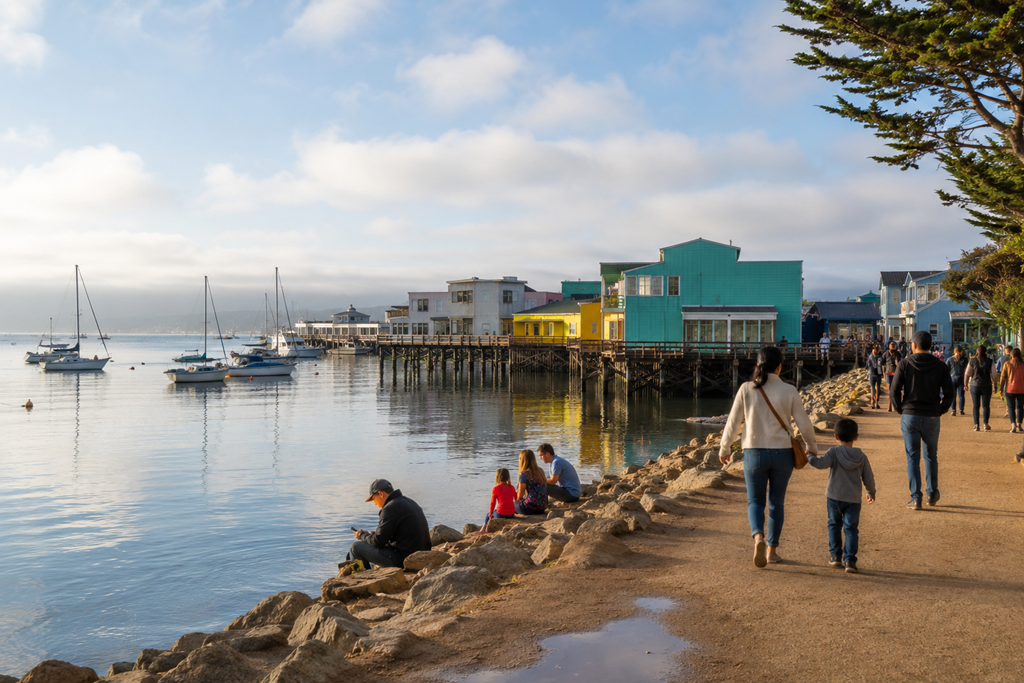
Monterey is one of California’s most rewarding coastal destinations for travelers who want ocean views, easy walking areas, wildlife, history, and a relaxed pace without needing a complicated itinerary. Set along Monterey Bay on California’s Central Coast, it works well for weekend trips, family vacations, romantic getaways, road trips, and slower coastal escapes.
This guide will help you understand the best times to visit, where to spend your time, what attractions are worth prioritizing, how to get around, what to eat, and how to plan a smoother trip.
Monterey At A Glance
Monterey is best known for its waterfront, marine life, historic adobes, Cannery Row, Old Fisherman’s Wharf, and access to nearby coastal scenery. It is compact enough that many visitors can enjoy the main waterfront areas on foot, especially around Cannery Row, the Monterey Bay Aquarium, Old Fisherman’s Wharf, downtown Monterey, and the Monterey Bay Coastal Recreation Trail.
The destination feels especially appealing because many of its best experiences are simple: walking by the water, watching sea otters or harbor seals from a respectful distance, exploring old streets, eating seafood, and taking scenic drives along the coast.
Monterey also makes a strong base for nearby places like Pacific Grove, Carmel-by-the-Sea, 17-Mile Drive, and Point Lobos State Natural Reserve. See Monterey highlights classic attractions such as Cannery Row, Old Fisherman’s Wharf, 17-Mile Drive, Point Lobos, and the Monterey Bay Aquarium as core parts of the wider Monterey County visitor experience.
Best Time To Visit Monterey
Monterey can be visited year-round, but the best time depends on the kind of trip you want.
Spring
Spring is a good choice if you want mild weather, coastal walks, and fewer peak-season crowds. Wildflowers may appear along parts of the coast, and nearby parks can feel especially fresh after winter rains. Weather can still be cool or breezy, so bring layers.
Summer
Summer is popular, especially for families and road-trippers. Expect more visitors around Cannery Row, the aquarium, beaches, and scenic drives. Monterey’s summer weather can be cooler than many travelers expect because of coastal fog and marine air, so a light jacket is still useful.
Fall
Fall is often one of the most pleasant times to visit. The weather can be comfortable, crowds may be lighter than summer, and the oceanfront remains beautiful for walking, dining, and sightseeing.
Winter
Winter is quieter and can be a good fit for travelers who prefer fewer crowds and do not mind cooler weather or possible rain. It is also a nice time for slower museum visits, historic sites, seafood meals, and coastal drives between storms.
Key Areas To Know
Cannery Row
Cannery Row is Monterey’s best-known waterfront district. Once associated with sardine canning and made famous through John Steinbeck’s writing, it is now a visitor-friendly area with hotels, restaurants, shops, ocean views, and the Monterey Bay Aquarium.
This is a convenient area to stay if you want to be close to the aquarium, waterfront walks, and restaurants. It is also one of the busiest parts of Monterey, so expect more foot traffic during popular travel periods.
Old Fisherman’s Wharf
Old Fisherman’s Wharf is a classic Monterey stop for harbor views, seafood restaurants, gift shops, whale-watching tours, and a casual waterfront atmosphere. It is a good place to stroll, look out over the marina, and get a sense of Monterey’s working-harbor history.
Downtown Monterey
Downtown Monterey is a practical base for travelers who want access to restaurants, historic sites, and the waterfront without staying directly on Cannery Row. It also places you near Monterey State Historic Park and Custom House Plaza.
Pacific Grove
Pacific Grove sits just west of Monterey and is often paired with a Monterey visit. It is known for oceanfront walking paths, Lovers Point Park, older homes, quieter streets, and access to scenic coastline. Lovers Point Park includes shoreline recreation, wildlife viewing, bicycling, vista points, swimming, scuba diving, surfing, and other outdoor activities.
Carmel-By-The-Sea And Nearby Coast
Carmel-by-the-Sea is a short drive from Monterey and works well as a half-day or full-day add-on. Many travelers combine Monterey with Carmel, 17-Mile Drive, or Point Lobos for a more complete Central Coast trip.
Top Attractions And Experiences In Monterey
Monterey Bay Aquarium
The Monterey Bay Aquarium is one of the area’s signature attractions and a strong choice for families, first-time visitors, marine-life lovers, and anyone interested in the ocean. It is located on Cannery Row, and the aquarium advises visitors to check current hours, schedules, and ticket details before going.
Because it is popular, plan ahead during busy periods. Booking in advance can make arrival easier, especially on weekends, school breaks, and summer travel dates.
Cannery Row Waterfront Walk
Even if you do not shop or dine on Cannery Row, the area is worth walking for the ocean views, historic character, and easy access to nearby waterfront paths. It is best enjoyed without rushing. Leave time to step into side viewpoints, look for wildlife from a safe distance, and continue toward Pacific Grove if you want a longer walk.
Old Fisherman’s Wharf And The Harbor
Old Fisherman’s Wharf is ideal for a casual stroll, seafood meal, harbor view, or whale-watching departure. It is not a quiet hidden gem, but it remains a classic Monterey experience because it connects visitors to the water, boats, and local seafood culture.
Monterey State Historic Park
Monterey State Historic Park helps visitors understand Monterey beyond the waterfront. The park includes historic buildings and gardens connected to California’s Spanish, Mexican, and early American periods. California State Parks lists sites such as the Custom House, Pacific House, First Brick House, gardens, and guided walks, while advising visitors to check current details before visiting.
This is a good choice for travelers who enjoy history, architecture, and slower self-guided exploration.
Monterey Bay Coastal Recreation Trail
The Monterey Bay Coastal Recreation Trail is one of the easiest ways to experience Monterey without relying on a car for every stop. The paved path stretches 18 miles from Castroville to Pacific Grove and connects waterfront attractions such as Fisherman’s Wharf, Cannery Row, the Monterey Bay Aquarium, beaches, parks, historic sites, and downtown Monterey.
You can walk a short section, rent bikes, or use it to link several attractions in one relaxed outing.
Point Lobos State Natural Reserve
Point Lobos is not in Monterey itself, but it is one of the best nearby nature experiences. California State Parks describes it as outstanding for sightseeing, photography, nature study, picnicking, scuba diving, and coastal recreation, with rare plant communities, unique geological formations, and rich marine habitat.
Go early when possible, wear comfortable shoes, and keep your plan flexible. Parking can be limited during busy times, and conditions may vary.
17-Mile Drive
17-Mile Drive is a scenic coastal route near Monterey and Carmel, known for ocean views, cypress trees, golf courses, and dramatic coastline. It is a good add-on if you have a car and want a slower sightseeing drive. Build in time for pullouts and photos rather than treating it as a quick shortcut.
Beaches And Viewpoints
Monterey’s beaches are often better for walking, tide-watching, photography, and sitting by the water than for warm-weather swimming. Coastal conditions can be cool, windy, or foggy, and water temperatures are usually chilly. Good beach and viewpoint experiences include Del Monte Beach, San Carlos Beach when accessible, Lovers Point, and the rocky coastline toward Pacific Grove.
Because wildlife sometimes uses beaches and shoreline areas, respect closures and give animals plenty of space.
Food And Drink In Monterey
Monterey’s food identity is closely tied to the ocean. Seafood is the obvious focus, but the area also has casual cafes, bakeries, wine bars, coastal restaurants, and options for travelers who want something simple between sightseeing stops.
Good food experiences to consider include:
Seafood near the wharf or waterfront
Casual meals on Cannery Row
Coffee and pastries before a coastal walk
A picnic near the water
Local wine tasting in Monterey or nearby Carmel Valley
Clam chowder, fish tacos, grilled fish, oysters, or seasonal local catches
For an evergreen trip plan, avoid building your entire visit around one specific restaurant. Instead, choose the area and style of meal you want, then check current menus, hours, and reservations closer to your travel date.
How To Get Around Monterey
Walking
Walking is one of the best ways to enjoy central Monterey. Cannery Row, the aquarium, Old Fisherman’s Wharf, the harbor, downtown, and parts of the coastal trail can be linked on foot depending on where you stay and how much walking you enjoy.
Biking
Biking works especially well along the Monterey Bay Coastal Recreation Trail. It can be a pleasant way to cover more ground between Monterey and Pacific Grove while avoiding some parking challenges.
Driving
A car is useful if you plan to visit 17-Mile Drive, Carmel-by-the-Sea, Point Lobos, Big Sur, or multiple towns in one trip. Parking can be more difficult during busy periods, so consider parking once and walking when exploring the central waterfront.
Public Transit
Monterey-Salinas Transit serves the greater Monterey and Salinas areas, with service organized around major transit points such as Monterey Transit Plaza and Salinas Transit Center. The agency provides route, schedule, fare, and trip-planning information online.
Public transit can be helpful for some routes, but visitors planning scenic coastal stops may still prefer a car for flexibility.
Where To Stay In Monterey
The best area to stay depends on your priorities.
Stay near Cannery Row if you want easy access to the aquarium, waterfront restaurants, and ocean views.
Stay near downtown Monterey if you want a practical base close to historic sites, restaurants, and the wharf.
Stay near the beach or marina if you want a quieter coastal feel and do not mind being slightly farther from Cannery Row.
Stay in Pacific Grove if you prefer a quieter small-town feel with scenic walking and easy access to Monterey.
Stay in Carmel-by-the-Sea if you want a more village-like, romantic, or boutique coastal experience and plan to split time between Monterey and Carmel.
Practical Travel Tips For Monterey
Bring Layers
Monterey weather can shift throughout the day. A sunny morning can become breezy, foggy, or cool by afternoon. Pack layers even in summer.
Book Key Attractions Ahead During Busy Periods
For major attractions like the Monterey Bay Aquarium, check current visitor information and consider booking ahead during weekends, holidays, and school breaks.
Do Not Overpack Your Itinerary
Monterey is best when you leave room for slow coastal moments. One aquarium visit, one long walk, one historic stop, and one seafood meal can make a satisfying day.
Respect Marine Wildlife
Sea otters, seals, sea lions, birds, and other wildlife are part of the Monterey experience. Watch from a safe distance, never feed animals, keep pets controlled, and follow posted signs or closures.
Use Geography To Plan Your Days
Group nearby sights together. For example, pair Cannery Row with the aquarium and the coastal trail. Pair downtown Monterey with the historic park and Old Fisherman’s Wharf. Pair Pacific Grove with Lovers Point and scenic coastline.
Check Current Conditions Before Coastal Excursions
For beach visits, kayaking, whale watching, Point Lobos, or Big Sur add-ons, check weather, road, ocean, parking, and reservation details before you go.
Suggested Monterey Trip Flow
For A One-Day Visit
Start with a morning walk around Cannery Row or the Coastal Recreation Trail. Visit the Monterey Bay Aquarium if it is a priority. Have lunch near Cannery Row or the wharf, then spend the afternoon at Old Fisherman’s Wharf, Monterey State Historic Park, or Pacific Grove.
For A Weekend Visit
Use one day for Monterey’s waterfront: Cannery Row, the aquarium, the coastal trail, and Old Fisherman’s Wharf. Use the second day for a scenic add-on such as Pacific Grove, 17-Mile Drive, Carmel-by-the-Sea, or Point Lobos.
For A Slower Three-Day Trip
Spend the first day settling into Monterey and walking the waterfront. Use the second day for the aquarium, historic park, and wharf. Save the third day for Point Lobos, Carmel, 17-Mile Drive, or a longer coastal drive depending on weather and your pace.
Who Monterey Is Best For
Monterey is a strong fit for travelers who enjoy coastal scenery, marine life, history, scenic walks, and low-pressure sightseeing. It works well for families, couples, solo travelers, road-trippers, photographers, and anyone who wants a classic California coast experience without needing a big-city itinerary.
It may be less ideal for travelers looking for warm beaches, late-night nightlife, or a packed urban dining scene. Monterey’s strength is its setting: ocean air, historic streets, wildlife, and the feeling of being close to the water.
Final Thoughts For Planning A Monterey Trip
Monterey is easiest to enjoy when you keep the trip simple. Choose a few anchor experiences, such as the aquarium, Cannery Row, the Coastal Recreation Trail, Old Fisherman’s Wharf, and one scenic nearby outing. Then leave space for the small moments that make the area memorable: harbor views, sea air, a quiet bench by the bay, a bowl of chowder, or a slow walk toward Pacific Grove.
With a little planning and a flexible pace, Monterey can feel both easy and deeply satisfying.
Download Our Free E-book!