Paris is one of the world’s most visited cities, but a first trip can feel surprisingly hard to plan. There are famous landmarks, major museums, charming neighborhoods, café-lined streets, river views, parks, markets, and more places to eat than any short visit can realistically cover.
This guide is designed to help first-time visitors understand Paris before they arrive. You’ll find practical guidance on when to visit, where to stay, how to get around, what to prioritize, what to eat, and how to make the trip feel manageable instead of rushed.
Why Paris Is Worth Visiting
Paris is a city where many of the best experiences are simple: walking along the Seine, sitting at a café, visiting a museum, exploring a neighborhood, or seeing familiar landmarks in person for the first time.
The city is especially rewarding for travelers who enjoy art, architecture, food, history, fashion, gardens, and urban wandering. While Paris has major attractions worth planning around, it is also a city best experienced at street level. Some of the most memorable moments may come from a quiet bridge view, a bakery stop, or a walk through a neighborhood you did not originally plan to visit.
For first-time visitors, the key is not trying to see everything. Paris rewards thoughtful pacing.
Best Time To Visit Paris
Paris can be visited year-round, but each season offers a different kind of experience.
Spring
Spring is one of the most popular times to visit Paris. Gardens begin to bloom, café terraces feel lively, and the weather is often comfortable for walking. It can also be busy, especially around major holidays and school breaks, so book key attractions and accommodations ahead when possible.
Summer
Summer brings long daylight hours, outdoor dining, river walks, and a lively atmosphere. It is also one of the busiest travel periods. Expect more crowds at major landmarks and museums. If visiting in summer, plan your most popular attractions earlier in the day and build in breaks.
Fall
Fall is a strong choice for first-time visitors. The weather is often pleasant, the city feels active, and parks and tree-lined boulevards become especially scenic. It can still be busy, but the pace often feels more manageable than peak summer.
Winter
Winter is quieter in many parts of the city, though holidays can still bring visitors. Days are shorter and the weather can be chilly, but museums, cafés, covered passages, and historic churches make Paris a rewarding cold-weather destination. Winter can be a good fit if you care more about culture and atmosphere than long outdoor days.
How Many Days Do You Need In Paris?
For a first visit, three to five full days is a practical amount of time.
With three days, you can see major landmarks, visit one or two museums, enjoy a few neighborhoods, and get a basic feel for the city. With four or five days, you can slow down, add more museums or parks, take longer walks, and include a possible day trip.
If you only have two days, focus on a small number of high-priority experiences. Paris is not a city where rushing from one landmark to another usually leads to the best trip.
Best Areas To Stay For First-Time Visitors
Paris is divided into arrondissements, or districts, that spiral outward from the city center. Many first-time visitors do well staying somewhere central or well connected by Metro.
Saint-Germain-des-Prés
Saint-Germain-des-Prés is a classic Left Bank neighborhood with cafés, galleries, shops, and easy access to the Seine. It is a good fit for travelers who want a beautiful, walkable base with a traditional Paris feel.
The Latin Quarter
The Latin Quarter offers history, student energy, bookshops, casual restaurants, and proximity to the Panthéon, Luxembourg Gardens, and Notre-Dame area. It can be a practical choice for visitors who want charm without feeling too far from major sights.
Le Marais
Le Marais is one of the most appealing areas for first-time visitors who want boutiques, cafés, museums, historic streets, and a lively local feel. It is also a good base for exploring central Paris on foot. The Paris tourist office highlights the Marais as one of the city’s iconic neighborhoods for visitors.
Louvre and Palais Royal Area
This area is very central and convenient for sightseeing. It works well if you want to be close to the Louvre, Tuileries Garden, the Seine, and several major walking routes. It may feel less neighborhood-like in some pockets, but the convenience is excellent.
Opéra and Grands Boulevards
This area is useful for shopping, transit connections, covered passages, and access to major department stores. It can be busy, but it is practical for visitors who want central access and a wide range of hotels.
Montmartre
Montmartre has a village-like feel, hilltop views, artists’ history, and the Sacré-Cœur Basilica. It is atmospheric and memorable, but it sits farther from some central attractions. It can be a good choice for travelers who do not mind using public transportation regularly.
Major Attractions And Experiences For First-Time Visitors
Paris has far more to see than one trip can cover. For a first visit, prioritize a mix of landmarks, museums, neighborhoods, gardens, and walks.
Eiffel Tower
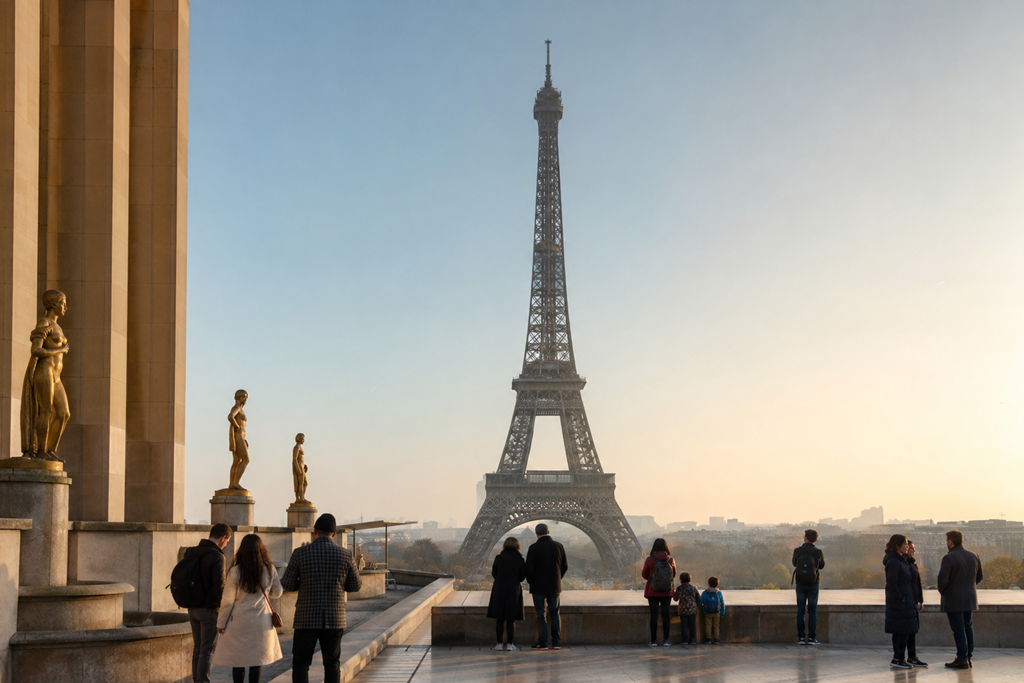
The Eiffel Tower is the landmark many first-time visitors most want to see. You can admire it from the surrounding area, view it from across the Seine at Trocadéro, walk near the Champ de Mars, or book a visit up the tower.
If going up the Eiffel Tower is important to you, book ahead during busy travel periods. The official Eiffel Tower site recommends booking early for peak months, school holidays, and public holidays.
Louvre Museum
The Louvre is one of the world’s most famous museums and is best approached with a plan. Instead of trying to see everything, choose a few priorities and allow time to enjoy the building itself.
Timed entry and advance planning are often useful for major museums like the Louvre. The Louvre’s official ticketing service notes that tickets are valid for a chosen time and date, so visitors should review current conditions before booking.
Musée d’Orsay
The Musée d’Orsay is known for Impressionist and Post-Impressionist art, as well as its dramatic setting in a former railway station. It is often more manageable than the Louvre and is a strong choice for travelers who enjoy art but want a slightly less overwhelming museum experience.
Notre-Dame And Île De La Cité
Île de la Cité is one of the historic hearts of Paris. The area around Notre-Dame is worth visiting for its architecture, river views, bridges, and nearby streets. Check current visitor access before planning a specific visit inside any major monument or church.
Sainte-Chapelle
Sainte-Chapelle is famous for its stained glass and is one of the most beautiful historic interiors in Paris. It pairs well with a walk around Île de la Cité and the Seine.
Sacré-Cœur And Montmartre
Montmartre offers a different side of Paris: winding streets, hilltop views, artists’ history, and neighborhood atmosphere. The area around Sacré-Cœur can be crowded, but quieter streets nearby are rewarding to explore.
Arc De Triomphe And Champs-Élysées
The Arc de Triomphe is one of Paris’s major monuments and offers a powerful sense of the city’s grand avenues. The Champs-Élysées is famous, though some visitors find the surrounding side streets and nearby viewpoints more enjoyable than the avenue itself.
Luxembourg Gardens
Luxembourg Gardens is one of the best places in Paris to slow down. It is ideal for a relaxed walk, a bench break, or a low-pressure morning between museum visits.
Tuileries Garden
Located between the Louvre and Place de la Concorde, the Tuileries Garden is easy to include in a central Paris walking route. It is especially useful for first-time visitors because it connects several major sights naturally.
Seine River Walks
Walking along the Seine is one of the simplest and best Paris experiences. The river connects major landmarks, bridges, museums, islands, and viewpoints. A river walk is especially helpful early in the trip because it gives you a better sense of how central Paris fits together.
Best Paris Neighborhoods To Explore
Paris becomes easier to understand when you think in neighborhoods instead of just attractions.
Le Marais
Le Marais is excellent for historic streets, small museums, boutiques, falafel shops, cafés, and people-watching. It is a good area for travelers who like wandering without a strict plan.
Saint-Germain-des-Prés
Saint-Germain-des-Prés is refined, literary, and elegant. It is a strong area for cafés, galleries, churches, side streets, and classic Left Bank atmosphere.
Latin Quarter
The Latin Quarter is historic, energetic, and practical. It works well for casual meals, bookstores, university history, and access to Luxembourg Gardens.
Montmartre
Montmartre is best explored on foot, away from the busiest areas when possible. Go for hilltop views, quiet stairways, small streets, and a different rhythm from central Paris.
Canal Saint-Martin
Canal Saint-Martin is a good option for visitors who want a more local-feeling walk. It has cafés, bridges, shops, and a relaxed atmosphere that can be a nice contrast to the major monument areas.
Île Saint-Louis
Île Saint-Louis is small, scenic, and easy to combine with Notre-Dame, Île de la Cité, or a Seine walk. It is a good place for a slower stroll and a simple food stop.
What To Eat In Paris
Paris is one of the world’s great food cities, but first-time visitors do not need an elaborate dining plan to eat well. Focus on simple, classic experiences and leave room for spontaneous stops.
Bakeries And Pastries
A good bakery stop can be one of the best daily rituals in Paris. Try a croissant, pain au chocolat, baguette sandwich, fruit tart, or seasonal pastry. Look for bakeries with a steady local flow rather than choosing only by online rankings.
Cafés
Cafés are part of everyday Paris life. They are good for breakfast, coffee, lunch, a light dinner, or a break between sights. Sitting outside with a drink or simple meal can be just as memorable as a more formal restaurant.
Bistros And Brasseries
Bistros and brasseries are good places to try classic French dishes in a traditional setting. Menus vary, but you might find dishes such as steak frites, roast chicken, onion soup, duck, salads, or seasonal specials.
Markets
Food markets are excellent for seeing local ingredients, picking up picnic items, or enjoying a casual meal. They are especially useful if you are staying in an apartment or want a lighter alternative to restaurant dining.
Picnic Foods
Paris is well suited to simple picnics. Bread, cheese, fruit, pastries, and prepared foods from markets or specialty shops can make an easy meal in a park or along the river where allowed.
Getting Around Paris
Paris is very walkable in the central areas, but the Metro is often the easiest way to cover longer distances.
Walking
Walking is the best way to experience Paris at a human pace. Many major sights are closer together than they may seem on a map, especially along the Seine. Comfortable shoes matter more than stylish ones.
Metro
The Paris Metro is usually the fastest way to move around the city. Stations are frequent, signs are clear once you learn the basics, and most major attractions are near a stop. Before your trip, review current ticket options and airport connections through official transit sources, since details can change over time.
RER And Trains
The RER connects central Paris with some outer areas, airports, and regional destinations. It is useful for certain trips, but first-time visitors should pay attention to direction, zones, and ticket requirements.
Buses
Buses can be slower than the Metro but more scenic. They are useful when you want to see the city as you travel or when a route is more direct than going underground.
Taxis And Rideshare
Taxis and rideshare services can be useful late at night, with luggage, or when transit routes are inconvenient. Traffic can slow trips, so they are not always faster than the Metro.
Airport Transportation
Paris is served primarily by Charles de Gaulle and Orly airports. Public transportation options connect both airports with the city, but the best route depends on where you are staying. Paris Aéroport provides official guidance for airport transfers, including public transport options between Charles de Gaulle, Orly, and the city.
Practical Planning Tips For First-Time Visitors
A better Paris trip often comes down to pacing and preparation.
Choose A Few Must-Sees
Pick your top three to five priorities before building the rest of your trip. This helps prevent every day from becoming overcrowded.
Group Sights By Area
Paris is easier when you plan geographically. For example, pair the Louvre with the Tuileries and Palais Royal, or Notre-Dame with Île Saint-Louis and the Latin Quarter.
Book Major Attractions Ahead When Needed
For high-demand attractions and museums, check whether timed entry or advance booking is recommended. This is especially important during busy travel periods.
Leave Space For Wandering
Some of the best Paris experiences are unplanned. Leave open time for cafés, side streets, markets, parks, and longer walks.
Learn A Few French Phrases
You do not need to speak fluent French, but polite basics help. Learn how to say hello, goodbye, please, thank you, excuse me, and whether someone speaks English.
Watch Your Belongings
Paris is generally manageable for visitors, but pickpocketing can happen in busy tourist areas, transit stations, and crowded attractions. Keep valuables secure, avoid leaving phones on café tables, and be cautious around distractions.
Expect Some Lines And Crowds
Paris is popular for a reason. Instead of trying to avoid all crowds, plan around them. Visit major sights early, book ahead when possible, and balance busy attractions with quieter neighborhoods.
Check Current Details Before You Go
Opening hours, reservation policies, transit routes, and access rules can change. Before visiting major attractions, check official websites for current information.
A Simple First-Time Paris Plan
For a first trip, you might think about your days like this:
Spend one day around the Eiffel Tower, Seine, Trocadéro, and nearby Left Bank areas.
Spend one day around the Louvre, Tuileries, Palais Royal, and possibly the Opéra area.
Spend one day around Notre-Dame, Île de la Cité, Île Saint-Louis, the Latin Quarter, and Luxembourg Gardens.
Spend one day in Montmartre, with time for a slower neighborhood walk or another museum.
Add extra time for the Musée d’Orsay, Le Marais, Canal Saint-Martin, shopping, markets, or a day trip if your schedule allows.
This kind of structure keeps the trip organized without making every hour feel scheduled.
Common First-Time Mistakes To Avoid
Trying To See Everything
Paris is too large and layered for one trip. A focused visit is usually better than a crowded checklist.
Staying Too Far From Transit
A cheaper hotel far from convenient transit can cost you time and energy every day. Location matters.
Underestimating Walking Time
Paris is walkable, but long days add up. Build in breaks and wear shoes that can handle uneven sidewalks, stairs, and museum floors.
Overloading Museum Days
Large museums are tiring. One major museum in a day is often enough for most travelers, especially if you also want to walk and eat well.
Eating Only Near Major Attractions
Restaurants closest to major landmarks can be convenient, but they are not always the most rewarding. Walk a few streets away when possible and look for places with a steady local presence.
Final Thoughts For Planning Your First Paris Trip
Paris is best approached with curiosity, patience, and a realistic plan. See the landmarks that matter to you, but do not build the entire trip around rushing from one famous place to the next.
Give yourself time to walk, sit, eat, look around, and let the city feel like more than a list of attractions. For many first-time visitors, the most memorable parts of Paris are not only the Eiffel Tower or the Louvre, but the everyday moments between them.
Download Our Free E-book!