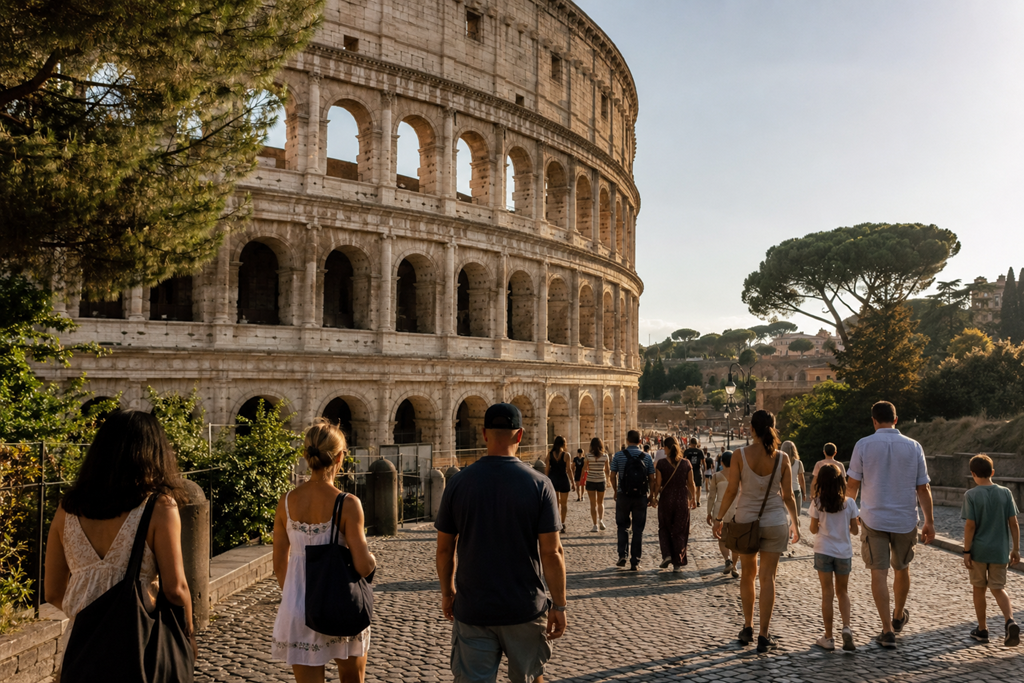
Rome is one of those cities where the practical and the unforgettable sit side by side. You can spend the morning walking through ancient ruins, the afternoon stepping into quiet churches and piazzas, and the evening eating pasta on a side street that feels like it has been part of the neighborhood forever.
This guide is designed to help you plan a better trip to Rome with less confusion. You’ll find a clear overview of when to visit, where to stay, what to see, how to get around, what to eat, and how to approach the city in a way that feels realistic rather than rushed.
Rome rewards travelers who leave room for both structure and wandering. Plan your major sights ahead, but give yourself space to slow down, sit in a piazza, walk without a strict agenda, and enjoy the everyday rhythm of the city.
Rome At A Glance
Rome is Italy’s capital and one of the world’s most historically layered cities. Its historic center is recognized by UNESCO and includes major monuments such as the Roman Forum, the Pantheon, Trajan’s Column, the Mausoleum of Hadrian, and important religious and public buildings tied to papal Rome.
For first-time visitors, Rome can feel both inspiring and overwhelming. The city is walkable in many central areas, but its sights are spread across different neighborhoods. The best approach is to group your days by geography instead of trying to cross the city repeatedly.
A good first trip usually includes a mix of:
Ancient Rome, including the Colosseum, Roman Forum, and Palatine Hill
Historic piazzas, fountains, and churches
Vatican City and the Vatican Museums
Food-focused neighborhoods such as Trastevere and Testaccio
A few slower experiences, such as Villa Borghese, the Appian Way, or a long evening walk
Best Time To Visit Rome
Rome can be visited year-round, but your experience will vary depending on weather, crowds, and how much walking you plan to do.
Spring
Spring is one of the most comfortable times to visit Rome. The weather is usually better for walking, outdoor dining, and long sightseeing days. This is also a popular period, so major attractions can still be busy.
Book key sights ahead when possible, especially places like the Colosseum and Vatican Museums. If you prefer a more relaxed pace, plan your most popular attractions early in the day and leave afternoons for neighborhoods, churches, gardens, and piazzas.
Summer
Summer in Rome can be hot, crowded, and physically tiring. It can still be a rewarding time to visit, but you’ll want to plan carefully.
Start early, take breaks in the afternoon, carry water, and avoid packing your schedule too tightly. Museums, shaded streets, churches, and long lunches can help break up the day. Outdoor ruins are best visited earlier or later when the light and temperature are more comfortable.
Fall
Fall is another excellent season for Rome. The weather is often pleasant for walking, and the city remains lively without always feeling as intense as the peak summer period.
This is a strong choice for travelers who want a balance of sightseeing, food, and neighborhood exploration. As with spring, it is still smart to reserve major attractions in advance during busy travel periods.
Winter
Winter is quieter than peak travel seasons and can be a good time to experience Rome with fewer crowds. Some days may be cool or rainy, but the city’s museums, churches, cafés, and indoor historic sites still make it worthwhile.
Winter works especially well for travelers who care more about history, food, and atmosphere than warm-weather sightseeing.
How Many Days Do You Need In Rome?
For a first visit, three to four full days is a practical minimum. This gives you time to see the Colosseum area, the historic center, Vatican City, and at least one or two neighborhoods without rushing every hour.
Five to seven days is better if you want a fuller experience. With extra time, you can add places like the Appian Way, Ostia Antica, Testaccio, the Borghese Gallery, or slower mornings built around coffee, markets, and walking.
A simple way to think about it:
Two days gives you highlights only.
Three to four days gives you a solid first visit.
Five or more days lets Rome feel more like a city and less like a checklist.
Best Areas To Stay In Rome
Choosing where to stay in Rome matters because it affects how much time you spend walking, using transit, or taking taxis. There is no single best area for everyone, but some neighborhoods are especially useful for first-time visitors.
Centro Storico
The historic center is convenient for classic Rome. You’ll be close to places like the Pantheon, Piazza Navona, Campo de’ Fiori, and the Trevi Fountain.
This area is ideal if you want to walk to many major sights and enjoy being surrounded by old streets, churches, fountains, and piazzas. It can be busy and more expensive, but the location is hard to beat.
Monti
Monti is a good choice if you want to stay near the Colosseum and Roman Forum while still having a neighborhood feel. It has restaurants, small shops, and atmospheric streets without feeling as formal as some parts of the historic center.
It works well for travelers who want access to ancient Rome and a more local evening atmosphere.
Trastevere
Trastevere is known for its narrow streets, restaurants, nightlife, and village-like feeling across the Tiber River. It is a strong option for travelers who want lively evenings and don’t mind being slightly farther from some major daytime attractions.
It can get busy at night, so choose your exact location carefully if you prefer quiet.
Prati
Prati sits near Vatican City and tends to feel more orderly and residential than the historic center. It is a practical base if the Vatican Museums, St. Peter’s Basilica, and access to the metro are priorities.
This area can be a good fit for travelers who want convenience without staying in the busiest tourist streets.
Testaccio
Testaccio is a strong choice for food-focused travelers. It has a more local feel and is known for Roman food traditions, markets, and everyday neighborhood life.
It is not as central for first-time sightseeing, but it can be rewarding for repeat visitors or travelers who want to experience Rome beyond the main landmarks.
Key Attractions And Experiences
Rome has more major sights than most visitors can comfortably see in one trip. Instead of trying to do everything, choose a mix of ancient history, art, religious sites, neighborhoods, food, and open-air wandering.
The Colosseum, Roman Forum, And Palatine Hill
The Colosseum is one of Rome’s defining landmarks, but it makes the most sense when paired with the Roman Forum and Palatine Hill. Together, they help you understand ancient Rome not just as a monument, but as a political, social, and ceremonial center.
This area deserves time. Avoid treating it as a quick photo stop. Wear comfortable shoes, bring water, and consider a guided tour if you want more context. Ancient ruins can be difficult to interpret without explanation, and a good guide can make the experience much more meaningful.
Book ahead during busy travel periods and check current entry rules before you go.
The Pantheon
The Pantheon is one of Rome’s most remarkable ancient buildings and remains one of the easiest major sights to fit into a walking route through the historic center. Its dome, oculus, and interior proportions make it feel different from almost anywhere else in the city.
It pairs naturally with Piazza Navona, Campo de’ Fiori, and nearby cafés and churches. Check current visiting requirements before you go, as entry procedures can change over time.
Piazza Navona
Piazza Navona is one of Rome’s great public spaces. Built over the shape of an ancient stadium, it is now known for fountains, cafés, street life, and surrounding architecture.
It is worth seeing both during the day and in the evening. The square can be busy, but it still gives a strong sense of Rome’s open-air social life.
Trevi Fountain
The Trevi Fountain is famous for a reason. It is dramatic, detailed, and tucked into a relatively compact urban space, which makes the first view feel especially striking.
It is also one of Rome’s most crowded spots. Visit early in the morning or later in the evening if you want a quieter experience. Even if you only stay briefly, it is worth including on a first visit.
Spanish Steps
The Spanish Steps are best experienced as part of a broader walk through the area around Piazza di Spagna, Via dei Condotti, and the streets leading toward Villa Borghese.
The steps themselves are more of a scenic urban moment than a long activity. They work well as a pause between shopping streets, viewpoints, and nearby historic areas.
Vatican Museums And Sistine Chapel
The Vatican Museums hold one of the world’s most significant art collections and include the Sistine Chapel. The official Vatican Museums website provides current information on opening hours, closures, ticket options, and visitor planning, so it is best to verify details directly before your visit.
This is a place where planning matters. The museums are large, crowded, and visually intense. Book ahead, give yourself enough time, and avoid scheduling too many other demanding sights immediately afterward.
St. Peter’s Basilica
St. Peter’s Basilica is one of Rome’s most important religious and architectural sites. Even travelers who are not religious often find it impressive because of its scale, art, and historical importance.
Security lines can vary, so arrive with patience. Dress modestly for church entry, and check current visiting guidance before you go.
Villa Borghese And The Borghese Gallery
Villa Borghese offers a useful change of pace from Rome’s dense historic streets. The park is good for walking, resting, and getting a little space between museum visits and ancient ruins.
The Borghese Gallery is one of Rome’s most rewarding art museums, especially for sculpture and Renaissance and Baroque art. Reservations are often important, so check current ticketing requirements before planning your visit.
Trastevere
Trastevere is one of the best neighborhoods for wandering. Its lanes, churches, restaurants, and evening energy make it appealing for travelers who want atmosphere without a strict itinerary.
Visit during the day for a quieter walk, then return in the evening if you want a livelier dining experience. The neighborhood is popular, so not every restaurant is equally memorable. Look for places that feel rooted in Roman cooking rather than built only around tourist traffic.
Campo de’ Fiori And The Jewish Ghetto
Campo de’ Fiori and the Jewish Ghetto are close enough to combine into one walking route. Campo de’ Fiori has long been associated with market life, while the Jewish Ghetto offers a deeper look at Rome’s layered history and food traditions.
This area is especially good for travelers who enjoy walking slowly, noticing details, and connecting food with history.
The Appian Way
The Appian Way is one of the most memorable ways to experience ancient Rome outside the dense historic center. It offers old paving stones, archaeological remains, catacombs, open landscapes, and a sense of Rome as an ancient city connected to the wider world.
The Appian Way was added to UNESCO’s World Heritage list in 2024, reflecting its long historical importance as an ancient Roman road.
This is best saved for travelers with more time or those who want a quieter, more spacious experience.
Rome Food Overview
Rome is a deeply satisfying food city, especially if you focus on traditional dishes rather than chasing trendy places.
Classic Roman pasta dishes include carbonara, cacio e pepe, amatriciana, and gricia. You’ll also see dishes built around artichokes, oxtail, tripe, seasonal vegetables, thin Roman-style pizza, supplì, and simple pastries.
Food in Rome is often best when it is straightforward. Look for menus that are focused rather than overly broad. Be cautious with restaurants that rely heavily on large photo menus, aggressive staff outside, or a location directly beside major monuments.
Coffee
Coffee is part of daily life in Rome. A simple espresso at the counter is quick and common. Cappuccino is usually a morning drink, though visitors do not need to worry too much about every local custom.
The main idea is to keep coffee simple. Step into a bar, observe how locals order, and enjoy the rhythm.
Pasta
Roman pasta is one of the best reasons to visit. Carbonara, cacio e pepe, amatriciana, and gricia are simple dishes, but they depend on balance and technique.
Rather than trying to find the “best” version in the city, choose a few traditional trattorias and let the experience be part of your trip.
Gelato
Good gelato should look natural, not piled high in bright artificial colors. Pistachio should usually be muted rather than neon green, and fruit flavors should look like real fruit.
Gelato is an easy pleasure in Rome, but quality varies. A little selectiveness helps.
Markets
Markets can be a useful way to see local food habits, even if you are not cooking during your trip. Campo de’ Fiori is central and well known, while Testaccio Market gives a more neighborhood-based food experience.
Markets are best visited earlier in the day. Check current schedules before making a special trip.
Getting Around Rome
Rome is best experienced through a combination of walking, public transport, and occasional taxis.
Many central sights are close enough to connect on foot, especially around the Pantheon, Piazza Navona, Trevi Fountain, Spanish Steps, and Campo de’ Fiori. Walking also helps you discover smaller churches, courtyards, fountains, and streets that are easy to miss when moving too quickly.
Rome’s public transport includes metro, buses, trams, and urban rail services. ATAC, the city’s public transport operator, provides current ticket and pass information, so check official details before choosing the best option for your trip.
The metro can be useful, but it does not cover every part of the historic center. Buses and trams fill in many gaps, though travel times can vary. For airport transfers, late arrivals, or luggage-heavy moves, taxis or pre-arranged transport may be more comfortable.
Practical Planning Guidance
Book Major Attractions Ahead
For the Colosseum, Vatican Museums, Borghese Gallery, and other high-demand sights, booking ahead can make your trip smoother. Some attractions may use timed-entry reservations, and rules can change, so verify current details before you go.
Group Your Days By Area
Rome becomes easier when you stop zigzagging across the city.
A practical first-visit structure might look like this:
Ancient Rome day: Colosseum, Roman Forum, Palatine Hill, Monti
Historic center day: Pantheon, Piazza Navona, Trevi Fountain, Spanish Steps
Vatican day: Vatican Museums, Sistine Chapel, St. Peter’s Basilica, Prati
Neighborhood day: Trastevere, Jewish Ghetto, Testaccio, or Appian Way
This keeps your days more realistic and gives you time to enjoy what is between the famous sights.
Wear Comfortable Shoes
Rome is a walking city with cobblestones, uneven pavement, stairs, hills, and archaeological sites. Comfortable shoes matter more than almost anything you pack.
Even if you use taxis or transit, you will likely walk more than expected.
Plan Around Heat And Crowds
During warmer months, start early and make the middle of the day lighter. Save indoor museums, churches, lunch, or rest breaks for the hottest hours.
For crowded sights, early morning and evening can feel more manageable. Rome is rarely empty, but thoughtful timing helps.
Dress With Churches In Mind
Many churches in Rome ask visitors to dress modestly. Bring a light layer or scarf if needed, especially in warmer months when sleeveless tops and shorts are common.
This is especially important for major religious sites such as St. Peter’s Basilica.
Leave Room For Wandering
Rome’s famous sights are important, but the city’s smaller moments often become just as memorable: a quiet church, a shaded street, a simple lunch, a fountain at night, or an unexpected view.
Do not schedule every minute. Rome is better when you leave space for discovery.
Common Mistakes To Avoid
Trying To See Too Much In One Day
Rome has a way of making everything look close on a map. In reality, walking on cobblestones, waiting in lines, navigating crowds, and absorbing major historical sites takes energy.
Choose fewer sights and experience them better.
Visiting Outdoor Ruins At The Hottest Time
The Colosseum, Roman Forum, Palatine Hill, and Appian Way can be tiring in strong sun. Plan outdoor ancient sites earlier or later when possible.
Treating Vatican City As A Quick Stop
The Vatican Museums and St. Peter’s Basilica can take a significant part of the day. Avoid squeezing them between too many other plans.
Eating Only Beside Major Landmarks
Some restaurants near major attractions are convenient but forgettable. Walk a few streets away, compare menus, and look for places that feel focused and lived-in.
Ignoring Transit Realities
Rome’s public transportation can be helpful, but it is not always the fastest option for every route. Build in extra time, especially when heading to timed-entry attractions.
A Simple First-Time Rome Plan
If you want an easy structure for a first trip, use this as a starting point.
Day One: Ancient Rome And Monti
Visit the Colosseum, Roman Forum, and Palatine Hill. Spend the evening in Monti for dinner and a relaxed walk.
Day Two: Historic Center
Walk through the Pantheon, Piazza Navona, Campo de’ Fiori, Trevi Fountain, and Spanish Steps. Keep the day flexible and enjoy the streets between the landmarks.
Day Three: Vatican City And Prati
Visit the Vatican Museums and Sistine Chapel, then St. Peter’s Basilica. Have lunch or dinner in Prati and keep the rest of the day lighter.
Day Four: Trastevere, Jewish Ghetto, Or Testaccio
Use your final day for neighborhood exploration. Choose Trastevere for atmosphere, the Jewish Ghetto for history and food, Testaccio for a more local food focus, or the Appian Way if you want open space and ancient roads.
Is Rome Worth Visiting?
Rome is absolutely worth visiting, especially if you enjoy history, architecture, food, art, walking, and cities with deep cultural layers.
It is not always the easiest city. It can be crowded, hot, noisy, and imperfect. But that is also part of what makes it feel alive. Rome is not a polished museum city. It is a modern capital built around ancient ruins, sacred spaces, apartment buildings, markets, traffic, fountains, and daily routines.
The best way to enjoy Rome is to plan the essentials, stay flexible, and give yourself permission not to see everything. A good Rome trip is not about finishing a list. It is about understanding the city piece by piece.
Download Our Free E-book!