Singapore is one of the easiest major cities in Southeast Asia to navigate, but that does not mean it is a place to rush through. Its appeal comes from the mix: futuristic gardens, historic neighborhoods, polished waterfronts, hawker food, tropical greenery, efficient public transportation, and cultural layers that reflect Chinese, Malay, Indian, Peranakan, and global influences.
This guide will help you understand where to go, how to plan your time, what to eat, how to get around, and what to keep in mind before visiting Singapore. It focuses on practical, long-lasting travel guidance rather than temporary events or trend-based recommendations.
Singapore At A Glance
Singapore is a compact city-state, which makes it especially convenient for first-time visitors. You can move from a heritage district to a skyline viewpoint, a botanical garden, a shopping area, and a hawker centre in the same day without needing long-distance travel.
The city is known for being clean, organized, safe, and highly developed, but it is not only a modern skyline destination. Some of the most rewarding experiences come from walking through neighborhoods like Chinatown, Little India, Kampong Gelam, Katong-Joo Chiat, and the Civic District, all of which are featured by Singapore’s official tourism board as key visitor areas.
Singapore is best for travelers who enjoy a mix of urban comfort, food exploration, architecture, gardens, museums, and easy transportation.
Best Time To Visit Singapore
Singapore has a warm, humid tropical climate year-round, so there is no true “cold season.” Lightweight clothing, comfortable walking shoes, sun protection, and a small umbrella are useful in almost every month.
Rain can happen at any time of year, often as short but heavy showers. Instead of planning around perfect weather, build flexibility into your days. Pair outdoor activities with nearby indoor options, such as museums, malls, food courts, or covered gardens.
A good planning approach:
- Visit outdoor places earlier in the day when possible.
- Keep afternoons flexible for indoor attractions or shaded neighborhoods.
- Book ahead during major holiday and school-break periods.
- Check current opening hours and reservation requirements before visiting major attractions.
How Many Days Do You Need In Singapore?
For most travelers, 3 to 5 days is a comfortable amount of time.
A shorter 2-day visit can cover Marina Bay, Gardens by the Bay, a heritage neighborhood, and a few food experiences. A 4- or 5-day trip gives you more room for Sentosa, museums, the Botanic Gardens, Katong-Joo Chiat, and a slower pace.
If Singapore is part of a larger Southeast Asia itinerary, it also works well as a clean, organized arrival or departure point because Changi Airport is well connected and easy to navigate.
Best Areas To Stay In Singapore
Marina Bay
Marina Bay is best for skyline views, waterfront walks, major attractions, and a polished city experience. It places you close to Gardens by the Bay, the waterfront promenade, the Merlion area, and many modern hotels.
Stay here if you want convenience, views, and easy access to Singapore’s most iconic modern sights.
Orchard Road
Orchard Road is a strong choice for shopping, hotels, dining, and central transportation access. It is not the most atmospheric area, but it is practical and well connected.
Stay here if you want a central base with many hotel options and easy MRT access.
Chinatown
Chinatown is good for food, heritage streets, temples, and access to both old and new Singapore. It also works well for travelers who want a more walkable neighborhood feel while still being near the business district and downtown attractions.
Stay here if you want culture, food, and convenience in one area.
Little India
Little India is colorful, lively, and rich in food, shops, temples, and everyday street life. It is a good choice for travelers who want a more textured neighborhood experience.
Stay here if you enjoy energetic streets, budget-friendly dining, and cultural detail.
Kampong Gelam
Kampong Gelam, also commonly associated with the Bugis area, offers heritage shophouses, cafés, textile shops, and views around Sultan Mosque. It is a good fit for travelers who want a mix of history, design, and walkable streets.
Stay here if you want boutique atmosphere and access to both heritage areas and central Singapore.
Sentosa
Sentosa is best for resort-style stays, beaches, family attractions, and a more vacation-focused feel. It is less convenient for everyday city sightseeing, but good if your trip is centered on leisure.
Stay here if you want beach time, resort amenities, or family-focused attractions.
Top Attractions And Experiences In Singapore
Gardens By The Bay
Gardens by the Bay is one of Singapore’s signature attractions and a useful starting point for understanding the city’s modern identity. The outdoor gardens, Supertree Grove, and waterfront setting are impressive even if you do not enter every paid conservatory. General entry to parts of the gardens is free, while specific attractions are ticketed, so check current details before you go.
Go during the day for garden views and architecture, or in the evening for a different atmosphere around the Supertrees and Marina Bay skyline.
Marina Bay Waterfront
The Marina Bay waterfront is one of the best areas for a first walk in Singapore. You can see the skyline, Marina Bay Sands, the ArtScience Museum exterior, the Helix Bridge, and the Merlion area in one broad loop.
This is a good place to visit early in your trip because it helps you understand the layout of central Singapore.
Singapore Botanic Gardens
The Singapore Botanic Gardens offer a slower, greener experience away from the densest parts of the city. The gardens are Singapore’s first UNESCO World Heritage Site, recognized for their history as a tropical colonial botanic garden and continuing role in conservation, education, and recreation.
This is a strong choice for morning walks, nature photography, and travelers who want a break from shopping malls and city streets.
Chinatown
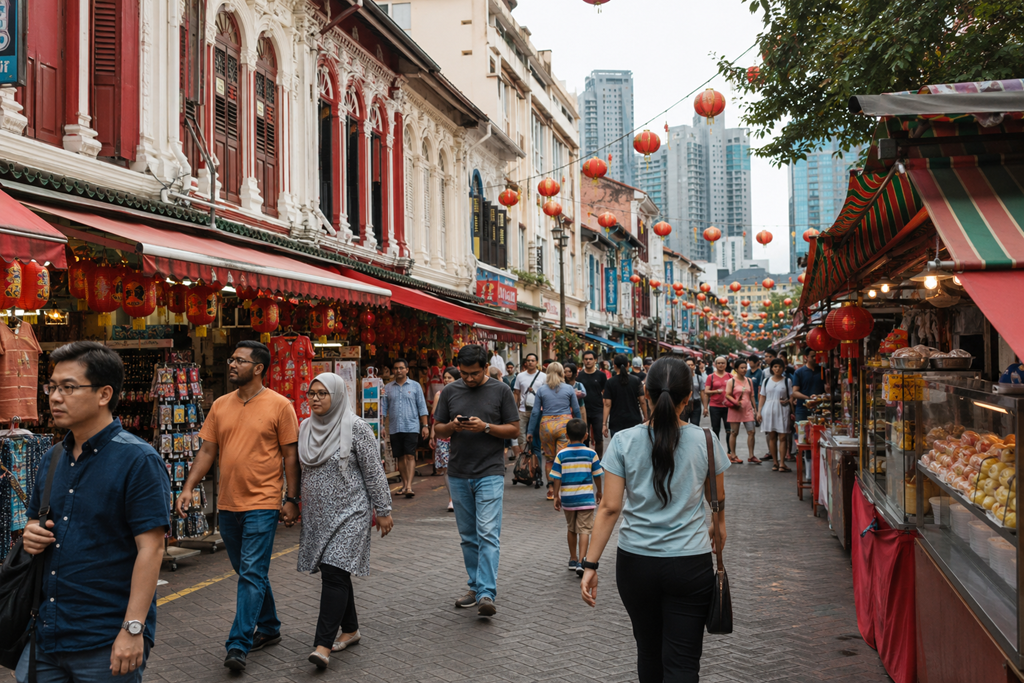
Chinatown is one of the most rewarding neighborhoods for walking. You will find temples, heritage buildings, souvenir shops, food streets, and hawker centres within a compact area.
Give yourself time to wander rather than treating it as a quick photo stop. Look for side streets, restored shophouses, and places where religious sites sit close to everyday commerce.
Little India
Little India is one of Singapore’s most sensory neighborhoods, with flower garlands, spice shops, gold jewelry stores, temples, restaurants, and colorful buildings. It is especially good for travelers who enjoy food and street-level exploration.
Visit respectfully, dress appropriately if entering religious sites, and allow time to simply walk without over-scheduling.
Kampong Gelam
Kampong Gelam offers a different layer of Singapore’s history, with Malay and Muslim heritage, textile shops, shophouses, cafés, and the area around Sultan Mosque. It is a good neighborhood for photography, browsing, and relaxed walking.
The area pairs well with nearby Bugis, making it easy to combine heritage streets with shopping and dining.
Katong-Joo Chiat
Katong-Joo Chiat is known for Peranakan culture, colorful shophouses, local food, and a more residential neighborhood feel. It is a good area for travelers who have already seen the major downtown sights and want a different side of Singapore.
This is a strong place to slow down, notice architectural details, and try traditional snacks or local dishes.
Civic District
The Civic District is useful for museums, colonial-era architecture, riverside walks, and understanding Singapore’s civic history. It includes several cultural institutions and is close to the Singapore River, making it easy to combine museums with a relaxed walk toward Clarke Quay or Marina Bay.
This area is especially good for travelers who enjoy history, art, and architecture.
Sentosa Island
Sentosa is Singapore’s main leisure island, with beaches, resorts, family attractions, walking paths, and entertainment options. It can feel very different from the city center, so it works best as a half-day or full-day escape.
Choose Sentosa if you want beach time, family-friendly activities, or a resort-style break from urban sightseeing.
Jewel Changi Airport
Jewel Changi Airport is worth considering if you have extra time before or after a flight. Its Rain Vortex is described by Jewel Changi Airport as the world’s tallest indoor waterfall, set inside a large nature-themed retail and garden space.
Because airport and airline timing can vary, do not plan this too tightly before departure. Leave enough time for check-in, immigration, security, and walking between terminals.
What To Eat In Singapore
Food is one of the best reasons to visit Singapore. The city’s dining culture ranges from hawker centres and casual kopitiams to polished restaurants and hotel dining, but first-time visitors should make time for local food in everyday settings.
Popular dishes to look for include:
- Hainanese chicken rice
- Laksa
- Char kway teow
- Satay
- Roti prata
- Nasi lemak
- Chili crab
- Kaya toast with soft-boiled eggs
- Ice kachang or chendol
- Teh tarik or kopi
Hawker centres are one of the most practical ways to try local food without overcomplicating your itinerary. They are usually casual, busy, and efficient. Bring tissues or napkins, watch how locals order and return trays, and do not be afraid to try a stall with a focused menu.
For a simple first food plan, try kaya toast for breakfast, hawker food for lunch, and a neighborhood dinner in Chinatown, Little India, Kampong Gelam, or Katong.
Transportation Basics
Singapore’s public transportation system is one of the easiest in the region for visitors. The MRT is clean, reliable, and useful for reaching most major sightseeing areas. Buses help fill in the gaps, especially for neighborhoods or attractions not directly beside an MRT station.
The Singapore Tourist Pass offers unlimited travel on basic public buses, MRT, and LRT trains for selected durations, according to official transit information.
Practical transportation tips:
- Use the MRT for most sightseeing days.
- Stay near an MRT station if convenience matters.
- Use taxis or ride-hailing when traveling late, carrying luggage, or visiting places less convenient by train.
- Avoid planning too many cross-city transfers in one day.
- Check current payment options before arrival, especially if using a contactless card or tourist pass.
Planning A Balanced Singapore Itinerary
A good Singapore itinerary should not be overloaded. The city is efficient, but the heat and humidity can make packed days feel tiring.
For A 2-Day Visit
Focus on Marina Bay, Gardens by the Bay, Chinatown or Little India, and one strong food experience. Add Jewel Changi Airport only if your flight timing makes it convenient.
For A 3-Day Visit
Add the Singapore Botanic Gardens, Kampong Gelam, and a museum or Civic District walk. This gives you a better balance of modern sights, heritage neighborhoods, and green space.
For A 4- To 5-Day Visit
Add Sentosa, Katong-Joo Chiat, more hawker centres, and slower neighborhood time. This is a better pace if you want to experience Singapore beyond the headline attractions.
Practical Travel Tips For Singapore
Pack For Heat, Rain, And Air Conditioning
Singapore is warm outside, but indoor spaces such as malls, museums, trains, and hotels can feel cool. Pack breathable clothing and consider carrying a light layer if you get cold indoors.
Plan Outdoor Sightseeing Early Or Late
Gardens, waterfront walks, and neighborhood exploring are often more comfortable earlier in the morning or later in the day. Use the middle of the day for lunch, museums, shopping areas, or rest.
Respect Local Rules And Customs
Singapore is orderly, and visitors should be mindful of rules around littering, smoking areas, public behavior, and transit etiquette. The easiest approach is to observe signs, follow local behavior, and be considerate in shared spaces.
Keep Your Itinerary Flexible
Even short rain showers can change the rhythm of a day. Keep a few indoor alternatives ready, especially near major sightseeing areas.
Book Ahead For Popular Attractions
Some major attractions may use timed entry, capacity limits, or advance reservations. Check current requirements before visiting, especially during weekends, holidays, and busy travel periods.
Choose Neighborhoods Based On Your Travel Style
Singapore is compact, but your base still matters. Stay near Marina Bay for iconic views, Chinatown for food and heritage, Orchard for shopping, Little India or Kampong Gelam for atmosphere, and Sentosa for resort-style travel.
A Thoughtful Way To Experience Singapore
The best Singapore trip balances the city’s polished modern side with its everyday local life. Gardens by the Bay and Marina Bay are worth seeing, but so are hawker centres, shophouse streets, temples, public gardens, and neighborhood walks.
Give yourself enough time to slow down between major sights. Singapore is easy to move through, but it becomes more memorable when you leave space for food, shade, conversation, and small discoveries.
Download Our Free E-book!