Sydney is one of those cities that works well for many types of travelers. You can spend the morning walking beside the harbor, the afternoon at the beach, and the evening exploring historic streets, casual restaurants, or waterfront viewpoints.
This guide is designed to help you understand Sydney before you arrive: where to stay, when to visit, how to get around, which landmarks are worth prioritizing, and how to build a trip that feels enjoyable rather than rushed.
Sydney is best known for the Sydney Opera House, Sydney Harbour Bridge, Bondi Beach, and its relaxed coastal lifestyle, but the city is also shaped by neighborhoods, ferries, parks, markets, museums, and everyday outdoor living. Tourism Australia describes Sydney as a city where major icons sit alongside beaches, restaurants, and easy day-trip options.
Sydney At A Glance
Sydney is Australia’s largest and most internationally recognized city, built around a dramatic natural harbor and a coastline of beaches, cliffs, bays, and ocean pools. For first-time visitors, the easiest way to understand the city is to think in three layers:
The harbor is where you’ll find major icons such as the Sydney Opera House, Circular Quay, The Rocks, ferries, and classic skyline views.
The coast is where beach life becomes part of the trip, especially around Bondi, Bronte, Coogee, and Manly.
The neighborhoods add texture, with areas like Surry Hills, Newtown, Paddington, Darlinghurst, and Chippendale offering food, shops, cafés, galleries, and local character.
A good Sydney trip usually mixes all three.
Best Time To Visit Sydney
Sydney can be visited year-round, but the best time depends on what kind of trip you want.
Spring: September To November
Spring is one of the easiest seasons for a balanced Sydney trip. Days become warmer, humidity is usually lower than summer, and the weather often works well for walking, sightseeing, gardens, and coastal views. Tourism Australia notes that spring temperatures generally range from about 11°C to 23°C, making it comfortable for outdoor exploring.
This is a good time for travelers who want pleasant weather without planning the entire trip around beach days.
Summer: December To February
Summer is Sydney’s classic beach season. It can be a beautiful time to visit if you want warm weather, ocean swims, coastal walks, ferry rides, and long evenings outside.
It is also a busy period, especially around holidays and school breaks. Book accommodation early, build flexibility into your schedule, and expect popular beaches and viewpoints to be crowded on good-weather days.
Autumn: March To May
Autumn is often one of the most comfortable times to visit Sydney. The weather can still be warm enough for outdoor meals and beach walks, but the intensity of summer begins to ease. It is a strong choice for travelers who want sightseeing, neighborhoods, and coastal scenery without peak summer crowds.
Winter: June To August
Winter in Sydney is cooler but still very manageable for city travel. Tourism Australia lists winter as June through August, with average temperatures roughly between 8.8°C and 17°C.
Winter is better for museums, food, harbor walks, gardens, and day trips than for a beach-focused itinerary. Pack layers, expect shorter days, and check the weather before planning long coastal walks.
How Many Days Do You Need In Sydney?
For a first visit, three to five days is a useful range.
With three days, you can see the harbor icons, explore one or two neighborhoods, visit Bondi or Manly, and take a coastal walk.
With five days, you can slow down, add museums or gardens, enjoy more ferry rides, visit both Bondi and Manly, and possibly include a day trip such as the Blue Mountains.
A shorter visit can still work, but Sydney rewards time outdoors. Rushing from landmark to landmark can make the city feel more complicated than it needs to be.
Best Areas To Stay In Sydney
Choosing where to stay has a big impact on how easy your trip feels. Sydney is spread out, so it helps to stay near the type of experience you want most.
Circular Quay And The Rocks
This is the most convenient area for first-time visitors who want easy access to the Sydney Opera House, Sydney Harbour Bridge, ferries, and classic harbor views. The Rocks is known for historic laneways, shops, markets, dining, and harbor scenery.
Stay here if you want the most iconic version of Sydney close by and do not mind paying more for convenience.
Sydney CBD
The central business district is practical for transport, shopping, museums, and access to different parts of the city. It may feel less atmospheric than The Rocks or the beach areas, but it is efficient.
Stay here if you want a central base and plan to move around by train, light rail, ferry, or bus.
Darling Harbour And Barangaroo
These areas work well for travelers who like waterfront paths, restaurants, family-friendly attractions, and a polished city feel. They are convenient without being quite as landmark-focused as Circular Quay.
Stay here if you want easy walking, modern waterfront spaces, and a comfortable base near the city center.
Surry Hills And Darlinghurst
These neighborhoods are good for travelers who care about cafés, restaurants, bars, independent shops, and a more local city feel. They are not directly on the harbor, but they give you a different side of Sydney.
Stay here if food, coffee, and neighborhood wandering are more important than waking up beside the Opera House.
Bondi Beach
Bondi is best for travelers who want a beach-centered trip. It is not the most convenient base for every landmark, but it gives you easy access to swimming, surf culture, coastal walks, and a relaxed outdoor rhythm.
Stay here if your idea of Sydney includes morning swims, beach cafés, and walking shoes.
Manly
Manly offers a beach-town feel with ferry access to Circular Quay. The ferry ride itself is part of the appeal, giving you harbor views while connecting you to the city.
Stay here if you want a quieter coastal base and do not mind relying on ferries for city sightseeing.
Top Landmarks And Experiences
Sydney has enough to fill a week, but first-time visitors should start with the experiences that define the city.
Sydney Opera House
The Sydney Opera House is the city’s most recognizable landmark and one of the best places to begin. Even if you do not attend a performance, it is worth seeing from several angles: from Circular Quay, the Royal Botanic Garden, the ferry, and across the water from Milsons Point or Kirribilli.
Guided tours are available and focus on the building’s architecture, history, and performance spaces. The Opera House is a short walk from Circular Quay and is accessible by public transport, ferry, light rail, bus, bike, car, and on foot.
Check current tour availability and performance schedules before you go.
Sydney Harbour Bridge
The Harbour Bridge is both a working piece of infrastructure and one of Sydney’s best viewpoints. You can admire it from the water, walk across the pedestrian path, view it from The Rocks, or see it from the Royal Botanic Garden and Circular Quay.
For many travelers, simply walking part or all of the bridge is enough. It gives you wide views of the harbor, Opera House, ferries, and city skyline without requiring a major time commitment.
Circular Quay
Circular Quay is the practical and scenic heart of the visitor experience. Ferries depart from here, the Opera House is nearby, The Rocks is a short walk away, and many classic harbor views are within minutes.
It can be busy, but it is also one of the easiest places to orient yourself. Plan to pass through more than once rather than treating it as a single stop.
The Rocks
The Rocks is one of Sydney’s most historic neighborhoods, with old laneways, sandstone buildings, pubs, shops, markets, and views toward the harbor. It is a strong choice for slow wandering, especially if you want a break from beaches and big landmarks.
Because it sits close to Circular Quay and the Harbour Bridge, it fits naturally into a first-day itinerary.
Royal Botanic Garden Sydney
The Royal Botanic Garden is one of the best free experiences in central Sydney. It offers green space, harbor views, walking paths, and one of the classic viewpoints toward the Opera House and Harbour Bridge. The garden is free to visit, and the official site encourages visitors to check current access, parking, and accessibility details before going.
It is especially useful for travelers who want a scenic walk without leaving the central harbor area.
Bondi Beach
Bondi is Sydney’s most famous beach and a good place to experience the city’s coastal identity. It is popular, often busy, and not always quiet, but it remains worth visiting because it combines sand, surf, cafés, ocean pools, and access to the coastal walk.
For a more enjoyable visit, go early in the day, bring sun protection, swim between the flags, and give yourself time to walk beyond the main sand.
Bondi To Coogee Coastal Walk
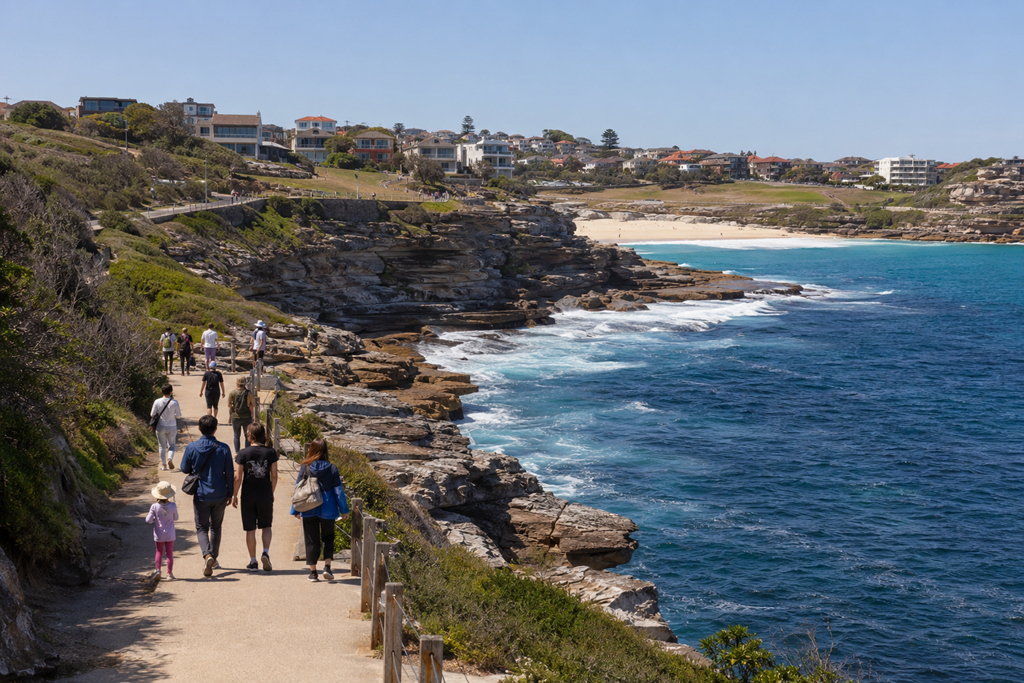
The Bondi to Coogee Coastal Walk is one of Sydney’s best outdoor experiences. It follows cliffs, beaches, bays, ocean pools, and residential coastal scenery. Official Sydney tourism describes it as a 6-kilometer walk that usually takes about two to three hours, depending on pace and stops.
You do not need to complete the full walk. Many visitors enjoy shorter sections, such as Bondi to Bronte or Bronte to Coogee. Wear comfortable shoes, bring water, and avoid the hottest part of the day in summer.
Manly And The Ferry Ride
Manly is worth visiting partly because of the journey. The ferry from Circular Quay gives you a broad view of the harbor, then drops you in a beachside area with oceanfront walks, casual dining, shops, and swimming spots.
Manly works well as a half-day or full-day trip. It is especially useful if you want a beach experience that feels different from Bondi.
Darling Harbour
Darling Harbour is a modern waterfront area with restaurants, attractions, family-friendly activities, and easy walking paths. It is not as historic as The Rocks or as naturally dramatic as the coast, but it is convenient and accessible.
It can be a good evening option, especially for travelers staying in the CBD, Barangaroo, or nearby areas.
Museums And Galleries
Sydney has a useful mix of museums and galleries for rainy days, slower travel days, or visitors who want more cultural context. Consider looking into the Art Gallery of New South Wales, Museum of Contemporary Art Australia, Australian Museum, and smaller local museums depending on your interests.
Check current opening hours and exhibitions before visiting, since museum schedules can change.
Beaches Worth Knowing
Sydney’s beaches are not all the same. Choosing the right one depends on whether you want scenery, swimming, surfing, walking, or a quieter local feel.
Bondi Beach
Best for first-time visitors, surf culture, beach cafés, and the coastal walk.
Bondi is the easiest beach to recognize and one of the most practical to combine with sightseeing. It is also busy, so treat it as an energetic beach experience rather than a hidden escape.
Bronte Beach
Best for a smaller coastal stop between Bondi and Coogee.
Bronte has a gentler neighborhood feel and is a natural pause along the coastal walk. It is a good place to rest, grab something casual to eat, or enjoy the ocean views.
Coogee Beach
Best for ending the Bondi to Coogee walk.
Coogee is relaxed and practical, with a broad beach, nearby cafés, and a comfortable local atmosphere. It works well if you want a less iconic but very enjoyable beach experience.
Manly Beach
Best for combining beach time with a ferry ride.
Manly feels like a separate coastal town while still being connected to central Sydney. It is a good choice for travelers who want a full beach outing rather than a quick photo stop.
Shelly Beach
Best for a quieter Manly add-on.
Shelly Beach is smaller and more sheltered than Manly’s main beach. It is a good place for a slower swim, a scenic walk, or a softer end to a Manly visit.
Food And Drink In Sydney
Sydney’s food culture reflects its geography and diversity. You will find strong café culture, seafood, Asian cuisines, bakeries, modern Australian restaurants, pub meals, beachside casual food, and neighborhood dining.
For a first trip, focus less on chasing specific “best” restaurants and more on matching food to the area you are already exploring.
Near the harbor, look for a meal with a view, but expect higher prices in the most scenic locations.
Around Surry Hills, Darlinghurst, Newtown, and Chippendale, look for cafés, casual restaurants, bakeries, and independent food spots.
Near Bondi, Coogee, and Manly, keep meals simple: breakfast, coffee, fish and chips, casual seafood, or a relaxed beachside lunch.
Sydney is also a good city for markets. Check current market days before planning around them, since schedules can change.
How To Get Around Sydney
Sydney is easier when you combine walking with public transport. You do not need a car for most first-time city itineraries.
Public Transport
Sydney’s public transport network includes trains, metro, light rail, buses, and ferries. Transport for NSW recommends using its Trip Planner to plan journeys around the city.
The Opal system is used for public transport in Sydney and surrounding regions, including the Blue Mountains, Central Coast, Hunter, and Illawarra. Visitors can use an Opal card, and contactless payment may also be available on many services. Check current Transport for NSW guidance before your trip, especially if you are deciding between an Opal card and contactless payment.
Ferries
Ferries are not just transportation in Sydney; they are part of the experience. A ferry ride from Circular Quay to Manly is one of the simplest ways to enjoy the harbor without booking a tour.
Build at least one ferry ride into your itinerary.
Walking
Sydney is very walkable within specific areas, but not always between areas. Circular Quay, The Rocks, the Royal Botanic Garden, Darling Harbour, Barangaroo, and parts of the CBD can be explored on foot.
For longer distances, use public transport or rideshare rather than trying to walk across the entire city.
Driving
A car is usually unnecessary for a first Sydney visit unless you are planning day trips outside the city. Parking can be expensive, traffic can be frustrating, and many major attractions are easier by public transport.
Practical Sydney Travel Tips
Start With The Harbor
For a first visit, begin around Circular Quay, the Opera House, The Rocks, and the Harbour Bridge. It gives you immediate orientation and helps the rest of the city make sense.
Plan Beach Days Around Weather
Sydney beach experiences are weather-dependent. Keep your beach plans flexible rather than locking every coastal activity into a fixed day.
Swim Between The Flags
At patrolled beaches, swim between the red and yellow flags. Conditions can change, and some beaches have strong surf or currents.
Bring Sun Protection
Even on mild days, the sun can feel strong. Pack sunscreen, sunglasses, a hat, and water, especially for beaches, ferries, and coastal walks.
Do Not Overload Each Day
Sydney is better when you allow time for walking, views, coffee, ferries, and unplanned pauses. A realistic day might include one major landmark, one neighborhood, and one scenic walk or beach.
Check Current Details Before You Go
Opening hours, tour availability, transport changes, and timed-entry requirements can change. For major attractions, check official websites before you visit or book.
Use Visitor Information If Needed
The City of Sydney points visitors toward local information services, including visitor support around Customs House, The Rocks, and Circular Quay. This can be helpful if you prefer maps, in-person advice, or last-minute guidance.
A Simple First-Time Sydney Plan
Day One: Harbor Icons
Start at Circular Quay. Visit the Sydney Opera House, walk through the Royal Botanic Garden, and spend time in The Rocks. If you have energy, walk part of the Harbour Bridge pedestrian path before dinner.
Day Two: Bondi And The Coast
Go to Bondi in the morning. Walk part or all of the Bondi to Coogee Coastal Walk, stopping at Bronte or Coogee depending on your pace. Keep the afternoon flexible for swimming, cafés, or a slower return to the city.
Day Three: Ferry To Manly
Take the ferry to Manly, spend time at the beach, walk to Shelly Beach, and return to Circular Quay near late afternoon or early evening. This day gives you beach time and harbor views without feeling too complicated.
Extra Days
With more time, add museums, Surry Hills or Newtown, Barangaroo, Paddington, a longer food-focused day, or a day trip to the Blue Mountains.
Who Sydney Is Best For
Sydney is a strong choice for travelers who enjoy cities with outdoor space. It is especially good for:
First-time visitors to Australia who want iconic landmarks.
Travelers who like beaches but still want museums, food, and neighborhoods.
Couples, families, solo travelers, and friend groups who enjoy flexible days.
People who prefer walking, ferries, viewpoints, and casual outdoor meals.
It may feel less ideal if you want a compact city where every attraction is close together. Sydney is beautiful, but it is spread out. The best approach is to group your plans by area and avoid crossing the city too many times in one day.
Final Thoughts On Planning A Sydney Trip
A good Sydney trip does not need to be complicated. Start with the harbor, add one or two beach experiences, choose a few neighborhoods that match your interests, and leave room for ferries, walks, and scenic pauses.
The city’s biggest strengths are durable ones: the Opera House, the Harbour Bridge, coastal walks, beaches, gardens, neighborhoods, and the daily rhythm of being near the water. Build your itinerary around those, and Sydney becomes much easier to enjoy.
Download Our Free E-book!