Helping a dog with separation anxiety usually means making alone time feel safer in small, steady ways—not forcing the dog to “get over it,” punishing the behavior, or turning every departure into a dramatic event.
A dog with separation anxiety is not being stubborn, spiteful, or poorly behaved on purpose. The barking, pacing, chewing, scratching, drooling, accidents, or frantic greetings are usually signs of distress connected to being left alone or separated from the person they feel attached to. The ASPCA describes separation anxiety as distress triggered by separation from a dog’s guardians, and veterinary behavior guidance commonly emphasizes gradual behavior work instead of punishment.
That distinction matters because the wrong response can accidentally make the problem worse.
When a dog is already panicking, harsher discipline, sudden long absences, or repeated “practice” departures that push the dog past their limit may teach them that being alone is even more frightening. The goal is not to prove that your dog can survive your absence. The goal is to help your dog slowly learn that alone time can be predictable, calm, and safe.
What Separation Anxiety Can Look Like At Home
Separation anxiety can feel confusing because it often happens when the owner is not there to see it.
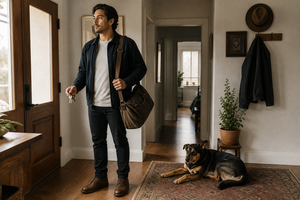
You may come home to scratched doors, torn cushions, chewed blinds, drool near the entryway, or complaints from neighbors about barking. Some dogs pace before you leave. Some follow you from room to room. Some start to panic when they see shoes, keys, a work bag, or a coat.
Other dogs seem fine until the door closes.
That is part of what makes the issue emotionally hard for pet owners. It can look like disobedience from the outside, but many anxious dogs are not calmly choosing bad behavior. They are reacting from stress. Cornell’s veterinary guidance notes that anxiety signs in dogs may include destructive behavior, drooling, excessive barking, panting, shaking, whining, and other body-language changes.
This does not mean every chewed shoe is separation anxiety. Dogs may chew from boredom, lack of exercise, teething, habit, or access to tempting objects. But when the behavior clusters around departures and alone time, it is worth looking at the emotional pattern underneath it.
The First Helpful Shift Is To Stop Taking It Personally
One of the most useful reframes is this: your dog is not “getting back at you” for leaving.
Dogs do not destroy a doorframe because they are making a moral point. A dog who panics when alone may be trying to escape, get closer to you, cope with rising stress, or respond to sounds and cues that feel overwhelming.
That matters because taking the behavior personally often leads to reactions that increase tension. Scolding after the fact, showing the dog the mess, or acting angry when you come home can make your return feel unpredictable. The dog may then become anxious both when you leave and when you come back.
A calmer interpretation does not excuse the damage or make the situation easy. It simply gives you a better starting point. You are not dealing with revenge. You are dealing with distress.
Long Absences Are Not The Best Training Tool
A common misunderstanding is that a dog will eventually “get used to it” if they are left alone long enough.
For some dogs, normal independence develops naturally. But for a dog with real separation anxiety, repeated long absences can reinforce panic instead of reducing it. If the dog spends two hours barking, clawing, panting, or trying to escape, the nervous system is not practicing calm. It is practicing distress.
That is why gradual separation work is often recommended. The idea is to build tolerance slowly, using absences short enough that the dog can remain under threshold. Desensitization and counterconditioning are commonly used approaches for separation-related problems, and research reviews have pointed to systematic desensitization as an important treatment strategy.
In plain language, this means your dog may need practice with very small versions of being apart before they can handle the real thing.
That might begin with you stepping into another room, touching the doorknob, picking up keys without leaving, or briefly walking outside and returning before your dog panics. The exact plan can vary by dog, but the principle is the same: build confidence below the panic point.
Your Departure Routine May Be Louder Than You Think
Dogs are excellent pattern readers.
You may think the moment of separation begins when you close the door. Your dog may think it begins when you put on work shoes, fill your travel mug, grab your keys, silence the kitchen lights, or pick up a bag.
Those cues can become emotional triggers. The dog starts worrying before you are gone because the routine predicts being left behind.
This is one reason it can help to make departure cues less meaningful. Picking up your keys and sitting back down, putting on a jacket without leaving, or walking to the door without disappearing can slowly teach the dog that these cues do not always lead to a long absence. Departure-cue desensitization is a common part of separation anxiety management.
The point is not to trick your dog. It is to reduce the emotional charge around the signals that make your dog tense up.
Big Goodbyes And Big Reunions Can Add More Intensity
It is natural to comfort a dog before leaving, especially if you feel guilty. It is also natural to greet them warmly when you come home.
But for some anxious dogs, intense goodbyes and high-energy reunions can make the emotional contrast sharper. The departure becomes a dramatic event. The return becomes a burst of relief. The space in between feels even more loaded.
A calmer approach is often more helpful.
This does not mean ignoring your dog coldly or withholding affection. It means keeping transitions ordinary. Leave with less ceremony. Return with quiet warmth. Let your dog settle before turning the reunion into a highly excited event.
The message becomes: leaving and coming back are normal parts of life, not emotional emergencies.
Comfort Items Can Help, But They Cannot Do The Whole Job
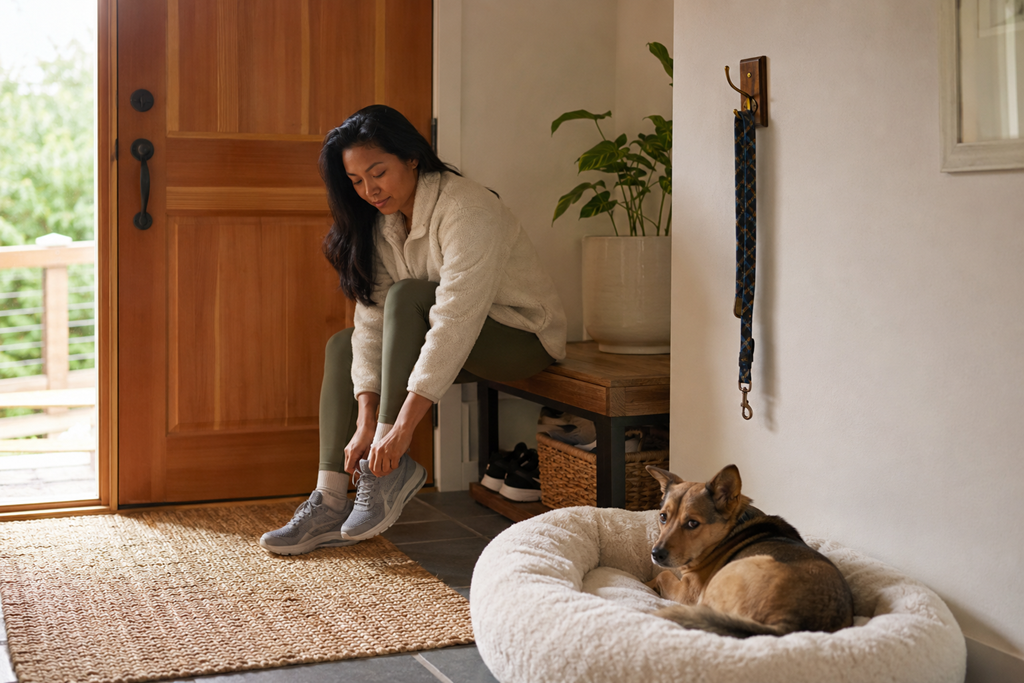
A cozy bed, a safe room, calming music, food puzzles, familiar scents, or a special chew may help some dogs feel more settled. These supports can be useful, especially for mild cases or as part of a broader plan.
But comfort items are not always enough on their own.
If a dog is already in panic mode, a treat toy may go untouched. A bed may be ignored. A crate may feel like confinement rather than comfort if the dog has not been gradually and positively conditioned to it.
This is where many pet owners feel stuck. They buy the bed, the toy, the camera, the calming spray, and the crate, but the dog still struggles. That does not mean they failed. It may simply mean the dog needs the emotional part of the problem addressed more gradually.
The environment can support the process, but it usually cannot replace it.
Punishment Can Make Separation Anxiety Worse
Punishment is one of the clearest patterns to avoid.
A dog who is punished for anxious behavior may become more fearful, not more secure. If the behavior happened while you were gone, the dog may not connect the punishment to the specific action anyway. Instead, they may learn that your return sometimes brings anger.
Veterinary behavior guidance from the American College of Veterinary Behaviorists states that punishment has no place in separation anxiety treatment because punishment-based training can create more anxiety and worsen separation-related behavior.
This can be difficult to remember when the damage is expensive or upsetting. A scratched door, destroyed rug, or noise complaint is stressful. But anger after the fact rarely teaches the dog how to be alone calmly.
A better question is: “What happened before my dog crossed their limit, and how can I make that moment easier next time?”
Exercise Helps Overall, But It Is Not A Complete Fix
A walk, play session, or training game before you leave can help a dog settle. Many dogs do better when their physical and mental needs are met.
But “tired” is not the same as “emotionally safe.”
A dog can be physically tired and still panic when alone. Exercise may reduce excess energy, but it does not automatically change the dog’s fear of separation. If the underlying issue is anxiety, the dog may still need gradual alone-time practice, calmer routines, and possibly professional support.
This is a helpful distinction because it keeps owners from blaming themselves when a long walk does not solve everything. Movement can support the dog’s well-being. It just may not be the whole answer.
Some Dogs Need More Support Than A Home Routine Can Provide
Mild separation-related stress may improve with calmer routines, environmental support, and careful gradual practice. More severe cases may need help from a veterinarian, veterinary behaviorist, or qualified positive-reinforcement trainer experienced with separation anxiety.
This is especially important if the dog injures themselves, damages doors or windows trying to escape, cannot eat when alone, panics quickly, or has sudden behavior changes. Medical issues, pain, noise fears, age-related changes, and other anxiety patterns can overlap with separation-related behavior. VCA notes that some dogs who appear to have separation anxiety may also be reacting to frightening events that happen while alone, such as storms or fireworks.
Getting help does not mean the situation is hopeless. It means the dog’s distress deserves a plan that matches the intensity of the problem.
The Goal Is Progress, Not A Perfect Dog
Helping a dog with separation anxiety is often slow because the problem is emotional, not just behavioral.
Progress may look like your dog staying calm while you step outside for thirty seconds. It may look like less pacing before you leave. It may look like your dog resting for part of your absence instead of staying alert the whole time. These small changes matter.
The most helpful approach is usually calm, gradual, and realistic: reduce panic where you can, avoid making departures more dramatic, stop punishing anxious behavior, and build alone-time tolerance in small steps the dog can actually handle.
A dog with separation anxiety is not trying to make life harder. They are struggling with a moment that feels unsafe to them. When you respond with patience and structure instead of pressure, you give them a better chance to learn that being alone does not have to feel like an emergency.
Download Our Free E-book!