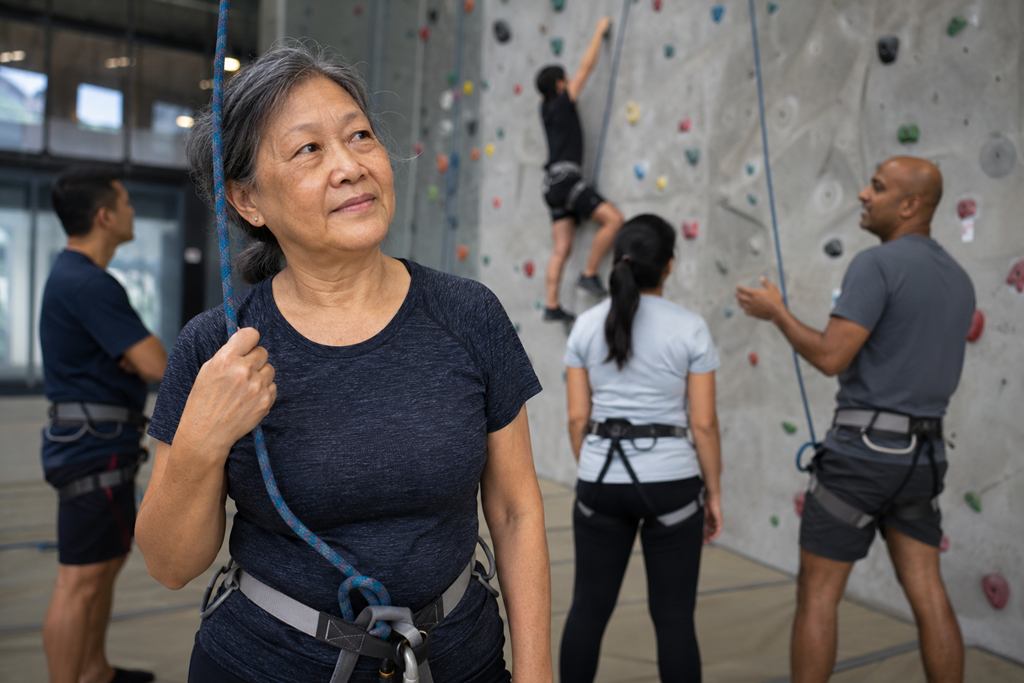
Many people misunderstand growing older because they treat it as one single experience: decline. In reality, growing older is not just about what the body loses. It is also about what the body, mind, schedule, priorities, and relationships begin to need more of.
That distinction matters.
Aging does bring real changes. Energy may not feel as predictable. Recovery may take longer. Sleep, movement, digestion, balance, strength, and stress tolerance may all require more attention than they once did. But growing older does not automatically mean becoming helpless, irrelevant, or unable to enjoy life.
For many people, the hardest part is not aging itself. It is adjusting to a new relationship with their body and life without feeling like they have failed.
Aging Is Often Misread As Giving Up
One of the biggest misunderstandings about growing older is the idea that adjusting your pace means giving up.
Someone may choose a shorter walk instead of a long one. They may sit down during an event instead of standing the whole time. They may leave a gathering earlier, ask for help lifting something, or take more time to recover after a busy day.
From the outside, these choices can look like limitation. From the inside, they may be signs of wisdom.
Growing older often requires people to become more honest about what supports them. That can include better routines, more realistic expectations, different forms of movement, stronger boundaries, and more attention to rest. These changes are not proof that life is shrinking. They may be part of protecting the ability to keep participating.
The misunderstanding happens when people confuse adaptation with defeat.
The Body May Need More Respect Than Before
Many people expect their body to keep responding the way it did in earlier years. They assume that if they once pushed through fatigue, ignored stiffness, slept poorly, or skipped recovery, they should still be able to do the same.
But aging often makes the body less forgiving of neglect.
This does not mean the body is broken. It means signals may become harder to ignore. A poor night of sleep may affect the next day more noticeably. A heavy meal may feel different. Inactivity may show up as stiffness. Stress may affect energy, focus, or mood more quickly than it used to.
This is one reason growing older can feel confusing. The person may not feel “old” in their mind, but their body may be asking for different care than before.
That gap can create frustration. Someone may think, “Why can’t I do this the way I used to?” A more useful question may be, “What does my body need now so I can keep doing what matters?”
Slowing Down Is Not Always The Problem
Another common misunderstanding is that slowing down is always bad.
In some situations, a slower pace is a warning sign that deserves medical attention, especially when changes are sudden, severe, or unusual. But in everyday healthy aging, slowing down can also be part of becoming more selective.
A person may no longer want to fill every weekend. They may care less about impressing others. They may prefer fewer commitments, more meaningful conversations, or activities that feel worthwhile rather than draining. This can look like withdrawal to people who equate busyness with vitality.
But a less crowded life is not automatically a less meaningful one.
Growing older can bring a stronger awareness of energy, time, and attention. Many people begin to recognize that they do not want to spend limited energy on things that no longer fit. That is not always loss. Sometimes it is refinement.
Independence Does Not Have To Mean Doing Everything Alone
Aging is also misunderstood because independence is often defined too narrowly.
Many people grow up believing independence means handling everything alone, needing nothing, and never asking for support. By that definition, any request for help can feel embarrassing. Accepting assistance with transportation, errands, technology, home maintenance, or health decisions may feel like a personal failure.
But real independence is often supported by wise systems.
Using grab bars, better lighting, meal planning, medication reminders, supportive shoes, routine checkups, or help from family does not erase independence. These supports can help preserve it. They reduce unnecessary strain and make daily life easier to manage.
The goal is not to prove you need nothing. The goal is to stay engaged in life with the right support around you.
That shift can be emotionally important. It allows people to see help as a tool, not a label.
Aging Does Not Make People Less Complex
One quiet harm of age-related stereotypes is that older adults are often treated as if their lives become simpler. Their preferences, frustrations, desires, ambitions, and identities may be overlooked.
But growing older does not erase personality.
People still want respect. They still want privacy, humor, learning, connection, purpose, pleasure, beauty, comfort, and choice. They may still want to try new things, change their mind, travel, create, work, volunteer, date, mentor, exercise, or build routines that feel satisfying.
The mistake is assuming that age explains everything.
If an older person feels tired, lonely, uninterested, forgetful, cautious, or frustrated, age may be one factor, but it may not be the whole story. Sleep, pain, medications, grief, stress, nutrition, isolation, finances, hearing, vision, environment, and daily routine can all shape how a person feels.
Reducing everything to “just getting older” can cause real needs to be missed.
The Emotional Side Is Easy To Underestimate
Growing older is not only physical. It can bring emotional adjustments that people do not always talk about.
A person may notice that activities they once did easily now require more planning. They may feel surprised by how much recovery matters. They may compare themselves with younger family members, former versions of themselves, or peers who seem to be aging differently.
There can be grief in that.
Not always dramatic grief. Sometimes it is a quiet moment in the kitchen, on a walk, in a doctor’s office, at a family gathering, or after a long day. It may come from realizing that something familiar now feels different.
This does not mean the person is negative or ungrateful. It means they are adjusting.
One helpful reframe is to see aging as an ongoing process of renegotiation. The body changes. Priorities change. Social roles change. The home may need changes. Routines may need changes. Expectations may need changes.
That can be hard, but it can also make room for a more honest life.
Not Every Change Should Be Dismissed As Normal Aging
While aging is often unfairly treated as decline, the opposite mistake can also happen: dismissing every change as normal.
Some changes deserve attention. Sudden weakness, new confusion, unexplained weight changes, ongoing pain, frequent falls, major mood shifts, shortness of breath, or a noticeable change in daily function should not be brushed aside as simply part of getting older.
The point is not to become fearful of every symptom. The point is to avoid ignoring patterns that interfere with daily life.
Healthy aging includes paying attention without panic. It means noticing what is changing, asking better questions, and getting appropriate support when something feels off.
Aging may explain some changes. It should not be used as a reason to stop listening to the body.
The Better Question Is Not “Am I Getting Old?”
Many people ask themselves, “Am I getting old?” when they notice changes in energy, strength, appearance, memory, or stamina.
That question can feel heavy because it often carries judgment. It can make normal adjustments feel like proof that life is moving in the wrong direction.
A more useful question is: “What helps me function well now?”
That question points toward action without shame.
It may lead someone to protect sleep, rebuild strength gradually, stay socially connected, eat in ways that support energy, talk with a healthcare professional, simplify parts of the home, practice balance, schedule recovery time, or choose activities that fit their current capacity.
The answer will not look the same for everyone. That is part of what many people misunderstand. Aging is not one uniform path. It is shaped by health history, lifestyle, environment, relationships, resources, mindset, and daily choices.
Growing Older Can Still Include Growth
Aging can involve loss, but it can also involve growth. The two can exist together.
Someone may have less tolerance for stress but more wisdom about what deserves their attention. They may have less physical speed but more patience with long-term priorities. They may need more recovery but feel more confident saying no. They may no longer chase every opportunity but may choose better ones.
Growing older is not only about adding years. It is also about learning how to live with more awareness of limits, needs, values, and tradeoffs.
The misunderstanding is believing that a meaningful life depends on staying exactly the same.
It does not.
A meaningful life can change shape. It can become quieter in some areas and richer in others. It can include support, adjustment, humor, frustration, acceptance, effort, and new forms of strength.
Growing older is not something people need to romanticize or fear. It is something they can learn to understand more honestly.
And when aging is understood with more honesty, it becomes easier to respond with care instead of judgment.
Download Our Free E-book!