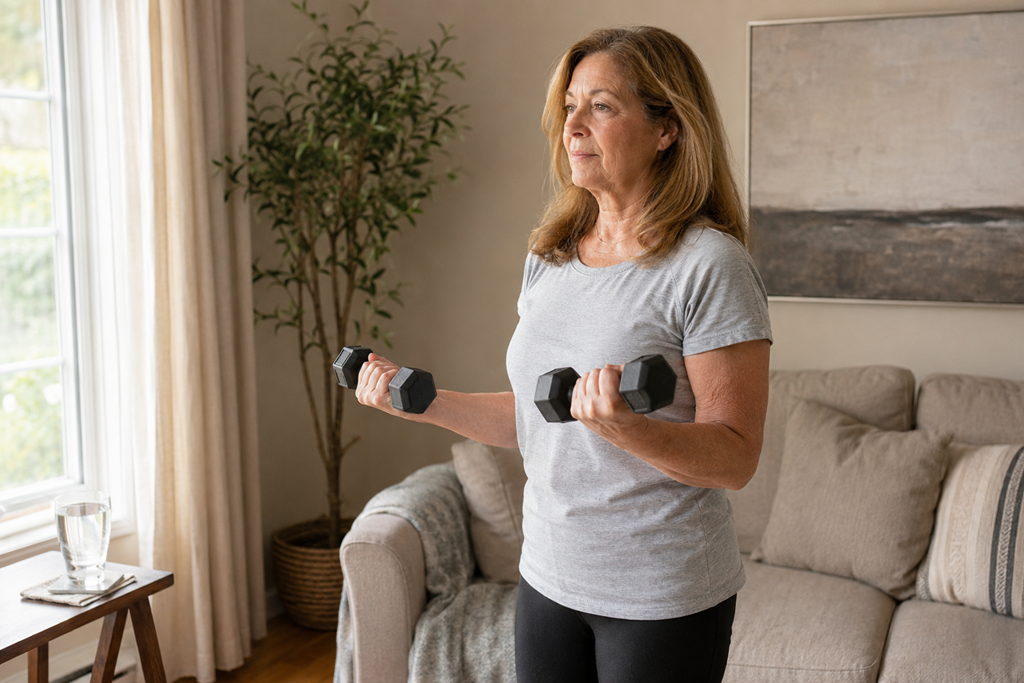
Resistance training matters more as you age because muscle becomes less automatic to keep. In younger years, daily movement, hormones, and general activity often help you maintain strength without thinking about it very much. As the years pass, the body tends to lose muscle, power, balance, and bone-supporting strength more easily, which means everyday life can start to feel harder even if nothing dramatic has happened.
That is why resistance training is not only about looking fit or lifting heavy weights. For many adults, it becomes one of the most practical ways to protect independence, confidence, and ease of movement.
The goal is not to become someone else. The goal is to help your body keep doing ordinary things with less strain.
Strength Starts Showing Up In Ordinary Moments
The need for resistance training often becomes noticeable in small, everyday ways.
You may feel it when carrying groceries from the car takes more effort than it used to. You may notice it when getting up from a low chair feels less smooth. Stairs may feel heavier. Your back may tire faster while doing chores. A suitcase, laundry basket, or bag of soil may suddenly feel more awkward than expected.
These moments can be easy to dismiss as “just getting older,” but they are often signs that your body needs more strength support.
Resistance training helps because it gives your muscles a clear reason to stay useful. Walking, stretching, and general activity all matter, but they do not always challenge the muscles enough to maintain strength over time. Muscle usually responds best when it has to work against some form of resistance, whether that resistance comes from dumbbells, machines, bands, body weight, or carefully chosen household movements.
The National Institute on Aging notes that strength training can support older adults in multiple ways, including helping with strength, mobility, and daily function as people age.
Aging Does Not Make Strength Less Important
One common misunderstanding is that strength training is mostly for younger people, athletes, or people trying to change how they look.
In reality, strength often becomes more important with age because it protects the basic movements that make life feel manageable.
Strength helps you rise from a chair, climb steps, carry things, steady yourself, garden, clean, travel, and move through the day without depending on momentum or strain. It also supports joints by helping the muscles around them do more of the work. When strength fades, the body may compensate in small ways: leaning more, bracing more, avoiding certain movements, or feeling more cautious than before.
That caution is understandable. But avoiding strength work entirely can sometimes make the cycle worse. The less the muscles are asked to do, the less prepared they become for everyday demands.
The CDC’s physical activity guidance for older adults includes muscle-strengthening activities at least two days per week, along with aerobic activity and balance-related movement. This does not mean everyone needs an intense gym routine. It simply reflects that strength is part of healthy aging, not an optional extra.
Resistance Training Is Really About Capacity
A helpful way to think about resistance training is capacity.
Capacity means your body has enough strength in reserve that ordinary life does not always feel like a near-maximum effort. When your legs, hips, back, shoulders, and core have more capacity, everyday movement can feel less draining.
This is one reason resistance training can feel so different from simply trying to “exercise more.” More movement is helpful, but strength training gives the body a specific signal: keep these muscles ready, keep these movement patterns available, keep this system capable.
That does not require punishment or extreme effort. In fact, many people do better when they stop thinking of resistance training as something that must be hard, intimidating, or exhausting. It can be calm, progressive, and appropriate for the person’s current body.
For someone new to it, resistance training might begin with controlled sit-to-stand movements, light dumbbells, resistance bands, wall pushups, or guided machine exercises. For someone more experienced, it may involve heavier weights and more structured programming. The principle is the same: muscles need a reason to stay strong.
Muscle Loss Can Be Quiet Before It Becomes Obvious
Another reason resistance training matters more with age is that muscle loss can happen gradually.
It may not feel like a sudden decline. Instead, life quietly becomes smaller. You stop carrying certain things. You avoid stairs when possible. You sit more often. You choose easier errands. You may not notice the pattern until your world has narrowed.
That narrowing can affect more than fitness. It can influence confidence, social life, travel, hobbies, home maintenance, and the willingness to try new things.
Resistance training helps interrupt that quiet shrinkage. It reminds the body that strength is still needed. It can also help people feel more connected to their bodies in a grounded, practical way.
Research and expert guidance consistently point to resistance training as a useful tool for supporting muscle function and physical capacity in older adults. A National Strength and Conditioning Association position statement reported strong evidence that resistance training can help reduce age-related declines in neuromuscular function and functional capacity.
It Is Easy To Confuse Gentle With Safe
Many people avoid resistance training because they think it is too risky, too aggressive, or too late to start.
That hesitation is understandable, especially if someone has had pain, injury, illness, or years away from exercise. But the safer choice is not always doing less forever. Often, the safer long-term choice is doing the right amount, in the right way, with enough patience.
Gentle movement can be valuable, but if it never challenges strength, it may not be enough to maintain the muscles needed for daily life. On the other hand, resistance training does not need to mean pushing through pain or copying workouts designed for someone else.
A calm approach matters. Starting lighter, learning good form, resting enough, and adjusting for medical history can make strength training feel more approachable. Anyone with significant pain, balance concerns, heart issues, recent surgery, or a medical condition should get guidance from a qualified health professional before beginning or changing an exercise routine.
The point is not to be fearless. The point is to be appropriately supported.
Strength Also Supports Balance, Bones, And Confidence
Resistance training is often talked about as a muscle-building habit, but its value reaches further.
Stronger legs and hips can support steadier movement. Stronger back and core muscles can make posture and daily tasks feel more controlled. Strength work can also support bone health, especially when paired with weight-bearing activity and appropriate medical care.
The National Institute on Aging describes strength training as one way older adults can build healthier bodies as they age, with benefits that go beyond appearance.
There is also an emotional side. When people feel physically capable, they often move through life with more ease. They may feel less fragile. They may trust themselves more when lifting, reaching, bending, or walking on uneven ground. That confidence can matter deeply, especially for people who have started to feel disconnected from their bodies.
This does not mean resistance training solves everything. It does mean strength can become a quiet form of reassurance.
The Goal Is Not To Chase Youth
Resistance training as you age should not be framed as a fight against aging.
That framing can feel exhausting. It can make normal changes seem like failure. A healthier view is that strength training helps you cooperate with the body you have now.
Aging changes the body, but it does not erase the body’s ability to adapt. Many people can still gain strength, improve function, and feel more capable with consistent, appropriate resistance training. The pace may be different than it was at 25, but the benefit can be very real.
The goal is not to look younger. The goal is to make your current life easier to live.
That may mean carrying groceries with less strain. Getting off the floor with more confidence. Traveling without feeling as physically limited. Keeping up with grandchildren. Managing home projects. Protecting the simple freedom of being able to move well.
A Stronger Body Can Make Life Feel Less Negotiated
One of the clearest reasons resistance training matters more with age is that strength gives you options.
When strength fades, more activities require negotiation. You wonder whether the chair is too low, whether the stairs are too much, whether the bag is too heavy, whether the outing will be tiring, or whether you should avoid something that used to feel simple.
When strength is supported, life can feel less negotiated. Not perfect. Not effortless. But more available.
Resistance training is not about becoming extreme. It is about maintaining enough physical ability to keep participating in your own life with steadiness and confidence.
As you age, strength becomes less about performance and more about preservation. It helps protect the ordinary movements that make daily life feel open, capable, and familiar. That is why resistance training matters more with time: not because aging is something to fear, but because your body deserves support for the life you still want to live.
Download Our Free E-book!