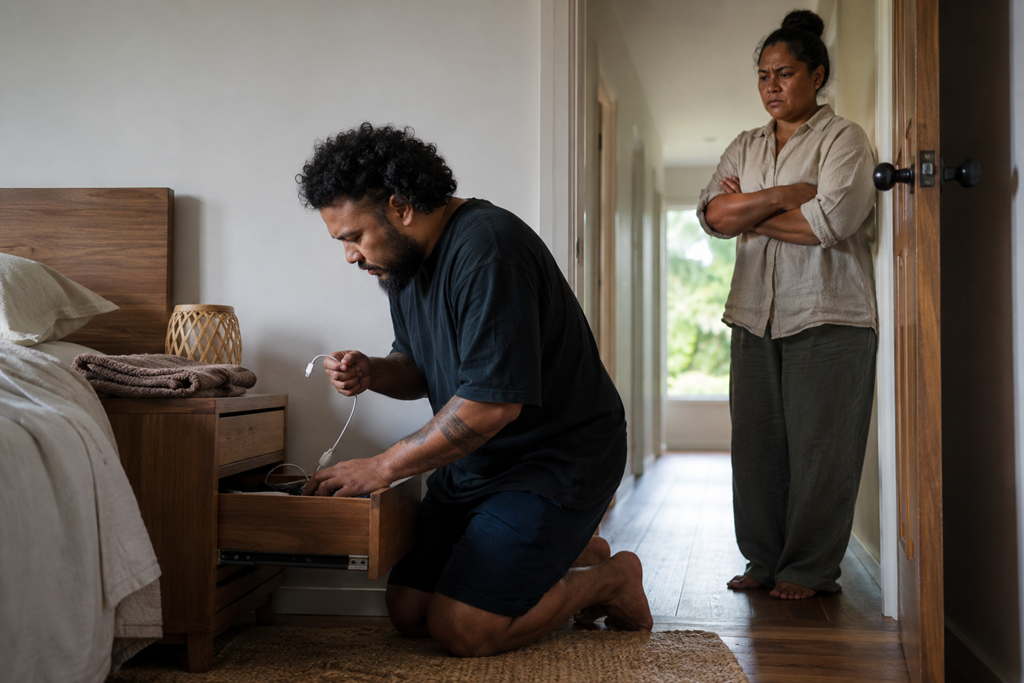
Trust issues often follow people into new relationships because a new partner does not automatically erase what an old experience taught someone to fear. Even when the new relationship is different, the mind may still look for signs that the same hurt, betrayal, disappointment, or emotional abandonment could happen again.
This does not always mean someone wants to distrust their new partner. Sometimes it means they learned to protect themselves before they learned how to feel safe again.
In a new relationship, trust issues can show up in small moments: wondering why a reply took longer than usual, feeling uneasy when plans change, reading too much into tone, bracing for rejection, or expecting hidden motives even when nothing obvious is wrong. The person may care deeply and still feel guarded. They may want closeness while also feeling afraid of what closeness could cost them.
That is what makes this pattern so confusing. The relationship may be new, but the fear is not.
A New Relationship Can Still Touch An Old Wound
Many people expect trust issues to disappear when they meet someone kinder, more respectful, or more emotionally available. But trust is not only about who is standing in front of you now. It is also shaped by what your past taught you to notice.
If someone has been lied to, dismissed, cheated on, manipulated, repeatedly let down, or made to feel replaceable, they may begin watching for warning signs long after that relationship ends. The new partner may not have caused the wound, but certain moments can still press on it.
A delayed response may feel like distance. A change in tone may feel like withdrawal. A harmless private moment may feel like secrecy. A busy day may feel like loss of interest.
The issue is not always the event itself. It is the meaning the person’s past attaches to it.
Trust Issues Are Often Protective, Not Random
Trust issues can look unreasonable from the outside. But inside the person experiencing them, they often feel like protection.
A person may think, “I ignored signs before, and I do not want to do that again.” They may question details, scan for inconsistencies, or emotionally pull back before they can be hurt. Even when the reaction is too strong for the present moment, it may have started as an attempt to avoid repeating a painful experience.
That does not mean every suspicion is accurate. It also does not mean every fear should control the relationship. But it helps to understand that trust issues are not usually created out of nowhere.
They often come from a history where trust once felt costly.
The Hard Part Is Separating Memory From The Moment
One of the most important shifts is learning to tell the difference between what is happening now and what the situation reminds you of.
For example, a new partner forgetting to mention a plan may genuinely need a conversation. But it may also remind someone of a past partner who hid things often. Those are not the same situation, even if they feel similar at first.
This is where many new relationships get stuck. One person feels accused. The other person feels unsafe. Then both people react to the emotional intensity instead of the actual issue.
The question is not, “Should I ignore this feeling?”
The better question is, “Is this feeling responding to what happened here, or to what I have been through before?”
That question creates more room for honesty.
Why This Pattern Can Affect Intimacy
Trust and intimacy are closely connected. It is difficult to feel emotionally close when part of you is waiting for disappointment.
A person with trust issues may want affection, reassurance, honesty, and consistency. But when those things are offered, they may still struggle to fully receive them. They may question whether the kindness is real. They may wonder if the closeness will last. They may hold back parts of themselves until they feel more certain.
This can be painful for both people. The guarded person may feel lonely even inside the relationship. The other partner may feel like they are being judged for someone else’s mistakes.
That is why trust issues need care, not shame. The goal is not to pretend the past did not matter. The goal is to keep the past from making every new moment feel like evidence of danger.
Reassurance Helps, But It Cannot Do All The Work
Reassurance can matter in a new relationship, especially when someone is learning what safety feels like with a different kind of partner. A thoughtful response, honest explanation, or consistent action can help soften fear.
But reassurance alone does not fix trust issues if the deeper pattern remains untouched.
A person may ask for reassurance, feel better briefly, and then feel anxious again the next time something uncertain happens. That cycle can become exhausting because the relationship starts depending on repeated proof instead of growing trust.
Trust usually strengthens through a combination of two things: the new partner showing consistency over time, and the guarded person learning to notice when an old fear is taking over the present.
Both parts matter.
Not Every Concern Is A Trust Issue
It is also important not to use the phrase “trust issues” to dismiss real concerns.
Sometimes a person feels uneasy because something truly is off. A partner may be secretive, inconsistent, disrespectful, emotionally unavailable, or unwilling to be honest. In that case, the issue is not only old fear. It may be present behavior.
The difference is worth paying attention to.
Old fear often makes neutral situations feel threatening. Present red flags usually involve repeated patterns that would concern many people: dishonesty, avoidance, broken promises, blame-shifting, disappearing, or making someone feel guilty for asking reasonable questions.
The work is not to trust blindly. The work is to see accurately.
What Makes Trust Issues Worse In New Relationships
Trust issues often grow stronger when they are handled with defensiveness, secrecy, testing, or silence.
Testing a partner may feel safer than being direct, but it can create more confusion. Pulling away may feel protective, but it can leave the other person guessing. Accusing too quickly may create conflict before the real fear is even named.
On the other side, a partner who responds with irritation, mockery, or impatience can make the fear feel even more justified.
A better path usually begins with naming the experience without turning it into an attack. Instead of saying, “You are probably hiding something,” a person might learn to say, “This brought up something old for me, and I am trying to understand whether it belongs to this moment.”
That kind of honesty does not solve everything immediately, but it changes the tone of the conversation.
A New Partner Is Not Responsible For The Past, But They Do Affect The Present
A new partner cannot undo what someone else did. They cannot erase betrayal, disappointment, or emotional neglect from another relationship.
But they can still choose how they show up now.
Consistency, honesty, patience, and follow-through matter because they help create a different experience. Over time, a person who has been hurt may begin to see that not every relationship repeats the old pattern.
At the same time, the person carrying trust issues has responsibility too. They have to notice when fear is asking the new relationship to pay for an old injury. They have to be willing to pause, reflect, and communicate instead of assuming the worst every time uncertainty appears.
Trust grows best when both people understand the difference between support and blame.
Healing Trust Does Not Mean Never Feeling Afraid
A person can be healing and still get triggered. They can trust their partner more than before and still have moments of doubt. They can want a healthy relationship and still feel protective when something reminds them of the past.
Progress does not always feel like instant confidence. Sometimes it looks like pausing before reacting. Asking one honest question instead of making an accusation. Letting a partner explain before deciding what something means. Admitting, “This is hard for me,” instead of pretending not to care.
Those moments matter because they interrupt the old pattern.
Trust issues often follow people into new relationships because people carry lessons from what hurt them. But those lessons do not have to become the entire story. With self-awareness, honest communication, and consistent behavior over time, a new relationship can become something more than a place where old fears repeat.
It can become a place where trust is slowly relearned.
Download Our Free E-book!