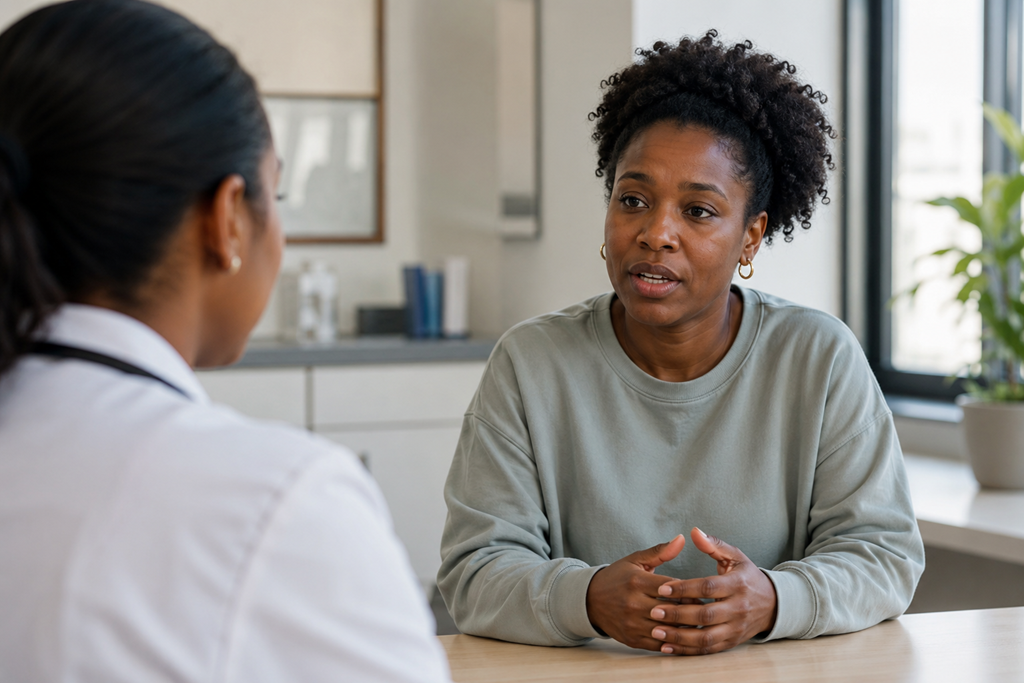
Women’s health needs more attention because many health concerns that affect women are too often minimized, delayed, misunderstood, or treated as “just part of life.” This does not mean every ache, mood change, cycle shift, or energy dip is dangerous. It means women deserve to have their symptoms, questions, risks, and life-stage changes taken seriously before they become harder to manage.
For many women, health concerns do not always appear as one dramatic problem. They may show up as fatigue that keeps being explained away, painful periods that are treated as normal, stress that becomes constant, sleep that never feels restorative, changes after pregnancy that are brushed aside, or symptoms during midlife that are dismissed instead of discussed.
The problem is not only that women sometimes ignore their health. The bigger issue is that many women learn to push through discomfort because daily life keeps demanding more from them.
Women’s Health Is Often Treated Too Narrowly
One reason women’s health gets overlooked is that people often reduce it to reproductive health alone.
Reproductive health matters, but it is not the whole picture. Women’s health also includes heart health, mental well-being, hormones, sleep, digestion, bones, pain, energy, sexual health, pregnancy and postpartum recovery, perimenopause, menopause, chronic conditions, preventive care, and the way stress affects the body over time.
When women’s health is viewed too narrowly, important concerns can slip through the cracks. A woman may bring up exhaustion and be told she is simply busy. She may mention mood changes and be told she is emotional. She may struggle with pain and be told it is expected. She may notice changes in her body and feel unsure whether they are worth discussing.
That uncertainty can make women wait longer than they should to ask questions.
The Everyday Cost Of Not Paying Attention
When women’s health does not receive enough attention, the effects can reach far beyond doctor’s appointments.
A woman who is constantly tired may struggle at work, feel less patient at home, or stop doing things that used to make her feel like herself. A woman dealing with untreated pain may rearrange her life around discomfort without realizing how much she has adapted. A woman experiencing anxiety, depression, hormone shifts, or sleep disruption may blame herself instead of recognizing that her body and mind are asking for support.
Many women become skilled at functioning while not feeling well.
They keep showing up. They keep caring for others. They keep meeting expectations. From the outside, everything may look fine. On the inside, they may be managing symptoms, worry, confusion, or exhaustion that never gets fully addressed.
That is why attention matters. Not because every concern is an emergency, but because small, repeated signs deserve room to be noticed.
“Normal” Should Not Mean Ignored
A major misunderstanding in women’s health is the idea that if something is common, it must be harmless or unavoidable.
Many women experience period discomfort, hormonal shifts, mood changes, fatigue, stress, body changes, or midlife symptoms. But common does not always mean something should be ignored. It also does not mean a woman should be expected to tolerate symptoms without support.
This distinction matters.
Some experiences are part of natural life stages. Others may be signs that the body needs evaluation, rest, treatment, lifestyle support, or a more detailed conversation with a qualified health professional. Women do not need to panic over every change, but they also should not have to prove they are suffering enough before being taken seriously.
A better approach is to treat symptoms as information.
Pain is information. Fatigue is information. Irregular changes are information. Mood shifts are information. Sleep disruption is information. None of these signs automatically means something severe is happening, but they are worth noticing instead of dismissing.
Women Often Put Their Own Health Last
Many women delay care because they are carrying responsibilities that feel more immediate than their own health.
They may be caring for children, partners, aging parents, clients, coworkers, households, communities, or all of the above. They may be used to being dependable. They may feel guilty making time for appointments, rest, exercise, therapy, testing, or even a quiet conversation about what has changed.
This pattern can make self-neglect look responsible.
A woman may tell herself she will deal with her health when life slows down. But life does not always slow down on its own. Without intention, her needs can remain at the bottom of the list for months or years.
Paying attention to women’s health is not about becoming self-focused. It is about recognizing that a woman’s body is not separate from the life she is trying to live. Her energy, mood, mobility, sleep, focus, and long-term health all affect how she moves through her days.
Small Changes Can Be Easy To Miss
Women’s health concerns are sometimes overlooked because they develop gradually.
A woman may not notice how much her sleep has changed until she realizes she cannot remember the last time she woke up refreshed. She may not realize her stress has become constant until her body starts reacting with tension, headaches, stomach issues, or irritability. She may not notice that her periods, weight, mood, skin, appetite, or energy have shifted until the pattern has been there for a while.
Slow change can feel less serious because there is no single dramatic moment.
That is why paying attention does not have to mean obsessing over the body. It can simply mean noticing patterns. What keeps happening? What is new? What is getting harder? What is interfering with daily life? What has been explained away for too long?
These questions can help a woman describe her experience more accurately when she does seek care.
Being Dismissed Can Make Women Doubt Themselves
Another reason women’s health needs more attention is that many women have had the experience of not feeling heard.
They may have been told their symptoms were stress, aging, weight, hormones, motherhood, anxiety, or “just life” without enough curiosity. Sometimes those factors may be part of the picture. But when they are used as quick explanations, a woman may leave feeling embarrassed for asking.
Over time, this can train women to doubt their own observations.
They may wonder if they are overreacting. They may wait until symptoms become disruptive. They may downplay pain. They may stop bringing up concerns because they do not want to seem difficult.
Women should not have to choose between ignoring their body and sounding alarmed. There is a middle place where concerns can be discussed thoughtfully, without drama and without dismissal.
More Attention Does Not Mean More Fear
Giving women’s health more attention does not mean treating the body like a problem. It does not mean living in fear of what could go wrong. It simply means respecting the body enough to listen earlier.
That might look like keeping up with preventive visits, asking questions when something changes, taking pain seriously, discussing mental health honestly, learning family health history, or recognizing when stress has moved from temporary pressure into a daily burden.
It may also mean broadening the conversation beyond appearance, fertility, weight, or age. Women’s health deserves to include strength, comfort, rest, pleasure, confidence, mobility, emotional well-being, and the ability to participate fully in life.
The goal is not perfection. The goal is not constant monitoring. The goal is a healthier relationship with the body, where concerns are not ignored simply because a woman is used to carrying on.
The Body Deserves To Be Part Of The Conversation
Women’s health needs more attention because women’s lives are often full, demanding, and layered. Health concerns can be easy to explain away when there are responsibilities to manage and people depending on them.
But pushing through is not the same as being well.
When women’s symptoms, questions, and life-stage changes are taken seriously, they have a better chance of getting the right support at the right time. They can make decisions with more information. They can speak about their bodies without shame. They can notice patterns before they become harder to untangle.
Women do not need to wait until something feels severe before they deserve care, answers, or attention. Their health matters in ordinary moments, not only in crisis.
Download Our Free E-book!