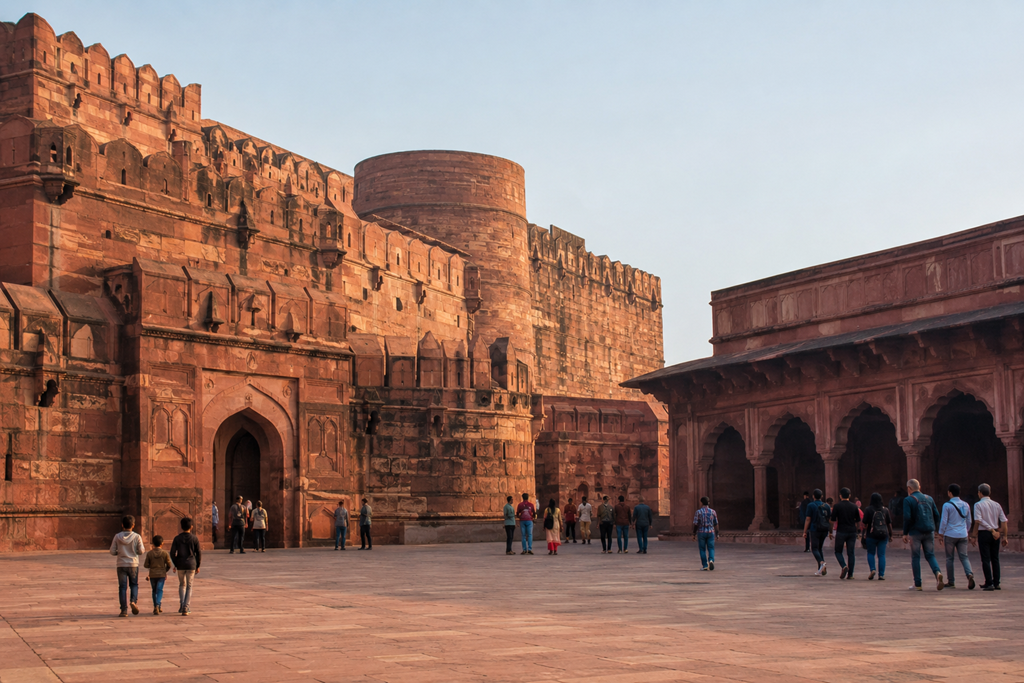
Agra is best known for the Taj Mahal, but the city has much more to offer than its most famous monument. Beyond the marble dome and reflecting pools, Agra has powerful forts, Mughal gardens, riverfront tombs, busy markets, traditional crafts, and food experiences that help you understand the city more fully.
This guide focuses on practical, lasting things to do in Agra beyond the Taj Mahal. Use it to build a more balanced trip, especially if you have an extra day or want to see the city with more context.
Historic Landmarks and Mughal Architecture
1)) Explore Agra Fort
Agra Fort is one of the most important places to visit in Agra after the Taj Mahal. This red sandstone fortress once enclosed the imperial city of the Mughal rulers and includes palaces, audience halls, mosques, and courtyards within its walls. UNESCO describes it as a powerful red sandstone fortress with a 2.5-kilometer enclosure and major structures such as Jahangir Palace, Khas Mahal, and Diwan-i-Khas.
It is worth visiting because it gives Agra’s history more depth. Instead of seeing Mughal architecture only through a memorial, you see it through a place of power, politics, daily court life, and royal residence.
Agra Fort is best for first-time visitors, history lovers, architecture fans, and anyone who wants a fuller understanding of the city. Give yourself enough time to walk slowly, look at the details, and notice how the fort combines strength with elegance.
2)) Visit Itmad-ud-Daulah’s Tomb
Often called the “Baby Taj,” Itmad-ud-Daulah’s Tomb is one of Agra’s most beautiful smaller monuments. It sits along the Yamuna River and is known for its marble inlay work, garden setting, and refined proportions. The official Taj Mahal site notes that the tomb was commissioned by Empress Noor Jahan in memory of her father and is considered a precursor to the Taj Mahal.
This is a good stop if you enjoy details more than scale. The decoration, screens, symmetry, and riverfront atmosphere make it feel intimate compared with Agra’s larger monuments.
Itmad-ud-Daulah is especially good for travelers who want strong architecture without the same level of crowds. It also pairs well with Mehtab Bagh and Chini Ka Rauza because all three sit on or near the Yamuna side of the city.
3)) See the Taj Mahal from Mehtab Bagh
Mehtab Bagh is a garden across the Yamuna River from the Taj Mahal. Even though this article focuses on things beyond the Taj Mahal, this garden deserves a place because the experience is different: you are not touring the monument itself, but seeing it from across the river in a quieter landscape.
The garden is aligned with the Taj Mahal on the opposite bank, and the official Taj Mahal site describes it as one of the best places to view the mausoleum.
Visit Mehtab Bagh if you want a slower viewpoint, a break from crowded monument spaces, or a good place to appreciate the Taj Mahal’s placement within the riverfront landscape. Check current access conditions before you go, especially during periods of heavy rain or high river levels.
4)) Take a Half-Day Trip to Fatehpur Sikri
Fatehpur Sikri is one of the best excursions from Agra. Located outside the city, it was once the Mughal capital under Emperor Akbar and is now a UNESCO World Heritage Site. UNESCO lists Fatehpur Sikri as one of the three World Heritage properties in the Taj Trapezium Zone, along with the Taj Mahal and Agra Fort.
The site is known for red sandstone architecture, grand gateways, courtyards, palaces, and religious structures. It feels different from central Agra because it has the atmosphere of a planned imperial city rather than a single monument.
Fatehpur Sikri is best for travelers who have more than one day in Agra. It takes more time and energy than a quick city stop, so plan it when you can move at a reasonable pace rather than squeezing it between too many other sights.
5)) Walk Through Akbar’s Tomb at Sikandra
Akbar’s Tomb is another worthwhile Mughal site that many first-time visitors miss. Located in Sikandra, it is set within spacious grounds and combines red sandstone, marble details, gateways, gardens, and decorative calligraphy.
The official Taj Mahal site describes Akbar’s Tomb as an important Mughal architectural masterpiece built between 1604 and 1613 and set within 119 acres of grounds.
This is a good choice if you want a less rushed historic stop. The grounds give the visit a more open feel, and the tomb helps connect the story of Agra to Akbar, one of the most important Mughal emperors.
6)) Stop at Jama Masjid
Jama Masjid is one of Agra’s major religious and architectural landmarks. It stands close to Agra Fort and is known for its red sandstone and white marble design. Incredible India notes that the mosque was commissioned by Shah Jahan for his daughter Jahanara Begum and completed in 1648.
This is not usually the longest stop on an Agra itinerary, but it adds important cultural context. It also brings you closer to the older, busier parts of the city.
Dress modestly, be respectful of prayer times, and check current visitor guidelines before entering. Even a short visit can help you see Agra as a living city, not only a collection of monuments.
Gardens, Riverfront Sites, and Quieter Corners
7)) Visit Chini Ka Rauza
Chini Ka Rauza is a smaller riverfront mausoleum known for its Persian influence and glazed tile decoration. It is not as polished or famous as Agra’s major monuments, but that is part of its appeal.
The official Taj Mahal site describes it as the mausoleum of Afzal Khan Mullah, Shah Jahan’s prime minister and a Persian poet, and notes its blue glazed tile work.
This stop is best for travelers who enjoy quieter heritage sites and do not need every place to feel grand or perfectly restored. It pairs naturally with Itmad-ud-Daulah and Mehtab Bagh, especially if you are exploring the Yamuna riverfront side of Agra.
8)) Spend Time in Ram Bagh
Ram Bagh is one of Agra’s historic Mughal gardens and a worthwhile stop if you want a slower change of pace. The official Taj Mahal site describes it as one of the earliest Mughal gardens, believed to have been laid out by Babur, and calls it Agra’s oldest garden.
The main reason to visit is not spectacle. It is the chance to see a garden tradition that shaped Mughal design and to take a break from denser sightseeing.
Ram Bagh is best for travelers who enjoy gardens, history, and quieter spaces. It can also work well as a low-pressure stop between more demanding monument visits.
9)) Walk the Taj Nature Walk
The Taj Nature Walk is a good option when you want greenery, open air, and distant views rather than another formal monument. It gives you a different sense of Agra’s landscape and can be a useful reset during a busy sightseeing day.
This is best for travelers who like walking, photography, birdlife, and slower travel moments. It can also be a good choice if you are traveling with someone who needs a break from forts and tombs.
Go earlier in the day when temperatures are more comfortable, carry water, and check current access details before visiting.
Local Culture, Markets, and Food
10)) Explore Kinari Bazaar and the Old City Markets
Agra’s markets are an important part of the city experience. Kinari Bazaar and nearby old city lanes are known for textiles, wedding goods, jewelry, craft items, sweets, and everyday local shopping.
This is not the place to rush through with a checklist. It is best experienced slowly, with time to look around, compare quality, and observe the rhythm of the streets.
The markets are best for travelers who enjoy local atmosphere, street photography, small purchases, and a more lived-in view of Agra. Keep your belongings secure, agree on prices clearly, and avoid feeling pressured to buy.
11)) Learn About Marble Inlay and Local Craft Traditions
Agra’s craft traditions are closely tied to the city’s architectural identity. Marble inlay work, leather goods, carpets, textiles, and stone carving are all part of the local shopping and artisan scene.
A craft demonstration can be worthwhile if it is handled respectfully and without pressure. The best version of this experience helps you understand the skill behind the decoration you see in Agra’s monuments.
This is especially useful after visiting the Taj Mahal, Itmad-ud-Daulah, or Agra Fort because you will notice the craftsmanship with more appreciation. Choose reputable shops or guided experiences, and remember that you do not need to buy anything for the visit to be valuable.
12)) Try Agra’s Classic Food Experiences
Agra’s food scene is another reason to leave time beyond monument visits. Look for local sweets like petha, savory street snacks, North Indian vegetarian dishes, Mughlai-style meals, and simple chai stops between sightseeing.
This is best approached as a food experience rather than a restaurant checklist. Choose busy, well-regarded places, pay attention to hygiene, and ask your hotel or a trusted local guide for current recommendations.
Food is one of the easiest ways to make your Agra trip feel more complete. Even a small tasting walk, a stop for sweets, or a relaxed dinner after sightseeing can help the city feel more personal and memorable.
How to Prioritize Your Time in Agra
If you only have one extra half-day beyond the Taj Mahal, prioritize Agra Fort and Itmad-ud-Daulah. Together, they give you a strong mix of scale, history, and detail.
If you have a full extra day, add Mehtab Bagh, Akbar’s Tomb, and a market or food experience. This creates a balanced day with monuments, views, local streets, and time to pause.
If you have two or more days, include Fatehpur Sikri. It is one of the most rewarding experiences near Agra, but it deserves enough time to visit without rushing.
Practical Tips for Visiting Agra Beyond the Taj Mahal
Agra is easier to enjoy when you do not overload your schedule. Many of the city’s monuments reward slow looking, especially places with detailed stonework, gardens, and layered history.
Start earlier in the day when possible, especially in warmer months. Keep your plans flexible, since traffic, weather, crowds, and security procedures can affect timing.
Hire a licensed guide if you want deeper historical context, especially at Agra Fort or Fatehpur Sikri. For short stops, a good guide can help you notice details you might otherwise miss.
Before visiting any monument, check current opening hours, ticket rules, and entry requirements. These details can change, and confirming them before you go helps avoid unnecessary stress.
A Better Way to See Agra
The Taj Mahal may be the reason many travelers come to Agra, but it should not be the only part of the city they remember. Agra Fort shows the power of the Mughal court. Itmad-ud-Daulah reveals delicate craftsmanship. Mehtab Bagh changes your perspective. Fatehpur Sikri expands the story beyond the city center. Markets, gardens, food, and smaller monuments add texture.
The best Agra trip gives the Taj Mahal its place without letting it overshadow everything else. With even a little extra time, Agra becomes a richer, more layered destination.
Download Our Free E-book!