Cape Town is one of those cities where the setting is part of the experience. Mountains rise behind the neighborhoods, beaches curve along the Atlantic coast, and day trips can take you from botanical gardens to penguin colonies to dramatic ocean cliffs.
This guide focuses on the best things to do in Cape Town for first-time visitors and returning travelers who want a balanced trip: scenic views, nature, beaches, cultural landmarks, and a few easy city experiences that help the destination feel more complete. Many of these places are long-standing Cape Town classics, but it is still wise to check current opening hours, weather conditions, and booking requirements before you go.
Nature, Mountains, And Scenic Viewpoints
1)) Ride or hike up Table Mountain
Table Mountain is Cape Town’s signature landmark and one of the best places to understand the city’s geography. From the top, you can see the city bowl, the Atlantic coastline, Lion’s Head, Robben Island, and the surrounding mountains on a clear day.
Most visitors take the cableway, while experienced hikers may choose one of the established hiking routes. Weather changes quickly on the mountain, so build flexibility into your plans. If the summit is covered by cloud or wind conditions are poor, it may be better to shift your visit to another day.
Table Mountain is part of Table Mountain National Park, which stretches from Signal Hill and Table Mountain down toward Cape Point and includes protected coastal and mountain landscapes.
Best for: first-time visitors, photographers, hikers, and anyone who wants the classic Cape Town view.
2)) Watch sunset from Signal Hill
Signal Hill is one of the easiest scenic viewpoints in Cape Town. Unlike Table Mountain or Lion’s Head, it does not require a major hike to enjoy wide views over the city, harbor, ocean, and surrounding peaks.
It is especially popular around sunset, but that also means parking and traffic can become more challenging during busy periods. Arrive earlier than you think you need to, bring a light layer, and avoid leaving valuables visible in your vehicle.
Signal Hill works well on your first evening in Cape Town because it gives you a simple, memorable overview without needing a full-day commitment.
3)) Hike Lion’s Head for sweeping city and ocean views
Lion’s Head is one of Cape Town’s most rewarding hikes, offering a changing view as you circle upward. You will see Table Mountain, Camps Bay, the city bowl, and the Atlantic coastline from different angles.
The hike is popular, but it is more demanding than a casual walk. Some sections are steep, and certain routes involve ladders or chains. Go in daylight, wear proper shoes, carry water, and avoid hiking alone if you are unfamiliar with the area.
Choose Lion’s Head if you want a more active experience than Signal Hill but do not necessarily want a full Table Mountain hike.
4)) Explore Kirstenbosch National Botanical Garden
Kirstenbosch is one of the most beautiful places in Cape Town to slow down and enjoy the natural setting without a strenuous hike. Set against the eastern slopes of Table Mountain, the garden is known for South African plant life, shaded paths, lawns, mountain views, and peaceful walking routes.
It is a strong choice for travelers who want nature but prefer an easier pace. You can spend a couple of hours walking the main paths, crossing the canopy walkway, sitting with a picnic, or combining it with other southern-suburbs stops.
Cape Town Tourism lists Kirstenbosch among the city’s major attractions, and its position below Table Mountain makes it especially useful for visitors who want scenery without going to the summit.
5)) Visit Cape Point and the Cape of Good Hope
Cape Point and the Cape of Good Hope are among the most dramatic day-trip experiences from Cape Town. Expect rugged cliffs, ocean views, wind-shaped landscapes, hiking paths, and a strong sense of being at the edge of the peninsula.
This is not a quick stop if you want to enjoy it properly. Give yourself enough time for the drive, viewpoints, short walks, and possible stops along the way. The area is part of Table Mountain National Park, and SANParks lists Cape Point and the Cape of Good Hope among the park’s key attractions.
It pairs well with Boulders Beach, Simon’s Town, or a scenic coastal drive if you are planning a full Cape Peninsula day.
6)) Drive Chapman’s Peak Drive
Chapman’s Peak Drive is one of the region’s most memorable scenic routes, winding between mountain slopes and the Atlantic Ocean. It is less about reaching a single attraction and more about enjoying the journey.
The drive works especially well as part of a Cape Peninsula loop, but conditions can vary due to weather, maintenance, or safety closures. Check the road status before making it a key part of your day.
Plan to stop at viewpoints where permitted rather than rushing through. The best experience is unhurried: ocean below, cliffs above, and enough time to enjoy the scale of the coastline.
Beaches And Coastal Experiences
7)) Spend time at Camps Bay Beach
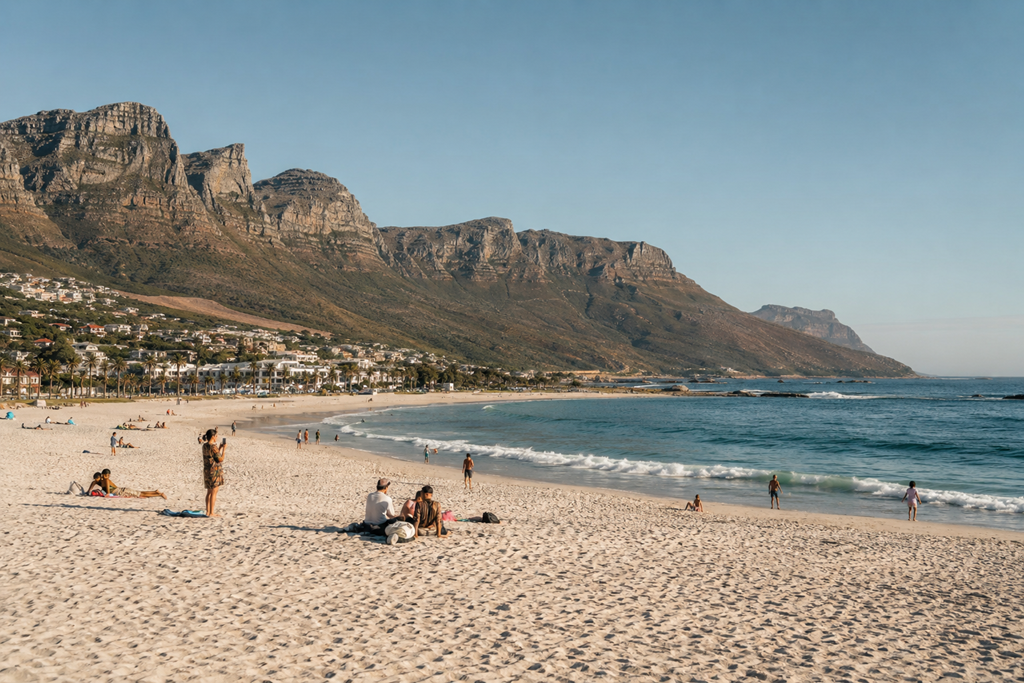
Camps Bay is one of Cape Town’s most recognizable beach areas, backed by the Twelve Apostles mountain range and lined with restaurants and cafés nearby. It is a good choice if you want a scenic beach setting with easy access to food, drinks, and city energy.
The water is often cold, so many visitors come more for the view, walk, sunset, and atmosphere than for long swims. It can get busy, especially during warm weather, but the combination of sand, mountains, and ocean makes it one of the city’s classic stops.
Camps Bay is best for travelers who want a beautiful beach without feeling too far from the city.
8)) Visit Clifton’s beaches
Clifton is known for a series of smaller beaches tucked below the road, each separated by granite boulders. Compared with Camps Bay, the setting can feel more sheltered and tucked away, though reaching the sand usually involves stairs.
These beaches are ideal if you want a more scenic, slightly quieter beach experience. Bring what you need with you, because services are more limited than in Camps Bay.
Clifton is especially good for sunbathing, photography, and a simple beach break between sightseeing days.
9)) See the penguins at Boulders Beach
Boulders Beach, near Simon’s Town, is famous for its African penguin colony. It is one of the most distinctive wildlife experiences near Cape Town and works well as part of a Cape Peninsula day trip.
The penguins are protected, so visitors should keep a respectful distance, stay on designated paths, and avoid treating the area like a petting-zoo experience. SANParks describes Boulders as home to a unique and endangered land-based colony of African penguins and notes that it has become a well-known international visitor attraction.
This is a strong stop for families, wildlife lovers, and anyone who wants a memorable coastal experience that is not just another viewpoint.
10)) Walk the Sea Point Promenade
The Sea Point Promenade is one of the easiest ways to enjoy Cape Town’s coastline without planning a major outing. The paved waterfront path is popular for walking, jogging, people-watching, and sunset views.
It is useful on arrival day, after a long sightseeing day, or when you want something low-effort but still scenic. You can start with a short walk and extend it depending on your energy.
For many travelers, the promenade is also a practical way to feel the everyday rhythm of Cape Town: locals exercising, families walking, waves breaking along the seawall, and the Atlantic stretching out beside the city.
11)) Go to Muizenberg for a relaxed surf-town feel
Muizenberg has a different personality from the Atlantic beaches. It sits on the False Bay side of the peninsula and is known for its long beach, surf culture, and colorful beach huts.
It is a good choice if you want a more casual, open beach experience or are interested in beginner-friendly surf lessons. Conditions can vary, so check local guidance before swimming or surfing.
Muizenberg pairs well with a southern suburbs or False Bay day, especially if you are also visiting Kalk Bay, Simon’s Town, or Boulders Beach.
Culture, History, And City Life
12)) Take the ferry to Robben Island
Robben Island is one of Cape Town’s most important historical sites. The island is closely associated with South Africa’s apartheid history and Nelson Mandela’s imprisonment, but its history extends across centuries.
The official Robben Island Museum describes the island as having a rich 500-year, multi-layered history and as a symbol of the triumph of the human spirit over adversity, suffering, and injustice.
Because the visit depends on ferries and guided tours, book ahead when possible and allow enough time in your schedule. The official museum notes that tours include the ferry journey to and from the island and can take several hours overall.
This is best for travelers who want more than scenery and are willing to spend time engaging with the country’s history.
13)) Walk through Bo-Kaap
Bo-Kaap is one of Cape Town’s most photographed neighborhoods, known for its brightly painted houses, cobbled streets, and Cape Malay heritage. It is visually striking, but it is also a real residential community, so visit respectfully.
Rather than treating it only as a photo stop, take time to learn about the area’s cultural history, food traditions, and community identity. A guided walk can add context and help you see beyond the surface.
Bo-Kaap is especially worthwhile if you want a short city experience that connects architecture, history, and local culture.
14)) Spend a few hours at the V&A Waterfront
The V&A Waterfront is one of Cape Town’s easiest places to spend a flexible afternoon. It combines harbor views, shops, restaurants, museums, boat departures, and access to the Robben Island ferry terminal.
It is not the quietest or most local-feeling part of the city, but it is convenient, walkable, and useful for first-time visitors. It can work well on arrival day, a rainy day, or as a base before or after a scheduled tour.
Cape Town Tourism lists the V&A Waterfront among the city’s major attractions, along with Table Mountain and Robben Island.
15)) Visit the District Six Museum and nearby central sights
The District Six Museum helps visitors understand a painful and important part of Cape Town’s history: forced removals during apartheid and the destruction of a once-vibrant community. It is a meaningful counterbalance to the city’s natural beauty and beach-focused attractions.
Afterward, you can pair the visit with nearby central sights such as the Company’s Garden, historic buildings, or a simple walk through parts of the city center during the day.
Choose this experience if you want a fuller understanding of Cape Town beyond its postcard views. It is especially worthwhile for travelers who value history, context, and thoughtful cultural stops.
How To Prioritize Your Time In Cape Town
If you only have two or three days, focus on Table Mountain, one major coastal experience, one historical site, and one easy city area. A balanced short trip might include Table Mountain, Camps Bay or Clifton, Robben Island, Bo-Kaap, and a Cape Peninsula day with Boulders Beach and Cape Point.
With four or five days, you can slow the pace and add Kirstenbosch, Lion’s Head, Sea Point Promenade, Muizenberg, and more time along the coast. This makes the trip feel less rushed and gives you backup options if weather affects mountain or ferry plans.
For the smoothest experience, avoid stacking too many weather-dependent activities into one day. Table Mountain, Robben Island, boat trips, beaches, and scenic drives can all be affected by wind, cloud, or sea conditions. Keep your schedule flexible where you can.
Practical Planning Notes For Cape Town
Cape Town is easiest to enjoy when you group activities by geography. Table Mountain, Signal Hill, Lion’s Head, Camps Bay, Clifton, and Sea Point can fit naturally into city-based days. Cape Point, Boulders Beach, Simon’s Town, Muizenberg, and Chapman’s Peak work better as a longer peninsula route.
For transportation, many visitors use a mix of rideshare services, guided tours, rental cars, and organized day trips. A rental car can be useful for the peninsula and beaches, but it is not always necessary for central Cape Town. For evening plans, arrange transportation in advance rather than assuming you will walk long distances after dark.
Safety varies by area and time of day, so use the same common-sense approach you would in any major city: stay aware, avoid displaying valuables, ask local hosts or hotel staff for current area guidance, and choose reliable transportation when moving around at night.
Cape Town rewards travelers who leave room for weather and mood. Some days are best for mountains. Some are better for museums, gardens, markets, or coastal walks. A flexible plan will usually serve you better than a rigid checklist.
Download Our Free E-book!