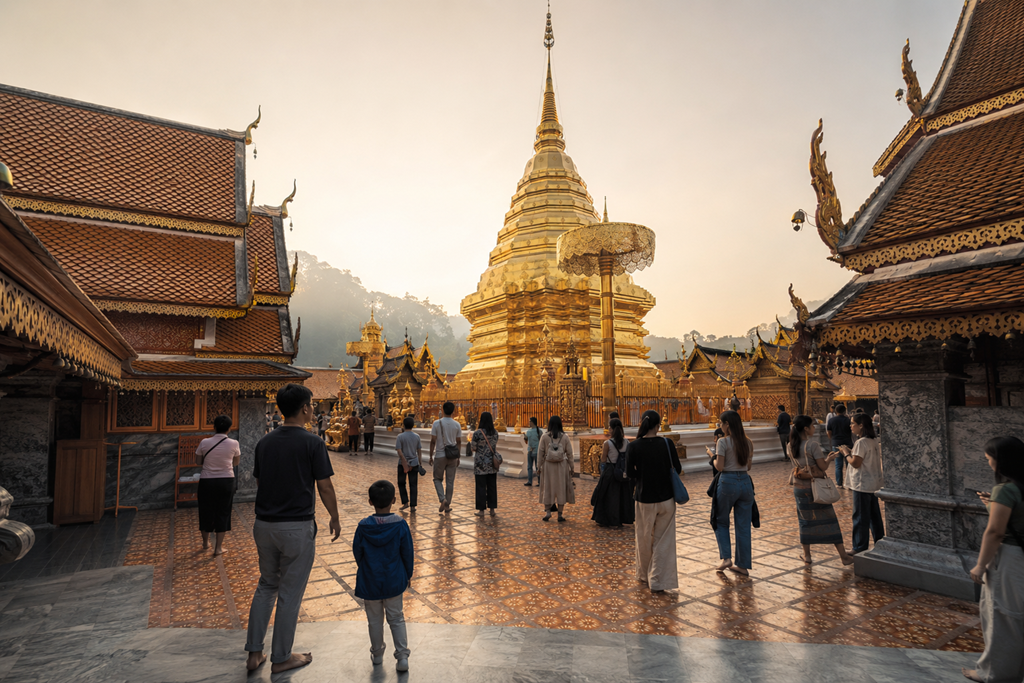
Chiang Mai is one of Thailand’s most rewarding destinations for travelers who want more than a quick checklist. Set in Northern Thailand, the city blends historic temples, mountain scenery, traditional markets, local food, and a slower rhythm that makes it easier to explore without rushing. The Tourism Authority of Thailand highlights Chiang Mai for its Lanna culture, natural beauty, handmade products, and important landmarks such as Wat Phra That Doi Suthep.
This guide focuses on the best things to do in Chiang Mai for first-time visitors and returning travelers alike. You’ll find classic temples, nature escapes, local neighborhoods, cultural experiences, and practical ways to enjoy the city with more clarity.
Start With Chiang Mai’s Temples And Old City
1)) Visit Wat Phra That Doi Suthep
Wat Phra That Doi Suthep is one of Chiang Mai’s most important and memorable sights. Sitting on a mountain above the city, the temple is known for its golden chedi, long staircase, and sweeping views over Chiang Mai on clear days. It is also one of the most meaningful religious landmarks for local people.
This is a good first major stop because it helps you understand Chiang Mai’s connection to Buddhism, mountain geography, and local identity. Go with enough time to walk slowly, observe the temple grounds respectfully, and take in the view rather than treating it as a quick photo stop.
It’s best for travelers who want a classic Chiang Mai experience, temple architecture, and a strong sense of place. Dress modestly and check current visiting details before you go.
2)) Explore Wat Chedi Luang
Wat Chedi Luang sits in the Old City and is one of Chiang Mai’s most striking temple complexes. Its large brick chedi gives the site a different feeling from the bright gold temples many travelers expect in Thailand. The Chiang Mai provincial tourism site notes Wat Chedi Luang’s large Buddhist chedi as one of the city’s notable temple landmarks.
This is worth prioritizing because it connects visitors to Chiang Mai’s older Lanna history. The temple grounds are easy to combine with other Old City sights, making it a practical stop even on a shorter visit.
Spend time noticing the textures, scale, and quieter corners of the grounds. Wat Chedi Luang is especially good for travelers who enjoy historic architecture and want a deeper look at Chiang Mai beyond its most photographed hilltop temple.
3)) See Wat Phra Singh
Wat Phra Singh is another essential Old City temple and a natural companion to Wat Chedi Luang. It is known for its classic Northern Thai architecture, elegant temple halls, and active religious life.
This is a good temple to visit if you want to see Chiang Mai’s spiritual culture within the city itself. Because it is centrally located, it fits easily into a half-day Old City walk.
The best way to experience Wat Phra Singh is to slow down and look closely at the details: rooflines, murals, carved wood, and the way locals use the space for worship. Like all temples in Chiang Mai, dress respectfully and avoid disruptive behavior inside prayer areas.
4)) Wander The Old City Streets
Chiang Mai’s Old City is surrounded by traces of ancient walls and a moat, creating a clear historic center that is easy to explore on foot. This area is home to many temples, guesthouses, cafes, massage shops, small restaurants, and quiet side streets.
The Old City is not just one attraction. It is the part of Chiang Mai where many visitors begin to understand the city’s pace. Walking here gives you a chance to connect temples, markets, and everyday neighborhood life without needing a full itinerary.
This is best for travelers who like flexible exploration. Choose a few anchor points, such as Wat Chedi Luang, Wat Phra Singh, and Tha Phae Gate, then leave room for unplanned stops along the way.
Experience Chiang Mai’s Markets And Local Culture
5)) Walk The Sunday Walking Street
The Sunday Walking Street, often associated with Tha Phae Gate and the Old City, is one of Chiang Mai’s most popular market experiences. The Tourism Authority of Thailand points to Tha Phae Walking Street as a place to experience local life and shop for handmade products.
This market is worth doing because it brings together crafts, snacks, local art, clothing, souvenirs, and street life in one walkable area. It can get busy, so it is better approached with patience rather than a tight schedule.
It’s especially good for travelers who want handmade items, casual food, and a lively evening atmosphere. Bring small cash, watch your belongings in crowded areas, and check current operating details before planning your evening around it.
6)) Visit The Chiang Mai Night Bazaar Area
The Night Bazaar area is a long-running Chiang Mai evening shopping district, especially useful for travelers staying near the eastern side of the city. You’ll find market stalls, casual food, souvenirs, textiles, and nearby side markets.
This is not always the most local-feeling market in Chiang Mai, but it is convenient, accessible, and easy to browse. It can be a good low-effort evening option after a day of temples or a day trip.
Prioritize it if you want a simple night out, especially if you are staying nearby. For more handmade or locally distinctive items, compare it with weekend walking streets and smaller craft markets.
7)) Browse Warorot Market
Warorot Market, also called Kad Luang, is one of Chiang Mai’s best places to see everyday local commerce. Unlike markets aimed mainly at visitors, this area is useful for produce, snacks, flowers, dried goods, textiles, and household items.
This is worth visiting because it gives you a more grounded view of Chiang Mai. It is less about perfect souvenir browsing and more about seeing how the city shops, eats, and moves through the day.
Warorot Market is best for curious travelers, food lovers, and anyone who enjoys local market energy. Go earlier in the day for a fuller experience, and be respectful when taking photos.
8)) Take A Thai Cooking Class
A Thai cooking class is one of the most practical cultural experiences in Chiang Mai. Many classes introduce travelers to key Northern Thai and broader Thai ingredients, often including a market visit before cooking.
This is worth doing because it turns Chiang Mai’s food culture into something you can understand, not just consume. You learn how herbs, curry pastes, rice, noodles, vegetables, and sauces work together.
A cooking class is especially useful for travelers who enjoy food but feel unsure what to order. Choose a class that explains ingredients clearly and offers a manageable menu rather than trying to cover too much in one session.
Enjoy Nature Near The City
9)) Spend A Day At Doi Inthanon National Park
Doi Inthanon National Park is one of the best nature day trips from Chiang Mai. It is known for waterfalls, viewpoints, nature trails, birdwatching, remote villages, and cooler temperatures at higher elevations. It is also home to Thailand’s highest mountain.
This is worth prioritizing if you want to balance Chiang Mai’s temples and markets with mountain scenery. A day trip can include viewpoints, short walks, waterfalls, and cultural stops, depending on the route.
Because the park is outside the city, it requires more planning than an Old City attraction. Consider going with a reputable guide or driver, especially if you want to visit several stops efficiently. Bring layers, as higher elevations can feel cooler than Chiang Mai city.
10)) Hike The Monk’s Trail To Wat Pha Lat
The Monk’s Trail is a popular forest walk leading toward Wat Pha Lat, a peaceful temple tucked into the hillside below Doi Suthep. It offers a different kind of temple experience: shaded paths, forest surroundings, stone details, and a quieter atmosphere than many central temples.
This is best for travelers who want a light outdoor activity without committing to a full mountain trek. The walk can be uneven, so wear proper shoes and avoid going after heavy rain if conditions seem slippery.
Wat Pha Lat itself is a highlight. It feels more integrated with the forest than the city temples, making it a rewarding stop for travelers who enjoy quiet architecture and nature together.
11)) Visit A Waterfall Near Chiang Mai
Chiang Mai’s surrounding mountains make waterfalls a natural part of many itineraries. Some visitors include waterfalls as part of a Doi Inthanon day trip, while others visit closer options depending on their schedule and transportation.
A waterfall visit is worth considering if you want a break from city sightseeing. It can add fresh air, shaded scenery, and a different pace to your trip.
The best choice depends on season, weather, and how far you want to travel. During rainy periods, water flow may be stronger, while some paths can also be muddier. Check current conditions before going, and avoid risky swimming areas.
12)) Visit An Ethical Elephant Sanctuary
Chiang Mai is well known for elephant experiences, but this is one area where travelers should be especially thoughtful. Look for sanctuaries that prioritize observation, education, rescue, and elephant welfare rather than performances, riding, or forced interactions.
This is worth doing only if you choose carefully. A responsible visit can help you better understand elephant care, conservation challenges, and the difference between entertainment-based tourism and welfare-focused experiences.
Before booking, read the sanctuary’s policies closely. Favor places that limit direct contact, avoid elephant riding, explain their care standards clearly, and are transparent about how the animals are treated.
Go Deeper Into Local Food, Craft, And Neighborhoods
13)) Try Northern Thai Food
Chiang Mai is one of the best places to try Northern Thai food. Dishes such as khao soi, sai ua, nam prik noom, sticky rice, and herb-filled soups help distinguish the region from central and southern Thai cuisine.
This is worth making time for because food is one of the clearest ways to understand Chiang Mai’s regional identity. Instead of only looking for “best restaurants,” think in terms of dishes and food experiences.
Try a mix of simple local restaurants, market stalls, and casual eateries. Ask what a place does well, and do not feel pressure to chase only famous spots. The most useful food experiences are often the ones that help you understand everyday flavors.
14)) Explore Nimmanhaemin
Nimmanhaemin, often shortened to Nimman, is Chiang Mai’s modern café, boutique, and lifestyle area. It has a different feel from the Old City, with more contemporary shops, coffee spots, galleries, and restaurants.
This area is worth visiting if you want to see modern Chiang Mai alongside the historic center. It is especially good for travelers who like cafés, design, independent shops, and a more urban neighborhood walk.
Nimman is not where you go for ancient temples or traditional markets. It is where you go to see how Chiang Mai’s younger, creative, and international side fits into the city’s broader identity.
15)) Learn About Local Handicrafts
Chiang Mai has a long association with handmade crafts, including textiles, woodwork, silverwork, ceramics, umbrellas, and other artisan traditions. You can encounter crafts in markets, workshops, small shops, and villages around the city.
This is worth prioritizing if you want souvenirs with more meaning than mass-produced items. It also gives you a way to support local makers when you buy thoughtfully.
Look for quality, context, and transparency. Ask about materials, techniques, and where items are made. Even if you do not buy much, learning about Chiang Mai’s craft culture adds another layer to the trip.
How To Prioritize Your Chiang Mai Trip
If you only have two or three days, focus on the Old City temples, Wat Phra That Doi Suthep, one market, one Northern Thai food experience, and either a cooking class or a nature day trip.
With four or five days, add Doi Inthanon, Warorot Market, Nimman, Wat Pha Lat, and a slower evening market experience.
With a week or longer, Chiang Mai becomes easier to enjoy at a gentler pace. You can mix major sights with neighborhood walks, cooking, cafés, ethical animal experiences, craft shopping, and time in the mountains.
The best Chiang Mai itinerary is not the busiest one. It is the one that gives you enough space to appreciate the city’s temples, food, nature, and local culture without turning every day into a race.
Practical Notes For Visiting Chiang Mai
Chiang Mai is generally easier to navigate than Bangkok, but planning still helps. The Old City is walkable in parts, while songthaews, tuk-tuks, taxis, ride-hailing, private drivers, and organized tours can help with longer distances.
Dress modestly for temples, especially when shoulders and knees should be covered. Remove shoes where required, keep your voice low in prayer areas, and avoid posing disrespectfully with Buddha images.
For mountain trips, bring layers, water, comfortable shoes, and sun protection. Conditions can feel different outside the city, especially at higher elevations such as Doi Inthanon.
For markets, bring small cash and avoid carrying more than you need. Bargaining may be acceptable in some settings, but keep it friendly and reasonable.
Chiang Mai’s air quality can vary by season, especially during regional burning periods. If you are sensitive to air pollution, check general seasonal patterns and current conditions before finalizing travel dates.
Download Our Free E-book!