Hong Kong can feel like several trips in one: a skyline city, a harbor destination, a food capital, a shopping hub, and a place with quiet temples, islands, gardens, and mountain views. For first-time visitors, the key is not trying to see everything. It is choosing experiences that give you a clear, memorable introduction to the city without overloading your days.
This guide focuses on classic, reliable things to do in Hong Kong: the views, neighborhoods, food experiences, cultural sites, and scenic places that help you understand why the city is so rewarding to explore.
Classic Hong Kong Views and Harbor Experiences
1)) Ride the Peak Tram to Victoria Peak
Victoria Peak is one of the best places to begin a first trip to Hong Kong. The ride up by Peak Tram is part of the experience, and once you reach the top, you get the city’s most famous wide-angle view: dense towers, Victoria Harbour, Kowloon, and the surrounding hills.
This is especially helpful early in your trip because it gives you a visual sense of how Hong Kong is arranged. You can see how close the mountains, harbor, and urban neighborhoods are to each other.
Go during clear weather if your schedule allows. Late afternoon can be a good time because you may see the city in daylight and then watch the lights come on after dark. The Peak Tram is one of Hong Kong’s most recognized visitor experiences, and the Hong Kong Tourism Board describes it as a route to panoramic views of the skyline and harbor.
2)) Take the Star Ferry Across Victoria Harbour
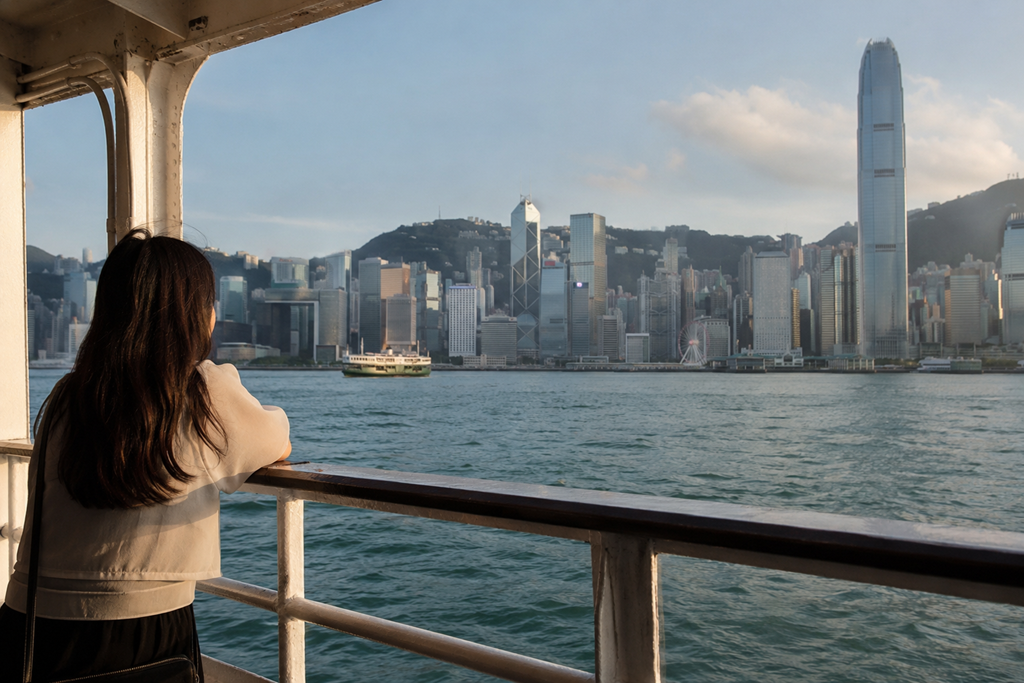
The Star Ferry is simple, short, and memorable. It connects Hong Kong Island and Kowloon across Victoria Harbour, giving you a close view of the skyline from the water without needing a long boat tour.
For first-time visitors, this is one of the easiest ways to feel the geography of the city. You can ride between Central or Wan Chai and Tsim Sha Tsui, then continue walking along the Kowloon waterfront.
The ferry’s roots go back to the late 19th century, when a cross-harbor service began between Hong Kong Island and Kowloon. That long history is part of what makes it more than just transportation.
3)) Walk the Tsim Sha Tsui Promenade
The Tsim Sha Tsui waterfront is one of the best free things to do in Hong Kong. From the promenade, you can look across Victoria Harbour toward the skyscrapers of Central and Wan Chai.
This is a good choice for your first evening, especially if you are staying in Kowloon. The walk is easy, scenic, and flexible. You can combine it with the Star Ferry, nearby museums, shopping streets, or dinner in Tsim Sha Tsui.
It is also a useful place to slow down between busier sightseeing stops. Hong Kong is dense and energetic, so having a simple harbor walk in your plan can make the day feel more balanced.
4)) See the Skyline From Both Sides of the Harbor
Many visitors only see the skyline from one viewpoint, but Hong Kong is better when you compare perspectives. From The Peak, you look down over the city. From Tsim Sha Tsui, you look across the harbor. From the Star Ferry, you see the skyline while moving through the water.
These three views together help you understand Hong Kong’s layered setting: high-rise districts, mountain slopes, busy harbor traffic, and compact neighborhoods all close together.
This is best for travelers who enjoy photography, city views, architecture, or a first-day orientation.
Culture, Temples, and Historic Places
5)) Visit Man Mo Temple in Sheung Wan
Man Mo Temple is one of Hong Kong’s most atmospheric cultural stops. Located in Sheung Wan near Hollywood Road, it offers a contrast to the surrounding streets, galleries, cafés, and antique shops.
The temple is dedicated to the gods of literature and martial arts and is one of the city’s oldest temples. The Hong Kong Tourism Board notes that the complex is a declared monument, with buildings estimated to have been constructed between 1847 and 1862.
For first-time visitors, this is a good reminder that Hong Kong is not only modern towers and shopping districts. It is also layered with older community spaces, religious traditions, and preserved heritage.
Be respectful when visiting. Keep your voice low, follow posted photography rules, and remember that this is an active place of worship.
6)) Explore Tai Kwun in Central
Tai Kwun is a restored heritage and arts complex in Central, set within the former Central Police Station compound. It is a strong choice for travelers who want history, architecture, art, and a walkable city experience in one stop.
You can visit courtyards, historic buildings, exhibitions, shops, and dining spaces. Even if you do not stay long, the site helps show how Hong Kong adapts older colonial-era structures for modern public use.
Tai Kwun pairs well with Man Mo Temple, Hollywood Road, PMQ, Central Market, and the Mid-Levels Escalator. Together, they make an excellent half-day route through Central and Sheung Wan.
7)) Spend Time at Chi Lin Nunnery and Nan Lian Garden
Chi Lin Nunnery and Nan Lian Garden are among the most peaceful cultural places in Hong Kong. Located in Diamond Hill, they combine Buddhist architecture, landscaped gardens, wooden structures, ponds, rocks, trees, and carefully planned walking paths.
The setting is especially striking because the gardens sit within urban Kowloon, surrounded by residential towers and traffic. The Hong Kong Tourism Board describes the nunnery and garden as a spiritual retreat at the base of the mountains in Diamond Hill.
This is best for travelers who want a quieter experience, enjoy gardens, or need a break from the intensity of central districts. It is also a good choice for families and first-time visitors because the layout is approachable and easy to enjoy without needing much background knowledge.
8)) Visit Wong Tai Sin Temple
Wong Tai Sin Temple is one of Hong Kong’s best-known temples and a meaningful stop for visitors interested in local religious life. The temple is associated with worship, prayer, and fortune-telling traditions, and it often feels more active and community-centered than a quiet historic site.
For first-time visitors, it offers insight into the everyday spiritual side of Hong Kong. You may see people making offerings, praying, or taking part in rituals. As with any active religious site, visit respectfully and give space to worshippers.
It pairs well with Chi Lin Nunnery and Nan Lian Garden because they are both in Kowloon and can fit into the same day without crossing the harbor repeatedly.
Markets, Neighborhoods, and Street Life
9)) Walk Through Mong Kok
Mong Kok is one of the best neighborhoods for seeing Hong Kong’s street-level energy. It is busy, vertical, colorful, and packed with shops, food stalls, signs, side streets, and local crowds.
This is not the place to rush through with a checklist. The value is in wandering. Explore side streets, browse small shops, look for snacks, and notice how much daily life fits into a compact area.
First-time visitors often enjoy Mong Kok because it feels different from the polished skyline image of Hong Kong. It is lively, crowded, and practical, with a mix of shopping, food, and neighborhood life.
10)) Browse Temple Street Night Market
Temple Street Night Market is a classic evening stop in Kowloon. It is known for market stalls, casual food, souvenir shopping, and a lively nighttime atmosphere.
This is best approached as a walk and snack experience rather than a major shopping mission. Go with reasonable expectations, browse slowly, and enjoy the atmosphere. Markets can change over time, so check current conditions before building an entire evening around one specific section.
It works well after a day in Tsim Sha Tsui, Jordan, or Yau Ma Tei.
11)) Explore Central, Sheung Wan, and Hollywood Road
Central and Sheung Wan are ideal for a first-time visitor because they combine old and new Hong Kong in a compact area. In a single walk, you can pass office towers, historic temples, dried seafood shops, art spaces, cafés, antique stores, hillside streets, and restored heritage buildings.
Hollywood Road is especially useful as a route because it connects several worthwhile stops, including Man Mo Temple, PMQ, galleries, and nearby lanes.
This area is best for travelers who like urban wandering. You do not need every stop planned. Choose a few anchors, then leave room for side streets and breaks.
12)) Ride the Central–Mid-Levels Escalator
The Central–Mid-Levels Escalator is both practical transportation and a memorable city experience. It carries people through one of Hong Kong Island’s steep hillside districts and lets you see restaurants, residential buildings, small streets, and neighborhood layers along the way.
For visitors, it is a good way to understand how vertical Hong Kong can be. You can use it as part of a walk through Central, SoHo, and the Mid-Levels area.
It is best combined with nearby stops rather than treated as a standalone attraction. Use it to connect neighborhoods, then get off when a street looks interesting.
Food and Local Experiences
13)) Eat Dim Sum
Dim sum is one of the most important food experiences for a first trip to Hong Kong. It is not just about dumplings or buns. It is about the style of eating: sharing small dishes, ordering tea, and trying several textures and flavors in one meal.
Good dim sum can be found in many types of places, from traditional teahouses to modern restaurants. For a first visit, choose somewhere convenient to your sightseeing route rather than chasing a single “best” restaurant. Restaurant rankings change, but dim sum remains a core Hong Kong experience.
Popular items to try include shrimp dumplings, siu mai, barbecue pork buns, rice noodle rolls, turnip cake, egg tarts, and custard buns.
14)) Try Everyday Hong Kong Café Food
Hong Kong’s cha chaan tengs, or local cafés, are another essential food experience. These casual spots often serve milk tea, pineapple buns, egg sandwiches, macaroni soup, baked rice, noodles, and other comforting dishes that reflect the city’s blend of Cantonese and international influences.
This is a good way to experience Hong Kong beyond formal restaurants. It is also practical for travelers because local cafés are often fast, affordable, and located near busy neighborhoods.
For a first visit, try one breakfast or lunch at a local café and keep the meal simple. The experience is part food, part rhythm of daily life.
15)) Visit Tian Tan Buddha and Po Lin Monastery on Lantau Island
Tian Tan Buddha, often called the Big Buddha, is one of Hong Kong’s most memorable day-trip experiences. Located on Lantau Island near Po Lin Monastery, the large seated bronze Buddha sits above the surrounding hills and is reached by a long staircase.
The Hong Kong Tourism Board notes that the statue stands 34 meters high including its base, and visitors climb 268 steps to reach it.
This is best for travelers who want a scenic break from the central city. The experience can include the Buddha, Po Lin Monastery, Ngong Ping village area, and nearby walking paths depending on your time and energy.
Because it takes longer than a neighborhood stop, give it a half day or more. Check current transport details before you go, especially if you plan to use the cable car or visit during a busy travel period.
Practical Planning Notes for First-Time Visitors
Hong Kong is easy to explore independently, but it helps to group your days by geography. Spend one day around Central, Sheung Wan, The Peak, and the harbor. Spend another around Tsim Sha Tsui, Mong Kok, Temple Street, and Kowloon cultural sites. Save Lantau Island for a separate half-day or day trip.
The MTR is usually the easiest way to move between major areas, and the Airport Express connects Hong Kong International Airport with the city; MTR describes the Airport Express journey between the airport and Central as taking as little as 24 minutes.
For most first-time visitors, a stored-value transit card or mobile payment option makes getting around easier, especially if you plan to use the MTR, ferries, buses, and trams.
Try not to overfill each day. Hong Kong rewards walking, pausing, eating, and noticing small details. Choose two or three main experiences per day, then leave space for the unexpected streets, harbor views, and meals that often become the best parts of the trip.
Download Our Free E-book!