Melbourne is one of Australia’s most rewarding cities for travelers who like to explore on foot, eat well, visit galleries, and spend time in neighborhoods with their own personality. It is not a city that needs to be rushed. Many of its best moments come from wandering through laneways, sitting down for a good coffee, browsing a market, or moving between grand cultural buildings and quiet gardens.
This guide focuses on classic, durable Melbourne experiences that are likely to remain useful for first-time visitors and return travelers alike: major landmarks, food areas, museums, parks, markets, waterfront walks, and local neighborhoods. Use it to choose what fits your pace, interests, and trip length.
Start With Melbourne’s City Core
1)) Walk Melbourne’s Laneways And Arcades
Melbourne’s laneways are one of the city’s signature experiences. Around the central business district, narrow streets and covered arcades connect coffee shops, small restaurants, boutiques, murals, and heritage architecture. Flinders Lane is especially known for dining, shopping, galleries, and laneway atmosphere.
This is a good first-day activity because it helps you understand Melbourne’s rhythm quickly. Rather than only moving between big landmarks, give yourself time to wander. Hosier Lane is the best-known street art stop, but the broader experience is really about noticing details: tiled floors, narrow stairways, small bars, old shopfronts, and cafes tucked into places you might otherwise miss.
It is best for visitors who enjoy photography, coffee, design, food, and low-pressure exploring.
2)) Visit Federation Square And Flinders Street Station
Federation Square and Flinders Street Station sit near the emotional center of the city. Flinders Street Station is one of Melbourne’s most recognizable heritage landmarks, while Federation Square acts as a public meeting place beside galleries, cultural spaces, restaurants, and the Yarra River.
This area works well as a starting point because it connects easily to several other experiences: the laneways, the riverfront, Southbank, the National Gallery of Victoria, and the city’s tram network. It is also a practical orientation point if you are new to Melbourne.
Come during the day for architecture and people-watching, or return in the evening when the station and nearby riverfront feel more atmospheric.
3)) Spend Time At The National Gallery Of Victoria
The National Gallery of Victoria, commonly known as NGV, is one of Melbourne’s strongest cultural stops. NGV International on St Kilda Road presents a broad collection from around the world, while The Ian Potter Centre: NGV Australia at Federation Square focuses on Australian art, including Indigenous and non-Indigenous works. The permanent collections are generally free to enter, while special exhibitions may have separate entry requirements.
This is a worthwhile choice even if you do not usually plan trips around museums. The buildings are easy to include in a central Melbourne itinerary, and the collections offer a quieter break from shopping, dining, and street-level exploring.
Check current exhibitions before you go, but do not build your whole visit around a temporary show. The permanent galleries are enough to make NGV one of Melbourne’s most dependable things to do.
4)) Browse Queen Victoria Market
Queen Victoria Market is one of Melbourne’s most practical and enjoyable food experiences. The market has been part of the city for more than a century and stretches across two city blocks, with fresh produce, specialty foods, clothing, souvenirs, and hundreds of small businesses.
For travelers, the market is useful because it combines sightseeing with everyday local life. You can stop for breakfast, pick up picnic supplies, browse food halls, or simply walk through to get a feel for Melbourne’s multicultural food culture.
Go earlier in the day if you want the strongest market atmosphere. Opening days and hours can vary, so check current details before planning your visit.
Culture, History, And Local Identity
5)) See The Royal Exhibition Building And Carlton Gardens
The Royal Exhibition Building and Carlton Gardens are among Melbourne’s most important historic sites. The building and gardens were designed for the international exhibitions of 1880 and 1888, and UNESCO recognizes the site for its connection to the 19th-century international exhibition movement.
This stop is especially good for travelers interested in architecture, history, gardens, and heritage landmarks. The building’s scale and setting make it impressive even from the outside, and the surrounding Carlton Gardens give you room to slow down between city activities.
It pairs naturally with the Melbourne Museum, which sits nearby, or with a walk into Carlton for Italian food and coffee.
6)) Explore Melbourne Museum
Melbourne Museum is a strong choice for visitors who want more context about the city, Victoria, natural history, science, and culture. Its location beside the Royal Exhibition Building makes it easy to combine both in one half-day.
This is especially useful for families, first-time visitors, and travelers who like to understand a destination beyond surface-level sightseeing. Museums can also be a smart option on very hot, rainy, or windy days.
Check current galleries and ticket details before you go, especially during school holidays or busy travel periods.
7)) Visit The Shrine Of Remembrance
The Shrine of Remembrance is Victoria’s national memorial honoring Australians who have served in war and peacekeeping. It is one of Melbourne’s major civic landmarks and sits in a prominent position near the Royal Botanic Gardens and St Kilda Road cultural area.
The experience is reflective rather than rushed. Visitors can explore memorial spaces, exhibitions, and the surrounding grounds. The elevated position also gives you a strong view back toward Melbourne’s skyline.
This is best for travelers interested in history, architecture, public memory, and meaningful city landmarks.
8)) Learn Through A First Peoples Cultural Experience
Melbourne sits on the traditional lands of the Kulin Nation, and a thoughtful visit should leave room for First Peoples history and culture. The Royal Botanic Gardens Melbourne offers Aboriginal heritage experiences that introduce visitors to the significance of plants, Country, and continuing cultural knowledge.
This type of experience can add depth to your trip because it shifts Melbourne from being just a modern city of coffee, trams, and galleries into a place with much older layers of meaning.
Book ahead where required, and approach the experience as learning rather than checklist sightseeing.
Gardens, River Walks, And Open Spaces
9)) Walk Through The Royal Botanic Gardens Melbourne
The Royal Botanic Gardens Melbourne are one of the city’s best places to pause. Located near the city center, the gardens offer wide lawns, lakeside paths, mature trees, native and international plantings, and skyline views from certain angles. Entry to the Melbourne Gardens is free.
This is a good choice if your itinerary is becoming too dense. You can spend an hour walking through, bring a simple picnic, or combine the gardens with the Shrine of Remembrance.
It is especially good for couples, solo travelers, families, and anyone who needs a quieter break from central Melbourne.
10)) Follow The Yarra River Through Southbank
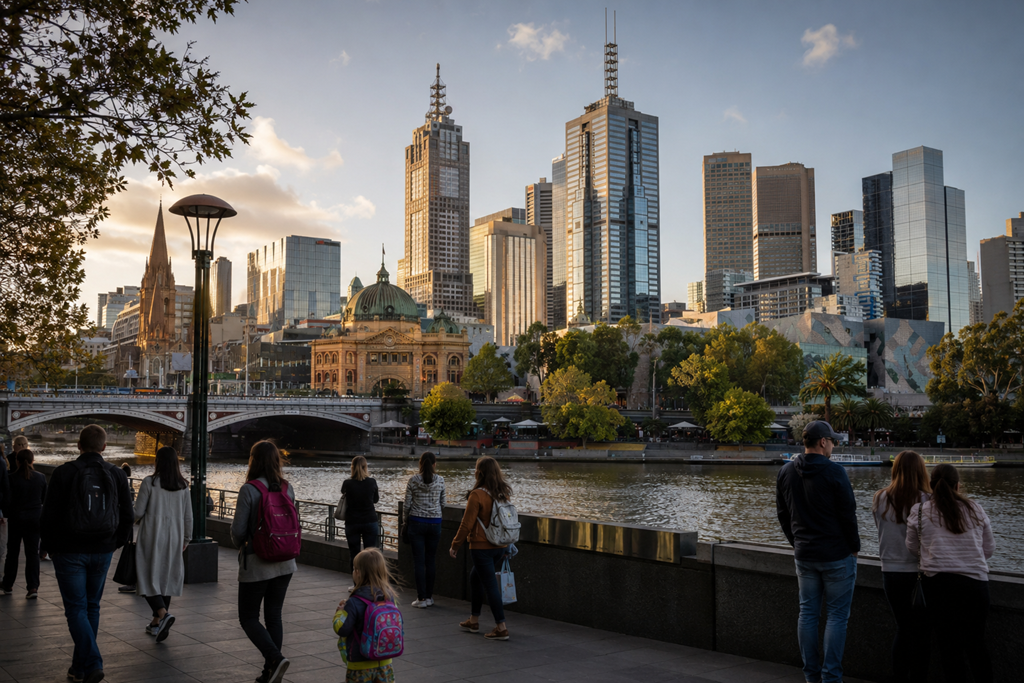
The Yarra River gives Melbourne a natural walking route through the city. The Southbank promenade is easy to follow, with views back toward Flinders Street Station, the skyline, bridges, restaurants, and cultural venues.
This is not a complicated activity, which is part of its appeal. Walk in the late afternoon or early evening, when the city begins to shift from workday energy into dinner and nightlife. You can keep it simple with a riverside stroll or extend the walk toward the Arts Precinct and gardens.
It is best for travelers who want city views without needing a formal attraction or fixed schedule.
11)) Spend A Few Hours In St Kilda
St Kilda gives Melbourne a seaside contrast. The neighborhood is known for its beach, pier, palm-lined foreshore, old amusement atmosphere, cafes, and relaxed walking areas. It is not a remote beach escape, but it is an easy way to add the bay to a Melbourne trip.
Go for a walk along the foreshore, stop for coffee or cake, and take in the difference between central Melbourne and the coast. The area works especially well in mild weather, but it can still be worth visiting outside peak beach season for the views and neighborhood feel.
Check transport routes before you go, and allow enough time so it does not feel squeezed between central-city activities.
Food, Coffee, And Neighborhood Exploring
12)) Experience Melbourne’s Coffee Culture
Melbourne’s coffee culture is one of the city’s most famous everyday pleasures. You do not need to chase a single “best” cafe to enjoy it. In fact, the better approach is to build coffee into your walking route: laneways in the CBD, Carlton, Fitzroy, Collingwood, South Melbourne, and other neighborhoods all offer strong options.
This is a useful travel mindset for Melbourne generally. Let food and coffee become part of how you explore, rather than treating every stop as a separate attraction.
For first-time visitors, try a simple morning coffee in the CBD, then another in a neighborhood like Fitzroy or Carlton to feel the difference in atmosphere.
13)) Eat Your Way Through Carlton And Lygon Street
Carlton, especially around Lygon Street, is strongly associated with Italian food, cafes, gelato, and a long-standing dining culture. It is close enough to the city center to be easy, but it feels distinct from the CBD.
This area is best approached as a neighborhood walk plus a meal. You can combine it with Carlton Gardens, the Royal Exhibition Building, or Melbourne Museum, then settle into lunch, dinner, or dessert nearby.
Rather than relying on the most talked-about restaurant of the moment, look for menus, atmosphere, and pacing that fit the kind of meal you want.
14)) Explore Fitzroy And Collingwood
Fitzroy and Collingwood are two of Melbourne’s most interesting inner-north neighborhoods for street art, independent shops, cafes, bars, vintage stores, galleries, and casual dining. They are good choices when you want to see a more local, creative side of the city beyond the main visitor circuit.
Brunswick Street, Smith Street, and Gertrude Street are all useful anchors, but the best experience comes from wandering side streets and taking your time. This area is especially good in the afternoon, when you can browse, stop for coffee, and stay into the evening for dinner or drinks.
It is best for travelers who like neighborhoods more than monuments.
Melbourne Experiences Worth Prioritizing
15)) Use The Tram Network To Connect The City
Melbourne’s tram network is part of the city’s identity and a useful way to move between neighborhoods. The Free Tram Zone covers central areas, and visitors do not need to use a myki card when traveling only inside that zone. If your journey starts or ends outside the Free Tram Zone, you need a valid fare.
For travelers, trams are more than transportation. They help make Melbourne feel accessible. You can use them to connect the CBD, Docklands, Queen Victoria Market, Federation Square, and other central stops, then use paid public transport for areas farther out.
Before riding, check whether your route stays within the Free Tram Zone. It is one of the easiest mistakes for first-time visitors to make.
How To Prioritize Your Time In Melbourne
If you only have one day, focus on the CBD laneways, Federation Square, Flinders Street Station, NGV, the Yarra River, and Queen Victoria Market if your timing works. This gives you a strong first impression without spending too much time in transit.
With two or three days, add the Royal Botanic Gardens, Shrine of Remembrance, Carlton, Melbourne Museum, and a neighborhood like Fitzroy or Collingwood.
With four or more days, include St Kilda, slower food-focused exploring, extra gallery time, and more unplanned wandering. Melbourne rewards a less rigid itinerary.
Practical Notes For A Better Visit
Melbourne weather can shift quickly, so bring layers and be ready to adjust your day. Outdoor plans such as gardens, St Kilda, laneway wandering, and river walks are more enjoyable when you have flexibility.
Book ahead for special exhibitions, guided cultural experiences, popular restaurants, and busy travel periods. For everyday exploring, leave open space in your itinerary. Some of Melbourne’s best travel moments come from finding a cafe, shop, mural, or street you did not plan for.
Use the Free Tram Zone carefully, walk when distances are short, and group attractions by area. Melbourne is easy to enjoy when you avoid crossing the city too many times in one day.
Download Our Free E-book!