Seoul is one of those cities where old and new sit side by side in a way that feels natural. You can spend the morning walking through palace courtyards, the afternoon exploring design shops and cafés, and the evening eating street food in a market or watching the skyline glow from the Han River.
This guide focuses on the best things to do in Seoul for a well-rounded trip: major cultural sites, traditional neighborhoods, food experiences, scenic walks, shopping areas, museums, and viewpoints. It is especially useful for first-time visitors who want to understand what is worth prioritizing without trying to do everything at once.
Historic Seoul And Traditional Culture
1)) Visit Gyeongbokgung Palace
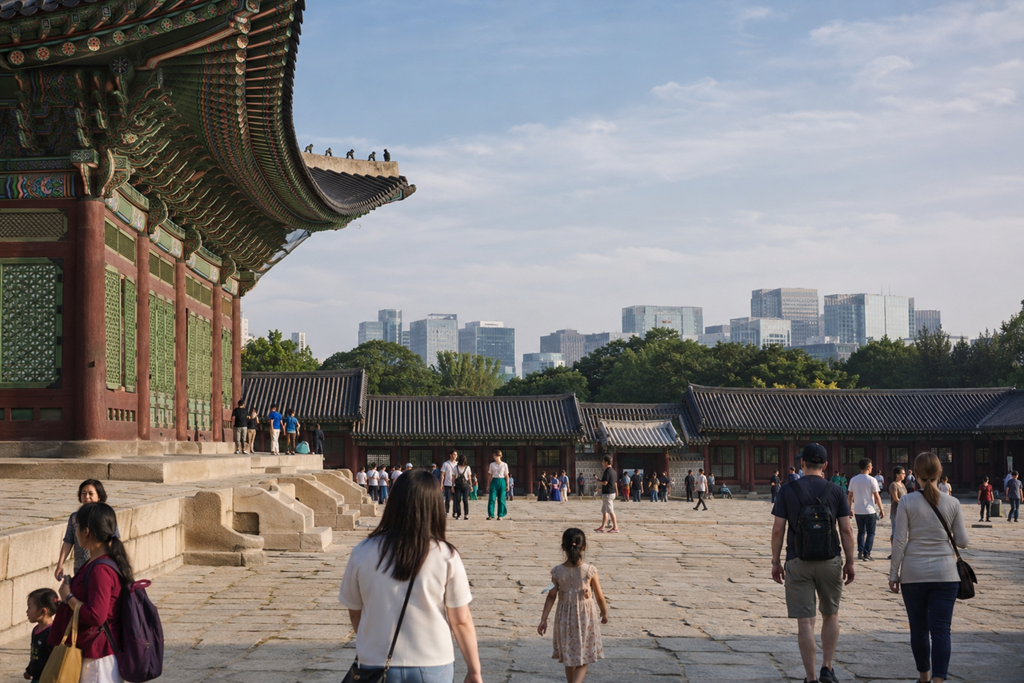
Gyeongbokgung Palace is one of the most important historic sites in Seoul and a strong place to begin your trip. Built during the Joseon Dynasty, it gives visitors a clear sense of Korea’s royal history, architecture, ceremonial spaces, and traditional palace layout.
The palace grounds are large enough to feel like a meaningful visit, but not so complicated that you need to be a history expert to enjoy them. Walk through the main gates, pause in the wide courtyards, and take time to notice the painted wooden details, stone paths, mountain backdrop, and quiet corners away from the busiest areas.
This is best for first-time visitors, history lovers, photographers, and anyone who wants a classic Seoul experience. Check current opening hours before you go, especially because palace schedules can vary by day or season. Seoul’s official tourism guide highlights the Gyeongbokgung, Gwanghwamun, Insa-dong, Bukchon, and Seochon area as a strong first-time visitor route.
2)) Walk Through Bukchon Hanok Village
Bukchon Hanok Village is known for its traditional Korean houses, narrow lanes, and views that connect old Seoul with the modern skyline. It sits between major palace areas and has long been one of the city’s most recognizable historic neighborhoods. Visit Seoul describes Bukchon as reflecting 600 years of Seoul’s history and notes its location between Gyeongbokgung Palace and Changdeokgung Palace.
The main appeal is simply walking slowly. The lanes, tiled roofs, wood-framed homes, and hillside views make the neighborhood feel distinct from the city’s larger commercial districts. It is a good place to appreciate Seoul’s architectural layers.
Because Bukchon is also a residential area, visit respectfully. Keep noise low, avoid blocking doorways, and check current visitor guidance before going. Local authorities have taken steps in recent years to manage overtourism and protect residents, so it is worth confirming any access rules before your visit.
3)) Explore Changdeokgung Palace And Its Garden
Changdeokgung Palace is another major royal palace and is often appreciated for its harmony with the surrounding landscape. Compared with Gyeongbokgung, it can feel more intimate and naturally integrated with hills, trees, and garden paths.
The palace is especially worthwhile if you enjoy historic architecture, quieter sightseeing, and places where nature and culture overlap. Its garden area is one of the highlights, but access may depend on guided routes or timed entry, so check current details before planning your day around it.
If you only have time for one palace, Gyeongbokgung is often the easiest first choice. If you have time for two, Changdeokgung adds a different and more landscape-focused view of Seoul’s royal history.
4)) Visit Jogyesa Temple
Jogyesa Temple offers a peaceful cultural stop in central Seoul. It is an accessible place to experience Korean Buddhist architecture, temple courtyards, lanterns, and devotional spaces without needing to travel far from other major attractions.
This is not a large all-day attraction, but it works well as part of a walking route through central Seoul, especially if you are also visiting Insa-dong, Gwanghwamun, or nearby palace areas. Take a slow look at the main hall, the temple grounds, and the details around the buildings.
As with any active religious site, be respectful. Keep your voice low, avoid intrusive photography, and give worshippers plenty of space.
5)) Try Wearing Hanbok In A Historic Area
Wearing hanbok, traditional Korean clothing, is a popular cultural experience in Seoul, especially around palace districts and Bukchon. Many visitors pair hanbok rental with a palace visit because the setting makes the experience feel more connected to Korean history.
This is best for travelers who enjoy photography, cultural experiences, or a more immersive way to explore traditional sites. It can also be a memorable activity for couples, families, and friend groups.
Choose comfortable footwear, since palace grounds and historic streets often involve a lot of walking. If you plan to take photos, go earlier in the day to avoid the busiest crowds.
Food, Markets, And Everyday Seoul
6)) Eat Your Way Through Gwangjang Market
Gwangjang Market is one of Seoul’s classic food stops. It has a long history and remains a popular place for visitors who want to try Korean street food in a busy, traditional market setting. Visit Korea describes Gwangjang Market as Korea’s first permanent market and notes that it continues to thrive as a major market selling food, groceries, traditional goods, textiles, and more.
The draw here is the energy: food stalls, sizzling pans, shared counters, and a steady flow of locals and travelers. Common foods associated with the market include savory pancakes, dumplings, noodles, rice rolls, and other Korean comfort foods.
Go with curiosity rather than a rigid checklist. Walk through first, notice what looks fresh and busy, then choose a few dishes to share. This is one of the best places in Seoul to understand how food, routine, and local culture come together.
7)) Explore Insa-dong For Tea, Crafts, And Culture
Insa-dong is a good neighborhood for traditional crafts, tea houses, galleries, small shops, and souvenirs that feel more rooted in Korean culture than generic tourist shopping. It is also easy to combine with palace visits, Jogyesa Temple, or Bukchon.
This is a good area for travelers who like slow browsing. Look for ceramics, paper goods, calligraphy supplies, traditional snacks, and quiet tea rooms. Even if you do not buy much, it is a pleasant neighborhood for wandering.
Insa-dong is especially useful when you want a cultural experience that does not require heavy planning. You can spend an hour here or stretch it into a relaxed afternoon.
8)) Spend Time In Myeongdong
Myeongdong is one of Seoul’s best-known shopping and street food districts. It is lively, central, and easy to reach, making it a practical stop for first-time visitors who want cosmetics, fashion, casual food, and a bright urban atmosphere.
This is not the quietest or most traditional part of Seoul, but that is part of the point. Myeongdong shows the commercial, fast-moving side of the city. It works especially well in the evening, when lights, food stalls, and shopping streets feel more animated.
Go here if you want convenience, energy, and easy access to familiar travel services. Skip or shorten it if you prefer slower neighborhoods and historic areas.
9)) Try Korean Barbecue Or A Shared Table Meal
Korean barbecue is one of the most enjoyable food experiences in Seoul because it is social, interactive, and built around sharing. Sitting around the grill, cooking meat or vegetables, adding side dishes, and wrapping bites in lettuce gives you a meal that feels like an experience rather than just a stop for food.
You do not need to chase a famous restaurant to enjoy it. Look for places with steady local traffic, clear menus, and a comfortable environment. Many restaurants specialize in specific cuts or styles, so it helps to be flexible rather than searching for one “perfect” place.
This is ideal for travelers who want a memorable dinner without needing a complicated plan. If you are vegetarian or traveling with dietary restrictions, research ahead because menus and broths can vary.
Views, Walks, And Outdoor Spaces
10)) See The City From N Seoul Tower And Namsan
N Seoul Tower, located on Namsan, is one of Seoul’s most recognizable viewpoints. The area gives visitors a wide look over the city’s dense neighborhoods, surrounding hills, and layered skyline.
You can make this a simple viewpoint stop or turn it into a longer walk depending on your energy. Namsan’s paths offer a greener break from the busier shopping and palace districts, while the tower area gives you the classic elevated city view.
This is especially worthwhile around late afternoon or evening, when the city transitions from daylight to night lights. Check current operating details before you go, especially if you plan to visit the observatory.
11)) Walk Along Cheonggyecheon Stream
Cheonggyecheon Stream is a restored urban waterway running through central Seoul. It is a useful place to take a break between neighborhoods, especially if you have been walking through busy streets or sightseeing areas.
The stream path is easy to enjoy without a strict plan. You can walk a short section, sit near the water, or use it as a gentle route between nearby districts. It is particularly pleasant when you want a lower-effort activity that still feels connected to the city.
This is best for travelers who like urban walks, photography, and simple moments between larger attractions.
12)) Relax By The Han River
The Han River is central to Seoul’s geography and daily life. Its parks, paths, bridges, and skyline views give visitors a different perspective from the palace and shopping districts.
A Han River stop is most rewarding when you do not overcomplicate it. Pick a riverside park, walk for a while, sit with a snack or drink, and watch how locals use the space for biking, picnics, exercise, and evening meetups.
This is a good option for repeat visitors, families, couples, and anyone who wants a slower break in the itinerary. It is also useful if your trip feels too packed and you need one activity that does not require tickets, lines, or heavy planning.
13)) Visit Seoul Forest Or A Major City Park
Seoul has several green spaces that help balance the intensity of the city. Seoul Forest is one of the better-known options, with walking paths, trees, open areas, and nearby cafés and neighborhoods.
A park visit is not always the first thing travelers put on a Seoul itinerary, but it can make the trip feel more enjoyable and sustainable. After several days of palaces, markets, subway rides, and shopping streets, a simple walk outdoors can be exactly what you need.
This is best for slower travelers, families, photographers, and anyone visiting during pleasant weather. Check the forecast and choose a park that fits naturally with the rest of your day.
Modern Culture, Shopping, And Neighborhoods
14)) Explore Hongdae For Youth Culture And Nightlife
Hongdae is known for youth culture, music, casual fashion, cafés, nightlife, and a creative street atmosphere. It has a different feel from the palace areas and gives visitors a look at Seoul’s younger, more expressive side.
During the day, it can be a fun place for shopping, cafés, murals, and people-watching. In the evening, the area becomes more energetic, with restaurants, bars, street activity, and performance culture.
This is best for travelers who enjoy lively neighborhoods and do not mind crowds. If you prefer a quieter experience, visit earlier in the day or keep your time here shorter.
15)) Visit Dongdaemun Design Plaza And The Surrounding Area
Dongdaemun Design Plaza, often called DDP, is one of Seoul’s major modern architecture and design landmarks. Its curved, futuristic structure contrasts strongly with the city’s traditional palaces and older markets, which makes it a useful stop for understanding modern Seoul.
The surrounding Dongdaemun area is also associated with shopping, fashion, and late-day urban energy. Even if you do not visit an exhibition, the exterior and public spaces are worth seeing.
This is best for architecture fans, design-minded travelers, photographers, and anyone who wants Seoul to feel bigger than palaces and food markets.
How To Prioritize Your Seoul Itinerary
If you only have two or three days in Seoul, focus on a balanced mix rather than trying to see every major area. A strong first-time itinerary might include one palace, Bukchon or Insa-dong, Gwangjang Market, N Seoul Tower, Myeongdong, and one modern neighborhood such as Hongdae or Dongdaemun.
If you have more time, add Changdeokgung Palace, a Han River visit, Seoul Forest, more food experiences, and slower neighborhood walks. Seoul rewards repeat wandering, so leaving open space in your schedule is often better than stacking too many attractions into one day.
Practical Seoul Travel Notes
Seoul’s public transportation system is one of the easiest ways to move around the city. A transportation card can make subway and bus travel more convenient, and Korea’s official tourism site notes that prepaid transportation cards can be used for public transportation and, in many cases, other payments as well. Seoul’s official city guidance also notes that public transportation cards can be used for buses, subways, taxis, and public bikes, with cards available through convenience stores and subway stations.
Plan your days by geography. Palace areas, Bukchon, Insa-dong, Jogyesa, and Gwanghwamun can work well together. Myeongdong and Namsan can also pair naturally. Hongdae, the Han River, and larger parks may fit better as separate half-day plans depending on where you are staying.
Seoul is generally easy to explore independently, but a few simple habits help: wear comfortable shoes, check attraction hours before you go, carry a charged phone, and avoid making every meal or café stop dependent on one specific place. The city has plenty of good options, and flexibility often leads to a better trip.
A Thoughtful Way To Experience Seoul
The best things to do in Seoul are not limited to one type of travel experience. The city is rewarding because it lets you move between royal palaces, traditional homes, street food markets, modern design spaces, riverside parks, and energetic shopping streets in a single trip.
For a first visit, aim for variety. Choose a few major cultural sites, add one or two food experiences, spend time in at least one modern neighborhood, and leave room for a walk without a fixed destination. That balance will help Seoul feel less like a checklist and more like a city you can actually understand.
Download Our Free E-book!