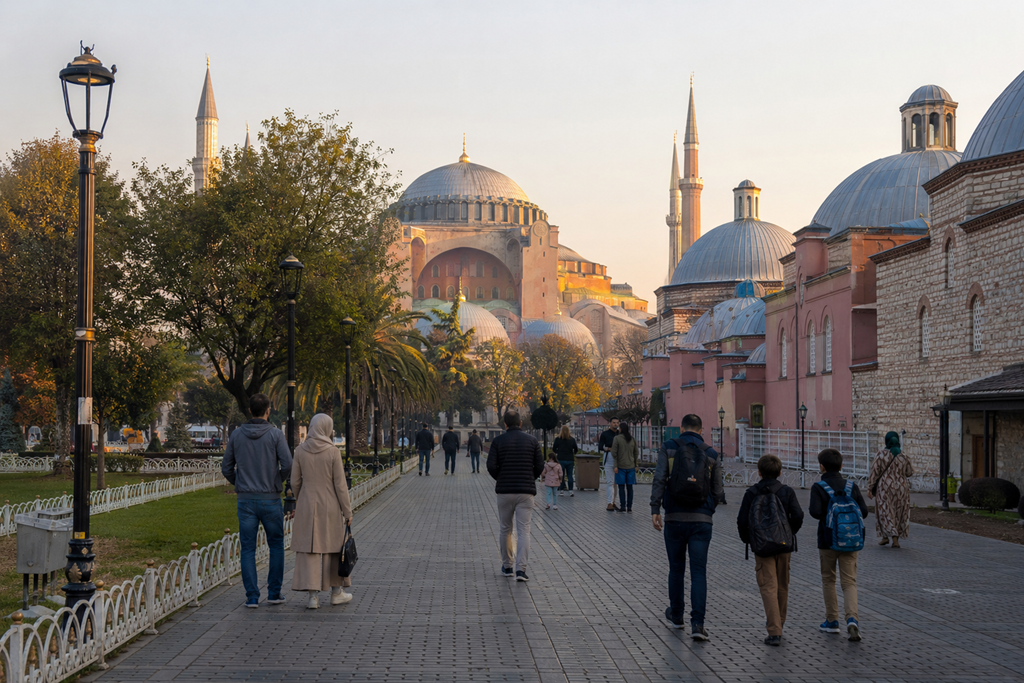
Istanbul is one of the world’s most rewarding cities for travelers because it does not fit neatly into one category. It is historic and modern, European and Asian, deeply traditional and constantly changing. You can spend the morning walking through Byzantine and Ottoman landmarks, cross the Bosphorus by ferry in the afternoon, and end the day in a neighborhood café or market street that feels completely different from where you started.
This guide focuses on the best things to do in Istanbul for first-time visitors and return travelers who want a thoughtful, well-rounded trip. You will find major landmarks, scenic walks, food experiences, markets, neighborhoods, viewpoints, and cultural stops that help you understand the city beyond a checklist.
Istanbul’s Historic Areas are recognized by UNESCO for their exceptional Byzantine and Ottoman heritage, including palaces, mosques, churches, cisterns, fortifications, and historic urban districts.
Start With Istanbul’s Historic Core
1)) Visit Hagia Sophia
Hagia Sophia is one of Istanbul’s most important landmarks and a natural place to begin. Its long history as a Byzantine church, Ottoman mosque, museum, and mosque again makes it one of the clearest examples of Istanbul’s layered identity.
What makes Hagia Sophia worth visiting is not only its scale, but the feeling of standing inside a building that has carried different meanings across centuries. Look for the vast dome, marble details, calligraphy, and remaining traces of earlier Christian mosaics.
Because Hagia Sophia is an active mosque, visitors should dress respectfully and check current visitor rules before going. Prayer times and access details can affect when non-worshippers are allowed to enter.
2)) See the Blue Mosque
The Blue Mosque, officially the Sultan Ahmed Mosque, sits close to Hagia Sophia and is one of the most recognizable sights in Istanbul. Its domes, minarets, courtyard, and interior tilework make it a major stop in Sultanahmet.
This is a good choice for travelers who want to understand Ottoman religious architecture without going far from the city’s other major historic sites. Since it remains an active mosque, visit respectfully, avoid prayer times when needed, and be prepared for modest dress expectations.
Pairing the Blue Mosque with Hagia Sophia, the Hippodrome, and the Basilica Cistern makes for one of the most efficient half-days in Istanbul.
3)) Explore Topkapi Palace
Topkapi Palace offers a different view of Istanbul’s history. Rather than one single room or monument, it is a large palace complex with courtyards, pavilions, treasury rooms, religious relics, gardens, and views toward the Bosphorus.
For centuries, Topkapi Palace was closely tied to the power and administration of the Ottoman Empire. It is best for travelers who enjoy history, architecture, decorative arts, and palace grounds. Give yourself enough time here, because rushing through Topkapi can make it feel like just another museum instead of a major historic complex.
If you are short on time, prioritize the courtyards, key exhibition rooms, and viewpoints. If you enjoy deeper history, consider adding the Harem section if available during your visit.
4)) Go Underground at the Basilica Cistern
The Basilica Cistern is one of Istanbul’s most atmospheric historic sites. This underground water reservoir, supported by rows of columns, gives visitors a quieter and more mysterious contrast to the grand mosques and palaces above ground.
It is especially worthwhile because it shows another side of old Constantinople: the infrastructure that helped the city function. The dim lighting, reflected water, stone columns, and Medusa-head column bases make it memorable even for travelers who do not usually spend much time in historic sites.
Check current opening details before visiting, especially during busy travel periods or restoration-related changes.
5)) Walk Through the Hippodrome Area
The Hippodrome area is easy to overlook because it is not enclosed like a museum, but it is one of the most historically important public spaces in Istanbul. Once a major gathering and chariot-racing area of Byzantine Constantinople, it now connects several key sights in Sultanahmet.
You can see monuments such as the Obelisk of Theodosius and the Serpent Column while walking between Hagia Sophia, the Blue Mosque, and nearby museums. It is a good reminder that some of Istanbul’s best historic experiences happen outdoors, simply by paying attention to the spaces between major attractions.
Markets, Streets, and Everyday Istanbul
6)) Wander the Grand Bazaar
The Grand Bazaar is one of Istanbul’s classic travel experiences. It is not just a place to shop; it is a large covered market district full of jewelry, carpets, ceramics, textiles, lamps, leather goods, souvenirs, and everyday movement.
The best way to experience it is to slow down, look around, and accept that you may get turned around. That is part of the experience. If you plan to buy something meaningful, compare quality, ask questions, and do not feel pressured to decide quickly.
The Grand Bazaar is best for travelers who enjoy historic markets, visual detail, and browsing. It can feel busy, so go with patience rather than a rigid shopping list.
7)) Smell and Taste Your Way Through the Spice Bazaar
The Spice Bazaar, also known as the Egyptian Bazaar, is smaller than the Grand Bazaar but especially appealing for food-focused travelers. You will find spices, teas, dried fruit, nuts, Turkish delight, and other edible souvenirs.
This is a good stop before or after exploring Eminönü, the waterfront, and the Galata Bridge area. Even if you do not buy much, the colors and aromas make it one of the most sensory experiences in the city.
For practical purchases, look for sealed items that will travel well, and check customs rules for your home country before buying food products in larger quantities.
8)) Cross the Galata Bridge on Foot
Walking across the Galata Bridge is one of the simplest and best free things to do in Istanbul. The bridge connects the historic peninsula with Karaköy and Galata, while giving you views of ferries, mosques, fishing rods, seagulls, and the Golden Horn.
It is especially useful early in your trip because it helps you understand Istanbul’s geography. You can see how the old city, waterfront, hills, and neighborhoods relate to one another.
The walk is easy to combine with the Spice Bazaar, Eminönü ferry piers, Karaköy cafés, and the climb toward Galata Tower.
9)) Explore Galata and Climb Toward Galata Tower
Galata is one of Istanbul’s most enjoyable areas for walking. Its sloped streets, small shops, cafés, music stores, galleries, and historic buildings offer a different rhythm from Sultanahmet.
Galata Tower is the neighborhood’s best-known landmark and a popular viewpoint. Even if you choose not to go up, the streets around the tower are worth exploring. This area works well for travelers who like wandering without a strict plan.
Because the streets can be steep and uneven, wear comfortable shoes. It is also wise to visit earlier in the day if you want a less crowded experience around the tower.
10)) Walk Down Istiklal Avenue
Istiklal Avenue is one of Istanbul’s busiest pedestrian streets. It runs through Beyoğlu and is lined with shops, historic passages, churches, consulates, cafés, bookstores, and side streets that reward detours.
This is not the quietest part of Istanbul, but it is useful for understanding the city’s modern public life. The nostalgic tram, side arcades, and surrounding neighborhoods give the area character beyond mainstream shopping.
For a better experience, do not only stay on the main avenue. Step into historic passages, look down side streets, and consider walking toward Cihangir, Çukurcuma, or Galata afterward.
Views, Water, and the Bosphorus
11)) Take a Bosphorus Ferry or Cruise
The Bosphorus is essential to understanding Istanbul. It separates Europe and Asia, links the Black Sea with the Sea of Marmara, and gives the city much of its visual drama.
A ferry or cruise lets you see palaces, mosques, waterfront mansions, bridges, hills, and neighborhoods from the water. For many travelers, this becomes one of the most memorable parts of the trip because it changes the scale of the city.
You do not need to overcomplicate it. Public ferries can be practical and scenic, while longer Bosphorus cruises give more context and time on the water. Choose based on your schedule, budget, and interest level.
12)) Ride a Ferry to the Asian Side
Crossing to the Asian side is one of the easiest ways to make your Istanbul trip feel more complete. Kadıköy is a popular choice because it has markets, cafés, casual restaurants, bookstores, waterfront walks, and a lively neighborhood atmosphere.
The ferry ride itself is part of the experience. You get views of the skyline, passing boats, and the changing relationship between the European and Asian shores.
Kadıköy is especially good for travelers who want a less monument-focused day. Come for food, neighborhood wandering, and a sense of everyday Istanbul.
13)) Watch the City From Süleymaniye Mosque
Süleymaniye Mosque is one of Istanbul’s most beautiful and rewarding mosque complexes. It is grand without feeling as crowded as some of the most famous sights, and its hilltop location offers excellent views over the city.
The mosque is associated with the great Ottoman architect Mimar Sinan and gives visitors a strong sense of Ottoman design, proportion, and setting. Around the mosque, you will also find courtyards, nearby streets, and viewpoints that make the area worth lingering in.
This is a strong choice for travelers who want beauty, architecture, and perspective without rushing from one major sight to the next.
14)) Visit Ortaköy and the Bosphorus Waterfront
Ortaköy is known for its waterfront setting, mosque, cafés, street food, and views of the Bosphorus Bridge. It is a good place to slow down after busier sightseeing days.
The main appeal is the combination of water, architecture, and neighborhood energy. You can walk by the shore, take photos of Ortaköy Mosque, try a stuffed baked potato if you are hungry, or simply sit with a view of the boats and bridge.
Ortaköy works best when treated as a relaxed stop rather than a major checklist attraction. Combine it with a Bosphorus route or nearby waterfront areas if your schedule allows.
Neighborhoods Worth Slowing Down For
15)) Explore Balat and Fener
Balat and Fener are historic neighborhoods known for colorful houses, old churches, synagogues, steep streets, cafés, and a layered cultural past. They are best explored slowly and respectfully, since these are lived-in neighborhoods rather than open-air photo sets.
The appeal here is texture: aging buildings, small shops, laundry lines, local cafés, religious history, and hill streets that feel different from the main tourist areas.
Wear comfortable shoes and be mindful when taking photos, especially near homes, schools, and places of worship. This area is best for travelers who enjoy neighborhood walks and local atmosphere.
16)) Spend Time in Karaköy
Karaköy sits near the water between Galata, the ferry piers, and the historic peninsula. It is a useful base for cafés, casual meals, galleries, bakeries, and walking routes.
This neighborhood works well because it connects so many parts of the city. You can arrive by ferry, walk to Galata, cross the bridge to Eminönü, or continue along the waterfront.
Karaköy is especially good for travelers who like mixing old and new Istanbul in one afternoon. It has historic streets and modern creative energy without requiring a complicated itinerary.
Food, Culture, and Local Experiences
17)) Try a Traditional Turkish Breakfast
A Turkish breakfast can be one of the most enjoyable food experiences in Istanbul. Depending on where you go, it may include bread, cheeses, olives, tomatoes, cucumbers, eggs, honey, kaymak, jams, pastries, and tea.
The value of this experience is not just the food. It encourages you to slow down and enjoy variety, conversation, and the ritual of a longer morning meal.
You can find Turkish breakfast in many neighborhoods, from classic cafés to modern breakfast spots. Rather than chasing the most famous place, choose somewhere convenient to your day’s route and check recent reviews before going.
18)) Experience a Hammam
A hammam, or Turkish bath, is one of Istanbul’s most distinctive cultural experiences. Traditional hammams often include warm rooms, bathing rituals, steam, scrubbing, and relaxation in a historic setting.
This is best for travelers who want a cultural experience rather than another monument. Some hammams are more local and simple, while others are more polished and visitor-friendly. Read the service details before booking so you understand what is included and what level of privacy or assistance to expect.
A hammam can be especially welcome after several days of walking. Book ahead during busy travel periods, and choose a reputable place that matches your comfort level.
How to Prioritize Your Istanbul Trip
If you only have a short visit, focus first on Sultanahmet, the Bosphorus, and one or two neighborhoods beyond the historic core. Hagia Sophia, the Blue Mosque, Topkapi Palace, the Basilica Cistern, the Grand Bazaar, and a ferry ride will give you a strong first impression.
With more time, add Süleymaniye Mosque, Galata, Karaköy, Kadıköy, Balat, Fener, Ortaköy, and a hammam. These experiences help Istanbul feel less like a list of landmarks and more like a living city.
The best Istanbul trips usually balance three things: major historic sites, time on the water, and unhurried neighborhood walks. Plan your days by geography when possible, leave room for traffic and hills, and check current opening hours or reservation requirements before visiting major attractions.
Download Our Free E-book!