The best way to enjoy a FIFA World Cup host city is to treat the match as the center of the trip, not the entire trip. The city around the event has its own rhythm, crowds, neighborhoods, public spaces, food, culture, and daily limits. When you plan with that reality in mind, the trip feels less rushed and more memorable.
For many fans, the mistake is trying to squeeze a normal sightseeing trip into a World Cup schedule. That sounds reasonable before arrival, but it can quickly become tiring. Match days take more time than expected. Transit is busier. Restaurants fill up. Security zones, fan areas, and crowd flows can change how a city feels. Even simple choices, like when to leave your hotel or where to eat after the match, can shape the whole experience.
Enjoying the host city well is not about doing everything. It is about choosing a few things that fit the energy of the trip.
The City Will Feel Different During The Tournament
A FIFA World Cup host city is not operating like it normally does. It may feel more festive, more crowded, more international, and sometimes less predictable.
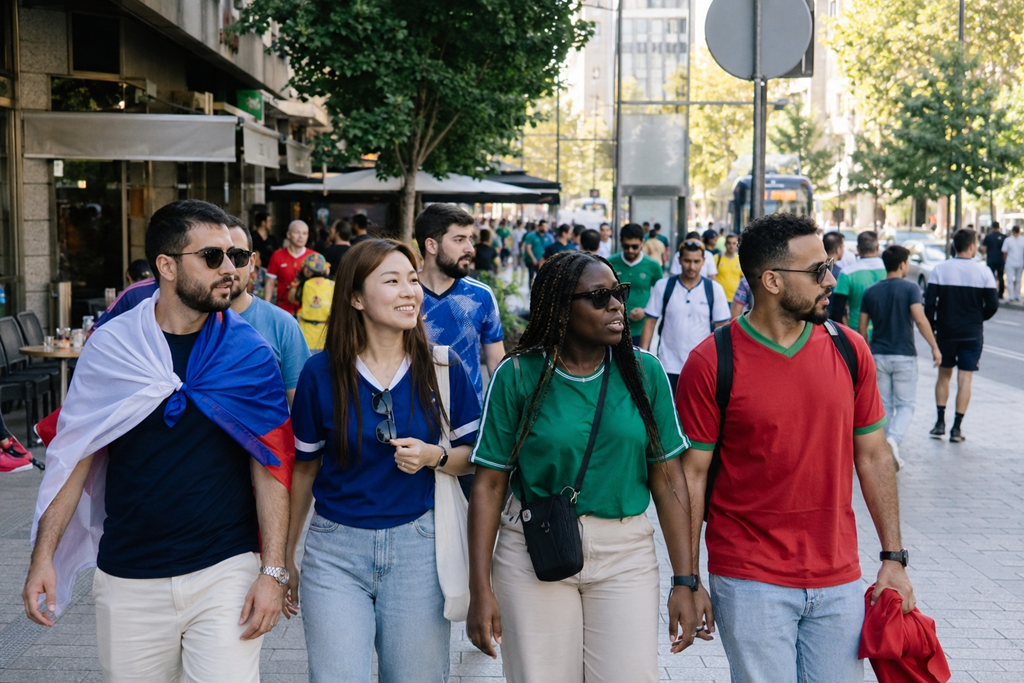
That can be part of the fun. You may hear different languages on the train, see jerseys from several countries in one plaza, or end up talking with fans you would never meet on a normal vacation. The event gives the city a shared atmosphere.
But the same atmosphere can also make casual planning harder. Popular areas may be packed. Hotel zones may feel busier than expected. Public transportation may run well but still feel crowded at peak times. Restaurants near stadiums, fan zones, and major tourist areas may require more patience.
The key is to expect the city to be alive, not effortless.
Start With The Match Schedule, Then Build Around It
The match should anchor the day. Even if kickoff is only two hours long, the full event-day experience may take much longer.
You need time to get to the stadium area, move through crowds, clear entry procedures, find your seat, enjoy the pre-match atmosphere, leave afterward, and get back to where you are staying. If you add an ambitious museum visit, a long meal, and a cross-city sightseeing plan on the same day, the schedule can become frustrating.
A better approach is to keep match days simple. Choose one light city experience before or after the game, not several. That could mean breakfast in a nearby neighborhood, a walk through a central area, or a relaxed meal away from the stadium rush.
Save bigger sightseeing plans for non-match days, when your time and attention are less divided.
Choose Neighborhoods, Not Just Attractions
Many visitors plan around landmarks only. That can work for a normal city break, but during the World Cup, neighborhoods often matter more.
Where you stay, where you eat, and where you spend time between events can affect how relaxed the trip feels. A neighborhood with good transit, walkable streets, casual food options, and a comfortable evening atmosphere may serve you better than an area chosen only because it is close to one famous attraction.
This is especially true if you are attending more than one match. You may not want every day to feel like a race across the city. Having a reliable local area where you can reset between bigger moments can make the trip feel more enjoyable.
The best World Cup host city experience often comes from a balance: one or two well-known sights, plus ordinary places where you can slow down.
Leave Space For The Fan Atmosphere
One of the most memorable parts of a World Cup trip is often not the stadium itself. It is the atmosphere around the city.
You might enjoy a public viewing area, a plaza full of supporters, a casual conversation at a café, or the simple sight of fans walking through the streets before kickoff. These moments are hard to schedule precisely, but they are often what make the trip feel different from a regular vacation.
That does not mean you need to chase every crowd or attend every public celebration. It means you should leave some unscheduled time to experience the city as it is during the tournament.
A tightly packed itinerary can make you miss the thing you came for: the feeling of being in a host city while the world is paying attention to the game.
Plan Food More Realistically Than You Think You Need To
Food can become one of the easiest parts of the trip or one of the most annoying. The difference is usually expectation.
Near stadiums, fan zones, transit hubs, and tourist corridors, restaurants may be crowded or limited. After a match, thousands of people may be trying to do the same thing at the same time. If you wait until everyone is hungry and tired, the choice can feel harder than it should.
It helps to identify a few simple options before the day begins. These do not need to be perfect restaurants. They can be casual places near your hotel, neighborhoods with several choices, grocery stores, food halls, or cafés where you can get something reliable.
The goal is not to turn meals into another complicated itinerary. It is to avoid being stuck when the city is busiest.
Use Public Transportation With Patience, Not Assumptions
Public transportation is often the smartest way to move around a World Cup host city, but it still requires patience. Even strong transit systems can feel different during major events.
Routes may be crowded. Stations near stadiums may have controlled entry or exit patterns. Travel times may stretch because of crowd movement, walking distance, or security-related delays.
The useful mindset is simple: plan by time blocks, not perfect estimates. Instead of assuming a ride will take exactly 25 minutes, give yourself a wider window. Instead of leaving at the last comfortable minute, leave earlier and let the extra time become part of the experience.
Arriving early is rarely wasted time at a World Cup. It lets you absorb the atmosphere without feeling rushed.
Do Not Try To Make Every Moment “Once In A Lifetime”
The phrase “once in a lifetime” can quietly create pressure. It can make travelers feel like every hour must be maximized, every meal must be special, and every photo must prove the trip was worth it.
That pressure can work against the experience.
A World Cup trip is already meaningful because of the event, the place, and the people around it. You do not need to overload the trip to justify it. A calm morning, a simple lunch, or an early night can help you enjoy the match more.
This is especially important for families, older travelers, first-time international travelers, or anyone attending multiple matches. Energy matters. Recovery matters. The city is easier to enjoy when you are not constantly pushing past your limits.
Common Ways Fans Make The Host City Harder To Enjoy
One common mistake is staying too far from useful transportation because the lodging price looked better. A lower room rate can lose its value if every day becomes a long, tiring commute.
Another mistake is treating match tickets as the only planning priority. Tickets matter, but the surrounding details matter too: lodging location, transit access, meal timing, rest, and how you will handle crowds after the match.
Some travelers also assume they can visit the city the same way they would during a quieter season. During the World Cup, the city may still be wonderful, but it may not be convenient in the usual way.
There is also the temptation to over-plan. Every hour does not need an assigned activity. In a host city, flexibility is not laziness. It is part of good planning.
A Better Way To Think About The Trip
Think of the host city as part of the event experience, not just the background.
The stadium gives you the match. The city gives you the setting. The streets, transit rides, cafés, fan gatherings, hotel conversations, and quiet breaks all become part of the memory.
You do not need a full destination guide to enjoy the city well. You need a realistic plan, a few good choices, and enough open space to let the trip breathe.
Pick your most important city experiences. Keep match days lighter. Stay close to practical transportation if possible. Give yourself more time than you think you need. Let some moments happen naturally.
That is how the host city becomes more than a place you passed through on the way to the stadium. It becomes part of why the World Cup trip felt worth taking.
Download Our Free E-book!