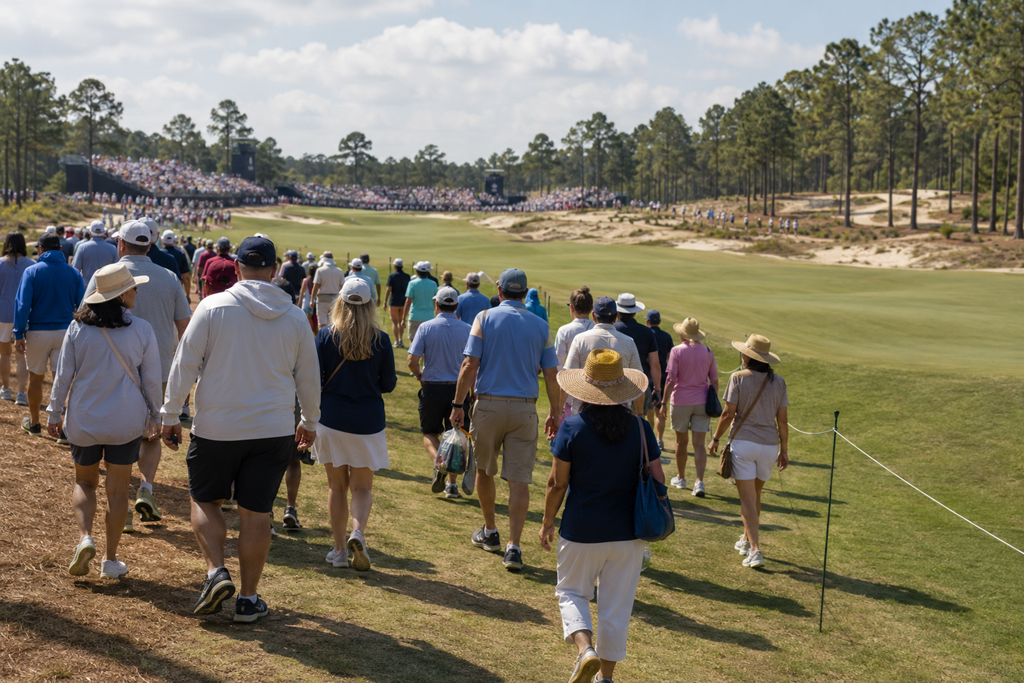
A day at the U.S. Open Golf is less like sitting in a stadium and more like spending several hours moving through a large outdoor course. The best way to prepare is to dress for walking, plan for changing weather, keep your bag light, and think of the day as an active spectator experience rather than a simple seated event.
That may sound obvious until you are actually there. Golf spectators often move across hills, grass, dirt paths, rope lines, grandstands, concession areas, merchandise tents, and shuttle zones. The official U.S. Open fan guidance notes that the championship involves substantial walking on grass hills, dirt paths, and uneven surfaces, and recommends appropriate footwear such as sneakers or golf shoes.
The weather adds another layer. A morning can begin cool and cloudy, turn sunny and warm by midday, and shift again if rain or storms move through. Because the U.S. Open is spread across an open-air course, your comfort depends less on one perfect outfit and more on being ready to adjust.
The U.S. Open Is A Walking Event Before It Is A Watching Event
Many first-time spectators imagine the day as finding a good spot, watching golf, and moving occasionally. In reality, the rhythm often feels more fluid. You may follow a favorite player for several holes, settle near a green, walk back toward food or restrooms, return to a grandstand, then reposition again as the leaderboard changes.
That movement is part of what makes golf tourism enjoyable. You are not locked into one seat. You can see the course, choose your vantage points, and experience the event from different angles.
But that freedom also means your body does more work than it might at a baseball, basketball, or football game. You may be standing for long stretches, walking on slopes, stepping around crowds, and covering more ground than expected. Comfortable preparation helps you stay present for the golf instead of spending the day thinking about sore feet, sun exposure, or whether you packed the wrong layer.
Footwear Matters More Than Looking Tournament-Ready
The easiest mistake is dressing for the idea of the U.S. Open instead of the reality of the grounds.
Golf events can have a polished feel, and many spectators want to look put together. That is understandable. But shoes should be chosen for stability, comfort, and traction first. A good U.S. Open walking shoe should handle grass, dirt, hills, damp ground, and long periods of standing.
This does not mean you need specialized gear. Supportive sneakers are usually more practical than stylish flats, sandals, or new shoes that have not been broken in. If rain is possible, avoid shoes that become slippery or uncomfortable when wet. If the forecast looks hot, choose socks that reduce rubbing and shoes that still feel comfortable after several hours.
The quiet truth is that footwear can shape the whole day. A spectator who is comfortable walking can follow more action, move more confidently through crowds, and make better decisions about when to rest. A spectator with sore feet starts shrinking the day early.
Dress For A Weather Range, Not A Single Forecast
Checking the forecast is important, but at a major outdoor golf event, it is better to prepare for a range of conditions.
The U.S. Open is usually played in June, when heat, sun, rain, humidity, wind, and changing cloud cover can all affect the spectator experience. Even when the forecast looks mild, the course may feel different depending on shade, elevation, breeze, and how long you are standing in one place.
A light layering approach usually works better than one heavy item. Think breathable base clothing, a light outer layer, sun protection, and rain awareness. A compact rain jacket or weather-resistant layer can be more useful than an umbrella, especially in crowded viewing areas where space is limited and visibility matters.
The goal is not to pack for every possible scenario. The goal is to avoid being caught with only one option.
Sun Protection Is Part Of Event Planning
At a golf championship, sun exposure can sneak up on you because the day feels social and spread out. You may not notice how long you have been standing along a fairway or sitting in an exposed grandstand until the afternoon.
A hat, sunglasses, and sunscreen are not extras. They are part of staying comfortable enough to enjoy the event. USGA safety guidance highlights hydration, sunscreen, and sun protection as important considerations for spectators, and notes that sunscreen containers must follow size rules.
This is also where planning ahead matters. Do not assume you can bring any size bottle, any type of container, or a full cooler of personal items. The USGA prohibited items list includes bag-size limits and restrictions on outside food and beverages, while allowing certain small clear bags and empty water bottles within stated limits.
Before attending, check the current year’s official fan guide because allowed items can vary by championship and venue.
Hydration Should Be Treated As A Pace Strategy
Hydration at the U.S. Open is not only about avoiding thirst. It affects how well you handle walking, sun, crowds, and long periods outside.
A common pattern is that spectators get caught up in the golf early, walk more than expected, and delay drinking water until they are already tired. That makes the rest of the day feel heavier.
A better approach is to connect hydration to natural breaks. Drink when you arrive, when you move between parts of the course, when you stop for food, and before the afternoon heat builds. If empty refillable bottles are allowed for that year’s event, bringing one can make this easier. The USGA has noted hydration stations at championship sites and has allowed 32-ounce-or-smaller bottles for refilling under its safety guidance.
The point is not to overthink it. It is simply to avoid treating water as something you will “get to later.”
The Best Viewing Plan Includes Rest Stops
One of the most helpful reframes is this: resting is not missing the event. It is how you extend the event.
A walking-heavy golf day rewards pacing. You do not need to chase every group, stand for every shot, or cover the entire course before lunch. Many spectators enjoy the day more when they choose a few priorities instead of trying to see everything.
That might mean following one favorite player for a stretch, then sitting near a green. It might mean watching a few groups come through one hole instead of constantly walking. It might mean using shaded areas, concession zones, or grandstands as part of the experience rather than as interruptions.
The U.S. Open can feel more enjoyable when you give yourself permission to pause.
Weather Alerts Are Not Background Noise
Changing weather at a golf course should be taken seriously because spectators are spread across open outdoor areas, temporary structures, trees, hills, and grandstands.
The official U.S. Open fan information guide uses weather alert levels, including advisories, watches, and warnings. A red weather warning means dangerous weather is imminent and fans should take immediate action, including exiting grandstands.
That does not mean you need to feel anxious about the weather. It means you should stay aware. Pay attention to scoreboard messages, app alerts, public-address announcements, and instructions from event staff. If weather changes, respond early instead of waiting to see what everyone else does.
A good spectator plan includes knowing where you would go if conditions shift.
A Light Bag Usually Beats A Prepared-For-Everything Bag
It is tempting to bring everything that might make the day easier. But at the U.S. Open, every item has to pass security rules and then be carried while you walk.
A lighter bag often creates a better day. Choose the essentials that directly support comfort: phone, ticket access, small permitted sunscreen, sunglasses, hat, allowed water bottle if applicable, light layer, and any personal medical needs.
Before packing, check the current prohibited-items list. Bag sizes, clear-bag rules, camera rules, food and beverage rules, and personal item restrictions can affect what you bring. The USGA prohibited-items guidance includes limits for bags and restrictions on items such as large bags, outside food and beverages, noise-producing devices, and other items.
This is one of the simplest ways to reduce event-day friction. A bag that is too large or packed with restricted items can slow down entry and create stress before the day has even started.
The Real Goal Is Comfort Without Overplanning
Preparing for walking-heavy days and changing weather at the U.S. Open is not about turning the event into a rigid checklist. It is about making a few smart choices before you arrive so the day feels easier once you are there.
Wear shoes that can handle uneven ground. Dress in light layers. Plan for sun, hydration, and possible rain. Keep your bag simple. Pay attention to weather alerts. Build rest into the day instead of treating it as a backup plan.
The U.S. Open is a memorable spectator experience because it lets you move with the tournament rather than watch from one fixed seat. When you prepare for the walking and the weather realistically, you give yourself more room to enjoy the golf, the course, and the rhythm of the day without feeling worn down by preventable discomfort.
Download Our Free E-book!